How do you turn a massive 2,500 square foot sports lounge in downtown Toronto — plagued by soaring rents, empty weekday nights, and low-margin draft beer sales — into a thriving $25,000/month entertainment goldmine? Let me tell you how I did it. For years, running a traditional sports bar in Canada was straightforward: you hung up a dozen flat-screen TVs, served buffalo wings, and waited for the NHL playoffs to pack the house. But the hospitality landscape has shifted dramatically. Rent in prime locations is unforgiving, and younger patrons no longer visit bars simply to watch a game on a screen they already have at home. They crave active, engaging, and highly social experiences. By mid-2025, my lounge was suffering from a critical dwell-time problem. Customers would visit, order a single domestic beer, stare at a hockey broadcast for three hours, and leave. Our average ticket was extremely low, and our weekday foot traffic was non-existent. I realized we didn't need more screens or cheaper drink specials. We needed a total paradigm shift. We needed to transform our space into an interactive "Eat & Play" sports lounge, where state-of-the-art simulators and virtual reality arenas act as the ultimate magnets to drive food, beverage, and high-margin gaming revenue.
The solution came when I partnered with NextPlay to redesign our floor plan, dedicating our underutilized areas to high-yield, commercial-grade gaming attractions. We decided to build a multi-layered entertainment ecosystem featuring three main pillars: the revolutionary indoor AR Golf Simulator, the high-octane Free Roaming VR Arena 2.0, and the ultra-modern Dart X3 arcade dart machines. By combining these premium experiences, we didn't just add games — we built a comprehensive entertainment destination that appeals to every single demographic in Toronto. From hardcore golf enthusiasts seeking professional swing training during freezing Canadian winters to corporate groups booking premium team-building packages on Tuesday afternoons, and casual party-goers looking for multiplayer VR action on Saturday nights, our new layout captured it all. In this extensive guide, I will share the exact blueprint, operational workflows, and financial metrics behind our success, demonstrating how this specific hybrid setup consistently generates over $25,000 in monthly high-margin revenue.
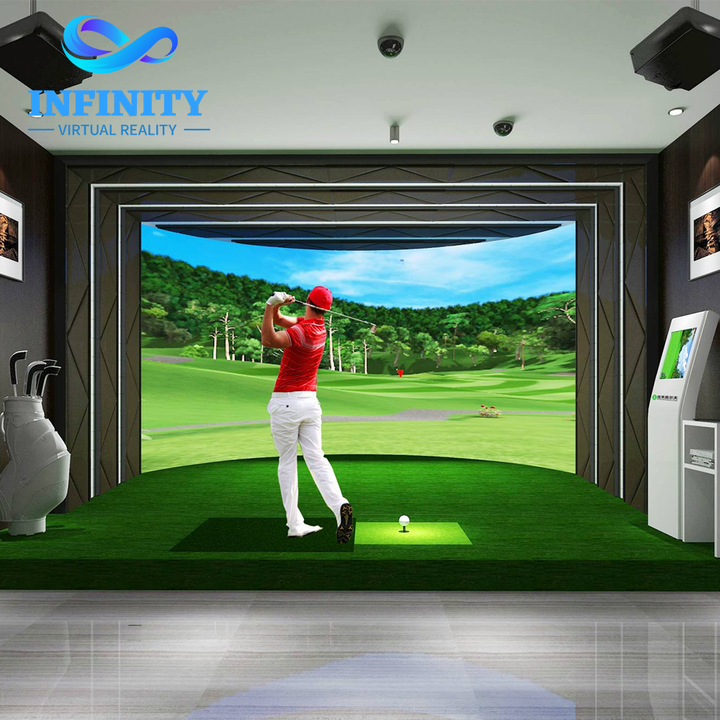
The first major pillar of our renovation was the installation of the AR Golf Simulator. Indoor golf is not a new concept, but standard simulators on the market often suffer from lag, inaccurate ball tracking, and low-resolution graphics that fail to satisfy passionate golfers. NextPlay's commercial-use indoor AR Golf Simulator completely redefines the virtual golfing experience. This high-end system is equipped with an ultra-precise high-speed dual-camera detector that tracks the ball's launch angle, spin rate, and speed at over 1,000 frames per second. Combined with a state-of-the-art 4K laser projector, it displays world-famous courses with absolute photorealism. When a player strikes a golf ball against the heavy-duty, double-layer impact screen, the transition from physical ball to digital trajectory is instantaneous, providing realistic, real-time feedback that matches the physics of an actual outdoor green.
What makes the AR Golf Simulator an extraordinary commercial asset in Toronto is its ability to tap into the high-spending corporate and enthusiast demographic. Toronto is known for its long, severe winters, which keep golfers indoors for nearly six months of the year. By allocating approximately 600 square feet of our lounge to a premium indoor AR Golf bay, we created a year-round training and social hub. Golfers can bring their own clubs and practice their swings, utilizing the advanced analytics of the high-speed camera detector to study their club path and ball compression. This professional-grade capability allowed us to charge a premium booking fee of $50 per hour on weekdays and $75 per hour on weekends. During peak winter months, the AR Golf Simulator runs at 90% capacity, generating thousands of dollars in direct booking revenue alone.
However, the true magic of the AR Golf Simulator lies in its massive "F&B Pull" — the food and beverage sales generated by players and their companions. Unlike traditional golf courses where players walk long distances, our indoor AR Golf bay is structured as a luxury social lounge. We built a comfortable plush seating area right behind the hitting mat, complete with a high-top bar counter and a dedicated server call button. A typical booking consists of a group of four colleagues or friends. While one person is taking their swing, the other three are sitting, relaxing, ordering craft beers, eating gourmet sliders, and socializing. The dwell time of these groups averages 2.5 hours. Our internal sales audits revealed a staggering statistic: for every $1.00 our guests spend on booking the AR Golf Simulator, they spend an average of $1.50 on high-margin food and drinks. The AR Golf bay itself contributes over $10,000 per month in raw simulator booking fees, while driving an additional $15,000 in food and beverage sales, making it a highly profitable anchor for our sports lounge.
Operationally, the AR Golf Simulator is incredibly simple to maintain. The heavy-duty screen is designed to withstand tens of thousands of impacts, and the high-speed camera system requires only initial calibration upon installation. The software features an intuitive touch-screen interface that allows guests to select their preferred courses, adjust weather conditions, and customize game modes without requiring constant staff intervention. This high level of self-sufficiency means that our existing bartending and wait staff can easily manage the golf lounge, ensuring that our operational expenses remain exceptionally low and our profit margins remain spectacularly high.
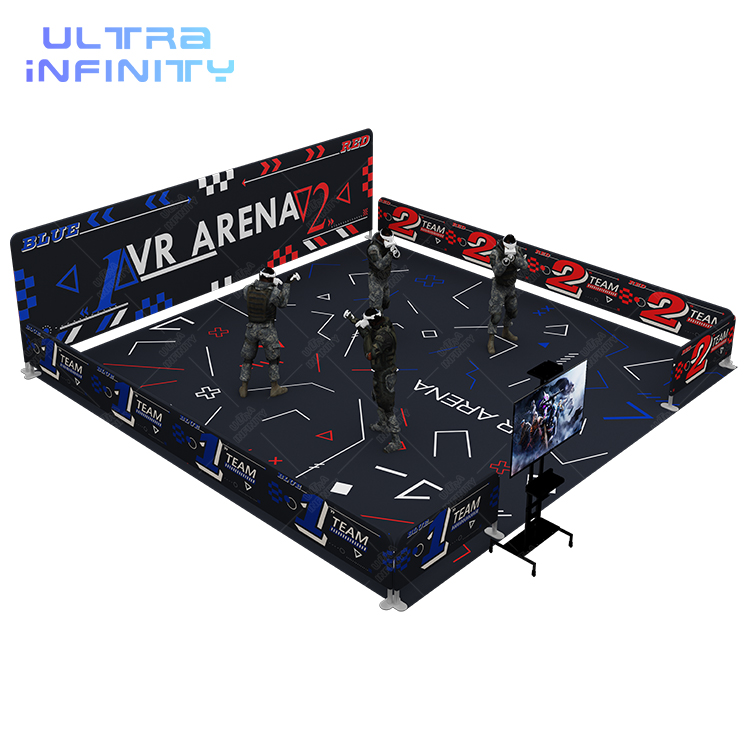
While the AR Golf Simulator targets premium corporate clients and avid golf enthusiasts, we needed an attraction that would appeal to the high-energy, gaming-oriented, and tech-savvy crowd. To capture this segment, we dedicated approximately 1,000 square feet of our floor space to the spectacular Free Roaming VR Arena 2.0 (multiplayer VR walking and shooting simulator). Traditional virtual reality setups are often isolating; players stand in small, enclosed booths, tethered to bulky computers by thick cables. NextPlay's VR Arena 2.0 shatters these boundaries by using a fully wireless tracking network. Players wear lightweight, beautifully balanced VR headsets that communicate with high-bandwidth local wireless base stations. This allows up to four players to walk, dodge, turn, and coordinate tactics inside a shared physical arena with absolute freedom of movement.
NextPlay's VR Arena 2.0 is built around three core design philosophies: "no weight limit, no site limit, and no age limit." By eliminating heavy, restrictive harnesses and awkward mechanical treadmill structures, players of all body shapes and physical capabilities can comfortably enter the game. The "no site limit" design allows the tracking boundaries to be fully adjusted; while we allocated 1,000 square feet, the system can scale down to 600 square feet or up to 1,500 square feet, fitting perfectly into the physical layout of almost any commercial venue. Finally, the "no age limit" is achieved by using weight-balanced headsets that don't strain younger players' necks, and offering intuitive, easy-to-learn software. From young kids celebrating birthday parties to older adults engaging in competitive shooting matches, the VR Arena 2.0 provides an accessible, thrilling experience for everyone.
In our Toronto sports lounge, we surrounded the VR Arena 2.0 with high-durability safety fencing and clear viewing glass, placing it in the heart of our venue. This placement is a masterclass in experiential design. When guests walk, dodge, and laugh as they battle alien hordes or zombie waves in virtual reality, their physical movements and emotional reactions are fully visible to everyone in the sports bar. The sight of friends shouting and dodging in real life while acting like futuristic heroes is highly entertaining. This creates a natural spectator crowd in our lounge. Onlookers gather around the safety glass with their drinks, cheering on the players and capturing vertical videos to share on Instagram and TikTok. This organic social media exposure acts as a powerful marketing engine, turning the gameplay itself into a live billboard that constantly attracts new players from across the city.
The economics of the VR Arena 2.0 are incredibly compelling. We operate the arena in rapid 15-minute cycles, which includes a 2-minute safety briefing and gear-up, a 11-minute high-intensity gameplay session, and a 2-minute post-game score review and photo-op. We charge $20 per player per session. With up to four players per session, a single 15-minute game can bring in $80. On a busy Friday or Saturday night, we run the arena at 85% capacity for eight hours straight, generating over $2,100 in direct gaming revenue per night. Because the entire system is highly automated and controlled from a single touch-screen console, a single staff member can manage the entire arena, keeping labor costs extremely low. Sanitation is equally simple: the silicone face guards are wiped down with medical-grade disinfectant wipes, and the headsets are placed in UV-C rapid sanitizing boxes between sessions, ensuring a pristine, clean experience for every guest.
The true secret behind our sports lounge hitting $25,000 in monthly gaming revenue does not lie in operating these machines in isolation. Instead, it is the powerful synergy created by combining them into a single, cohesive entertainment ecosystem. In the hospitality and leisure industry, relying on a single attraction is a risky strategy. If a customer tries your one game and leaves, your customer acquisition cost remains high, and your guest lifetime value is severely limited. By combining the AR Golf Simulator (which draws in premium corporate clients, older golf enthusiasts, and high-spending lunch crowds) with the Free Roaming VR Arena 2.0 (which attracts younger gamers, birthday parties, and high-energy weekend crowds), we built a venue that appeals to every segment of the market.
We call this our "Cross-Selling Funnel." A corporate group might book our AR Golf Simulator for an after-work happy hour session on a Thursday. While enjoying their craft beers and taking turns on the virtual green, they watch another group of players laughing and running in the VR Arena 2.0. Intrigued, the corporate event coordinator asks about our team-building packages. Before they leave, they book the entire venue — including the VR Arena and our Dart X3 stations — for their company holiday party the following month. Similarly, on weekends, families who visit for our kid-friendly VR games discover that their parents can enjoy a premium round of golf or play a competitive game of darts, leading to higher overall dwell times and significantly larger transaction sizes per group.
To help prospective venue owners and hospitality operators evaluate the financial viability of this model, we have compiled a detailed performance and ROI comparison. The following table highlights the space requirements, capital expenditure (CapEx), average monthly revenues, monthly operational expenses (OpEx), net monthly profits, and estimated payback periods across four different operational configurations. This data is based on real-world market rates in Toronto and audit results from our first year of operation.
| Configuration Scenario | Space Required | CapEx (Equip + Setup) | Monthly Gaming Revenue | Monthly OpEx (Est.) | Net Monthly Profit | Payback Period |
|---|---|---|---|---|---|---|
| Scenario A: Traditional Lounge (No Upgrades) | 2,500 sq ft | $15,000 | $4,000 | $3,500 | $500 | 30.0 months |
| Scenario B: AR Golf Only Bay | 600 sq ft | $28,000 | $8,500 | $4,500 | $4,000 | 7.0 months |
| Scenario C: VR Arena Only Zone | 1,000 sq ft | $35,000 | $11,000 | $5,500 | $5,500 | 6.3 months |
| Scenario D: Combo Setup (Golf + VR + Darts) | 2,500 sq ft | $75,000 | $25,000 | $11,000 | $14,000 | 5.3 months |
Note: CapEx details include commercial equipment costs, shipping, customs clearance, physical enclosure construction, localized dynamic lighting, professional-grade padded flooring, and initial marketing launch campaigns. Monthly OpEx covers space rental, staff salaries, electricity and high-speed fiber internet, hardware maintenance reserves, and localized SEO and advertising. The Combo Setup (Scenario D) delivers the absolute highest net profits and strongest business resilience due to its powerful cross-selling dynamics, returning the full capital investment in just over 5 months.
Launching an interactive, tech-driven sports lounge requires careful planning and precise operational execution. Based on our highly successful experience in Toronto, we have documented a comprehensive 7-step roadmap to guide you from your initial floor-plan concepts to a highly profitable grand opening.
The foundation of your success lies in selecting a high-traffic location with appropriate physical specs. You need a minimum of 2,000 to 2,500 square feet of flat floor space, with a ceiling height of at least 9.5 feet to accommodate high golf swings and ceiling-mounted VR sensors. The layout must prioritize direct sightlines. Place the highly active, glass-enclosed VR Arena 2.0 in the center or front of your lounge to act as a visual magnet. Position the premium AR Golf bay in a dedicated corner to allow focus during play, while ensuring there is a spacious lounge seating area directly behind it to encourage spectator food and drink consumption.
Commercial gaming and simulator systems require stable, high-capacity electricity and ultra-low latency internet. The AR Golf Simulator requires a stable 220V power outlet with a peak demand of approximately 4.5 kW for its laser projector, high-speed camera detector, and server PC. The VR Arena 2.0 and Dart X3 systems add another 5 kW of combined load. You must install a dedicated 15 kW electrical distribution box. Crucially, connect the primary tracking servers and wireless routers to an Online Double-Conversion UPS (Uninterruptible Power Supply) to prevent sudden headset disconnects or computer reboots during temporary voltage drops.
Safety is absolutely critical when running interactive simulators. For the AR Golf Simulator, we installed heavy-duty, double-layer canvas impact screens and thick, commercial-grade side padding to absorb stray golf balls and prevent dangerous ricochets. For the VR Arena 2.0, where players walk blindfolded with VR headsets, the active tracking zone must be physically separated from spectators. We erected a 1.2-meter-high tempered glass barrier with padded handrails and laid 1-inch-thick, high-density interlocking rubber tiles across the play area to prevent slips and protect players' joints during sudden movements.
Because NextPlay's systems are designed with user-friendly, highly automated software interfaces, our 2,500 square foot lounge requires only 2 staff members during peak times. However, comprehensive training is essential. Staff must understand how to quickly boot up the tracking servers, calibrate VR headsets, and sanitize equipment in under 30 seconds using UV-C rapid sanitizing boxes. Staff must also practice emergency shutdown procedures, knowing exactly when and how to hit the physical emergency stop buttons on the consoles, and how to deliver clear, friendly safety briefings to first-time players.
To maximize revenue, implement a dynamic pricing model. On quiet weekdays (Monday to Wednesday), offer promotional pricing (e.g., $35/hour for AR Golf and $12/session for VR Arena) to attract college students and remote workers. During peak weekend periods, charge standard premium rates. Crucially, design high-value Combo Passes that encourage groups to try multiple attractions, such as our "Golf & VR Happy Hour" pass, which bundles a 1-hour golf simulator booking with four VR Arena tickets and a pitcher of local craft beer, instantly boosting our average transaction value.
One of the biggest pitfalls of arcade lounges is content stagnation. If guests realize that nothing has changed after three months, they will not return. To maintain a high repeat-customer rate, we establish a strict game rotation calendar with NextPlay. The VR Arena 2.0 features an extensive library of cooperative zombie shooters, player-vs-player arenas, and family-friendly adventures. We introduce a major new game title every quarter and host bi-weekly competitive leagues and local tournaments with live digital leaderboards, turning casual players into a dedicated, recurring community.
To fully capture the "Eat & Play" synergy, your food and beverage operations must integrate seamlessly with the gaming layout. We placed unique, durable QR codes in our AR Golf lounge, beside the VR Arena waiting benches, and on our Dart X3 tables. Guests scan these codes on their phones to view our full menu of craft beers, signature cocktails, and finger-friendly gourmet food. Orders are sent directly to our kitchen, and servers deliver items on customized stable trays that fit perfectly into the built-in cup holders of our gaming tables, minimizing spills and maximizing service efficiency.
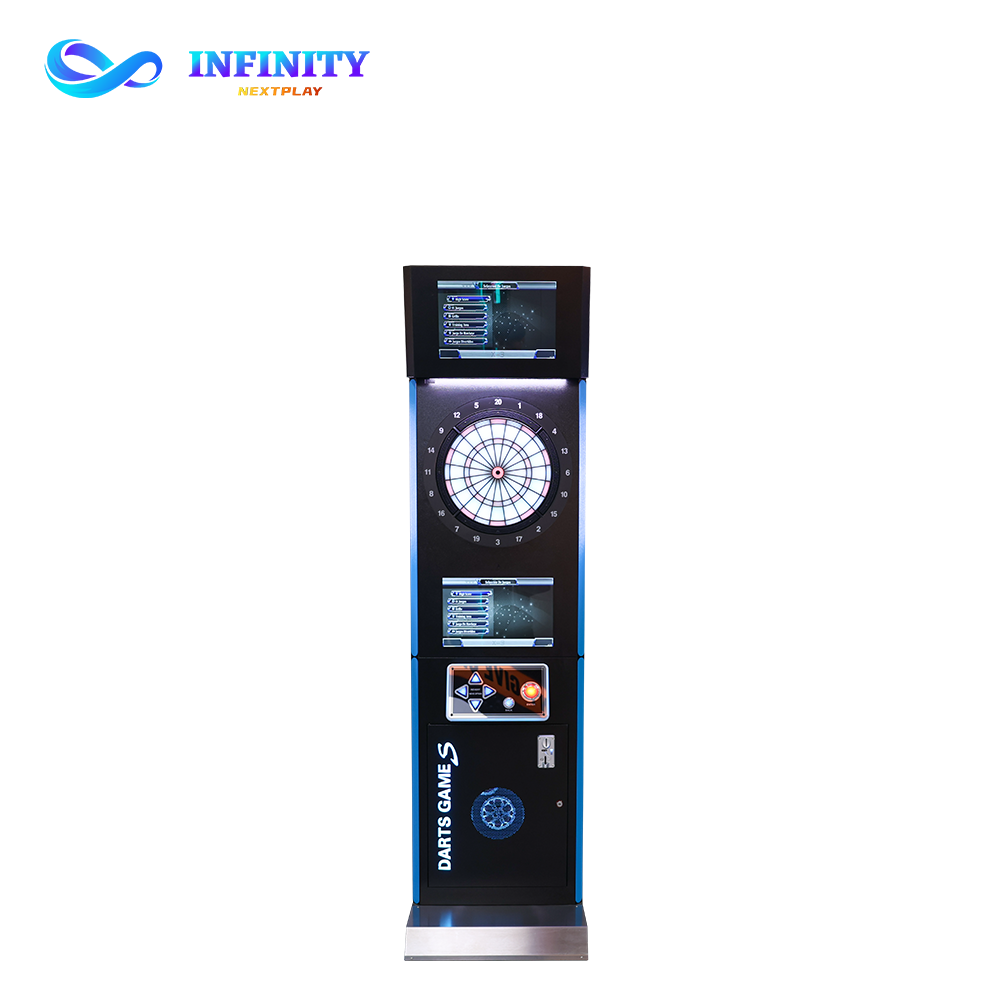
While the AR Golf Simulator and the Free Roaming VR Arena 2.0 occupy larger physical spaces and act as our premium anchors, we faced the challenge of optimizing several small, irregular "dead zones" in our 2,500 square foot layout. In any commercial venue, empty corners and narrow walkways are wasted rent. To solve this problem and drive high-volume, casual social play, we introduced the Dart X3 (professional arcade dart machine for full venue solutions). Darts and bars have had a natural connection for decades, but traditional cork dartboards are difficult for casual players to score, present safety concerns from flying metal-tip darts, and fail to generate significant commercial revenue.
NextPlay's Dart X3 completely modernizes this classic bar game, transforming it into a high-tech arcade powerhouse. It features dual high-definition screens — an upper screen for animations, global player rankings, and interactive graphics, and a lower screen for simple, touch-controlled game selection. The machine utilizes high-precision, automatic electronic scoring and soft-tip plastic darts, completely eliminating safety risks and manual math. The Dart X3 comes pre-loaded with a massive variety of game modes, ranging from classic "501" and "Cricket" to unique mini-games and global online multiplayer tournaments. The striking cabinet is wrapped in customizable glowing LED lights that pulse in response to player bullseyes, creating an eye-catching spectacle that draws in bar patrons.
From a spatial efficiency perspective, the Dart X3 is unbeatable. A single unit requires a physical footprint of only 15 square feet. We placed three Dart X3 machines in a narrow alcove beside our primary draft beer bar, creating a high-yield social gaming corridor. We priced the darts at a low entry fee of $3 per player per game. Because the games are fast and highly engaging, players continuously feed money into the machines while waiting for their drinks or socializing in groups. Most importantly, darts are a highly physical and conversational social game that pairs perfectly with alcohol consumption. Our beverage sales in the bar area increased by 25% following the installation of the Dart X3 corridor, as players spent longer periods socialising and drinking while playing darts with friends, making it the ultimate low-cost, high-yield asset for our sports lounge.
To build a highly successful, multi-tiered interactive sports lounge similar to our Toronto setup, we recommend a total venue size of 2,000 to 2,500 square feet. This area allows for optimal product spacing and fluid guest traffic flow. Specifically, the AR Golf Simulator requires a dedicated area of approximately 15 feet wide, 20 feet deep, and at least 9.5 feet of ceiling height to ensure absolute safety during full backswings. The Free Roaming VR Arena 2.0 requires a flat, open play floor of at least 800 to 1,000 square feet, surrounded by clear safety glass or fencing to separate active players from dining guests. Each Dart X3 arcade machine is extremely space-efficient, requiring only 3 feet of width and 8 feet of throwing depth (approximately 24 square feet total per machine), allowing them to fit perfectly into narrow walkways or underutilized corners.
Integrating food and beverages with advanced technology requires smart spatial zoning and strict operational guidelines. For the AR Golf Simulator, we built a dedicated dining bar and plush seating section strictly behind the hitting mat, separated by a physical glass barrier. This allows guests to eat and drink comfortably while watching their friends play, but prevents anyone from bringing open beverages or food onto the actual turf hitting mat. For the VR Arena 2.0, players are physically walking in a blindfolded virtual state, so food and beverages are strictly banned inside the glass enclosure. We placed high-top tables with integrated deep cup holders right outside the VR Arena waiting benches, allowing guests to place their beers securely before gearing up. Additionally, all our gaming tables and consoles are made of non-porous, commercial-grade materials that can be easily wiped clean with disinfectant, ensuring that your high-tech investments remain completely clean and protected.
Running high-performance commercial simulators and VR servers requires a stable and well-distributed power grid. In our Toronto sports lounge, we installed a dedicated 15 kW electrical distribution box to manage the combined load. Specifically, the AR Golf Simulator operates on standard 220V power and has a peak draw of 4.5 kW under full laser projector and dual server use. The Free Roaming VR Arena 2.0 tracking network, routers, server computer, and rapid charging docks require approximately 3 kW of power. Each Dart X3 arcade machine operates on standard 110V power and has a very low power draw of approximately 350W. We strongly recommend having a certified electrician install dedicated circuit breakers for each major attraction to prevent accidental power overloads. Crucially, connect your VR tracking servers and golf computer to an Online Double-Conversion UPS (Uninterruptible Power Supply) to filter voltage spikes and keep the software running smoothly during temporary power glitches.
Not at all. NextPlay designs all its commercial equipment with user-friendly, highly automated software interfaces specifically tailored for the hospitality industry. The AR Golf Simulator features an intuitive touch-screen kiosk where players can easily select their favorite golf courses, adjust game settings, and track their swings without requiring staff assistance. The VR Arena 2.0 is managed entirely from a centralized tablet-based control panel. The operator can turn on all headsets, calibrate the wireless tracking boundaries, and launch multiplayer games with a single tap. The software includes built-in automated voice tutorials that guide players on how to hold their controllers and navigate the game. During our standard operations, a single bartender or lounge host can comfortably manage the payments and startup processes for all attractions, eliminating the need for expensive specialized IT staff.
NextPlay equipment is engineered to withstand heavy, continuous commercial use in high-traffic environments. The physical cabinets, steel mounting structures, and electric electronic systems of the AR Golf Simulator and Dart X3 have an average operational lifespan of 8 to 10 years. The VR Arena 2.0 headsets and tracking base stations have a standard commercial life of 3 to 4 years before standard wear-and-tear or technological upgrades warrant a headset swap. Maintenance is remarkably straightforward: we wipe the non-porous silicone face cushions of our VR headsets with disinfectant and run them through rapid UV-C sanitizing chambers between plays. NextPlay provides a comprehensive commercial warranty, 24/7 remote technical support, and automatic cloud software updates that deliver fresh games, course rotations, and security patches directly to your system, ensuring your venue remains at the cutting edge of entertainment.
Get a free 3D layout for your space. No commitment required.