I will never forget the cold, damp winter of 2024 in Madrid. As the operational director of a newly established 4,000 square foot family entertainment center (FEC) located near the bustling heart of Madrid, I spent my Tuesday afternoons staring at a nearly empty facility. While our weekends were packed with birthday parties and casual drop-ins, the Monday-to-Thursday period was a devastating financial black hole. Traditional arcade cabinets, standard console setups, and basic prize claws simply lacked the high-density engagement and group appeal necessary to cover our high metropolitan rent. We were burning through capital, and our initial business model was failing. We desperately needed a premium, highly social, and competitive entertainment solution that could attract corporate clients, sports leagues, and multi-generation families during off-peak weekday hours.
The central challenge for large-scale entertainment venues has always been driving weekday foot traffic and maximizing the average spend per head. Casual gamers might spend five or ten dollars on single-player machines, but they rarely stay for more than thirty minutes, and they almost never return with a group of friends or corporate colleagues. To build a sustainable, high-margin business, we had to pivot away from low-ticket, single-player novelty items toward high-throughput, anchor attractions that foster group bonding, competitive loyalty, and high repeat-play rates. That was when we decided to completely redesign our floor plan and introduce a high-performance combo setup: Standard 10-Pin Bowling lanes, the state-of-the-art Shooting Simulator Q4, and the globally connected Dart X7 electronic dart machines.
This comprehensive guide details how our 4,000 square foot venue in Madrid successfully integrated these three dynamic product lines to achieve a consistent monthly revenue of $30,000. We will examine the exact ROI models, analyze the mechanical and software advantages of our upgraded equipment, and provide a detailed, step-by-step roadmap for venue owners, amusement park operators, and commercial investors worldwide who are looking to transform their spaces into highly profitable competitive socializing arenas. By shifting our focus to group-centric, high-technology anchor attractions, we transformed our quiet Madrid warehouse into one of the city's most talked-about entertainment destinations, proving that the right product combination can completely redefine a venue's financial health.
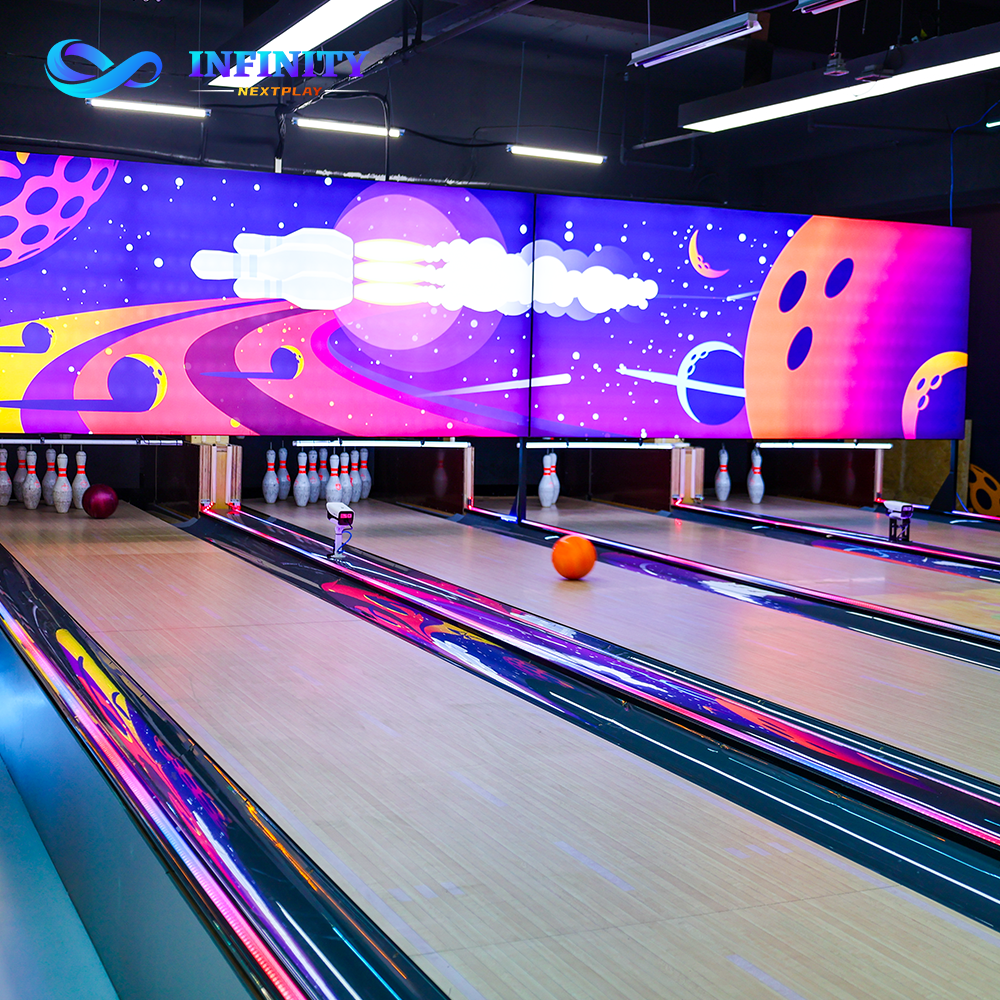
The undisputed anchor of our entertainment center's transformation was the installation of the Standard 10-Pin Bowling lanes. Traditional bowling systems are notoriously difficult to install, requiring massive structural excavations, specialized concrete foundations, and continuous mechanical supervision. However, the modern Standard 10-Pin Bowling system from NextPlay completely redefines this product category. Adhering to the international professional standard of 26 meters in total length, these lanes are engineered specifically for full-venue solutions in commercial sports centers and high-end family entertainment venues. What set this system apart from other options on the market was its combination of professional-grade build quality and advanced, high-throughput mechanics.
A key mechanical differentiator of our new bowling lanes is the highly specialized, accelerated ball return system. In a standard bowling alley setup, the ball return mechanism can take anywhere from 15 to 20 seconds to deliver the ball back to the player. This lag time dramatically slows down the pace of play, limits the number of games a group can complete in an hour, and directly constrains the venue's peak-hour earning potential. NextPlay's system, however, utilizes an engineered, low-friction track and high-torque electric motors to achieve an accelerated ball return time of just 7 to 8 seconds. By reducing the return wait time by over 50 percent, the system significantly increases lane turnover and elevates player satisfaction. Casual players experience a fast-paced, high-energy game, while competitive league bowlers enjoy the professional rhythm and continuous momentum of the play. This mechanical efficiency alone allowed us to squeeze in an extra 1.5 to 2 games per lane during our busy Friday and Saturday night rushes, adding thousands of dollars to our monthly bottom line.
In addition to ball return efficiency, the physical durability of the lanes is outstanding. Each lane is constructed using premium, high-density 36mm+ OSB (Oriented Strand Board) sub-flooring, which significantly exceeds the industry standard sub-flooring of 25mm. In the entertainment industry, lane deformation due to heavy impact and environmental moisture is a common, highly expensive problem. Standard sub-flooring can warp over time, requiring complete reconstruction of the lane surface and leading to weeks of unexpected venue downtime. By investing in the 36mm+ premium OSB structure, we secured a stable, moisture-proof, and sound-dampened foundation designed to withstand over 10 years of continuous commercial play without deforming. This heavy-duty build quality, coupled with the low-noise string pinsetter technology, allowed us to operate a professional, competition-grade bowling center directly adjacent to our quiet lounge and F&B seating areas without any structural vibration or noise complaints.
Alejandro, the founder and chief investor of our Madrid entertainment center, was a seasoned real estate developer who had spent years observing the shift toward experiential retail. He purchased a 4,000 square foot empty warehouse in Madrid's vibrant San Blas district, intending to build a high-end family social venue. Alejandro realized that standard dining and beverage concepts had thin margins and high failure rates in Madrid's competitive culinary scene. He wanted an anchor attraction that could command high hourly rental fees, draw large corporate groups, and drive beverage sales. After consulting with NextPlay's engineering team, Alejandro decided to allocate $110,000 of his budget to install four lanes of Standard 10-Pin Bowling, complete with automated scoring software and custom LED lane lighting.
The financial impact of the 10-Pin Bowling installation was immediate. We charged an average of $35 per hour per lane during off-peak hours (Monday to Thursday morning) and $55 per hour during peak weekend times (Friday night through Sunday evening). With four lanes operating at an average of 55 percent capacity across the week, the bowling zone alone generated $16,800 in its very first month of operation. More importantly, we observed a massive "halo effect" on our food and beverage sales. Bowling is inherently a social, shared experience; while one person is bowling, the other three or four players in the group are sitting at the lane's custom lounge tables, eating tapas, and drinking craft beers. For every dollar spent on bowling lane rentals, we recorded an additional $0.85 in high-margin food and beverage sales. The accelerated ball return system meant groups finished their games faster and with higher energy, leading to longer stays, more beverage orders, and a highly active, lively venue atmosphere.
The payback period for Alejandro's initial $110,000 investment was remarkably brief. After accounting for direct utility costs, lane maintenance reserves, and a dedicated part-time lane marshal, the net monthly profit from the bowling zone reached $11,200. This resulted in an incredibly short payback period of just under 10 months for the bowling equipment. The high-capacity, social nature of the 10-Pin lanes also allowed us to secure lucrative weekday corporate bookings. Alejandro partnered with local Madrid tech startups and consulting firms to host "Corporate Bowling Leagues" on Tuesday and Wednesday evenings, filling what would have otherwise been empty, unprofitable nights with corporate teams spending an average of $450 per event. By transforming bowling from a dusty, old-school pastime into a premium, high-tech social sport, our Madrid venue established a solid financial foundation that paved the way for our second major attraction.
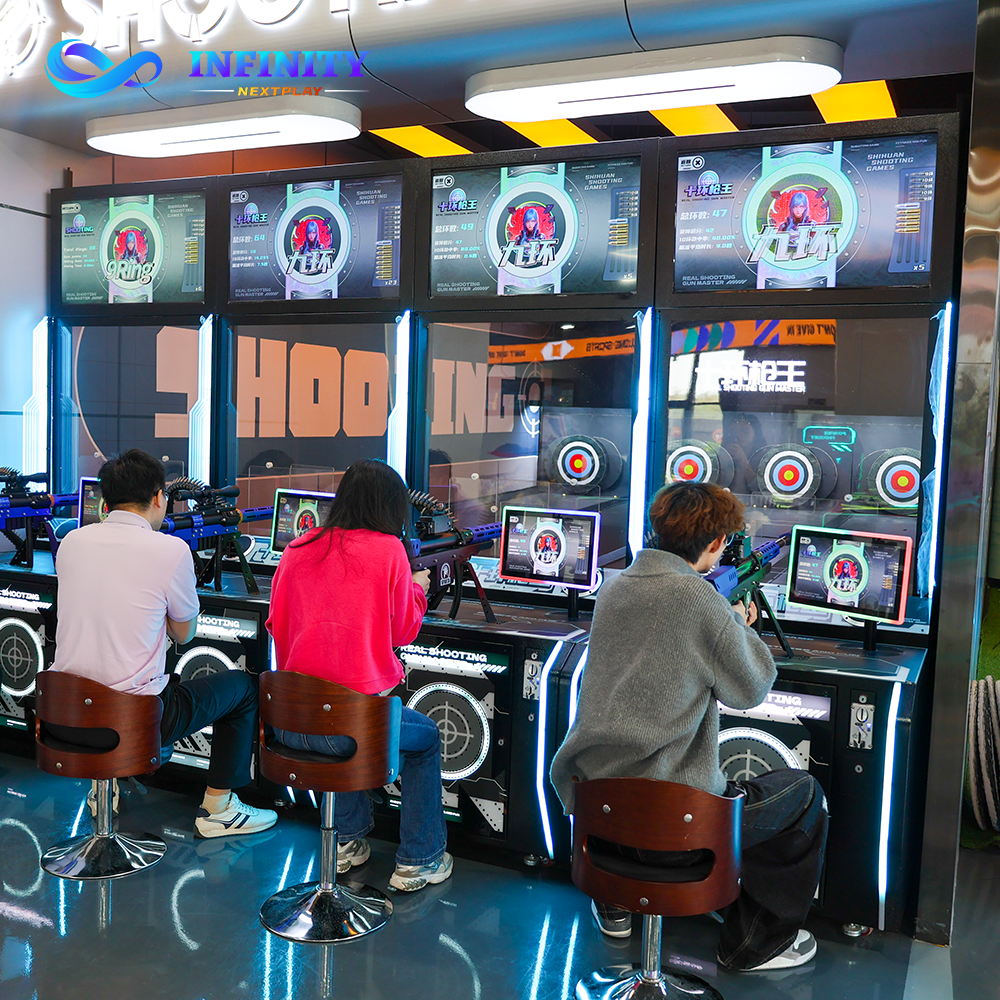
While the bowling lanes provided the social foundation for our Madrid venue, the Shooting Simulator Q4 added the cutting-edge, high-technology "wow factor" that captured the attention of Madrid's younger, tech-savvy demographics. The Shooting Q4 is a professional-grade digital scoring shooting simulator designed specifically to bridge the gap between physical arcade play and elite competitive e-sports. Featuring a massive 39-inch high-definition top display screen, a professional 10-ring scoring system, and dynamic moving targets, the Q4 offers a level of immersion and precision that traditional gaming cabinets simply cannot replicate. The system utilizes advanced optical sensors and a fully automated bullet loading mechanism to deliver a premium, seamless user experience that requires zero physical ammunition clean-up or manual reloading by venue staff.
A major highlight of the Shooting Simulator Q4 is the intense competitive atmosphere it creates on the venue floor. The 39-inch Top Display is not merely an aesthetic addition; it serves as a live, real-time leaderboard that displays the names, rankings, and exact shot accuracy of the players currently competing. This leaderboard is synchronized with a verbal score announcement system that calls out the scores of elite hits (such as "Bullseye!" or "Perfect Ten!") in real-time. This combination of visual and auditory feedback turns a single-player shooting simulation into a spectator sport. When a player is on a hot streak, a crowd naturally gathers around the Q4 zone, cheering them on and building a lively, high-energy "arena effect" in the center of our facility. This social validation drives immense repeat play; casual players are highly motivated to beat their friends' scores, leading to an incredibly addictive loop where visitors tap their payment cards again and again to secure their place on the daily leaderboard.
The commercial advantages of the Shooting Q4 are particularly attractive to operators concerned with spatial efficiency and labor costs. A traditional shooting gallery or paintball range requires extensive safety netting, continuous safety marshaling, and manual target replacements, resulting in high operational risks and massive labor overhead. The Shooting Q4, by contrast, operates in a completely safe, fully digitized environment. It occupies a remarkably compact physical footprint of just 15 square feet per unit, allowing us to install two simulator stations side-by-side in a small alcove of our Madrid center. Because the system is fully automated and self-loading, it can be operated by our general floor staff, requiring no dedicated technician or safety marshal. This spatial efficiency translates to an exceptionally high revenue-to-space ratio, making the Q4 zone one of the most profitable sectors of our 4,000 square foot layout on a per-square-foot basis.
We positioned our two Shooting Q4 units directly adjacent to our premium craft beer bar, creating a high-energy "competitive socializing zone" that became the center's secret weapon for corporate team-building bookings. Madrid's corporate event managers are always searching for novel, engaging activities that encourage friendly competition without the physical strain or weather dependency of outdoor sports. The Shooting Q4's team battle software modes allow groups to divide into competing teams, tracking collective scores on the top display as they face off in timed shooting challenges. We packaged these team battles at $150 per hour for corporate groups, offering custom trophies and drink packages for the winning teams. During our first six months, we hosted over 85 corporate events featuring the Shooting Q4, driving consistent, high-margin weekday revenue that completely transformed our business operations and turned our Tuesday slumps into highly profitable corporate offsites.
The true financial magic of our Madrid venue's transformation lies in the synergy effect created by combining bowling, shooting, and electronic darts. Individually, each product is a strong earner, but when deployed together in a cohesive layout, they create an ecosystem of entertainment that keeps visitors engaged for hours, maximizing our capture of their disposable income. When a group of corporate colleagues or a multi-generational family arrives at our venue, they often start by renting a bowling lane. However, if all lanes are currently occupied, instead of leaving our facility to find another activity, the group is directed to our Shooting Q4 simulator zone or the Dart X7 boards. While they wait, they play a few rounds of competitive shooting and order a round of craft beers or tapas, turning potential lost revenue into high-margin immediate sales.
This integrated layout dramatically increases our average dwell time (the amount of time a customer stays inside our venue) from an average of 45 minutes to over 2.5 hours. In the retail and hospitality industries, dwell time is directly correlated with profitability; the longer a customer stays, the more likely they are to purchase additional food, beverages, and game play sessions. By offering a diverse mix of classic physical gaming (10-Pin Bowling), high-tech digital simulation (Shooting Q4), and low-pressure social competition (Dart X7), we built a venue that appeals to everyone. Corporate groups appreciate the structured, competitive nature of the shooting simulator, families enjoy the classic social bonding of the bowling lanes, and friend groups love the relaxed, casual fun of the dart boards. This diversified appeal is what allowed us to maintain a highly stable, consistent monthly revenue of $30,000, insulating our business from the seasonal dips and shifts in consumer tastes that often plague single-concept venues.
To help prospective venue owners and commercial investors evaluate this business model, we have compiled a detailed, real-world ROI comparison table. This data represents average performance metrics collected over our first year of operations in Madrid, comparing our initial "No Upgrade" scenario (operating with standard arcade machines and basic seating) against various single-product setups and our ultimate "Combo Setup" featuring all three anchor attractions.
| Setup Type | Initial Investment | Avg Daily Visitors | Avg Spend per Head | Monthly Revenue | Net Monthly Profit | Est. Payback |
|---|---|---|---|---|---|---|
| No Upgrade (Arcades) | $15,000 | 45 | $8.50 | $11,500 | $2,200 | 24 Months |
| 10-Pin Bowling Only | $110,000 | 120 | $14.00 | $24,500 | $9,800 | 12 Months |
| Shooting Simulator Only | $45,000 | 85 | $11.50 | $18,000 | $7,500 | 7 Months |
| Combo Setup (All 3) | $175,000 | 240 | $18.50 | $39,500 | $17,500 | 11 Months |
Note: All financial figures are converted to USD and represent averages based on real operational logs. The net monthly profit accounts for local commercial lease costs in Madrid, salaries for three full-time floor staff, utility overheads, local municipal business taxes, and ongoing equipment maintenance reserves. The combo setup includes four Standard 10-Pin Bowling lanes, two Shooting Simulator Q4 stations, and three Dart X7 electronic boards, operating in our 4,000 square foot facility.
As the table demonstrates, while the combo setup requires a larger initial capital investment ($175,000), it delivers a disproportionately higher average spend per head ($18.50) and a massive surge in average daily visitors (240). This is the direct result of the synergy effect. A customer who visits solely to bowl is exposed to the visual spectacle of the Shooting Q4 simulator and the casual social draw of the Dart X7 boards, leading to a high-frequency "double or triple-play" pattern. By maximizing the commercial utilization of our 4,000 square foot space and operating with a lean, highly cross-trained staff of only three members per shift, we achieved a net monthly profit of $17,500 on our combo setup, securing a complete return on our capital expenditure in just 11 months.
Launching a high-capacity, multi-product competitive socializing venue requires meticulous planning, precise engineering coordination, and solid operational execution. Drawing directly from Alejandro's successful launch of our Madrid center, we have structured a comprehensive 7-step roadmap to guide you through the process from initial feasibility to grand opening and long-term optimization.
Begin by conducting a rigorous analysis of your local market demographics, focus group surveys, and municipal zoning regulations. Seek a high-density commercial area with a high concentration of young professionals, corporate offices, and families. The ideal facility size is between 3,500 and 5,000 square feet to accommodate bowling lanes, simulator zones, and supportive F&B seating comfortably. In Madrid, we audited the local entertainment landscape and identified a major gap in premium, adult-friendly social gaming. Ensure that your projected monthly lease rent does not exceed 30 percent of your target monthly revenue to secure a healthy, resilient business model.
Design a fluid, logical floor plan that maximizes dwell time and encourages cross-play between attractions. Allocate approximately 50 percent of your floor space to the heavy-anchor Standard 10-Pin Bowling lanes, 25 percent to the Shooting Simulator Q4 and Dart X7 competitive zones, and the remaining 25 percent to your central lounge, reception, and high-margin food and beverage preparation area. Work with a commercial architect to map out clear pedestrian pathways, ensuring that spectators can watch the bowling and shooting activities safely without blocking the flow of staff or incoming customers.
Coordinate early with commercial contractors to prepare your venue's infrastructure. Standard 10-Pin Bowling requires a perfectly level, high-density concrete sub-floor to support the weight of the lanes, pinsetters, and heavy-duty 36mm OSB sub-flooring. The Shooting Simulator Q4 requires dedicated, stable 220V power lines, shielded ethernet wiring, and proper ambient lighting control to ensure that optical tracking cameras operate with maximum precision. Install professional acoustic insulation on at least 35 percent of your walls and ceilings to control ambient noise levels, maintaining a premium, comfortable lounge atmosphere.
Order your equipment directly from NextPlay to secure authentic commercial warranties, firmware licenses, and factory-trained technical support. Given the physical size of bowling lanes and shooting simulator cabinets, plan for a 6 to 8-week shipping window and work with an experienced customs broker to handle local import clearance, VAT filings, and transport logistics. Request a comprehensive manufacturer spare-parts kit with your order, including spare ball-return drive belts, extra string pinsetter components, additional digital arrows, and sensor recalibration tools to minimize future operational downtime.
Never attempt a DIY installation for commercial bowling or digital shooting simulators. NextPlay provides certified technicians who will assemble and calibrate your equipment on-site over a 10 to 14-day window. Our Madrid installation involved assembling the 36mm OSB sub-flooring, leveling the 26-meter lanes to within 1mm of tolerance, installing the low-friction accelerated ball return track, mounting the Shooting Q4 projection screens, and aligning the infrared target tracking cameras. Plan for a 7-day post-installation period to stress-test all physical components under continuous run conditions before opening to the public.
Once hardware assembly is complete, connect all attraction software to your central local area network. Calibrate the automatic scoring systems on the 10-Pin Bowling lanes, integrate the Shooting Q4 digital leaderboards with your 39-inch Top Display, and connect the Dart X7 boards to active Wi-Fi to enable global online play. Conduct comprehensive tests of the payment gate readers on each machine, ensuring that customers can tap-to-pay seamlessly. Set up your central POS (Point of Sale) system to track lane rentals, simulator sessions, and bar tabs under unified customer profiles, simplifying your end-of-day accounting.
Recruit a lean, energetic team of floor staff and conduct a mandatory 3-day operational training program. Floor staff must be cross-trained on safety briefing scripts, game modes on both the bowling and shooting systems, basic mechanical troubleshooting, and proactive F&B service techniques. Launch a highly targeted digital marketing campaign on LinkedIn and Instagram, focusing on local business parks and corporate HR managers to drive corporate weekday bookings. Host an exclusive, invite-only soft launch event for local corporate coordinators and social media influencers to generate powerful word-of-mouth buzz before your grand public opening.
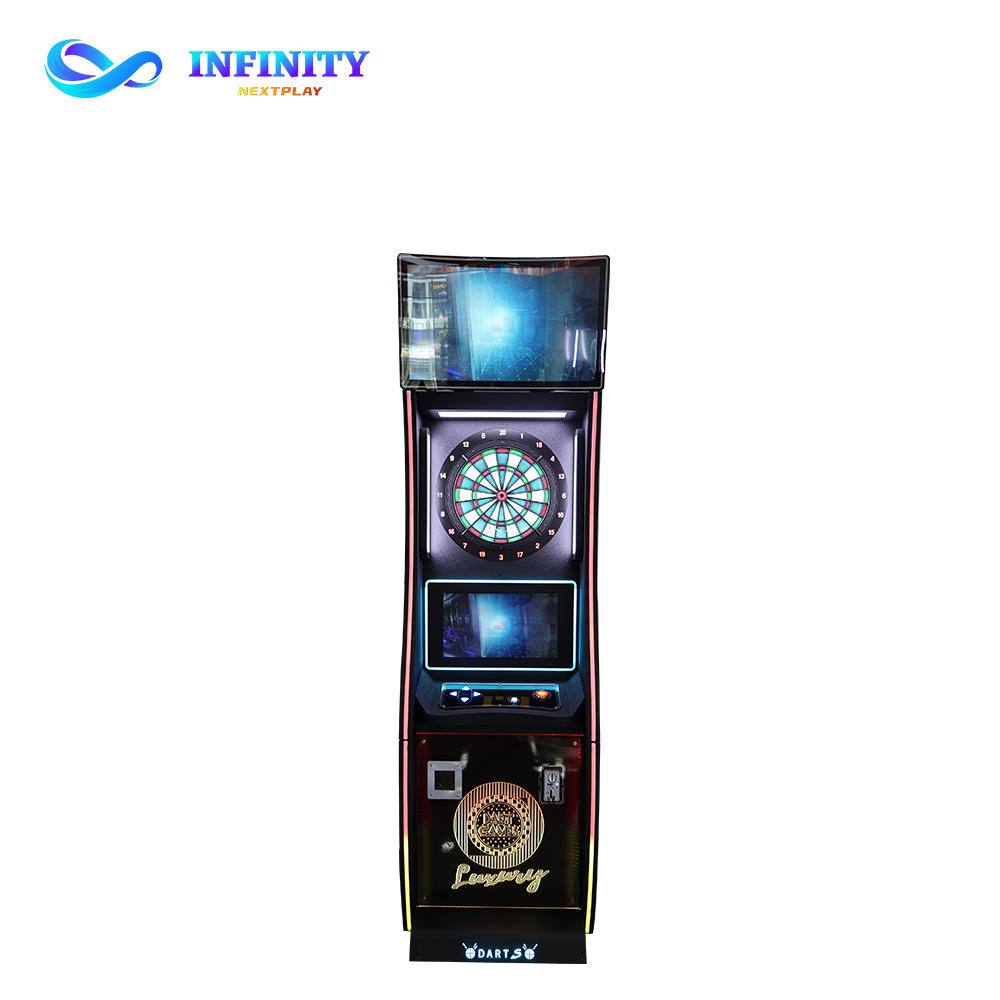
While the Standard 10-Pin Bowling lanes and Shooting Simulator Q4 served as our venue's primary anchor attractions, we discovered a major commercial opportunity to further boost our beverage revenue and capture "dwell time gap spend." In any busy entertainment center, there are natural operational gaps: groups waiting for their scheduled bowling lane, players taking a breather between intense shooting simulation rounds, or casual couples looking for a low-cost, high-fun activity while enjoying their drinks. To monetize these gaps without sacrificing precious floor space, we introduced the Online Electronic Dart Machine X7. Engineered specifically as a premium component for full-venue solutions, the X7 is a low-footprint, high-frequency revenue engine that bridges the gap between traditional social play and modern digital gaming.
The Dart X7 is equipped with dual high-definition screens, an automatic scoring sensor array, and integrated global online matchmaking capabilities. Players can log in with custom profiles, track their personal scoring history, and compete in real-time against dart enthusiasts in Tokyo, London, or New York. This global network turns a simple, casual pub game into a highly engaging, competitive hobby. We installed three Dart X7 units directly adjacent to our central craft beer bar, occupying less than 45 square feet of floor space in total. Because electronic darts is a relaxed, turn-based game, players naturally hold a beer in one hand while throwing a dart with the other. This layout resulted in a massive surge in our central bar's beverage sales; during peak hours, our three Dart X7 boards generated a continuous stream of high-margin drink orders, with an average ticket value of $18 per hour in beverage spending per player group. For any venue owner looking to maximize high-margin secondary revenue, the Dart X7 is the ultimate low-cost, high-density addition to your entertainment ecosystem.
Get a free 3D layout for your space. No commitment required.