How do you turn a dead shopping mall corridor into a $22K/month goldmine? Let me tell you how I did it in Paris. For years, retail operators in Europe have watched foot traffic decline. With the meteoric rise of e-commerce, shoppers no longer visit physical malls just to purchase goods. They seek experiences. In late 2024, as the manager of a premium 2,000 square foot commercial space inside one of Paris's most famous shopping hubs—resembling the bustling Westfield Les Quatre Temps—I was facing a crisis. Our anchor stores were reporting a 15% drop in dwell time, and our corridor was gradually losing its charm. Rent was high, and the traditional retail stores we tried to lease the space to were hesitant. That is when I realized we needed a paradigm shift. We did not need another clothing boutique or a standard cosmetic shop. We needed a high-margin, space-efficient, and visually captivating experiential entertainment hub that could draw people in from fifty yards away.
The solution lay in the rapid rise of virtual reality entertainment. But we could not just install basic home VR headsets; we needed commercial-grade attractions that offered experiences users could not replicate in their living rooms. We designed a micro-amusement VR Zone featuring three key anchors: the Free Roaming VR Arena 2.0, the Silla Giratoria VR 360 (360-degree rotating motion chair), and the ultra-sleek VR Starship U2. By combining multiplayer free-roaming action with high-throughput motion rides and family-friendly cinematic experiences, we built a highly interactive VR gaming zone. In this detailed article, I will share the entire operational roadmap, the financial breakdown, the technology behind our success, and how this setup generates an average of $22,000 per month in high-margin revenue.
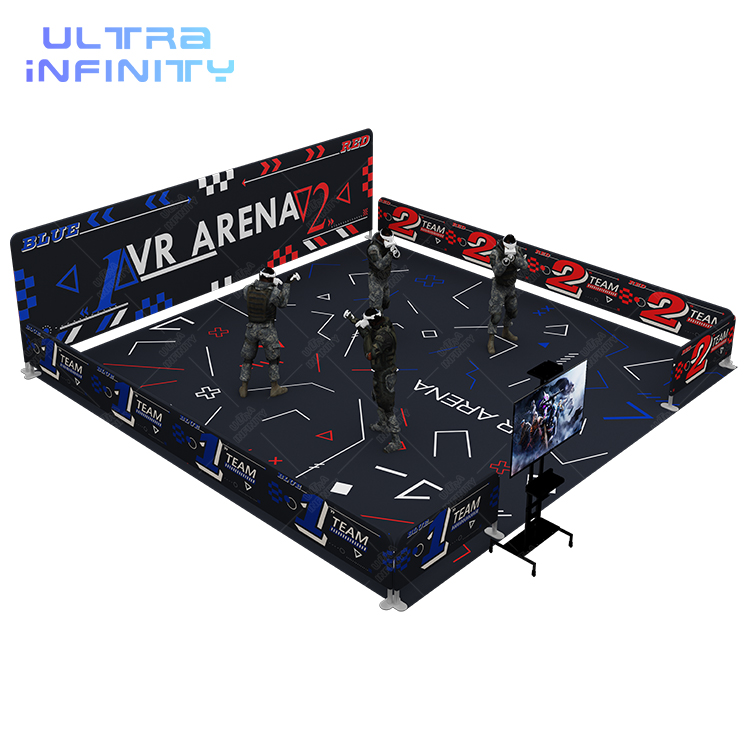
The anchor of our 2,000 square foot layout is the Free Roaming VR Arena 2.0, a multiplayer VR walking and shooting simulator that completely redefines how groups interact in virtual space. In traditional VR setups, players are tethered to high-end PCs by heavy cables, or confined to small 3x3 meter squares with overhead wiring. These physical limitations shatter the illusion of presence and restrict movement, often leading to motion sickness or collision anxiety. The VR Arena 2.0 solves this entire problem by utilizing an advanced wireless tracking network. Players wear lightweight, high-performance VR headsets equipped with integrated inside-out tracking sensors that communicate seamlessly with localized wireless base stations. This allows up to four players to walk, dodge, crouch, and coordinate tactics inside a shared physical space of approximately 1,000 square feet without any backpack PCs, heavy cords, or physical boundaries.
What makes the VR Arena 2.0 a commercial powerhouse is its commitment to absolute accessibility, summarized in its three core design philosophies: 1-no weight limit, 2-no site limit, 3-no age limit. Because there are no suspended mechanical arms, specialized moving treadmills, or complex harness structures, players of all body types can comfortably enter the arena. The "no site limit" philosophy means that the physical tracking boundaries are completely adjustable; while we utilize a 1,000 square foot area, the system can scale down to 600 square feet or up to 1,500 square feet depending on the venue's architecture. This is a massive advantage for mall operators who often have to work with irregularly shaped retail lots. Lastly, the "no age limit" design is achieved by offering intuitive game software with varying levels of complexity and weight-balanced headsets that do not strain younger players' necks. From 8-year-old kids celebrating birthdays to 45-year-old corporate executives engaged in competitive team-building sessions, the VR Arena 2.0 satisfies every demographic.
Let's dive into the specific operational metrics and customer story of our Paris installation. When we launched the VR Arena 2.0, we allocated exactly 1,000 square feet to the main arena floor, wrapping it in high-durability safety fencing with tempered viewing glass. This viewing glass is crucial; it allows shopping mall visitors to watch the players physically moving, shouting, and laughing, transforming the gameplay itself into a live billboard. We scheduled sessions in 10-minute blocks—consisting of a 1-minute safety and gear-up briefing, an 8-minute high-intensity gameplay session, and a 1-minute post-game score review and photo-op. This rapid cycle guarantees high operational throughput. We priced the experience at $15 per player per session. On a typical Saturday, we run the arena at 85% capacity for 10 hours straight, handling 6 sessions per hour. With an average of 3.2 players per session, a single day of operation on the VR Arena 2.0 alone brings in over $2,448 in raw revenue. On weekdays, we shift our focus to corporate team-building events, charging a flat rate of $180 per hour for private bookings, which keeps our morning and afternoon slots consistently occupied.
The high-margin nature of the VR Arena 2.0 stems from its incredible labor and maintenance efficiency. Traditional multiplayer entertainment, such as laser tag or escape rooms, requires massive staff ratios to manage players, reset physical props, and monitor safety. With the VR Arena 2.0, the entire zone is managed by a single operator. The system features a centralized control panel that launches games, monitors battery status, and calibrates the tracking network with a single touch. The self-loading, intuitive interface means that once players put on their headsets, they are guided by an automated in-game tutorial, freeing the staff member to focus on safety observation and sales. Maintenance is equally straightforward: the headsets are fitted with washable silicone face cushions that are sanitized with rapid UV-C chambers and medical-grade wipes between plays. There are no complex mechanical parts to wear down, resulting in an average monthly maintenance expense of less than $150, mostly spent on sanitary supplies and occasional charging dock accessory replacements.
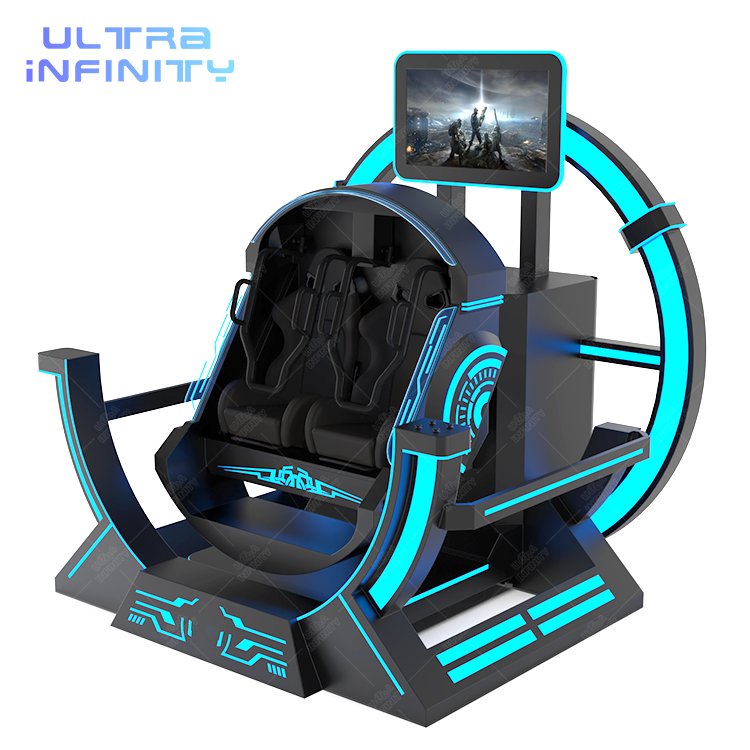
While the VR Arena 2.0 provides deep, interactive group engagement, we needed an attraction that would act as an instant physical magnet for passersby—something that could capitalize on "Scream Economics". Scream Economics is the theory that high-intensity, visually exciting amusement rides in retail areas advertise themselves through the natural reactions of the riders. When shoppers hear authentic laughter, gasps, and screams of excitement echoing down a quiet shopping mall corridor, they immediately slow down, search for the source of the sound, and gather around the attraction. To capture this powerful psychological phenomenon, we installed the Silla Giratoria VR 360 (the Ultra Infinity 360 VR Motion Chair / VR Roller Coaster Simulator).
The Silla Giratoria VR 360 is a masterclass in dynamic virtual reality hardware. It features a two-seat configuration mounted on an industrial-grade electric motion platform capable of 360-degree vertical rotation, deep forward tilts, and rapid side-to-side swings. Equipped with safety harnesses, wind simulation blowers, audio soundscapes, and integrated shooting buttons, it delivers a sensory experience that is incredibly intense yet perfectly safe. Unlike traditional hydraulic or pneumatic simulators that are slow, noisy, and prone to oil leaks, the VR 360 utilizes precise electric cylinders that respond in milliseconds to the visual cues in the VR headset. When the player experiences a vertical drop on a virtual roller coaster, the chair literally tips them upside down in perfect synchronization with the physics engine. This eliminates the sensory mismatch that causes nausea, leaving players with pure, unadulterated adrenaline.
From a spatial and economic perspective, the Silla Giratoria VR 360 is one of the most efficient revenue generators in the amusement industry. It occupies a remarkably small footprint of only 65 square feet (including the required safety clearance radius). We placed the VR 360 right at the edge of our storefront, facing the main mall corridor, separated only by a low, modern safety railing. The results were instantaneous. A group of teenagers would sit in the chair, select a crazy virtual roller coaster or a space fighter simulation, and begin rotating and screaming as they did flips. Within two minutes, a crowd of 30 to 40 onlookers would gather in the corridor, filming the riders on their phones and laughing along. This crowd became our main marketing channel. Many of these spectators would immediately line up to buy tickets, while others would wander deeper into our space to inspect the VR Arena or purchase refreshments.
The ticket pricing for the Silla Giratoria VR 360 is set at $10 per player for a 4-minute ride. Because the ride duration is short and loading is incredibly fast, we can easily process 10 rounds per hour. With both seats filled, a single VR 360 unit can generate up to $200 per hour. On busy weekends, the machine runs at over 75% capacity for 12 hours, contributing an average of $1,800 per day in high-throughput revenue. When combined with the VR Arena 2.0, the VR 360 acts as a highly efficient funnel, capturing low-commitment impulse buyers who might not have planned a full multiplayer session but are happy to spend $10 on a quick, thrilling ride. It creates a continuous cycle of foot traffic, ensuring there is never a dull moment in our venue.
The real magic of our $22,000 monthly revenue does not come from running these machines in isolation, but from the powerful synergy created by combining them into a unified, multi-tiered VR Zone. In the entertainment industry, relying on a single attraction is highly risky; if a customer plays your main game once and does not return, your customer acquisition cost remains high and your lifetime value flatlines. By combining the Free Roaming VR Arena 2.0 (which drives high-retention group play and pre-booked corporate events) with the Silla Giratoria VR 360 (which drives instant, high-volume impulse foot traffic), we created an ecosystem that caters to every stage of the consumer journey.
We call this the "Spectator-to-Player" funnel. A family walking through the mall is attracted by the screams and spinning motions of the Silla Giratoria VR 360. They stop to watch. The kids immediately ask to try it. While the kids are riding, the parents stand in our reception area and watch other players running around the VR Arena 2.0 through the viewing window, completely immersed in a cooperative sci-fi battle. When the kids finish their roller coaster ride, the parents see our Combo Ticket options—which offer a 15% discount when bundling the VR 360 and the VR Arena together—and decide to purchase a full family package. This increases our average transaction size from a simple $10 impulse ride to a $50 family experience. Furthermore, because they played a deep, cooperative game in the VR Arena, they develop a connection to the venue, prompting them to book their next birthday party or weekend outing with us.
To help prospective venue owners and mall operators understand the financial impact of this combination, we have compiled a detailed performance comparison. The following table highlights the capital investment, monthly revenue potential, operational costs, and estimated payback periods across four different operational configurations. All data is based on real-world retail rates and average performance figures from our first year of operation in Paris.
| Configuration Option | Space Required | CapEx (Equip + Setup) | Monthly Revenue | Monthly OpEx (Est.) | Net Monthly Profit | Payback Period |
|---|---|---|---|---|---|---|
| Scenario A: No VR (Standard Arcade) | 1,500 sq ft | $45,000 | $6,500 | $4,800 | $1,700 | 26.4 months |
| Scenario B: VR Arena Only | 1,000 sq ft | $35,000 | $11,500 | $6,200 | $5,300 | 6.6 months |
| Scenario C: VR 360 Only | 300 sq ft | $18,000 | $7,200 | $3,400 | $3,800 | 4.7 months |
| Scenario D: Combo VR Zone (Our Space) | 2,000 sq ft | $78,000 | $22,000 | $12,200 | $9,800 | 8.0 months |
Note: Monthly OpEx includes rent (allocated proportionally for the Paris mall rate), staff salaries, power utilities, equipment amortization, marketing spend, and minor maintenance reserves. CapEx includes shipping, import customs, physical safety enclosures, lighting, flooring, and marketing launch costs. As demonstrated, the Combo VR Zone (Scenario D) yields the highest absolute profit and massive cross-selling synergies, resulting in a healthy payback timeline of just 8 months.
Starting a commercial entertainment venue can feel overwhelming, especially when dealing with advanced hardware and high-traffic shopping mall regulations. Drawing from our hands-on experience in Paris, we have documented a comprehensive 7-step roadmap to guide you from raw lease space to a highly profitable grand opening.
The foundation of your business starts with selecting the right space. You need a minimum of 1,500 to 2,500 square feet with a ceiling height of at least 9.5 feet to accommodate the 360-degree vertical rotation of the Silla Giratoria VR 360 and the wireless ceiling trackers of the VR Arena. The layout must prioritize sightlines. Place your highest-intensity motion rides (like the VR 360) directly facing the mall corridor behind protective glass. This attracts onlookers and utilizes "Scream Economics" to build natural foot traffic. Place the VR Arena 2.0 deeper in the space to allow players privacy while they move, but ensure a large glass viewing window faces the reception counter to entice waiting customers.
Commercial VR motion systems and high-end server PCs require stable, high-capacity electricity. The Silla Giratoria VR 360 operates on standard 220V power and has a peak power demand of approximately 4.5 kW during intense dynamic motion. The VR Starship U2 and the VR Arena tracking servers add another 5 kW of combined load. You must install a dedicated 15 kW power distribution box for a 2,000 square foot layout. Crucially, we recommend installing a localized Online Double-Conversion UPS (Uninterruptible Power Supply) system for the core server and tracking hubs. This ensures that in the event of a brief voltage fluctuation or power glitch inside the mall, the headsets do not disconnect, which could ruin the player experience or cause sudden safety disconnects.
Safety is paramount in interactive entertainment. For the VR Arena 2.0, where players walk blindfolded with VR headsets, the active play zone must be physically separated from spectators. We installed a sleek, 1.2-meter-high tempered glass enclosure with soft padded handrails. Underneath the players, we laid high-density, anti-fatigue interlocking rubber floor tiles. These tiles protect players' joints during sudden movements and prevent slipping. For the VR 360, which physically rotates players, we created a clear, painted yellow safety boundary line on the floor and erected a physical metal barrier with a locked safety gate. The operator must stand outside this barrier at the control panel, ensuring no spectators wander into the rotation radius while the machine is active.
Because our systems are highly automated, a 2,000 square foot space only requires 2 staff members during peak periods. However, these staff members must be trained extensively. Your operations manual should cover three main areas: technical execution, guest onboarding, and safety protocols. Staff must know how to quickly boot up the tracking servers, calibrate headsets in under 30 seconds, and wipe down facial interfaces with disinfectant after every use. In terms of guest onboarding, the host must deliver a friendly, clear, 1-minute safety briefing: 'Keep your feet on the floor in the arena, do not run, and if you feel dizzy, raise your hand.' Staff must also practice emergency shutdown sequences, knowing exactly how to hit the physical emergency stop buttons on the VR 360 and the VR Starship in case a rider panics.
To maximize revenue, you must move away from flat-rate pricing. We implemented a highly successful dynamic pricing structure. Weekdays feature promotional pricing (e.g., $12 for the VR Arena, $8 for the VR 360) to attract students and remote workers during quiet morning hours. On weekends, pricing returns to the standard rate ($15 and $10). Crucially, we designed high-value Combo Passes. Our bestseller is the 'Ultimate VR Ticket' for $30, which includes one session in the VR Arena, one ride on the Silla Giratoria VR 360, and one session on the VR Starship U2. This bundle represents a 15% discount for the customer, but it increases our average transaction value by 66%, driving massive raw dollar volume into our cash registers.
One of the biggest pitfalls of arcade venues is content stagnation. If a customer plays your games and realizes nothing has changed three months later, they will not return. To maintain a high repeat-customer rate, we established a strict game rotation calendar in partnership with NextPlay. The VR Arena 2.0 comes pre-loaded with an expansive library of games ranging from player-vs-environment zombie survival shooters to player-vs-player sci-fi arenas and family-friendly cooperative magic quests. Every quarter, we introduce one major new game title and run localized tournaments with leaderboard displays at our entrance. This creates a competitive community spirit, driving hardcore players to return weekly to beat high scores and claim promotional prizes.
Before you open your doors, you must build local awareness. We executed a dual-track marketing strategy. For retail consumers, we optimized our Google Maps listing for search terms like 'VR experiences in Paris' or 'family things to do near Westfield'. We posted high-quality vertical videos of players screaming on the Silla Giratoria VR 360 to Instagram and TikTok, targeting users within a 5 km radius of the mall. For the B2B corporate market, we physically visited office buildings, offering HR directors free 15-minute trial sessions. This personal outreach was incredibly effective; within two months of opening, we had secured recurring monthly team-building bookings from large consulting firms and banks, providing a highly stable, high-value revenue base during quiet weekday afternoons.
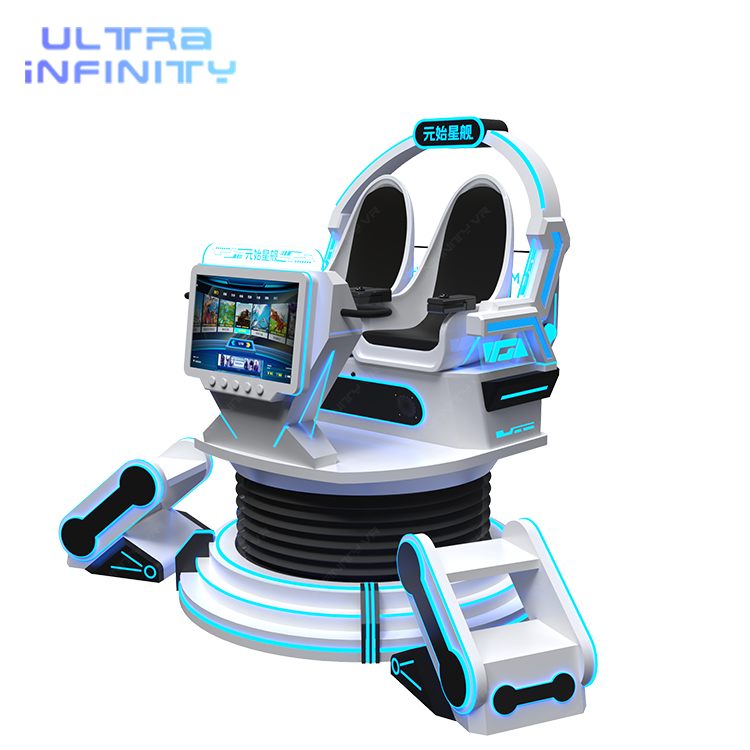
While the VR Arena 2.0 captures the active gamer and corporate segment, and the Silla Giratoria VR 360 captures the high-intensity adrenaline junkies, we needed a third pillar to perfectly balance our 2,000 square foot space. We realized that family units, younger children (ages 6 to 10), and couples looking for a romantic, immersive date night often found the intense vertical rotation of the VR 360 too extreme, yet wanted something more cinematic than a walking shooter. To capture this highly profitable, low-barrier segment, we introduced the VR Starship U2 (9D VR Cinema 2 Players Gaming Chair).
The VR Starship U2 is a state-of-the-art virtual reality simulation theater. Inspired by sci-fi aesthetics, its futuristic enclosed shell features glowing LED accent lights, dual high-back seats with integrated active seat vibrations, rapid back-push mechanisms, leg sweepers, and intense wind simulators. Each seat is equipped with specialized dual shooting buttons, allowing players to actively participate in interactive movies. With a massive library of over 60 high-definition games and 9D movies—ranging from deep-sea exploration and prehistoric dinosaur safaris to intense spaceship dogfights—the VR Starship U2 offers an incredible variety of low-intensity, deeply immersive experiences that appeal heavily to families with young children and casual mall-goers.
The inclusion of the VR Starship U2 completed our venue's product ecosystem, raising our monthly average revenue by an additional $4,500. Priced at $8 per player for a 5-minute session, it provides an affordable entry point for parents looking to entertain their children while shopping. The machine occupies a small footprint of just 70 square feet, allowing us to tuck it into a corner of our reception area. Because the gameplay is relaxed, riders do not scream in terror, but rather laugh and look around in awe, creating a comforting, family-friendly atmosphere that balances the high-octane screams of the VR 360. This balance is what makes our space a truly comprehensive, multi-generational entertainment destination.
A successful installation of this scale (approx. 2,000 square feet) requires a stable and dedicated power supply to ensure safety and prevent hardware damage. The total peak power draw is approximately 14 kW. The Silla Giratoria VR 360 has a peak requirement of 4.5 kW under full vertical acceleration. The VR Starship U2 requires 3.5 kW, and the VR Arena 2.0 tracking server, routers, and charging docks add an additional 2.5 kW. The remaining power is allocated for general venue lighting, reception computers, and localized air conditioning. We strongly recommend a 3-phase 380V or single-phase 220V power supply with a dedicated 63A circuit breaker. Crucially, we suggest connecting the VR Arena wireless controllers, network switches, and primary tracking servers to an online UPS (Uninterruptible Power Supply) to prevent sudden headset disconnects during commercial voltage spikes inside shopping malls.
One of the most attractive features of the NextPlay VR equipment is its incredible operational efficiency and high degree of automation. During standard weekdays, the entire 2,000 square foot venue can be run comfortably by a single well-trained operator. During busy weekend peaks, we utilize exactly 2 staff members. Staff member 1 handles the reception area, processes payments, sells Combo Tickets, and manages the Silla Giratoria VR 360 and VR Starship U2, both of which feature simple, automated touch-screen startup consoles that require less than 15 seconds to initiate. Staff member 2 is dedicated entirely to the VR Arena 2.0 zone, assisting players with their headsets, launching multiplayer matches, and monitoring safety through the glass enclosure. This incredibly low labor requirement ensures that your operational overhead remains low, driving high net profit margins of over 40%.
Hygiene is absolutely critical to maintaining a premium brand reputation in shopping centers. We employ a multi-layered sanitation protocol. First, all headsets are fitted with medical-grade, non-porous silicone face cushions rather than standard foam pads, which can absorb sweat. These silicone pads can be completely wiped clean in seconds using alcohol-free disinfectant wipes. Second, we provide every customer with a disposable, lightweight fabric VR eye mask before they wear the headset. Third, we utilize localized UV-C sanitizing chambers at our operator desks. Between games, headsets are placed inside these enclosed boxes for a rapid 45-second cycle that eliminates 99.9% of bacteria and viruses. These visible safety steps are highly appreciated by parents and corporate clients, serving as an active selling point that builds consumer trust.
All NextPlay and Infinity products are engineered for commercial, heavy-use amusement environments. The Silla Giratoria VR 360 and VR Starship U2 utilize robust electric cylinders and industrial-grade steel chassis with an operational life expectancy of 8 to 10 years under daily peak usage. The VR Arena 2.0 headsets and tracking base stations have an average life of 3 to 4 years before battery degradation or hardware advancements warrant a standard headset swap. In terms of software, NextPlay provides a comprehensive cloud update service. New games, security patches, and localized language updates are pushed automatically to the consoles on a quarterly basis. This guarantees that your venue always has fresh, engaging content to offer recurring players, preventing customer boredom and sustaining long-term revenue.
One of the key advantages of our multi-product VR Zone is its extreme layout flexibility. The "no site limit" philosophy of the Free Roaming VR Arena 2.0 means that its active tracking boundaries do not require a perfect square. The tracking system can be calibrated to fit rectangular spaces, L-shaped zones, or rooms with minor structural columns. Similarly, the Silla Giratoria VR 360 and the VR Starship U2 are entirely self-contained units that only require standard flat flooring and access to a power source. They can be placed in narrow retail alcoves, corridors, or corners. When you partner with NextPlay, their design team provides a free 3D CAD layout customized to your exact retail blueprints, ensuring that every square foot of your space is optimized for maximum revenue potential and fluid customer traffic flow.
Get a free 3D layout for your space. No commitment required.