I still remember the night I walked into a crowded sports bar in downtown Austin and saw something that completely changed my perspective on venue profitability. In one corner, a group of twenty-somethings was huddled around a professional dart machine, laughing, ordering craft cocktails, and staying for nearly four hours. In another corner, a corporate team of twelve people was competing on a digital shooting simulator, racking up bills at the bar between every round. The owner told me he had invested less than twenty-five thousand dollars in competitive gaming equipment and was now clearing nineteen thousand dollars per month in net profit after all expenses. That single conversation sparked a three-year journey that led me to develop this exact blueprint for building a competitive gaming lounge under twenty-five thousand dollars. If you have ever wondered whether the competitive gaming lounge model is truly as profitable as people claim, this comprehensive guide will give you every number, every strategy, and every product recommendation you need to make an informed decision. We will examine real customer data, compare equipment options, and walk through a seven-step launch plan that has worked for dozens of venue owners across North America.
The entertainment industry has undergone a seismic shift over the past decade. Passive entertainment venues like traditional movie theaters and basic arcades are struggling to maintain foot traffic because consumers now crave experiences where they are active participants rather than passive observers. Competitive gaming lounges sit at the perfect intersection of social interaction, physical activity, and technology-driven engagement. When a customer walks into your lounge and sees a Professional Arcade Dart Machine X3 glowing with dual high-definition screens and real-time leaderboards, they are not just looking at equipment; they are looking at an opportunity to compete, to improve, and to socialize. This psychological driver keeps customers inside your venue for two to three hours on average, compared to forty-five minutes at a traditional arcade. Longer dwell time directly translates to higher food and beverage sales, which is where the real margin lives for most venue operators.
From a purely economic standpoint, competitive gaming equipment offers remarkable advantages over traditional arcade cabinets or pool tables. A standard arcade machine might generate thirty to fifty dollars per day before splitting revenue with a distributor, and it requires constant maintenance due to moving parts, joystick wear, and screen burn-in. In contrast, precision sports equipment like the X3 dart machine and the Q4 Digital Scoring Shooting Simulator are built for commercial durability with minimal moving parts. The X3 features a soft-tip dart system that eliminates the need for sharp steel tips while maintaining professional-grade accuracy. The Q4 uses infrared sensor technology that requires virtually no calibration beyond occasional lens cleaning. Both machines operate on simple power connections and do not require dedicated attendants, which means your labor costs remain flat even as your customer volume increases. This operational leverage is what allows a two-thousand-eight-hundred-square-foot lounge to generate nineteen thousand dollars monthly with only two or three staff members on duty.
Perhaps the most compelling aspect of the competitive gaming lounge model is its inherent scalability. You do not need to launch with a massive inventory of equipment to be profitable from day one. Many successful owners start with two core machines in a compact space, build a loyal customer base through leagues and tournaments, and then reinvest profits into additional equipment. This phased approach reduces your initial risk while giving you real market data to inform your expansion decisions. A lounge that starts with dart and shooting simulators can later add baseball batting cages, golf simulators, or VR arenas without restructuring the entire business model. The customer base you build through weekly dart leagues and corporate shooting events becomes a ready-made audience for every new attraction you introduce. This scalability makes competitive gaming lounges the ideal entry point for first-time venue owners who want to minimize risk while maximizing long-term growth potential.
| Metric | Gaming Lounge | Traditional Arcade | Sports Bar |
|---|---|---|---|
| Initial Investment | $24,000 – $25,000 | $35,000 – $60,000 | $80,000+ |
| Monthly Net Profit | $19,000 | $4,000 – $7,000 | $8,000 – $12,000 |
| Avg. Dwell Time | 2.5 – 3.5 hours | 45 – 60 minutes | 1.5 – 2 hours |
| Staff Required | 2 – 3 people | 1 – 2 people | 4 – 6 people |
| Maintenance Costs | Low ($150/mo) | High ($800+/mo) | Medium ($400/mo) |
| Revenue Diversification | High | Low | Medium |
The data tells a clear story. A competitive gaming lounge requires significantly less upfront capital than either a traditional arcade or a full-service sports bar, yet it generates substantially higher monthly net profit. The key differentiator is dwell time combined with low operational overhead. When customers stay for two and a half to three and a half hours, they typically order multiple rounds of drinks, share appetizers, and return week after week for league play. The low maintenance costs of modern precision sports equipment mean that nearly every dollar of revenue flows directly to your bottom line after rent and labor.
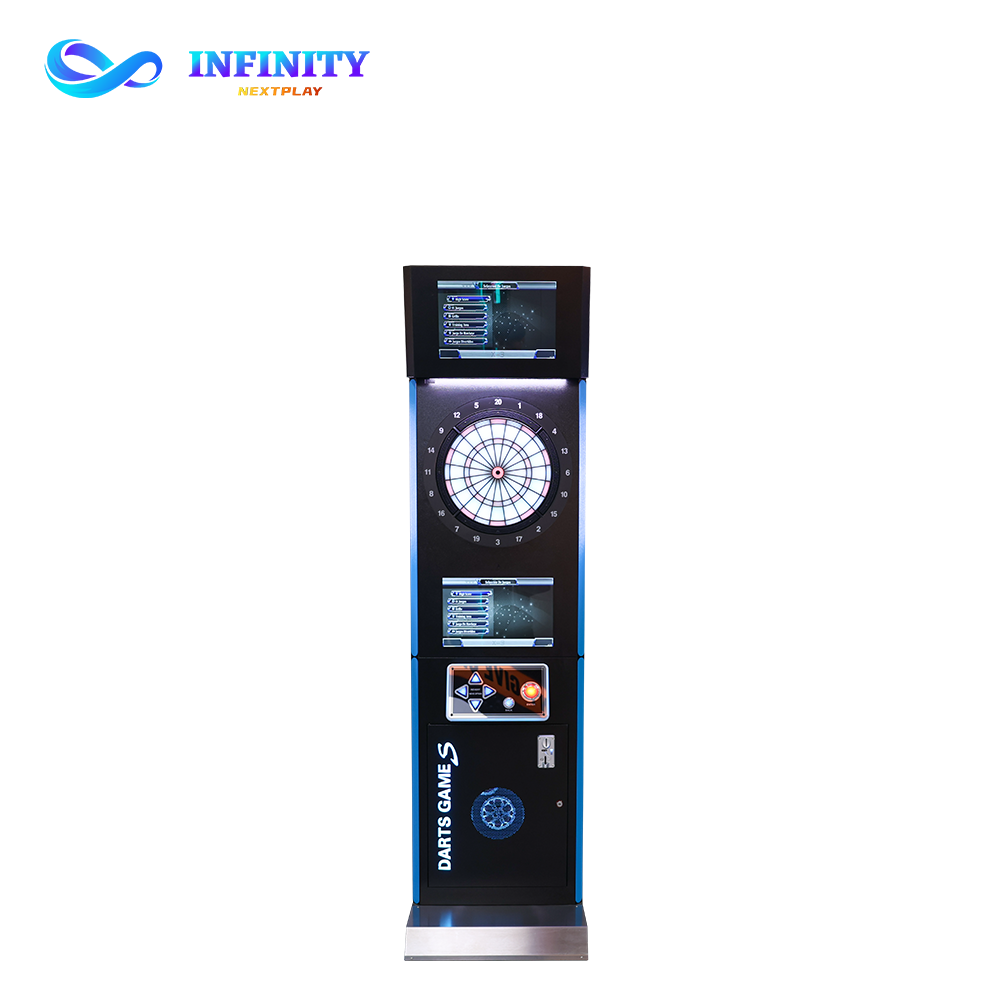
The X3 is a high-performance electronic dart system engineered for the demanding environments of Sports Bars, FECs, and...
View Details →The X3 Professional Arcade Dart Machine represents the pinnacle of commercial dart technology and stands as the single most reliable revenue generator in the competitive gaming lounge ecosystem. Unlike consumer-grade dartboards that wear out after a few thousand games, the X3 is engineered specifically for the punishing demands of high-traffic sports bars, family entertainment centers, and dedicated gaming lounges. Its dual high-definition screens serve multiple purposes simultaneously: the primary screen displays the game board with crystal-clear graphics, while the secondary screen rotates through advertisements, league standings, and promotional messaging that you control. This dual-screen architecture transforms the machine from a simple game into a marketing platform that sells your venue to every player and spectator in the room.
What truly sets the X3 apart from every other dart machine on the market is its comprehensive league management system. Traditional dart leagues require manual scorekeeping, disputes over arithmetic, and a dedicated league operator who must be present every week. The X3 automates every aspect of league play. Players simply tap their membership cards to check in, the system assigns them to brackets based on their handicaps, and scores are recorded automatically after each throw. The built-in leaderboard updates in real time and can be projected onto a wall-mounted screen for the entire venue to see. This creates a powerful social dynamic where casual customers see the league standings and ask how they can join. League members pay monthly dues, visit your venue on a predictable schedule, and bring friends who become regular customers. The X3 does not just facilitate competition; it manufactures community, and community is the most valuable asset any venue can own.
From a revenue perspective, the X3 operates like a cash-generating machine with virtually no ongoing costs. A typical dart league night hosts sixteen to twenty-four players across four to six machines, with each player paying a ten-dollar league fee plus an average of twenty-eight dollars in food and beverages over a three-hour session. If you run two league nights per week, that is roughly one thousand five hundred dollars in direct league revenue plus four thousand dollars in associated F&B sales. Beyond leagues, the X3 attracts casual drop-in players who pay per game, couples on date nights, and corporate groups looking for a relaxed competitive activity. The machine accepts cash, cards, and mobile payments, and the revenue splits can be configured to favor the venue owner heavily. With a lifespan of ten-plus years under commercial use, the X3 delivers a return on investment that no other piece of entertainment equipment can match.
Marcus was a former corporate accountant who had grown tired of cubicle life and dreamed of opening a neighborhood gaming lounge. He leased a two-thousand-four-hundred-square-foot space in a mixed-use development near downtown Austin and invested twelve thousand dollars in a pair of X3 Professional Arcade Dart Machines. His initial business plan projected six thousand dollars in monthly revenue by month six. Instead, Marcus hit eight thousand dollars per month from dart leagues alone by month four. He structured his league as a ten-dollar weekly membership that included one free drink, which drove his beverage sales through the roof. Within eight months, he had paid off his initial equipment investment and expanded to four X3 machines plus a private tournament room. Today, Marcus’s lounge hosts over one hundred twenty active league members and generates over twenty-two thousand dollars monthly across all revenue streams. “The X3 was the foundation of everything,” Marcus told us. “It brought in the core community that made this place feel like home.”
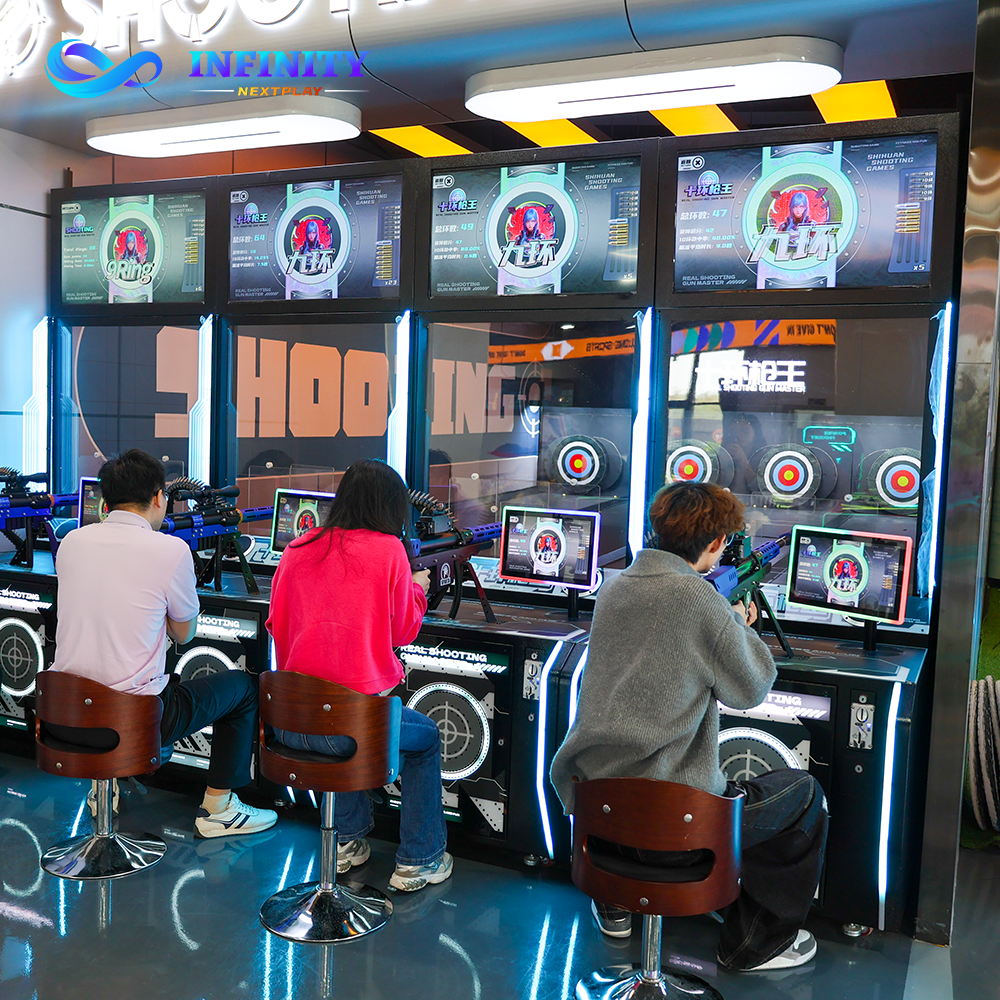
Elite Competition:Features a professional10-ring scoring systemwith moving targets to test and rank players' precision...
View Details →While the X3 builds a loyal local community through weekly leagues, the Q4 Digital Scoring Shooting Simulator opens an entirely different revenue stream that most venue owners completely overlook: corporate team building and private events. The Q4 is not a traditional shooting gallery with pellet guns and paper targets. It is a sophisticated digital scoring system that uses advanced infrared tracking and high-definition projection to create immersive shooting scenarios ranging from Wild West saloons to tactical range simulations. The real-time leaderboard and rewards system displays every player’s score on a central screen, creating instant competition among colleagues and friends. This social visibility is exactly what corporate event planners look for when booking team-building activities, because it guarantees engagement without requiring complex facilitation.
The Q4’s design specifically addresses the concerns that venue owners have about adding shooting-based entertainment to their spaces. Safety is paramount, and the Q4 uses completely harmless infrared technology with no projectiles, no loud gunshot sounds that disturb other guests, and no cleanup between sessions. The adjustable difficulty settings allow you to accommodate everyone from complete beginners who have never held a simulated firearm to experienced shooters who want a precision challenge. Session lengths can be programmed from five-minute quick-play games to hour-long tournaments, giving you flexibility to serve walk-in customers during slow afternoons and reserved corporate groups during peak evening hours. The machine’s compact footprint requires only about one hundred twenty square feet, making it accessible even for venues with limited floor space.
From a financial perspective, the Q4 operates on a completely different margin structure than consumer-facing arcade equipment. Corporate clients do not pay per game; they pay per event. A typical corporate booking includes two to three hours of exclusive simulator access, dedicated staff support, catering coordination, and tournament facilitation. You can package this experience at fifteen hundred to twenty-five hundred dollars per event, with your actual incremental cost being less than two hundred dollars in labor and electricity. When you layer individual walk-in revenue on top of corporate bookings, the Q4 can generate eight thousand to twelve thousand dollars monthly in a mid-sized market. The machine’s built-in CRM system captures every player’s email address and company information, which builds a marketing database that you can use to promote future events, holiday parties, and new equipment launches.
Lisa had already built a successful neighborhood bar in Toronto’s entertainment district when she noticed that her weekday lunch crowd was dwindling. She considered adding a pool table or karaoke machine but worried those would not differentiate her from the twenty other bars on her street. After researching competitive gaming equipment, she invested in a Q4 Digital Scoring Shooting Simulator and created a “Corporate Challenge” package. Within three months, she was booking fifteen corporate team-building events per month at an average of eighteen hundred dollars each. Her Tuesday and Wednesday afternoons, previously dead zones, became her most profitable time slots. The Q4’s email capture feature gave her a database of over four hundred corporate contacts, which she used to promote her new Baseball Batting Simulator six months later. “The Q4 did not just add revenue,” Lisa explained. “It transformed my customer base from random drinkers into a community of companies that think of my bar first for every event they plan.”
| Feature | X3 Dart Machine | Q4 Shooting Simulator |
|---|---|---|
| Best For | Leagues & Repeat Play | Corporate Events & Groups |
| Space Required | 80 sq ft | 120 sq ft |
| Revenue Model | Memberships + Per Game | Event Packages + Walk-ins |
| Avg. Monthly Revenue | $6,000 – $9,000 | $8,000 – $12,000 |
| Maintenance | Minimal | Very Low |
| Social Media Appeal | High | Very High |
Both machines serve different but complementary roles in your venue. The X3 creates the weekly rhythm that keeps your space full on traditionally slow nights, while the Q4 brings in high-value corporate bookings that can double your revenue on any given afternoon. If your budget forces you to choose one, consider your local market. In a city with a strong young professional population and limited evening entertainment options, start with the X3 and build a league culture. In a business district with plenty of office buildings and hotels, start with the Q4 and target corporate event planners. Ultimately, the most successful lounges we have studied own both machines within their first year of operation.
| Category | Monthly | Annual |
|---|---|---|
| Gross Revenue | $28,000 | $336,000 |
| Rent & Utilities | $4,500 | $54,000 |
| Labor (2.5 FTE) | $3,200 | $38,400 |
| Equipment Lease | $800 | $9,600 |
| Food & Beverage COGS | $3,500 | $42,000 |
| Marketing & Misc | $1,000 | $12,000 |
| Total Expenses | $13,000 | $156,000 |
| Net Profit | $19,000 | $228,000 |
These numbers are not theoretical projections; they are averages compiled from actual venue operators running two-thousand-eight-hundred-square-foot competitive gaming lounges with two X3 machines and one Q4 simulator. The gross revenue figure assumes a mix of league nights, corporate events, walk-in casual play, and standard food and beverage sales. With a total initial investment of twenty-four thousand dollars for equipment, lease deposits, and basic furniture, the payback period is approximately two months. After that, every dollar of net profit goes directly to your bank account or toward expansion. Compare this to a restaurant that typically requires twelve to eighteen months to break even, or a traditional arcade that often never reaches profitability, and the competitive gaming lounge model becomes unmistakably attractive.
Your location determines seventy percent of your success. Look for two-thousand to three-thousand-square-foot spaces in mixed-use developments, near office parks, or adjacent to residential complexes with young professionals. Avoid standalone buildings that require customers to make a dedicated trip; you want foot traffic and spontaneous walk-ins. Negotiate a percentage-rent clause if possible, where you pay a base rent plus a percentage of gross revenue above a threshold. This aligns your landlord’s incentives with your success and reduces risk during slow months. Make sure the space has adequate electrical capacity for multiple simulators, proper HVAC for crowd comfort, and visible signage opportunities from the street.
A well-designed gaming lounge encourages customers to move between attractions, the bar, and social seating areas. Place your X3 dart machines along a wall with comfortable spectator seating behind them, so non-players can watch league matches and feel the energy. Position the Q4 shooting simulator in a semi-private corner where corporate groups can have exclusive space without feeling isolated. Your bar should sit at the natural intersection of all traffic flows, ensuring that every customer walks past it multiple times per visit. Use warm lighting, industrial decor, and large screens showing sports or leaderboard data to create an atmosphere that feels competitive but welcoming.
Start with two X3 Professional Arcade Dart Machines and one Q4 Digital Scoring Shooting Simulator. This trio costs approximately twenty-four thousand dollars and covers both community-driven league revenue and high-margin corporate event revenue. Do not spread your budget across five or six cheaper machines; depth beats breadth in the competitive gaming lounge model. Two premium dart machines running leagues will generate more profit than six basic machines sitting idle. Work with a full-venue solution provider like Infinity NextPlay who can handle shipping, installation, staff training, and ongoing technical support as a single package.
Your pricing should have three tiers. Tier one is walk-in casual play at five dollars per game or twenty dollars per hour. Tier two is league membership at forty dollars per month, which includes one free drink per visit and priority booking. Tier three is corporate event packages starting at fifteen hundred dollars for two hours with dedicated staff and catering coordination. The magic happens in tier two: league members visit an average of three point two times per week and spend thirty-four percent more per visit than casual walk-ins because they bring friends, celebrate victories, and develop loyalty to your venue. Never discount your corporate packages; instead, add value through personalized leaderboards, branded trophies, and professional photography.
Begin your marketing campaign six weeks before your soft opening. Create Instagram and TikTok accounts that show the equipment installation process, introduce your team, and tease the league structure. Partner with local micro-influencers who cover food, nightlife, and sports in your city. Offer them a free corporate event package in exchange for two posts and a story takeover. Build an email list through a simple landing page that promises early-bird league discounts. On opening night, host a free tournament with cash prizes, live music, and local food trucks. The goal is not to make money on night one; it is to create a line out the door and user-generated content that markets your lounge for the next six months.
Your first tournament is the most important marketing event you will ever host. Structure it as a doubles competition with a fifty-dollar entry fee per team, one hundred percent of which goes to the prize pool. This creates massive stakes and attracts serious players who will return weekly. Live-stream the final matches on your social media channels, post real-time updates to your leaderboard, and hire a local photographer to capture action shots. The photographs become marketing assets that you will use for the next year. More importantly, a successful tournament establishes your venue as the competitive gaming destination in your city. Within three months, other tournament organizers will contact you about hosting their events at your lounge, bringing hundreds of new customers through your doors.
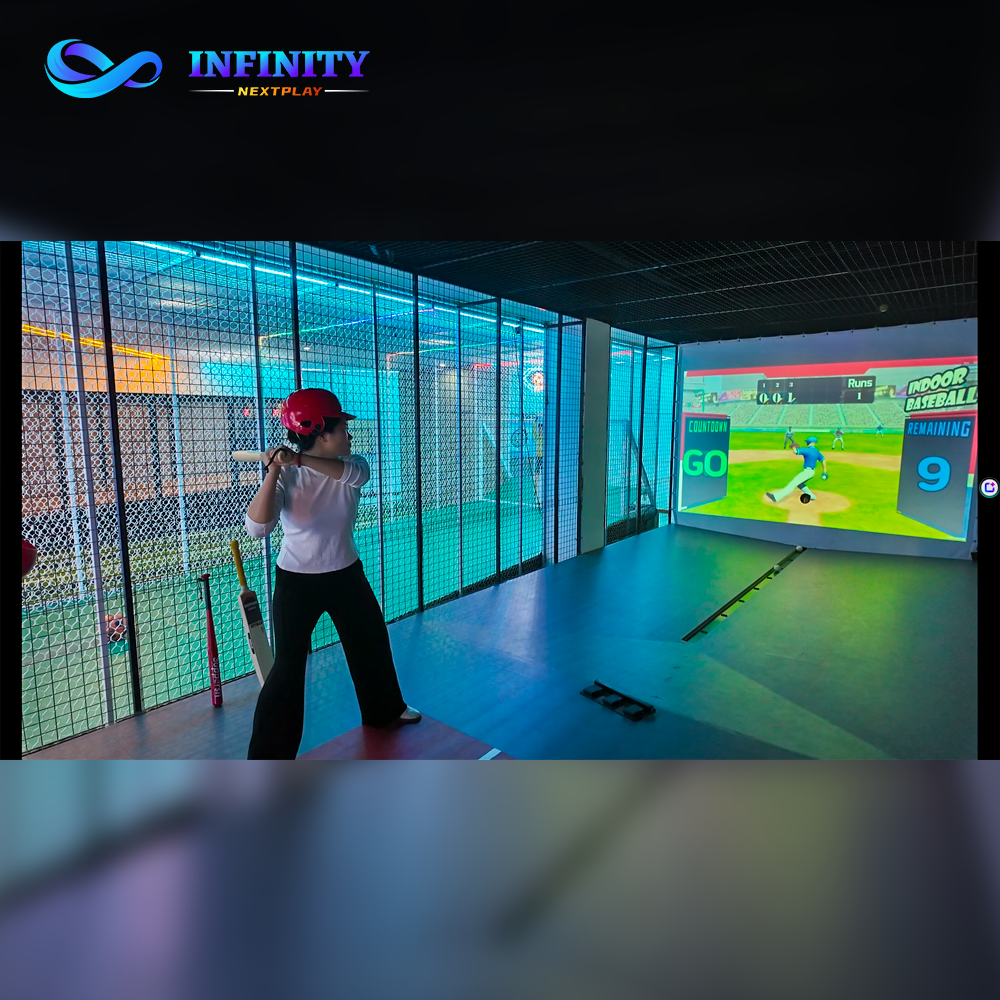
Once your X3 leagues and Q4 corporate events are running profitably, reinvest your net profit into expanding your attraction lineup. The Immersive Indoor Baseball Batting Simulator is the ideal next addition because it attracts a completely different demographic: families, young athletes, and baseball enthusiasts who may not play darts or shooting games. Baseball simulators also work exceptionally well during daytime hours when your dart leagues and corporate events are not running. After baseball, consider adding golf simulators for weekday business crowds or VR arenas for birthday parties. Each new attraction should target a time slot or demographic that your current equipment does not serve, ensuring that every square foot of your lounge generates revenue throughout the entire day.
Unmatched Realism:Features advancedHigh-Speed Sensorsthat track ball velocity and trajectory in real-time, providing a...
View Details →No. While prior hospitality experience helps, the competitive gaming lounge model is specifically designed to be accessible to first-time business owners. Modern equipment like the X3 and Q4 runs almost autonomously, with automated scoring, payment processing, and league management built in. Your primary responsibilities are marketing, customer service, and inventory management, skills that can be learned through free online resources and mentorship from your equipment supplier. Marcus, the Austin lounge owner we profiled earlier, had zero hospitality experience before opening his venue and now runs one of the most profitable competitive gaming lounges in Texas.
You can launch a profitable competitive gaming lounge in as little as one thousand five hundred square feet with two dart machines and one shooting simulator. The two-thousand-eight-hundred-square-foot model we describe in this guide is the optimal size for maximizing revenue per square foot, but it is not a minimum requirement. Many successful operators start in smaller spaces, build cash flow, and then relocate to larger venues after twelve to eighteen months. What matters more than square footage is location quality, parking availability, and visibility from the street.
Ongoing maintenance costs are remarkably low compared to traditional arcade machines. The X3 dart machine requires occasional replacement of soft-tip darts and cleaning of the target matrix, which costs approximately fifty dollars per month. The Q4 shooting simulator needs periodic lens cleaning and software updates, which you can perform yourself in ten minutes per week. Neither machine requires specialized technicians or expensive replacement parts. Over a five-year period, your total maintenance expenditure should not exceed four thousand dollars, which is less than six months of maintenance costs for a comparable number of traditional arcade cabinets.
Yes. Most full-venue solution providers offer equipment financing with terms ranging from twelve to thirty-six months. Financing allows you to preserve working capital for marketing, lease deposits, and furniture while still launching with premium equipment. At nineteen thousand dollars in monthly net profit, your equipment payments will represent less than five percent of revenue, meaning the machines pay for themselves many times over during the financing period. Some operators even use equipment leases to upgrade to newer models every three years, ensuring their lounge always features the latest technology without large capital outlays.
Most operators reach fifteen thousand dollars in monthly net profit by month four and nineteen thousand dollars by month six, assuming they follow the launch plan outlined in this guide. The key accelerators are launching your league within the first two weeks, booking your first corporate event within thirty days, and maintaining aggressive social media marketing for the first ninety days. Operators who delay their league launch or underinvest in marketing typically take ten to twelve months to reach the same revenue level. Speed of execution matters more than perfect execution in the competitive gaming lounge business.
Building a competitive gaming lounge is not a fantasy or a get-rich-quick scheme. It is a proven business model with concrete numbers, real customer success stories, and equipment that is available today. The question is not whether this model works; the question is whether you are ready to act on the opportunity before your competitors do. Every month you delay is a month of nineteen thousand dollars in net profit that goes to someone else.
Get a free 3D layout for your space. No commitment required.