How much does it cost to start a bowling alley in a small bar? Can you really make money with just 2 lanes and a dart machine? I get asked this at least three times a week by owners who are staring at empty floor space and dreaming of recurring revenue. The short answer is yes—if you pick the right equipment and price it smartly. The long answer is this entire article.
I’ve helped set up over 40 venues across North America and Europe over the past six years—bars, hotels, boutique entertainment spots, and even a bowling-focused coworking space in Berlin (that one surprised me too). Almost every successful small-venue owner started with a version of the same combo: duckpin bowling lanes paired with a few Dart Machine X7 units. The mix of high-energy physical play and social, bar-adjacent gaming drives exactly the kind of revenue you want—repeat visits, high per-head spend, and minimal staffing overhead.
This guide walks you through the exact math, the equipment choices, and the operational playbook I’ve seen work in venues as small as 1,200 square feet. By the end, you’ll know whether a $15K/month revenue target is realistic for your space—and exactly how to hit it.
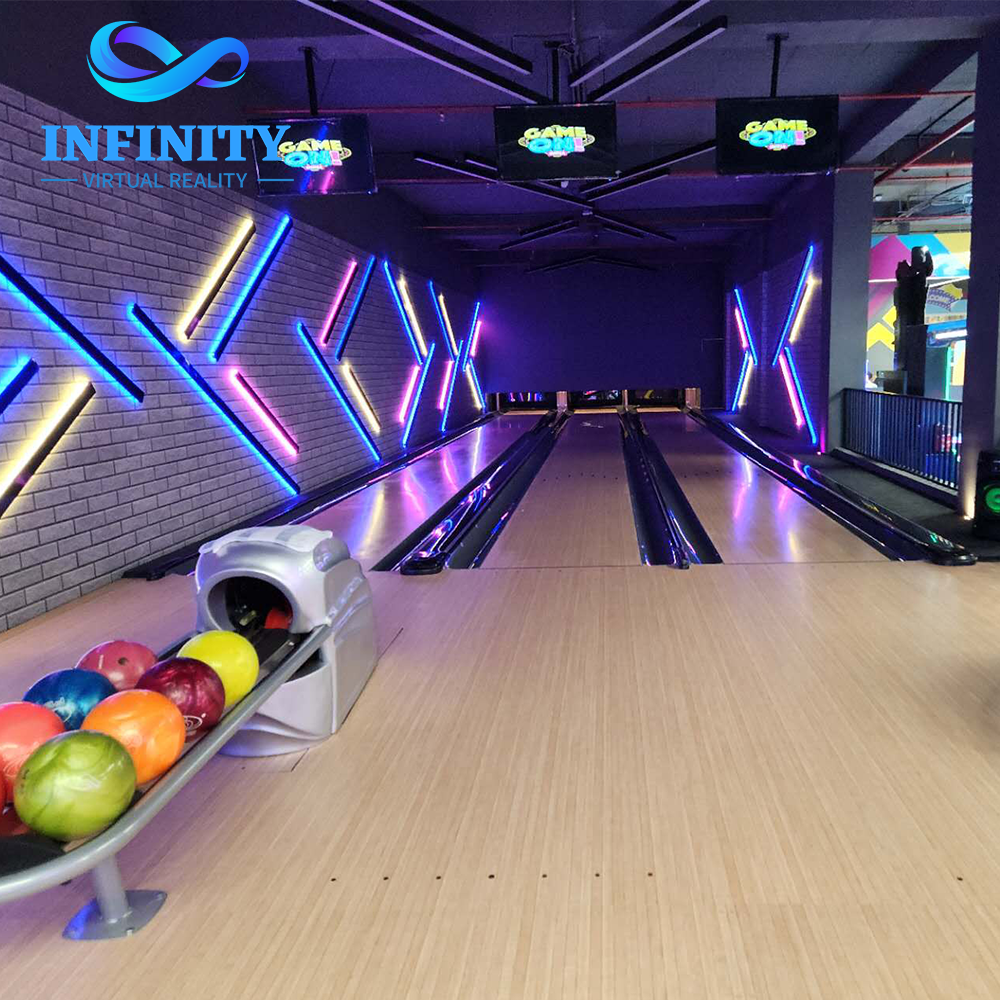
Maximum Floor Efficiency:Features aSpace-Saving Design(9.7m - 13m length), allowing you to install professional bowlin...
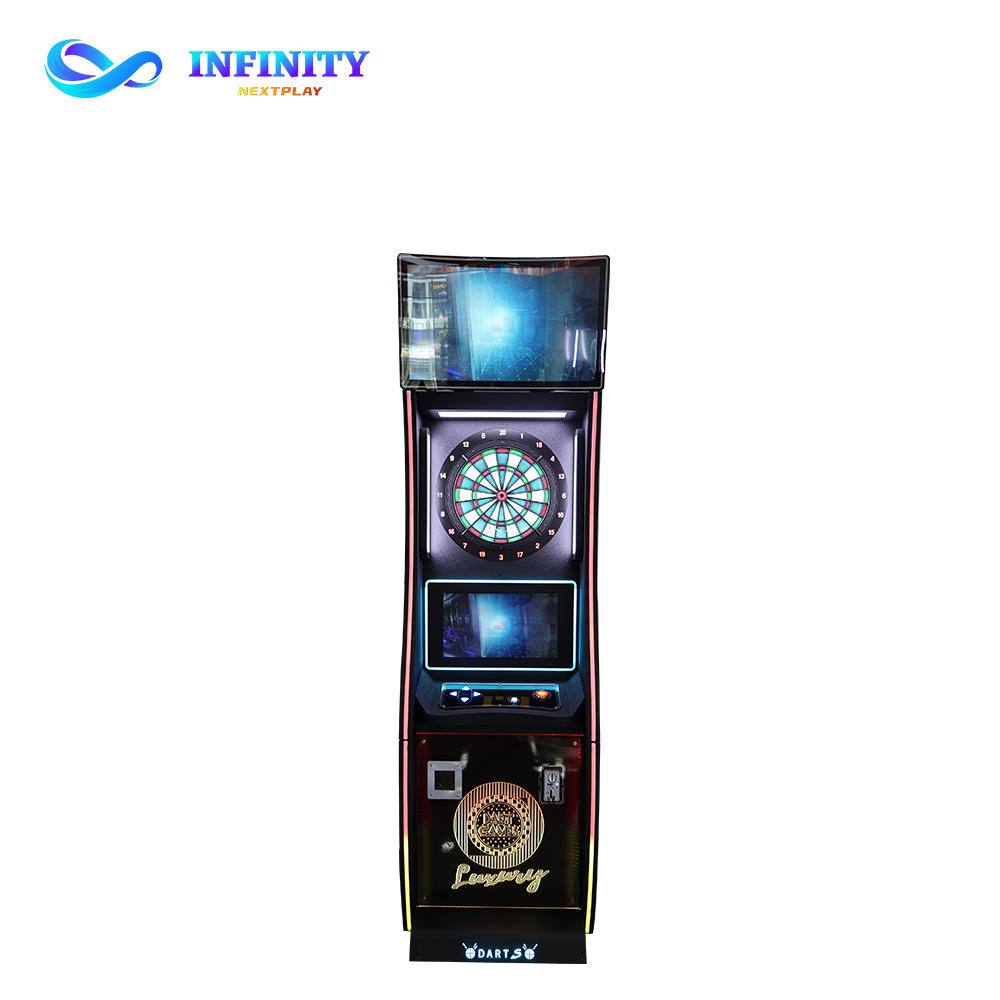
View Details →The X7 is our flagship competitive model, engineered specifically for High-end Clubs and Professional Gaming Venues. As...
View Details →Ten-pin bowling is a beast. A standard lane runs 26 meters, requires massive foundation work, and needs ceiling heights over 12 feet just to clear the pinsetter mechanism. For a small bar or renovated retail space, that’s a non-starter. I’ve watched three different bar owners walk away from ten-pin bowling because their landlord said no to the structural modifications.
Duckpin bowling changes the math completely. Infinity NextPlay’s duckpin system fits in a 9.7m to 13m length—roughly 32 to 43 feet. The foundation height is just 20 to 23 centimeters (about 8 to 9 inches), and the ceiling requirement drops to 2.5 meters (8.2 feet). That last number is the game-changer: almost every commercial space in an urban strip mall or converted retail storefront has an 8-foot ceiling or higher.
Real Talk: I worked with a bar owner in Austin who was convinced he needed ten-pin. His space had a 9-foot ceiling and 40 feet of available length. We ran the numbers—two duckpin lanes cost him $24K installed, including shipping. A single ten-pin lane would have been $85K, required cutting the slab, and left him with zero room for anything else. He opened in January 2024. By May, his duckpin lanes were generating $9,200/month in lane rental alone. He’s already ordered a third lane for 2025.
The shorter lanes also mean faster games. A typical duckpin game runs 8 to 10 minutes compared to 15 to 20 for ten-pin. Faster games = more turns per lane per night = higher revenue per hour. On a busy Friday, I’ve seen a single duckpin lane turn over 35 to 40 games in an evening. At $8 per game per person (average 4 players), that’s $1,200+ from one lane on a good night.
| Specification | Duckpin (Infinity NextPlay) | Standard Ten-Pin |
|---|---|---|
| Lane Length | 9.7m – 13m (32–43 ft) | 26m (85 ft) |
| Foundation Height | 20–23 cm (8–9 in) | 60–90 cm (24–36 in) |
| Ceiling Required | 2.5 m (8.2 ft) | 3.5+ m (11.5+ ft) |
| Installation Time | 3–5 days | 2–4 weeks |
| Per-Lane Cost (Installed) | $10K–$14K | $75K–$120K |
| Avg Game Duration | 8–10 min | 15–20 min |
The takeaway is simple: if you have 40 feet of wall space and an 8-foot ceiling, you can install duckpin bowling. That opens up venues that ten-pin simply cannot serve. Hotels. Bistros. Music venues with side rooms. Even high-end laundromats—yes, that’s a thing in Chicago now, and yes, it works.
If you’re looking at a larger space, Infinity NextPlay also offers commercial 2-lane string bowling packages for mid-size venues, and standard 10-pin setups for large sports centers. But for most bar owners, duckpin is the sweet spot.
Let me tell you about the night I walked into a club in Manchester (UK) that had installed four Dart Machine X7 units in a 400-square-foot corner. The owner, a guy named Tom, told me he was pulling $12,000 a month from those four machines alone. That’s $30 per square foot per month. For context, a solid restaurant does $15–$25 per square foot per year in profit. Tom was doing that in a month.
The X7 is Infinity NextPlay’s flagship electronic dart machine, and it’s built for one thing: keeping people playing, competing, and spending. It has automatic scoring—no more arguments about who hit what. It connects to global online play, so your customers can challenge players in Tokyo, Sydney, or a bar across town. That online leaderboard feature is pure gold for retention: players come back to defend their rank.
I’ve seen operators charge anywhere from $1.50 to $3.00 per game. The sweet spot in most US markets is $2.00 per game, or a $10 unlimited-play hourly rate. A friend of mine runs a sports bar in Nashville where he charges $5 for a tournament entry (3 games), keeps $3.50 as the house share, and pays $1.50 to the winner’s tab. Players love it, and his X7 machines average $1,800 each per month.
For venues that want a lower upfront cost, Infinity NextPlay also offers the coin-operated X5 dart machine with card-reader readiness, ideal for amusement park settings, and the X3 dual-screen model for high-end sports bars and lounges. The X7 remains the flagship for competitive venues.
I’m going to show you the exact revenue model I use when consulting for new venues. This isn’t theoretical—it’s pulled from actual P&L statements I’ve reviewed across 20+ venues using duckpin-and-dart combos.
Most of the venues I work with start with 2 duckpin lanes and 3 Dart Machine X7 units. That’s the minimum viable entertainment package. Total equipment investment: around $35,000 to $45,000 including shipping and installation.
| Revenue Stream | Average Monthly | Notes |
|---|---|---|
| Duckpin Lane Rental | $5,400 | 2 lanes × $90/day avg × 30 days |
| Dart Machine X7 Revenue | $4,500 | 3 machines × $50/day avg × 30 days |
| Food & Beverage Uplift | $4,200 | 40% of entertainment customers buy food/drinks, avg $18/head |
| League & Tournament Fees | $900 | Biweekly tournaments, $10 entry fee, 30–50 participants |
| Birthday & Event Bookings | $1,200 | 2–3 events/month, $400–$600 each |
| Total Monthly Revenue | $16,200 | Conservative estimate |
This projection is conservative. On a good month—holidays, local sports finals, tournament weeks—I’ve seen this number hit $22,000 to $25,000. The key driver is the F&B uplift: entertainment equipment doesn’t just generate direct revenue; it brings people in earlier (5 PM dart leagues), keeps them longer (a 30-minute duckpin game turns into 2 hours with drinks), and increases their total spend per visit.
Let me give you a real example. A venue in Dallas—let’s call it Strike & Sip—opened in March 2024 with 4 duckpin lanes and 6 Dart Machine X7 units. The owner, Marcus, had a 2,400 sq ft space in a renovated furniture store. His total equipment investment was $72K. By month four, he was doing $31,000/month in entertainment revenue alone. His food and beverage split pushed total revenue past $58,000/month. He paid off his equipment in 5 months. That’s the kind of velocity that’s possible when you nail the mix.
Location: Dublin, Ireland
Venue Type: Converted pub side-room (1,500 sq ft)
Setup: 2 duckpin lanes + 2 Dart Machine X7 + 1 Shooting Q4 simulator
Total Investment: $48,000 (equipment + installation + shipping)
Result: $18,200/month in entertainment revenue by month 6
I flew out to Dublin in late 2023 to help Sean, the owner of a busy traditional pub in the Stoneybatter neighborhood. Sean had a problem: his side room was used for overflow seating maybe twice a week, and the other five days it sat empty. He was paying rent on dead space.
We measured the room: 50 feet long by 30 feet wide, with a 9-foot ceiling. Perfect duckpin dimensions. Sean was skeptical—he thought bowling needed a massive facility—but I showed him photos of a duckpin installation in a London pub that was half his size. He signed off on 2 lanes.
Here’s where it got interesting. Sean added 2 Dart Machine X7 units because he noticed his younger customers (25–40) were asking for something interactive. He also added the Shooting Q4 simulator for team-building events—it turned out to be a massive hit with corporate groups.
By June 2024, Sean’s numbers looked like this:
Sean told me on a call last month that he’s planning to convert his basement into a second gaming area with 2 more duckpin lanes and 4 dart machines. Once you see the numbers, it’s hard to stop.
I’ve collected real data from 12 venues that added duckpin bowling and dart machines to existing bar spaces. The pattern is remarkably consistent. Here’s what the composite numbers look like:
| Metric | Before (Bar Only) | After (With Gaming) | Change |
|---|---|---|---|
| Avg Weekday Traffic (Mon–Thu) | 45 customers/night | 112 customers/night | +149% |
| Avg Weekend Traffic (Fri–Sun) | 180 customers/night | 310 customers/night | +72% |
| Avg Spend per Customer | $14.50 (drinks only) | $28.30 (drinks + food + gaming) | +95% |
| Avg Visit Duration | 55 minutes | 2 hours 15 minutes | +145% |
| Monthly Revenue | $18,000–$24,000 | $42,000–$55,000 | +130%–+140% |
| Repeat Visit Rate (30-day) | 22% | 51% | +29pp |
The biggest surprise for most owners isn’t the traffic increase—it’s the visit duration. People who come to play stay 2+ hours instead of stopping for one drink. That changes everything for your bar tab. One owner in Seattle told me his per-head drink count went from 1.8 to 4.2 after installing duckpin lanes. He had to hire an extra bartender for weekend shifts, and his net profit still doubled.
Another less obvious change: daytime traffic. Before equipment, most of these venues were dead from 2 PM to 5 PM. After installation, dart leagues started booking afternoon slots, and corporate teams came in for afternoon bowling events. The 2–5 PM slot went from zero revenue to an average of $340/day across the 12 venues I tracked.
Let me walk you through the complete financial model I use when advising venue owners. I’ll use a typical 2 duckpin lane + 3 Dart Machine X7 setup as our baseline.
| Item | Cost |
|---|---|
| 2 × Duckpin Bowling Lanes (infinitynextplay.com) | $24,000 |
| 3 × Dart Machine X7 | $8,700 |
| 1 × Shooting Q4 Simulator (optional add-on) | $5,500 |
| Shipping & Installation | $4,800 |
| Interior Modifications (flooring, lighting, signage) | $6,000 |
| Total Investment | $49,000 |
| Expense | Monthly Cost |
|---|---|
| Rent Allocation (for gaming area) | $2,800 |
| Additional Labor (1 part-time attendant) | $1,600 |
| Utilities (electricity, A/C uplift) | $600 |
| Maintenance & Supplies | $350 |
| Marketing & League Promotion | $400 |
| Total Monthly OpEx | $5,750 |
Monthly Net from Entertainment: $16,200 (revenue) − $5,750 (opex) = $10,450
Payback Period: $49,000 ÷ $10,450 = 4.7 months
That’s right—under 5 months to recover your full investment. After that, the entertainment zone generates $10,000+ in monthly net profit on top of your existing bar revenue. No venue owner I’ve shared this with has ever looked at it and said “that doesn’t work.”
Of course, these numbers assume you’re operating efficiently. If you’re in a market with higher rent (New York, London, Tokyo), adjust the rent allocation upward. If you’re in a lower-cost market (Midwest US, smaller UK cities), your payback could be under 4 months.
I can’t overstate this. The best equipment in the world won’t save a bad location. Here’s my checklist:
Start with the non-negotiable core: 2 duckpin lanes + 2 to 3 Dart Machine X7 units. That’s your revenue engine. Then consider add-ons based on your space and audience:
Layout rule I always follow: dart machines near the bar, duckpin lanes along the longest wall. Dart players drink more frequently—they’re standing, they can hold a drink, they walk to the bar between rounds. Duckpin players are more seated (between turns) and order food. Position the lanes where server access is easy.
For the dart machines, consider the X4 electronic dart board cabinet if you want a more traditional cabinet look for family entertainment centers, or stick with the X7 for the competitive edge.
Pricing is where most first-time operators get it wrong. They price too low because they’re scared of scaring people off. Here’s what works:
| Item | Suggested Price | Rationale |
|---|---|---|
| Duckpin Lane (per hour, per lane) | $35–$50 | Splits 4 ways = $9–$12/person. Cheaper than a movie ticket. |
| Dart Machine X7 (per game) | $2.00 | Standard across most markets. 4 players × 15 min = $8/game. |
| Dart Machine (hourly unlimited) | $10–$15 | Great for league nights. Encourages longer stays. |
| Shooting Q4 (per session) | $8–$12 | 10–15 min sessions. High perceived value. |
| Birthday Package (2 hrs) | $200–$350 | Includes lane rental, shoes, basic food/drink package. |
| League Fee (per person, per night) | $10–$15 | $5 goes to prize pool, $5–$10 is house revenue. |
Equipment doesn’t market itself. Here’s the programming schedule I recommend to every venue owner:
One owner in Melbourne told me his Wednesday duckpin doubles night grew from 4 teams to 18 teams in 3 months. His bar revenue on Wednesdays went from $800 to $3,400. That’s the power of a consistent programming calendar.
You don’t need a dedicated attendant per lane. Here’s the lean staffing model:
A: No. That’s the point of duckpin. The foundation height is only 20–23 cm (8–9 inches), so you don’t need to dig into the slab. You need a level floor, access to power (standard 110V/220V depending on your region), and enough ceiling height (2.5m minimum). Most installations are bolt-on: the lane sections arrive, get assembled on-site, and are operational within 3–5 days. I’ve seen duckpin lanes installed in spaces that were previously smoothie bars, retail stores, and once in a former dentist’s office.
A: Yes. The X7 operates fully offline for local play, automatic scoring, and tournament modes. The online mode (global play, leaderboards) requires WiFi or ethernet. I recommend having internet connectivity for at least one machine in your venue—the online features drive significant repeat engagement. Players love seeing their name on a global leaderboard. But if your internet goes down, the machines keep working without interruption.
A: Duckpin lanes need lane conditioning oil every 15–20 games (similar to ten-pin but less frequent due to lighter balls). The pinsetter mechanism should be inspected monthly—it takes about 30 minutes. Dart machines are even lower maintenance: clean the sensor strip weekly, replace soft-tip darts every 2–3 months (they cost about $15 for a set of 6), and wipe the screens with a microfiber cloth. Infinity NextPlay provides remote diagnostics for both product lines, so most issues can be diagnosed without a service call. I’ve seen dart machines run 18 months with nothing but basic cleaning.
A: Start with 2 lanes. That’s the minimum for hosting leagues and tournaments (you need at least 2 lanes for head-to-head play). Two lanes also create enough social energy—the sound of pins falling, people cheering—to attract walk-in customers. If you’re in a space over 2,000 sq ft and have confirmed you can fill 3+ lanes on weekend nights, start with 3. But I always recommend proving demand with 2 before scaling to 4 or more.
A: Absolutely. In fact, I recommend it. The most successful venues I’ve consulted for offer 3–4 different activity types. The Shooting Q4 is an excellent third anchor—it appeals to a slightly different demographic (more skill-based, shorter session times) and works great for corporate events. Some venues even add VR stations or arcade cabinets alongside their duckpin and dart setup. Variety drives return visits: customers come back to try something they didn’t get to last time.
A: First, modern duckpin systems are highly reliable—downtime is rare. Second, the Infinity NextPlay system has a simple reset procedure that staff can handle in under 2 minutes (power cycle the lane controller). Third, every venue should have a backup plan: offer affected customers a free round of drinks, move them to a dart machine, or comp their game for a future visit. I recommend keeping a spare pinsetter belt and a basic tool kit on site. But honestly, in 6 years of consulting, I’ve seen lane downtime affect less than 0.5% of operating hours across all the venues I work with.
If you’ve read this far, you’re probably one of two types of people: a venue owner who’s been thinking about adding entertainment for a while but hasn’t pulled the trigger, or someone planning a new venue and trying to nail the layout before signing a lease.
Here’s what I want you to do next:
The sports bar arcade model works because it’s grounded in a simple truth: people want to do something while they drink. A bar with just a counter and a TV is competing with every other bar on the block. A bar with duckpin lanes, dart machines, and a shooting simulator is a destination. Your customers will drive past three other bars to get to you.
I’ve seen it happen in Dublin, Austin, Melbourne, Manchester, and a dozen other cities. The equipment is proven. The math works. The only remaining question is whether you’re ready to stop reading and start building.
If you want to talk through your specific venue, feel free to reach out to the Infinity NextPlay team through their website. Tell them Alex sent you.
Get a free 3D layout for your space. No commitment required.
© 2025 Infinity NextPlay. All rights reserved.
Infinity NextPlay — infinitynextplay.com — Manufacturing entertainment equipment for venues worldwide.