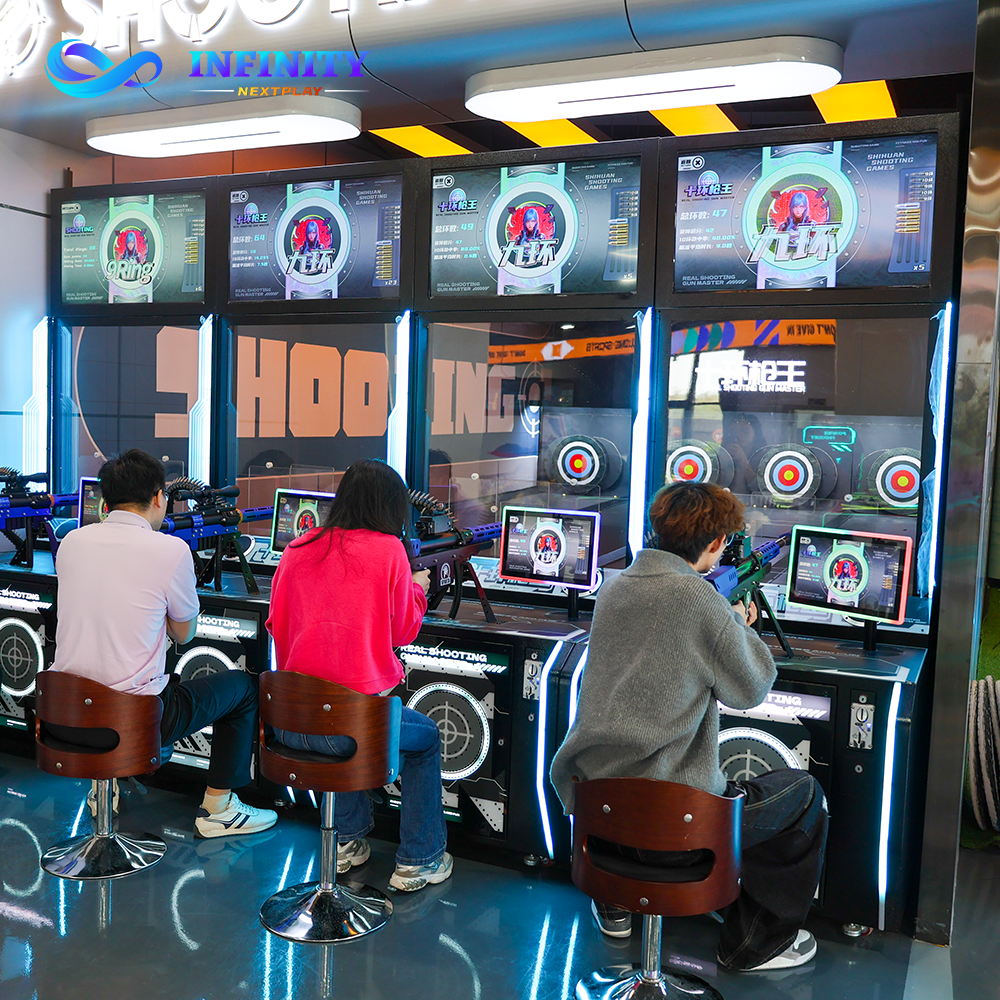
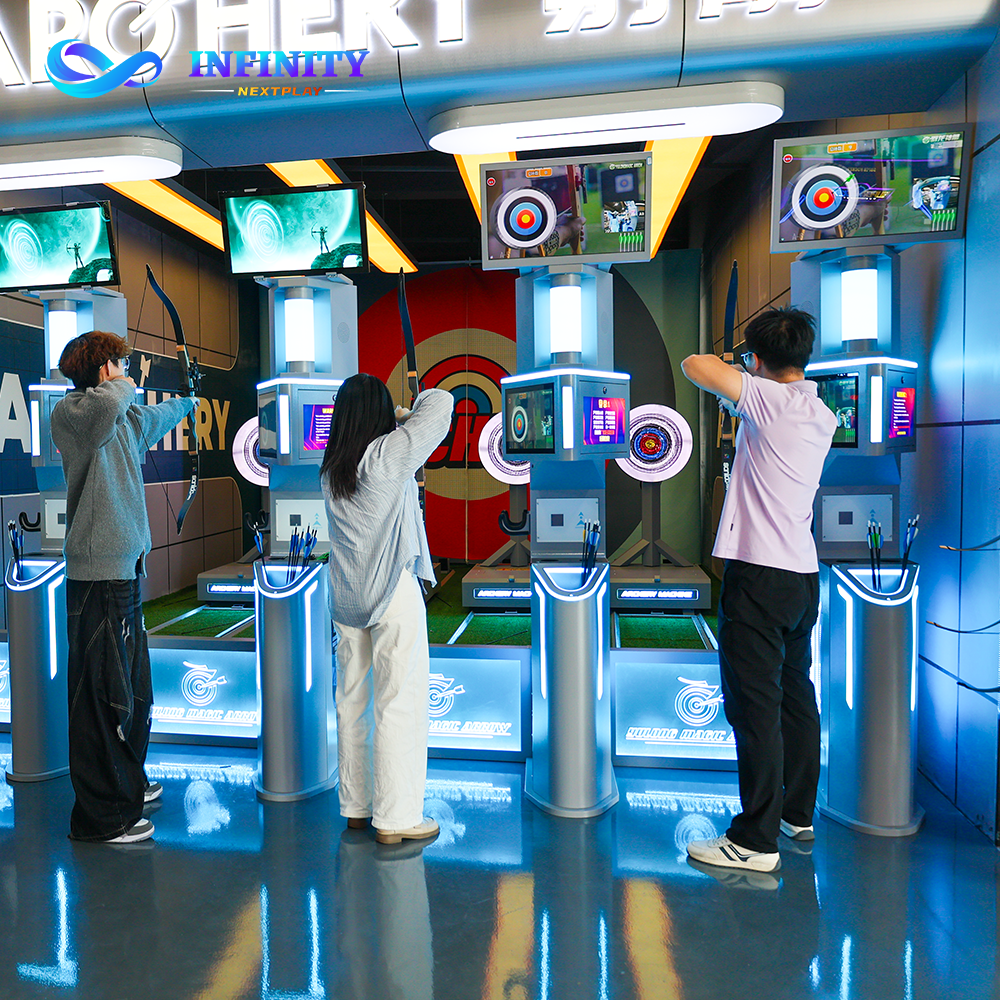
A bar's revenue is the product of three numbers: how many guests sit, how long they stay, and how often they order. Most bar operators work the first number, fighting for occupancy, and leave the second and third numbers to chance. A shooting simulator works the second and third: it stretches the stay and creates natural ordering moments.
The mechanism is simple. A group that plays a game has a reason to sit beyond the drink already in front of them. Each round creates a natural pause, and each pause is an ordering moment. The machine does not replace the bartender; it multiplies the occasions when the bartender hears the word "again".
| Bar Revenue Driver | Without a Game | With a Shooting Simulator | Change |
|---|---|---|---|
| Average stay per group | 45-60 min | 90-120 min | +45 to 100% |
| Ordering moments per hour | 1-2 | 3-5 | 2-3x |
| Average drink count per seat | 1.8 | 3.0-3.5 | +60 to 90% |
| Evening spend per seat | Base | Base + 60-90% | Higher |
| Group return likelihood | Low | High (score to beat) | Strong |
The table answers the headline question directly: the simulator drives drink spend because it drives time, and time is the bar's actual inventory. The rest of this guide uses the 5W1H structure to explain exactly how the machine produces those numbers, who delivers them, and what the operator must do to collect them.
What exactly is an optical shooting simulator? A screen-based shooter where players aim a light-based gun at projected targets, with automatic scoring, instant leaderboards and round-based play. No physical projectiles, no moving parts that wear, and a footprint of roughly 3 by 4 meters. It sits in the corner of a bar the way a dart board does, but with a screen that can draw a crowd.
Why shooting rather than the alternatives? The bar context favors games that are short, social and replayable in rounds. Compare the options that bars actually choose between, and the shooting simulator wins the time math:
| Bar Game Option | Round Length | Group Size | Spectator Draw | Ordering Moments |
|---|---|---|---|---|
| Shooting simulator | 2-3 min | 2-4 | Strong (screen) | Every round |
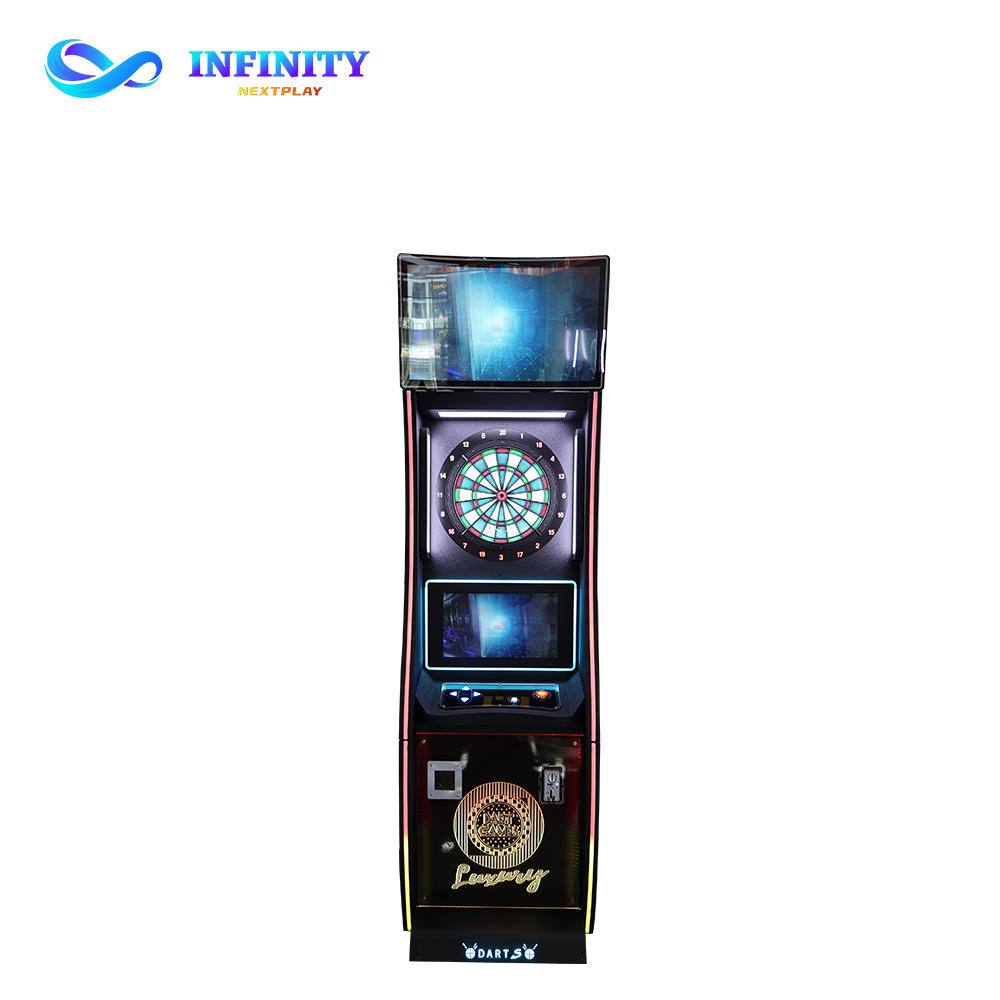
| Electronic darts | 5-10 min | 2-6 | Medium | Every 2-3 rounds |
| Video cabinet | 3-5 min | 1-2 | Weak | Rare |
| Pool table | 15-20 min | 2-4 | Medium | Between frames |
The round length is the secret. A 2-to-3-minute round is short enough to create a constant rhythm of pauses, and each pause lands the group back at the table ordering. Longer games produce longer stretches with no ordering moment. The shooting simulator produces an ordering moment every few minutes, which is exactly the cadence a bar wants.
The second reason is the leaderboard. Adults at a bar are not playing to win a prize; they are playing to see their name at the top of a screen. The score becomes the group's conversation, the rematch becomes the group's decision, and the next visit starts with "I beat your score last time". That is the loop that builds return traffic.
Who plays it? The paying audience is adult groups of two to four, usually work colleagues after hours, couples on a night out, and small friend circles. These groups have three traits that matter to a bar: they drink, they stay, and they talk. The machine gives the talk a subject.
The gender balance matters for placement. Optical shooting is the most gender-neutral competitive game in the bar repertoire; unlike pool table crowds or darts leagues, mixed groups play it without any skill intimidation. The screen scores automatically, so a first-time player and a regular start on equal footing.
| Time Window | Bar Traffic | Game Usage | The Game's Role |
|---|---|---|---|
| 5-7 pm (happy hour) | Building | Light | Early-fill anchor |
| 7-11 pm (golden) | Peak | Heavy | Stay-extender |
| 11 pm - 1 am (late) | Draining | Medium | Table turnover engine |
| Weekday afternoons | Weak | Rare | League practice |
The 7-to-11 window is the golden window: the machine's job there is not to fill the bar but to keep the groups that are already sitting from leaving. One group that stays 90 minutes instead of 60 buys the difference that the game's corner costs. The when is therefore not about the machine's own revenue; it is about the spend that happens at the tables around it.
The operator's second job is the early-fill: from 5 to 7 pm, the machine can anchor the first groups of the night, giving the bar a reason to open the game corner early and a reason for those groups to order dinner instead of just a first drink.
How does the machine convert play into spend? Through four mechanics that the operator controls: round structure, leaderboard rewards, group size incentives, and staff scripting. Each mechanic is a lever, and the levers compound.
| Mechanic | Cost to Operator | Spend Effect | Effort |
|---|---|---|---|
| Round structure | None | Ordering every 2-3 min | Set once |
| Leaderboard reward | 1 free drink / night | Score rivalry all night | Set once |
| Team pricing | None | Orders per machine minute | Price list |
| Staff script | None | Converted pauses | Training |
| Peak rotation | None | Constant corner flow | House rule |
The drink ripple is the result: each round produces a pause, each pause produces an order at the table, and each order extends the stay. The machine's own revenue is the small part; the ripple at the tables is the large part.
The honest numbers put the machine in perspective. A shooting simulator in a 60-seat bar, in a corner with a clear sight line from the tables, delivers its value through the four mechanics above. The per-night model below uses conservative assumptions and the math holds together.
| Line Item | Without Game | With Game | Difference |
|---|---|---|---|
| Groups per night touching the corner | 0 | 8-12 | New |
| Average stay, playing groups | 50 min | 95 min | +45 min |
| Drinks per seat, playing groups | 1.8 | 3.2 | +1.4 |
| Average drink price | $7.50 | $7.50 | Same |
| Extra spend per playing seat | Base | +$10.50 | +$10.50 |
| Extra night revenue (6 groups x 3 seats) | Base | +$189 | +$189 |
The machine itself earns the round fees on top: at $5 per round and six rounds per group, the corner adds $240 to $360 of direct game revenue per peak night. Combined with the ripple, the corner routinely covers its purchase price within three to four months in a bar that promotes it.
The second number that matters is the return visit. A group that played a leaderboard game at a bar has a reason to pick that bar again: the score to beat. Operators report that returning groups mention the game corner more often than the drink specials, which inverts the usual marketing order.
The machine does not run itself; the first 30 days decide whether it becomes a corner or a coat rack. The checklist has five items, all cheap, all behavioral.
| Week | Action | Measure | Target |
|---|---|---|---|
| Week 1 | Open the corner with free first rounds | Game starts per night | 10+ |
| Week 2 | Launch the leaderboard reward | Groups that rematch | 50%+ |
| Week 3 | Train the staff script | Orders at pauses | Visible |
| Week 4 | Set peak rotation rule | Wait time at corner | Under 10 min |
| Ongoing | Post the weekly champion | Return groups | Climbing |
The weekly champion post is the cheapest retention tool in the list: a printed name on a board (or a pinned message on the bar's social channel) gives the winner a reason to defend the title and gives their friends a reason to come watch. The game stops being a machine and becomes a bar institution.
The operator that follows the checklist gets the numbers from the previous section; the operator that plugs the machine in and walks away gets a dark screen in a corner. The difference is entirely in the running, not in the hardware.
Roughly 3 by 4 meters, similar to a dart corner: the screen and shooting zone plus a small spectator area. The sight line from the tables to the screen matters more than the total area.
2 to 3 minutes per round. Short rounds create constant pauses, and each pause is an ordering moment. Longer games produce long stretches with no order, which is what a bar does not want.
Yes, more than pool or darts leagues. Automatic scoring puts first-time players and regulars on equal footing, and mixed groups play without skill intimidation, which keeps couples and work teams at the corner.
In a 60-seat bar that promotes the corner, the direct game revenue plus the table ripple typically covers the machine in three to four months. The payback depends on the running, not just the purchase.
The line is "winner buys the next round", said when a round ends. It turns the machine's pause into an order without flyers or signs, and it is the cheapest lever in the whole model.
Yes. Cap the machine at two rounds per group during peak so the corner rotates; a waiting group sits at a table, and a seated group orders. Rotation multiplies the spend the corner generates.
An optical shooting simulator drives drink spend because it stretches time, creates ordering moments and gives adult groups a reason to come back. The 5W1H breakdown reduces to one sentence: short rounds at a screen with a scoreboard keep groups at tables, and groups at tables order.
The Shooting Simulator Q4 is the spend engine for the corner, the Dart Machine X7 extends the zone for groups that alternate games, and the Archery Simulator A6 adds the spectacle that draws the crowd. Contact NextPlay for the bar revenue sheet and the 30-day launch checklist, and let the round structure do the ordering for you.
Ask NextPlay for the bar-game revenue sheet behind this guide: the round formats, the leaderboard rewards and the staff script that turn a shooting simulator into a spend engine for your bar.