An impulse ticket is the simplest sale on a gaming floor: an unplanned single-play purchase made inside the 3 to 10 minute window when a guest has no commitment. The guest is waiting for a drink, queuing for another game, or walking the floor between sessions. There is no plan in that window, but there is money in the hand. The machine that wins the impulse ticket is the one that can be seen, understood and started in under 30 seconds, because the window closes the moment a friend calls or the next match begins. Operators who track ticket data find the same pattern everywhere: 60 to 70 percent of single-play sales go to guests who were not planning to play anything. The impulse ticket is a placement and timing decision before it is a content decision.
The window opens at predictable spots: the bar queue, the front of the shooting lanes, the path to the restroom, the route back to the table. A guest in that window is comparing nothing; the purchase is triggered by spectacle. That is why VR lines dominate impulse sales: a headset ride is the loudest spectacle on the floor, and it pulls the eye from across the room. But spectacle alone is not enough: the minutes between deciding and riding must be trivial, otherwise the guest walks past. The comparison between VR lines comes down to four numbers: visibility, motion, session length and price point.
Every impulse machine on the floor is scored by the same equation: visibility times motion times session length times price point. It is a product of multipliers, so one factor at zero kills the sale completely. Visibility: can a guest on the main path see the machine doing something? Motion: does the machine move in a way the eye catches without sound, because a busy floor is loud and a silent screen disappears into the wall? Session length: a short session lowers the ask and recycles the unit back to the queue. Price point: the ticket must feel like pocket change, close enough to the cost of a drink that the guest does not think twice.
| VR Line | Visible Motion | Session Length | Impulse Plays/Hour | Ticket Range |
|---|---|---|---|---|
| 9D Motion Motorcycle | Full rocking, riders visible | 3-5 min | 12-18 | $6-8 |
| Static VR Cabinet | None, screen hidden | 8-15 min | 4-6 | $3-4 |
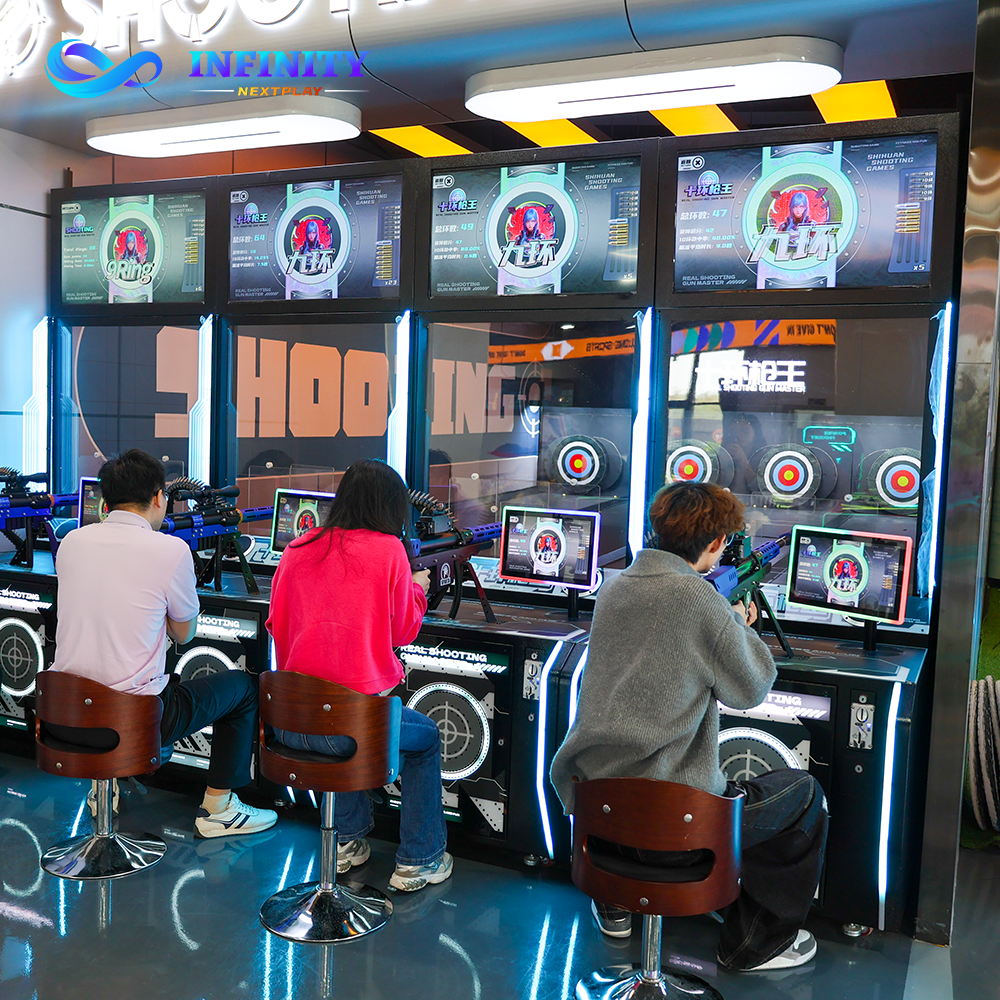
| Shooting Simulator | Screen only, no body motion | 6-10 min | 6-8 | $5-7 |
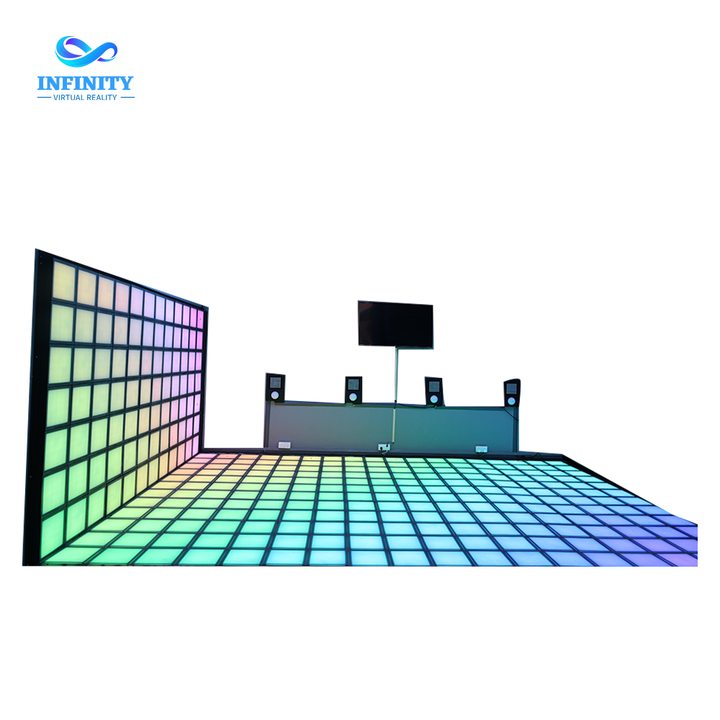
| LED Dance Floor | Light show, no vehicle | 5-10 min per round | 6-10 (group) | $4-6 |
The VR Thunder Motorcycle 9D sits at the top of the table for one reason: it is the only VR line whose game is visible without a headset. The platform rocks, the rider leans into the turns and the machine tilts back on braking, so a guest at the bar watches a full ride in real time. The queuing riders stand beside the platform, and their presence tells the floor the machine is worth the wait. Sessions run 3 to 5 minutes, short enough to feel like a small commitment and long enough to feel like a real ride. Every finished ride produces the next buyer, already standing there before the previous rider steps off.
Static VR cabinets score the opposite profile. The game plays inside a headset, so the floor sees a person standing still with a visor on; there is no motion on display and the screen is hidden. Sessions run 8 to 15 minutes because a seated VR experience needs time to feel like value, which drops the recycle rate to 4 to 6 plays an hour and pushes the ticket down to $3 to $4. A static cabinet earns about a third of the 9D revenue from the same floor space, with the same staff cost and the same rent.
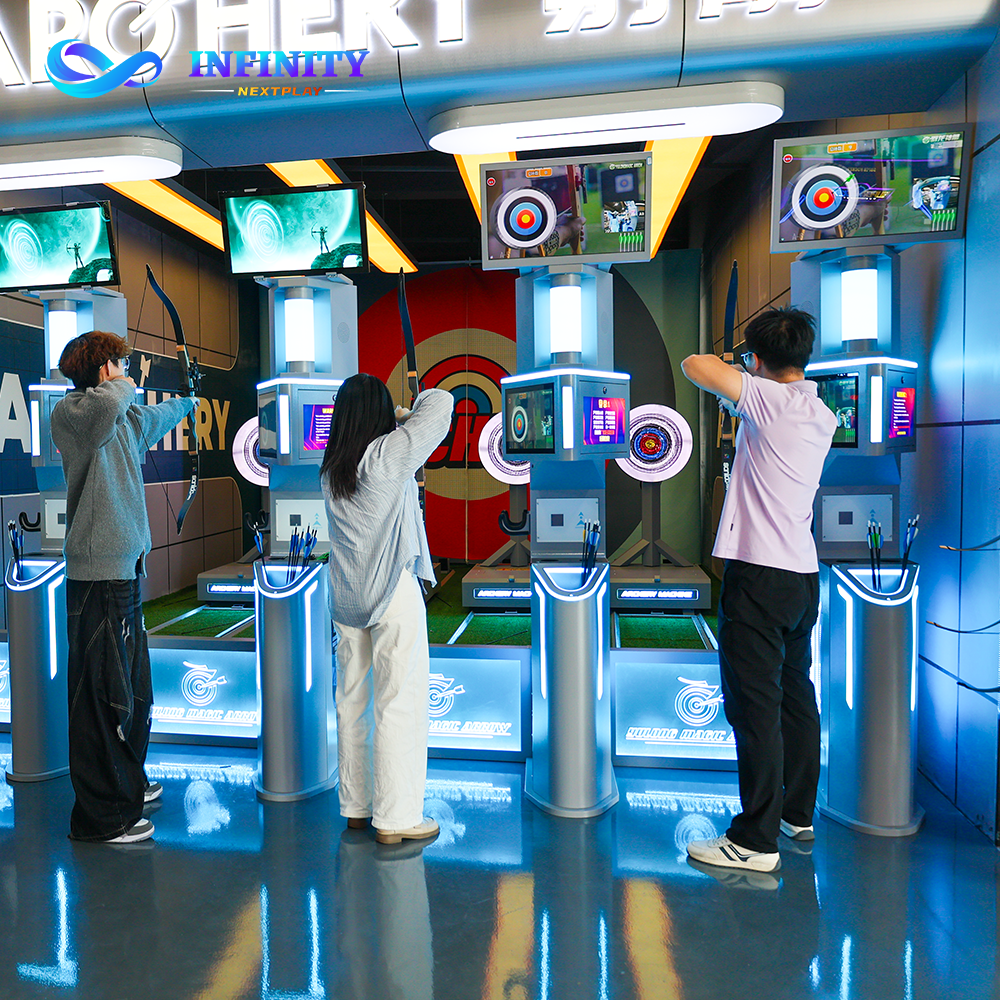
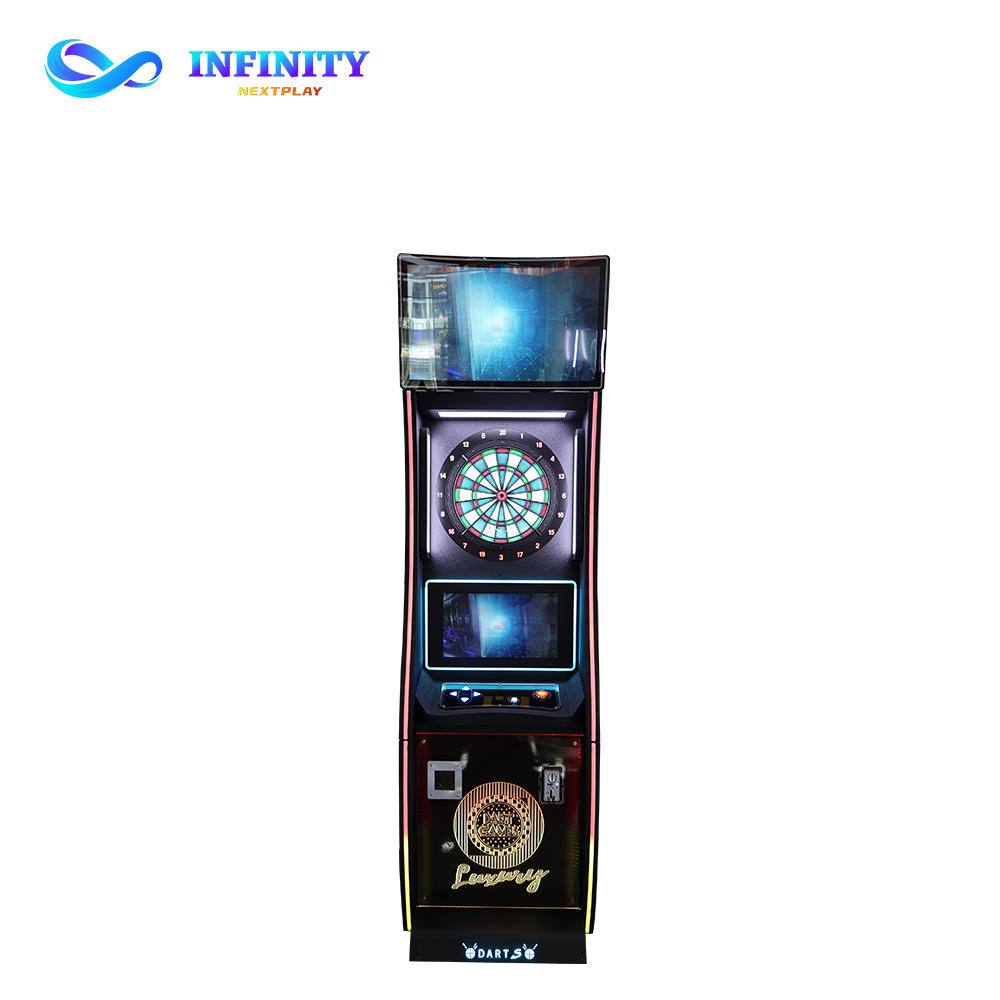
The Shooting Simulator Q4 and the Infinity Grid LED Dance Floor are destination games, not impulse machines. They pull crowds with screens, leaderboards and light shows, and a queue at the shooting lanes is excellent theater. But a shooting round runs 6 to 10 minutes with a group commitment, and an LED round runs 5 to 10 minutes with four to eight players, so the guest recycles slowly. The Dart Machine X7 and the Archery Simulator A6 hold the same position: they build social scenes and fill quiet hours, but they do not recycle guests into tickets the way a 3 to 5 minute ride does. Destination games build dwell; the 9D ride converts that dwell into tickets.
The 9D motorcycle wins the impulse ticket because it sells without a seller. A guest who sees the VR Thunder Motorcycle 9D platform rocking does not need a sign or a staff pitch; the machine explains itself in two seconds. The strongest asset is the rider waiting at the start position, because a person sitting on a motorcycle on a gaming floor is a walking advertisement: other guests watch the ride end, watch the rider step off laughing, and step into the empty seat before anyone has to ask. One host covers two units, spending about 20 seconds per ride on the seat belt, the start and the stop, and the rest of the time goes to selling the photo upgrade or keeping the queue tidy.
The turnover math decides the revenue. At 3 to 5 minutes per session with a changeover of under a minute, the unit recycles 12 to 18 impulse plays an hour, and a busy evening of four to six hours produces 50 to 90 rides. At $6 to $8 a ride, the daily total lands between $240 and $560 and crosses $700 on a peak weekend. The ticket is supported by the motion: a guest pays double for a ride that visibly moves and shakes them around, while a static cabinet has to argue for its $3 to $4.
| Metric | 9D Motion Motorcycle | Static VR Cabinet |
|---|---|---|
| Impulse Plays per Day | 40-70 (peak 80-100) | 25-40 |
| Average Ticket | $6-8 | $3-4 |
| Daily Revenue | $240-560 | $75-160 |
| Monthly Revenue | $7,200-16,800 | $2,250-4,800 |
| Staff Time per Play | 20 seconds (host) | None |
| Payback on Unit Cost | 2-4 months | 5-8 months |
The revenue table makes the decision simple. At the midpoint the 9D unit earns about $390 a day against $115 for a static cabinet, about 3.4 times more from the same floor space, about $11,700 a month against $3,450. The 9D motorcycle costs about $15,800 in the standard package, which puts the payback at 2 to 4 months at normal traffic and under 6 months even on a quiet floor, while a static cabinet takes 5 to 8 months to return less absolute money. The only real cost is one host for two units, and the host earns the wage back with photo upgrades and bundles before the second ride of the night.
An impulse ticket is an unplanned single-play purchase made in the 3 to 10 minute window when a guest is waiting, queuing or walking the floor with nothing scheduled. No advertising is involved: the sale is triggered by seeing a machine do something worth trying within 30 seconds. The window closes fast, so the machine that shows a short, visible and reasonably priced ride inside it collects the ticket.
The VR Thunder Motorcycle 9D turns over fastest. A 3 to 5 minute session plus a changeover of under a minute recycles the unit 12 to 18 times an hour, and a busy evening produces 50 to 90 rides. Static VR cabinets recycle 4 to 6 times an hour, shooting lanes 6 to 8, and LED floor rounds 6 to 10. The fastest machine earns the most tickets because it offers the most chances to sell.
A single 9D motorcycle runs 40 to 70 rides on a normal day and 80 to 100 on a peak weekend, based on 3 to 5 minute sessions and four to six active hours. At $6 to $8 average that is $240 to $560 a day, and across 300 operating days the unit delivers 12,000 to 15,000 rides a year.
Not per ride. One host covers one or two units and spends about 20 seconds per ride on the seat belt, the start and the stop. Between rides the host sells the photo upgrade and manages the queue. Off-peak, the unit can run on a token or QR start so a host is only needed on busy nights. Staffing works out to under 5 percent of ride revenue.
Three bundles lift the average ticket. A double-ride bundle at $10 to $12 sells well because the first ride is the demonstration. A friend race, two single rides back to back at $12 to $15, doubles group dwell and feeds the crowd effect. A $2 to $3 photo upgrade is nearly pure margin. Venues that test bundles report a 15 to 25 percent lift in average ticket.
The 9D motorcycle is about $15,800 in the standard package. At midpoint traffic, about $390 a day or $11,700 a month, the unit pays back in 2 to 4 months, and at half traffic it clears inside 6 to 8 months. A static cabinet takes 5 to 8 months to return less absolute revenue. NextPlay builds a payback model for each venue.
The impulse ticket is won in the 3 to 10 minute window, and the four multipliers of the impulse equation decide the winner. The 9D motion motorcycle scores highest on every one: the ride is visible without a headset, the motion sells itself, the 3 to 5 minute session recycles 12 to 18 plays an hour, and the ticket holds at $6 to $8. Static cabinets, shooting simulators and LED floors build dwell and social scenes; the 9D ride converts that dwell into tickets. Placement follows three rules: entry sightline, corner of the flow, beside the counter queue. Pricing follows three levers: the single ride, the double bundle and the photo upgrade. The revenue model closes the case: 2 to 4 months payback against 5 to 8 for a static cabinet.
The next step is a drawing, not a guess. Ask NextPlay for a 3D floor CAD that shows the sightline, corner and queue placement of the VR Thunder Motorcycle 9D in your exact floor plan, the equipment package price with installation, and a payback model built on your daily foot traffic and ticket price.
Ask NextPlay for a 3D floor CAD showing the best sightline, corner and queue placement for the VR Thunder Motorcycle 9D in your exact floor plan, plus the equipment package price with installation and a payback model built on your daily foot traffic and ticket price.