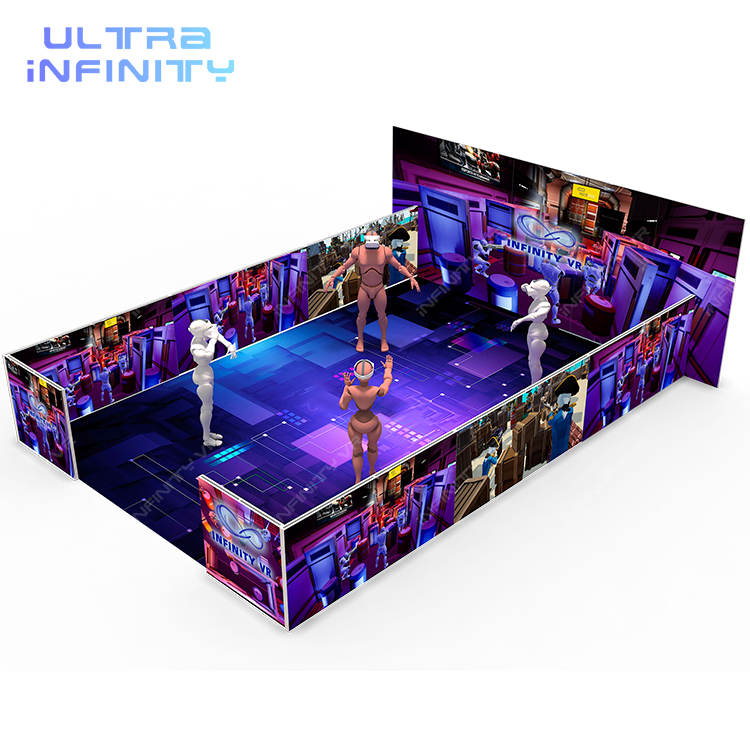
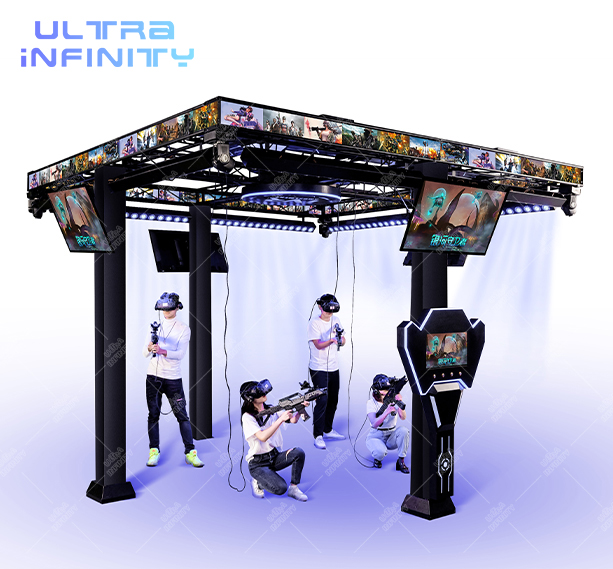
The VR arena is the only attraction where the guest moves at speed while unable to see the room: the headset blocks the vision, the game drives the movement and the guest has no eyes on the walls, the obstacles or the other players. The safety check that works for a fixed ride, check the restraints and the machine, does not cover the free-roam arena, because the risk is the interaction between the blind guest and the physical room. The opening check therefore covers six layers: the physical floor and padding, the equipment and headset check, the health screening, the briefing, the emergency plan and the staff training. The Free Roaming VR Arena and the standing-platform units, the VR Multiplayer Standing Platform and the VR Space Plus Shooting Platform, each have their own check profile, and this guide gives the full checklist for all three.
The stakes set the standard: a guest who trips, collides or falls in the arena has the headset on, so the staff cannot see the injury until the session ends, and the venue liability follows the documented check. The arena that runs the full checklist before every opening session protects the guest, the staff and the venue, and the checklist is the difference between the professional arena and the rented-room setup.
The physical floor check is the first layer, and it verifies four things. First, the padding: the arena floor and the wall bases carry the impact padding, 3 to 5 centimeters of closed-cell foam under the play area, and the padding seams are taped flat so no edge catches a foot. Second, the clearance: every player keeps 2 to 3 meters of clearance around the play area, and the boundary walls or curtains mark the play limit, because the blind player walks into the boundary at speed. Third, the surface: the floor is clean, dry and free of cables, and the equipment cables run overhead or in the floor channels, never across the play area. Fourth, the obstacles: the arena interior is empty of fixed furniture, and the game furniture, the virtual walls and the virtual obstacles, exists in the headset only, not in the room.
| Floor Check | Standard | Why |
|---|---|---|
| Impact padding | 3-5 cm foam under play area | Absorbs the fall impact |
| Clearance | 2-3 m around each player | Blind player walks at speed |
| Play boundary | Marked walls or curtains | Defines the safe play limit |
| Surface | Clean, dry, cable-free | No trip, no slip, no cable |
| Obstacles | Empty interior, no fixed furniture | Game obstacles are virtual only |
The floor check also verifies the equipment footprint: the standing-platform units, the VR Space Plus and the VR Multiplayer Standing Platform, bolt to the floor or sit on the marked pads, and the unit base is checked for the level and the stability, because a wobbling platform under a blind player is a fall waiting for the session end.
The equipment check runs before every opening and covers the headset, the cables and the units. The headset check verifies four things: the lens is clean and unscratched, the strap is intact and adjustable, the face cushion is clean and the display shows the calibration screen. The cable check verifies the cables are intact, the connectors are seated and the overhead rigging or the floor channels hold the cables clear of the players. The unit check verifies the platform stability, the sensor calibration and the emergency stop on each unit. The check takes 20 minutes for a 6-unit arena and is the daily record the venue keeps: the check sheet with the date, the unit numbers and the staff signature.
| Equipment Check | Verification | Frequency |
|---|---|---|
| Headset | Lens, strap, cushion, display | Every opening |
| Cables | Intact, seated, clear of players | Every opening |
| Units | Platform stability, sensor, e-stop | Every opening |
| Record | Check sheet with date and signature | Daily |
The headset hygiene is the detail that the professional arena gets right: the face cushion is cleaned between every guest with the disinfectant wipe, and the spare cushions are rotated. The hygiene is a health issue, not a comfort issue, and the venue that skips it trades the guest safety for the minutes.
The health screening is the layer that protects the guest from the game itself. The VR experience triggers motion sickness, dizziness and disorientation in some guests, and the screening identifies who should not play or should play with restrictions. The screening is a short set of questions at the booking or the entrance: the heart condition, the epilepsy or seizure history, the pregnancy, the balance disorder, the recent surgery and the age limit. The screening rules: the guests with the conditions play the seated or the fixed-platform games instead of the free-roam arena, the guests under the minimum age do not play the free-roam arena, and every guest signs the waiver or the digital consent before the first session.
| Screening Item | Question | Policy |
|---|---|---|
| Heart condition | Any cardiac condition? | Seated games only |
| Epilepsy / seizures | Any seizure history? | Excluded or restricted |
| Pregnancy | Pregnant? | Excluded |
| Balance disorder | Any dizziness or balance issues? | Seated games only |
| Age | Under the minimum age? | No free-roam play |
| Consent | Waiver signed? | Required before play |
The screening is not a medical exam; it is the informed-consent layer that the venue documents. The guest who reports the condition is directed to the safe option, the guest who hides the condition is the venue risk, which is why the waiver states the conditions and the guest signs the acknowledgment. The screening takes one minute and is the liability shield that the insurance and the lawyer both ask for.
The briefing follows the screening and turns the guest from a risk into a player: 2 to 3 minutes covering the play boundary, the movement rules, the other players, the stop signal and the emergency protocol, with the guest repeating the boundary and the stop before the headset goes on. The first session is supervised for the first 60 seconds, the staff watches the new guest move, checks the boundary and the running and verbally guides until the guest settles into the game.
The emergency plan is the layer that covers the moment the check did not prevent. The plan has three parts. Part one is the stop: every session has the stop button and the staff override that ends the game and returns the screens, and the staff knows where the stop is on every unit and in the arena control. Part two is the response: the staff protocol for the dizzy guest, the fall, the collision and the equipment failure, with the first-aid kit at the arena edge and the emergency contact list posted. Part three is the evacuation: the three emergency exits verified clear, the headset removal procedure for the disoriented guest and the staff roles in the evacuation, who guides, who assists and who calls.
| Emergency Element | Plan | Staff Action |
|---|---|---|
| Session stop | Stop button + staff override | Ends the game, returns screens |
| Dizzy guest | Seat, remove headset, water, rest | Assist and monitor |
| Fall / collision | Stop the session, first aid | Treat and document |
| Equipment failure | Stop the unit, tag it out | Isolate and report |
| Evacuation | 3 exits verified, headset removal | Guide, assist, call |
The staff training runs before the opening and quarterly after: every staff member practices the stop, the dizzy-guest response and the evacuation drill, and the drill is recorded. The training is the layer that makes the plan real: the plan on the wall protects nobody until the staff has run it, and the quarterly drill keeps the response automatic.
About 90 minutes for the complete pre-opening cycle: 20 minutes for the equipment check, 20 for the floor and padding, 10 for the screening and briefing materials, 20 for the emergency gear and exits and 20 for the staff roll-call and first-session supervision plan.
Three to five centimeters of closed-cell foam under the play area, with the seams taped flat, plus the padded wall bases. The foam absorbs the fall impact and the taped seams prevent the foot-catching edges.
Guests with the heart condition, epilepsy or seizure history, pregnancy, balance disorders or recent surgery, and guests under the minimum age. They are directed to the seated or fixed-platform games, and the waiver documents the screening.
Two to three minutes, covering the boundary, the movement rules, the other players, the stop signal and the emergency protocol. The guest repeats the boundary and the stop before the session starts.
No, the standard is one staff member per 6 players in the arena, with the first-session supervision for the new guests. The staff covers the stop, the response and the guidance from the arena edge.
Before the opening and quarterly after: every staff member practices the stop, the dizzy-guest response and the evacuation drill, and the drill is recorded with the date and the participants.
The VR arena safety check covers six layers, and the layers stack into one document: the physical floor and padding, the equipment check, the health screening, the briefing, the emergency plan and the staff training. The arena that runs the full checklist before every opening protects the blind-moving guest and the venue, and the checklist is the professional standard.
The Free Roaming VR Arena carries the free-roam profile, the Multiplayer Standing Platform and the Space Plus carry the fixed-platform profile, and all three pass through the same opening cycle. The next step is the kit: ask NextPlay for the VR arena safety kit, the checklist, the floor specification, the briefing script and the emergency plan template for your space.
Ask NextPlay for a VR arena safety kit: the opening checklist, the floor and padding specification, the briefing script and the emergency plan template for your space.