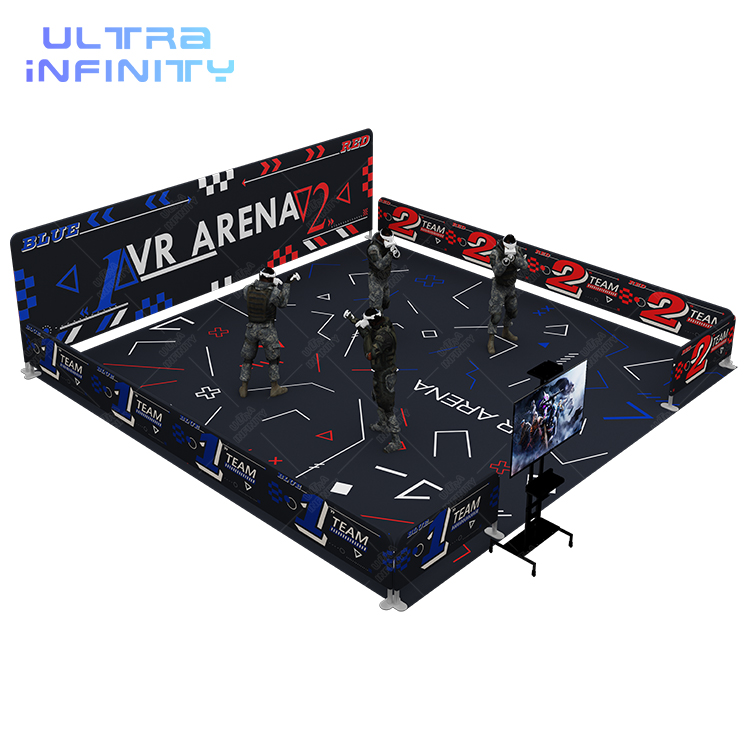
The noisy gaming room complaint starts with the physics of the bass: the subwoofer pushes the low frequencies that travel through the structure, not through the air, and the structure is the shared wall, the floor slab and the ceiling of the mall unit. The voice of the players carries through the door and the wall gaps, but the bass vibration is the one that the next-door tenant feels in the floor and the counter display, and the felt vibration is the complaint that reaches the property manager.Free Roaming VR Arena 2.0 and the 9D cinema chairs run the sound systems whose low end carries exactly this way.
The complaint math makes the case for the acoustic build: the mall lease holds the tenant responsible for the noise that disturbs the neighboring units, and the repeated complaint escalates from the warning to the forced mitigation and, in the worst case, the lease termination. The soundproofing budget looks expensive against the first quote and cheap against the complaint: one forced mitigation order costs more than the whole acoustic package, and the quiet gaming room is the one that renews the lease.
| Sound Path | What Carries It | Treatment |
|---|---|---|
| Airborne | Voices, game audio, alarms | Mass wall, sealed door, HVAC duct |
| Structure-borne | Subwoofer bass, vibration | Floating floor, spring isolation |
| Flanking | Gaps, pipe chases, ceiling plenum | Sealant, caulk, block the bypass |
| Door | Openings during sessions | Solid core door + double seals |
| Ventilation | Sound through the air duct | Duct lining + baffled outlet |
The wall is the first line of the acoustic defense, and the rating that matters is the STC, the Sound Transmission Class: the standard party wall in the mall construction sits around STC 40, which stops the normal conversation but lets the game audio through, and the gaming room needs the STC 50 wall to cut the loud content to the level the neighbor tolerates. The STC 50 wall is built in layers: the two stud rows with the gap between them, the insulation batts in the cavity and the two layers of the drywall on each face.
The door is the weakest link of the wall, because the standard hollow door has the rating far below the wall and the gap under and around it leaks the sound that the wall stops. The gaming room door spec is the solid-core door, the double perimeter seals and the automatic bottom sweep, and the seal check is a session habit: the door gap is inspected monthly and the worn sweep is replaced, because the seal that degrades reopens the leak that the build closed.
| Wall and Door | Specification | Why |
|---|---|---|
| Stud rows | Double rows with air gap | Decouples the two faces |
| Insulation | 100 mm batt in cavity | Absorbs the cavity sound |
| Drywall | Two layers each face | Mass stops the transmission |
| Door core | Solid core, heavy | Hollow door leaks sound |
| Seals | Double perimeter + sweep | Closes the gap leaks |
The bass vibration does not travel through the air alone: the subwoofer pushes the floor, the floor slab carries the wave to the next unit and the neighbor hears the bass in the structure, not through the wall. The bass isolation decouples the source from the structure: the subwoofer stands on the isolation feet, the game floor of the loud zone floats on the resilient layer and the sound rack decouples from the wall, so the vibration stops at the source instead of crossing the slab.
The isolation has three layers. Layer one is the equipment: the subwoofer sits on the spring or the rubber isolation feet with the weight-matched deflection, because the stiff foot that does not compress carries the vibration straight through. Layer two is the floor: the loud zone lays the floating floor on the resilient underlayment, and the platform floats instead of transmitting. Layer three is the structure: the wall-mounted speakers use the isolation mounts, and the rack that touches the shared wall moves 50 millimeters off it, because the contact point is the vibration bridge.
| Bass Isolation | Detail | Effect |
|---|---|---|
| Subwoofer feet | Spring feet, weight matched | Stops floor coupling |
| Floating floor | Resilient underlay, perimeter gap | Decouples the loud zone |
| Wall brackets | Isolation mounts | No structure bridge |
| Rack position | 50 mm off shared wall | No direct contact |
| Ceiling hangers | Spring hangers for heavy gear | Stops ceiling transmission |
The 360 Rotating VR Chair and the motion platforms add their own vibration: the rotation and the motion motors shake the frame, and the frame on the hard floor transmits the shake into the slab. The motion equipment installs on the isolation pads as a rule, and the pads double as the floor protection.
The soundproofing fails when the sound finds the bypass, and the bypasses are the ceiling plenum, the pipe chases and the wall gaps: the plenum above the suspended ceiling connects the gaming room to the neighboring units over the wall, the pipes and the conduits run the chase that carries the sound through and the gaps around the electrical boxes leak the direct path. The acoustic build seals the flanking paths as carefully as the wall itself, because the STC 50 wall with the open plenum still lets the sound travel over the top.
The ceiling treatment has the three steps. Step one is the barrier: the plenum is blocked at the wall line with the fire-rated sealant and the blocking board, so the air space does not connect the rooms over the wall. Step two is the absorption: the ceiling tiles use the acoustic tiles and the cavity is filled with the insulation, so the sound that bounces up is absorbed instead of transmitted. Step three is the seal audit: the electrical boxes get the putty pads, the light fixtures get the gaskets and the wall penetrations get the sealant, before the finishing hides the gaps.
| Flanking Seals | Seal Method | Timing |
|---|---|---|
| Ceiling plenum | Blocking + fire sealant at wall line | Before ceiling install |
| Pipe chases | Sealant around every penetration | During build |
| Electrical boxes | Putty pads behind covers | Before finishing |
| Light fixtures | Gaskets + sealed trim | During install |
| Wall gaps | Acoustic caulk all joints | Before paint |
The ventilation duct is the hidden speaker of the gaming room: the duct connects the room to the neighbors through the shared air system, the game audio and the bass travel up the duct and out the neighboring grille, and the complaint arrives from a unit that shares no wall at all. The HVAC treatment follows three rules: the first three meters of the duct from the gaming room are lined with the acoustic duct liner, the run is routed with the offset bend or the internal baffle so the sound cannot travel the straight line to the neighbor outlet, and the return grille sits away from the speakers with its path treated like the supply, because the return carries the sound out as easily as the supply brings the air in.
The soundproofing budget for a 100-square-meter gaming room stacks the package: the wall upgrade, the door, the floating floor of the loud zone, the plenum sealing and the HVAC lining add up to a fraction of the fit-out cost. The cost is real but the comparison decides it: the forced mitigation order, the lease penalty or the relocation costs many times the acoustic package, and the quiet venue keeps the rent, the deposit and the goodwill.
The phased approach fits the smaller budget: phase one seals the flanking paths and the door (the cheapest and the highest impact), phase two adds the wall mass and the plenum blocking and phase three adds the bass isolation and the floating floor. The phases follow the complaint priority: the tenant complains about the bass first, so the isolation comes early, and the voice leakage is fixed with the door and the seals.
| Budget Phases | Work | Priority |
|---|---|---|
| Phase 1 | Door seals, flanking caulk, gaskets | Highest impact per dollar |
| Phase 2 | Wall mass, plenum blocking, duct liner | Closes the big leaks |
| Phase 3 | Bass isolation, floating floor | Stops the neighbor complaints |
| Maintenance | Quarterly seal audit + pad checks | Keeps the rating over time |
| Test | Sound test at neighbor unit | Proves the result |
The gaming room targets the STC 50 party wall, the solid core sealed door, the bass isolation under the subwoofers and the motion equipment, the plenum blocking and the HVAC lining. The package brings the loud content down to the level the mall neighbor tolerates, roughly a 30 dB reduction at the shared boundary.
The bass travels through the structure, the floor slab and the shared wall, while the voices travel through the air and the gaps. The structure-borne vibration reaches the neighbor even when the wall stops the airborne sound, so the bass needs the isolation treatment that the voices do not.
Yes, the existing room gets the retrofit package: the door seals and the sweep, the acoustic caulk of the flanking paths, the putty pads on the electrical boxes, the duct liner and the isolation feet under the speakers and the motion equipment. The wall mass upgrade is harder after the finish, so the retrofit prioritizes the seals.
The STC rating measures how much sound the wall stops: the standard mall wall sits around STC 40 and the gaming room wall is built to STC 50 with the double stud rows, the insulation and the double drywall. The door and the seals must match, because the leak drops the effective rating of the whole assembly.
Yes, the motion platforms and the 360 rotating chairs shake the frame and the frame transmits the shake into the slab. The equipment installs on the isolation pads as a rule and the loud zone can float on the resilient underlayment, so the motion stays in the room.
Run the sound test at the neighbor unit during a full-volume session: the measurement at the boundary should show the bass and the game audio at the target level. The test record goes to the property manager as the proof that the venue meets the lease noise requirement.
The soundproofing of the noisy gaming room is the lease insurance: the wall and the door ratings stop the airborne sound, the bass isolation stops the structure-borne vibration, the plenum and the HVAC sealing close the flanking paths and the phased budget fits the venue at every size. The quiet room plays at full volume, keeps the neighbors silent and renews the lease without the complaint meeting.
The Free Roaming VR Arena 2.0 sets the acoustic load of the room, the 9D VR 4-Seat Cinema Chair brings the bass and the motion that need the isolation and the 360 Rotating VR Chair adds the vibration that the pads stop. The next step is the checklist: ask NextPlay for the acoustic audit, the wall and door specifications and the bass isolation plan for your gaming room.
Ask NextPlay for the acoustic checklist: the sound path audit, the wall and door specifications and the bass isolation plan for the Free Roaming VR Arena 2.0, the 9D VR 4-Seat Cinema Chair and the 360 Rotating VR Chair.