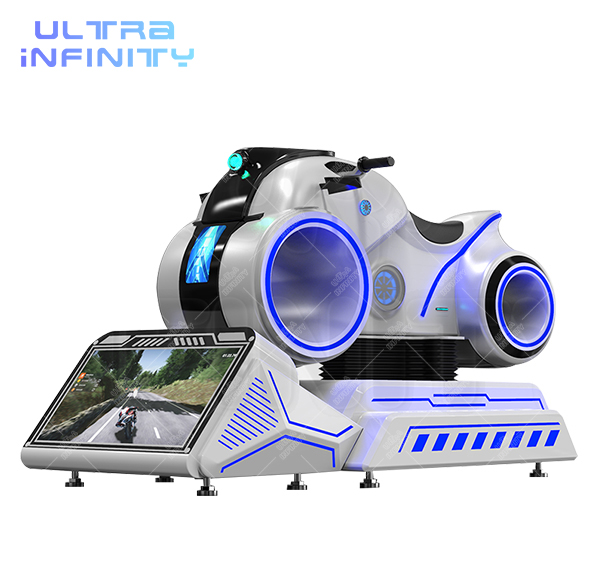
The 9D VR motorcycle is the purest impulse machine in the simulator family: one seat, a motion base, a 5-8 minute ride loop, and a location that does the selling - mall concourses, cinema lobbies, food-court edges where the guest was not planning to play and then does. The question the title asks - what does it pull daily - deserves the same treatment every simulator format gets in the published cluster: published price and capacity anchors, one clearly-labeled scenario, and the audit questions that decide whether a specific mall delivers the ceiling or a fraction of it.
Start with the arithmetic honesty. The $480-a-day headline is a ceiling, not a promise, and this guide tests it rather than repeating it: at the published $6-9 simulator-session band, $480 requires roughly 60 rides a day - about 6-9 rides per hour sustained across an 8-10 hour trading day with a queue in the peaks. A mall location with real footfall can reach it on weekends; a weak corner will book a third of it. The published bands make the number arithmetically reachable; your counter decides whether it is real.
The published cluster prices the impulse family first. The karting heat books $6-9 per six minutes (blog 795). The chair fleet books $130-320 per chair per day (per the published chair model) with a payback of about 4.5 months. The simulator rows book 60-90 rides per hour at 8-12 minute dwell on 4-6m2 per seat. The motorcycle inherits all three patterns: a $6-9 session band for the base ride, a per-seat daily gross in the chair-fleet neighborhood on weaker days and above it on strong ones, and a ride loop inside the published dwell window.
What the motorcycle adds is theater. A rider visibly leaning into a corner turns foot traffic into an audience, and the published spectator pattern applies at micro scale: watchers convert when the action is visible. That is why the format earns its place at the front of the floor rather than the back - the machine is simultaneously the product and the advertisement for the products behind it. The published attraction-mix study frames these impulse seats as the rent-subsidy layer: compact, self-serve, staffed from the counter, monetizing square meters that anchors cannot use.
Planning assumptions, stated in one place. The worked model rests on: (1) a mall-positioned single seat trading 8-10 hours a day; (2) the $6-9 published simulator-session band for the base ride, with a scenario $10-12 premium ride on weekends; (3) throughput of 6-9 rides per hour with queue, per the published per-seat independence pattern; (4) demand-driven ride counts of 25-65 a day - the demand side, not the machine side, is the binding constraint; (5) an installed budget that is quote-driven (request the quote - the published cost-analysis template prices the fit-out lines around it); (6) a contribution margin in the published 49-55% simulator-zone window. Replace any assumption with your counter data and the model reruns.
| Line | Scenario / Published Value | Basis |
|---|---|---|
| Base ride price | $6-9 per ride | Published simulator-session band (karting heat pattern) |
| Premium weekend ride | $10-12 | Scenario ladder on the same band |
| Throughput | 6-9 rides/hour with queue | 5-8 min loop, per-seat independence (published) |
| Rides per day | 25-65 (demand-limited) | Scenario on mall footfall patterns |
| Daily gross | About $190-480 | Scenario: rides x price across the band |
| Monthly gross | About $5,700-14,400 | Scenario across the trading month |
| Margin window | 49-55% contribution | Published simulator-zone margin family |
| Payback | Months-scale (scenario) | Published ladder: 4.5 mo chairs, 6-9 mo karting row |
Placement is the whole game for an impulse machine. The scenario rules: sightline from the main walking flow (the rider is the ad), power and a service apron planned in the lease line, and a counter or roving attendant who can run the ride, the queue and the upsell in one position. The published floor-balance pattern puts impulse seats where anchors leave daylight - entrances, concourses, F&B edges - and the published spectator-screen model explains why: the audience the machine gathers is itself a conversion surface for the beverages and the deeper attractions behind it.
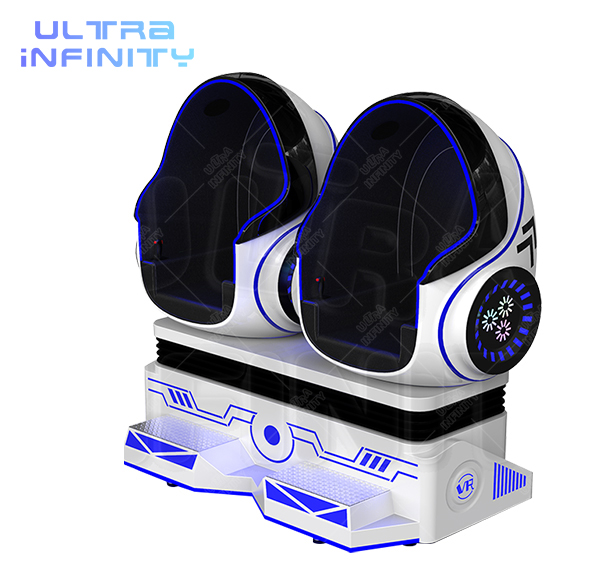
The age and height gate is a revenue line, not just a safety line. The published age-rules analysis maps which attractions enforce what: motion rides with a motorcycle envelope gate the smallest riders, and a turned-away family is either a chair-fleet customer instead (the published chair model books $130-320 per chair per day on exactly this spillover) or a lost ticket. The scenario pairing: motorcycle at the front for the impulse and the theater, chairs two steps behind to catch the riders under the gate and the guests who want seated, calmer motion.
The staff read closes the model: one attendant can run a two-seat impulse bank - motorcycle plus chair pair - from the counter, which is why the published equipment ranking sequences these formats first: cheapest labor per seat, fastest proof of footfall, and the cash flow that funds the next zone. The published kids-karting model shows the same per-seat economics at zone scale; the published chair model shows the spillover partner; and the published group-size economics explains the ceiling of the impulse layer - solo and duo tickets, which is exactly why the anchor attractions behind it exist.
On the worked scenario in this guide: a mall-positioned motorcycle books 25-65 rides a day at the published $6-9 simulator-session band, which is roughly $190-480 a day - the $480 headline is the ceiling case, reached on a strong footfall day at the top of the price band, and the honest plan is audited against your own counter, not the ceiling.
The ride loop runs 5-8 minutes including mounting and dismount, so a single seat serves 6-9 rides per hour with a queue - the same per-seat independence the published simulator rows use to book 60-90 rides per hour across a full row. Impulse demand, not the machine, is the limit: mall rides arrive in waves keyed to foot traffic.
The published chair model books $130-320 per chair per day with a 4.5-month payback; the motorcycle plays the same impulse economics at a higher price point and a bigger motion envelope, so its scenario daily band runs higher on strong footfall. The tradeoffs: one seat of floor per unit either way, a higher installed budget, and an age/height gate that trims the youngest riders.
The published simulator-session band is the anchor: $6-9 buys the 5-8 minute impulse ride in the published karting-heat pattern. The scenario ladder adds a premium ride - steeper track, leaderboard - at $10-12 on weekends. The published attraction-mix logic applies: the motorcycle wins on volume and impulse conversion, not on per-ride yield.
Where the passing traffic already walks: mall entrances, cinema concourses, food-court edges. The published spectator pattern - watchers convert when the action is visible - doubles here: the motorcycle is a show piece, and a rider leaning into a corner is the advertisement. The published attraction-mix study treats these impulse seats as the rent-subsidy layer around the anchor attractions.
The published ladder brackets it: about 4.5 months for the chair fleet, 6-9 for a karting row. The scenario motorcycle at a mid-band $300/day against a quote-driven installed budget lands payback in the same months-scale window - and the published equipment ranking's sequencing rule applies: prove the footfall with the cheapest formats first, then fund the motion machines from cash flow.
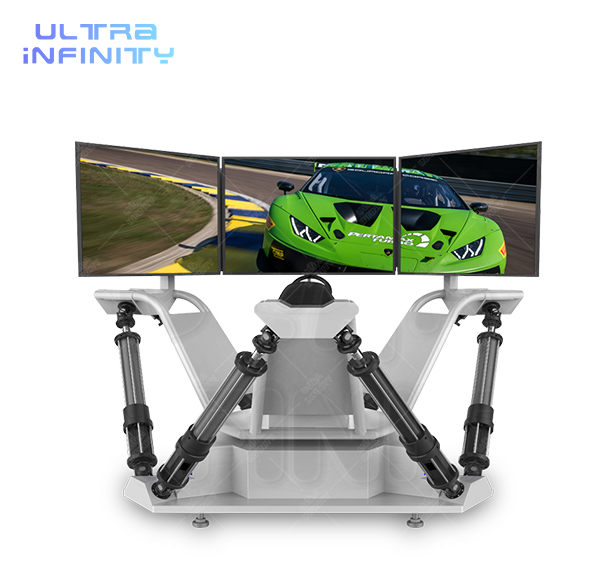
Send us your mall or lobby footfall and floor line: we will return the ride ladder, the placement plan and the payback scenario through the free 3D layout design - anchored with the VR Motorcycle Simulator, the VR Egg Chair and the Motion Racing Simulator Cockpit 6D.