Every game on the floor is a conversation between the machine and the player''s skill, and the difficulty setting decides whether that conversation ends in a rematch or a walk-away. A game that is too hard makes the first-time player feel stupid, and the feeling lasts one round; a game that is too easy makes the regular feel nothing, and the nothing lasts one session. The right difficulty is the narrow band where the player wins just often enough to feel skilled and just rarely enough to want another try.
| Difficulty vs Player | The Experience | The Floor Result |
|---|---|---|
| Too hard for a first-timer | Frustration, no progress, no win | One round, no return |
| Too easy for a regular | Boredom, no challenge, no story | One session, no rebook |
| Balanced for the first-timer | Progress every round, a win by round three | Session extends, repeat visit |
| Balanced for the regular | Close games, records, rivalry | League play, weekly return |
The session-length math is the practical reason difficulty matters: the venue sells minutes, and the balanced game naturally produces the 15 to 20 minute session that anchors a visit, while the imbalanced game produces either a one-round exit or a one-game boredom. The difference is not in the game, it is in the setting, and the setting is free to change.
The floor is a mix of skill levels at every hour, first-timers at the party table, regulars at the leaderboard station, kids at the family corner, and the single-setting machine serves only one of them. The venue that runs one difficulty per game is quietly telling two-thirds of its guests that the game is not for them; the venue that runs the skill tiers is serving the whole room.
Game designers have a working target for retention: the player should succeed on roughly 60 to 80 percent of meaningful attempts, and fail just often enough to raise the stakes. Below 60 percent, the game feels unfair and the player blames the machine; above 80 percent, it feels like a chore and the player stops noticing. The band is the zone where the win feels earned and the loss feels close.
The rule has a floor-specific version: the arcade does not have to satisfy the same player forever, it has to satisfy the player for the 15 to 20 minutes of the session and leave them wanting more. The balanced game produces a natural arc, an easy start, a rising challenge, a near-win that feels close, and the arc is what makes the guest hand over another credit instead of walking to the exit.
The leaderboard adds a second layer to the rule: the success rate matters for the casual, and the comparison matters for the regular. A game where the casual can score a respectable baseline and the regular can chase the top of the board serves both, which is why the settings are not one number per game but a tiered system per zone.
The skill-balance chart is the operating table of the floor: for every zone, the default setting, the family mode and the competitive mode, with the target success rate written next to each. The chart turns difficulty from an intuition into a documented standard that any shift manager can apply and any new hire can read.
| Zone / Game | Default Setting | Family Mode | Competitive Mode |
|---|---|---|---|
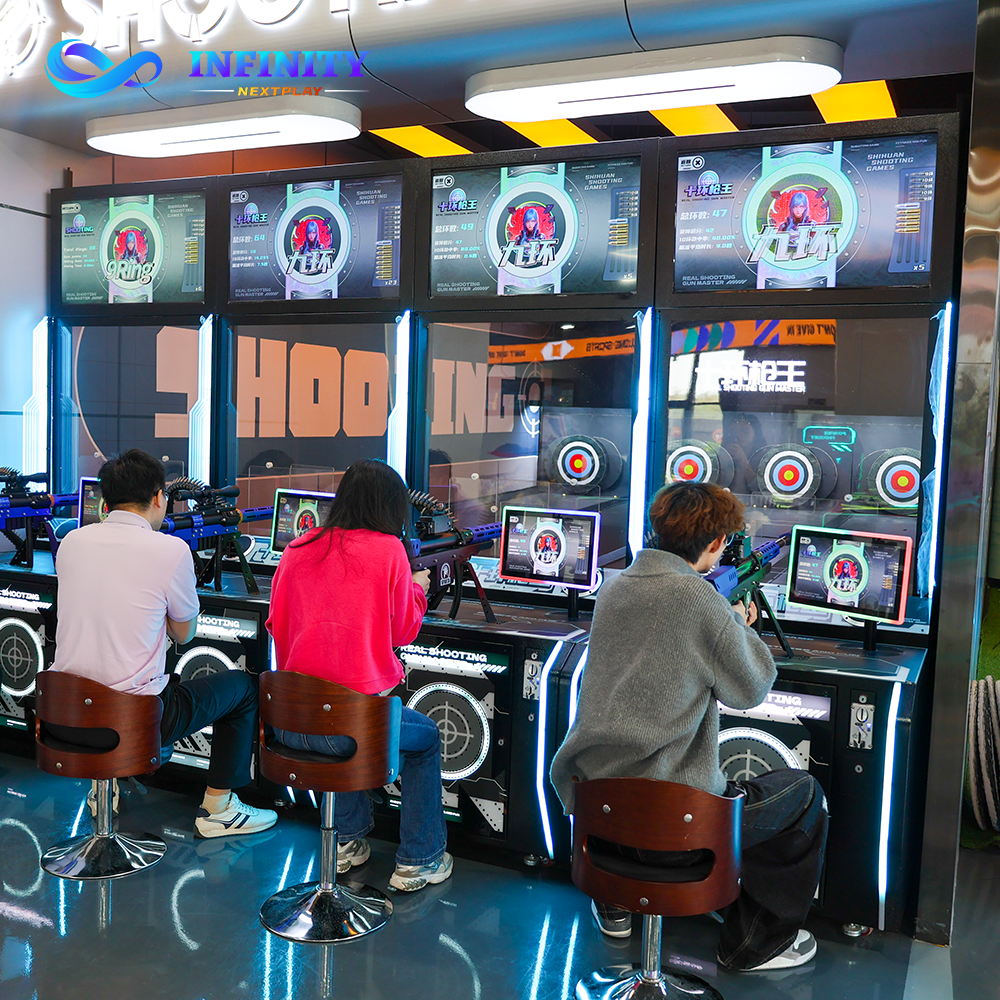
| Shooting sim (Q4) | Medium target, standard timer | Large target, slow targets | Small target, moving targets, ranked |
| Archery (A4) | Mid track distance, wide scoring rings | Short distance, large rings | Long distance, narrow rings, tournament |
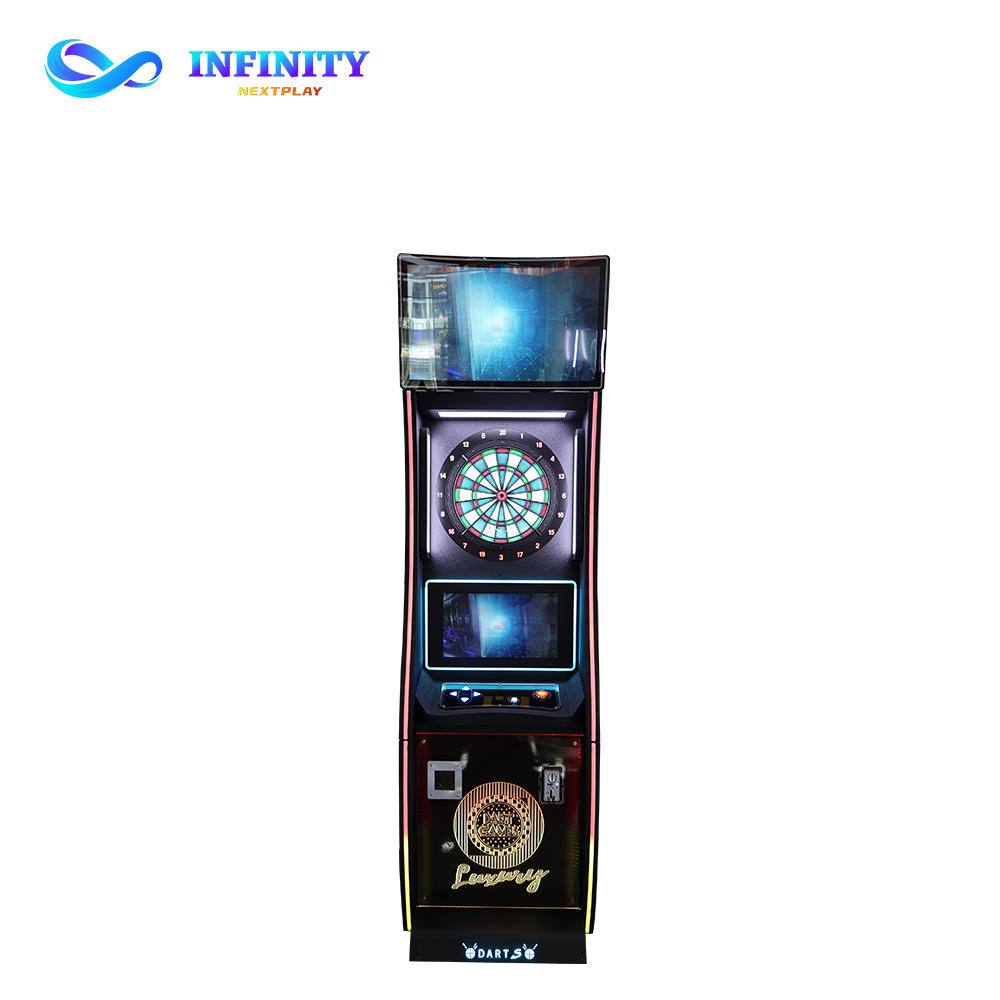
| Darts (X4) | Standard board, 501 game | Simplified scoring, big numbers | Handicap games, league ladder |
| VR motion | Standard session, gentle motion | Reduced motion, seated option | Full motion, hard track |
| Redemption games | Win rate near 80% | Near-guaranteed win, small prize | Skill-scaled prizes, big win possible |
The chart works because it separates the three questions the single setting confuses: who is playing, what game is it, and what is the floor trying to achieve in that zone. The family corner wants the win, the leaderboard wall wants the rivalry, the prize zone wants the near-miss that keeps them trying, and each goal has its own difficulty band.
The leaderboard is the arcade''s retention engine, and it has a built-in failure mode: once the same three regulars own the top of every board, the casual stops checking, the boards stop being social and the leaderboard wall becomes wallpaper. The handicap system is the fix, and it is the same math that bowling leagues and golf clubs have used for a century: give the weaker player a head start so the game stays close.
| Handicap Model | How It Works | What It Produces |
|---|---|---|
| Score handicap | Weaker player gets a points head start | Close games between any two players |
| Time handicap | Regular gets less time, casual gets more | Fair duels on shooting and reaction games |
| Tiered boards | Separate boards by experience bracket | Every bracket has a winnable top spot |
| Rotation crown | Weekly board reset with a named champion | Fresh races every week, new names on top |
The handicap math is simple to run: track each player''s rolling average score, set the handicap so the expected gap shrinks to a near-even game, and update the number after every session. The regular still wins more often, the handicap makes it close, and the casual walks away from a near-win feeling the game is beatable, which is exactly the feeling that brings them back.
Three regulars own the top, the casual sees an unclimbable wall, and the wall stops being a reason to play.
Every name on the board can win a given night, the races stay close, and the regular has to bring their A game to hold the crown.
The tiered board adds the social layer: a family bracket, a casual bracket and a pro bracket give every player a top spot they can reach, and the promotion moment, moving up a bracket after a win streak, is one of the strongest retention loops the arcade has. The boards should change names weekly, because the fresh race is the event.
The party hour is the hardest difficulty problem on the floor, because the party group is a mix of ages, heights and skill levels playing the same game at the same time. The family mode is the answer: one button that flips the machine to its easiest, most forgiving configuration, so the six-year-old, the grandmother and the birthday kid all get a win in the same session.
Dynamic difficulty is the automated version of the balance chart: the machine watches the player''s recent results and nudges the challenge in the direction that keeps the session alive. A first-timer who misses everything gets an easier target; a regular on a ten-win streak gets a tighter one. The machines that support it, sims with adjustable targets, archery with adjustable distance, darts with handicap modes, are the ones that hold both ends of the floor.
The Shooting Q4 is the model example: its adjustable targets and timers let the staff run a family round at party pace and a ranked round at tournament pace on the same unit. The Digital Archery Simulator A4 moves the track distance and ring size, which is the whole difficulty dial in one adjustment. The Electronic Dart Board Cabinet X4 brings the handicap and simplified-scoring modes that make darts the most inclusive game on the floor. The machines are built for the chart, and the chart is built on machines like these.
The balance chart is not a one-time setting; it is a monthly tune-up. The floor''s skill mix shifts as the regulars improve, the parties get younger in the summer and the league nights bring different players, and the settings that balanced last month are the settings that leak revenue this month. The tune-up is a thirty-minute review that most venues skip and the best venues run like clockwork.
The tune-up pays for itself in the two metrics that matter: session length and replay rate. A floor that nudges every machine toward the 60-80 percent band is a floor where the first-timer stays for the extra round and the regular keeps a reason to chase, and both behaviors are pure revenue.
A1: The family default should sit in the 60-80 percent success band, with a one-button family mode that goes easier: bigger targets, shorter distances, longer timers and a near-guaranteed win. The win is the deliverable in the family zone.
A2: Run the handicap math: track rolling averages, give weaker players a points or time head start and keep the games close. Add tiered boards by experience bracket and rotate the boards weekly so every bracket has a winnable top spot.
A3: No. The difficulty should match the zone goal: the family corner wants wins, the leaderboard wall wants rivalry, the prize zone wants near-misses and the competitive area wants fair, close games. Each zone gets its own settings.
A4: The machine watches recent results and nudges the challenge: an easier target for a player who misses everything, a tighter one for a player on a win streak. It keeps the session alive by keeping the success rate inside the comfortable band.
A5: Monthly, or whenever the floor mix shifts, like the summer party season or a new league night. Review the replay and session data, verify the machine settings match the chart and adjust from the data, not from the loudest regular.
A6: Difficulty sets session length and replay rate. A balanced game naturally produces the 15-20 minute session that anchors a visit; an imbalanced one produces a one-round exit or a one-game boredom. Both metrics are pure revenue.
The settings are free to change and the revenue they protect is not: the guest who wins in round three books the party, the casual who nearly beats the regular comes back next week, and the machine tuned to the 60-80 percent band keeps both playing. The skill-balance chart turns difficulty from a guess into a standard, and the standard runs the whole floor.
The machines that make the standard easy are the ones worth buying: the Shooting Q4 with its adjustable targets, the Digital Archery Simulator A4 with its distance dial and the Electronic Dart Board Cabinet X4 with its handicap modes. Contact NextPlay for the skill-balance chart and run a floor where every guest, casual or regular, has a game they can win.
Ask NextPlay for the skill-balance chart: the per-zone difficulty settings, the handicap formulas and the family-mode guide that keep casuals playing and regulars coming back.