A first-time visitor walks through the door with no attachment to the venue and no plan to return, and the decision about the second visit is made inside the first fifteen minutes. The guest either experiences a moment that feels like their kind of fun, or they experience confusion, waiting and a game they do not understand, and the second visit is quietly cancelled before the first one ends.
| First 15 Minutes | The Friction Version | The Welcome Version |
|---|---|---|
| 0-2 min: arrival | Unclear pricing, long queue, no greeting | Named greeting, clear menu, quick load |
| 3-6 min: orientation | Guest wanders, asks three times | One tour, one map, one staff name |
| 7-11 min: first game | Hard machine, no instruction, no win | Demo station, easy first round, a win |
| 12-15 min: the close | Guest leaves unsure of what to do next | Next-visit offer and membership invite |
The math of the window is simple: the second visit is the cheapest revenue the venue will ever earn, because the acquisition cost is already paid, and the second visit is decided in the first fifteen minutes of the first one. Every minute of friction in that window is a leak, and the leaks are almost always fixable with process, not with money.
The floor's job in that window is to remove the three blockers that kill first-timers: not knowing what to do, not winning anything and not feeling noticed. The welcome flow is the designed answer to all three, and the rest of this guide builds it step by step.
The audit is the uncomfortable walk-through every operator should do quarterly: enter the venue as a stranger, with no staff knowledge, and count every moment that requires a decision, a question or a wait. Each one is a point where a first-timer can bounce, and the audit turns the vague feeling that the counter is slow into a numbered list of leaks.
The audit produces a numbered leak list, and the fixes follow the numbers: the counter step that takes three minutes becomes a printed price card and a kiosk; the confusing floor becomes a color-coded zone map; the hard first game becomes a demo station. The venue that fixes the top three leaks usually lifts the first-timer conversion more than any ad campaign, because the leaks were the real funnel.
The data version of the audit is just as valuable: track the time from arrival to first game for new visitors, and the share who play a second game. The two numbers are the first-visit health check, and they move when the friction moves.
The welcome flow is a five-step map that runs the guest from the door to the membership offer without a dead moment, and every step is designed to do one job. The map is written down, the staff are trained on it and the steps are timed, because an improvised welcome is a welcome with leaks.
| Step | What Happens | The Success Signal |
|---|---|---|
| Greet | Name, welcome, one-minute pricing overview | Guest understands the play model |
| Tour | Ninety-second walk of the zones with one hook per zone | Guest names a game they want to try |
| Demo | Staff starts the first game and plays one round with the guest | Guest finishes a round with a win |
| Win | First session ends with a personal success on the board | Guest asks for a second game |
| Invite | Next-visit offer and membership pitch at the natural close | Guest leaves with the offer in hand |
The map works because each step hands the guest to the next one: the tour ends with a named game, the demo starts that game, the win creates the good feeling and the invite lands on the feeling. The five steps take about fifteen minutes, which is exactly the decision window the first section measured.
The invite is the step most venues skip, and it is the one that pays: a printed next-visit offer, a named staff member to ask for, a saved high score that can be beaten, a membership card with a visible first benefit. The guest who leaves with a reason to return is a regular in progress, and the guest who leaves with nothing is a stranger again.
The demo floor is the set of machines that a first-timer can approach alone and win on, with or without a staff member, and it is the physical answer to the friction audit. The demo machines are the ones with forgiving first rounds, clear instructions on the screen and an instant visible win, and they are placed where the tour naturally ends.
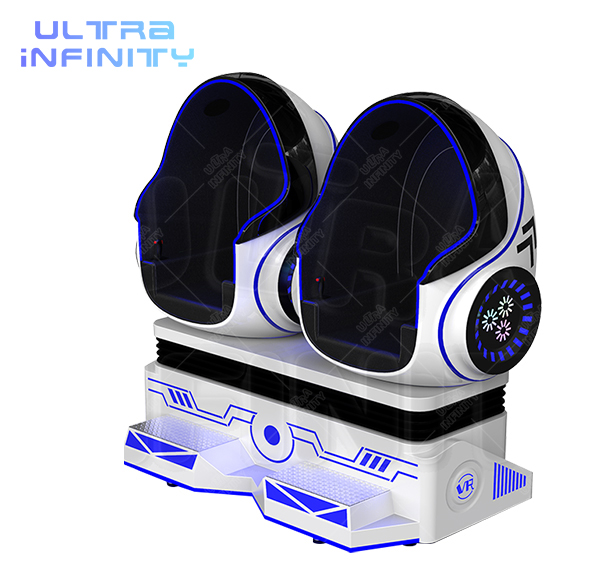
The first-visit arc maps well onto machines that lower the barrier: the VR Egg Chair gives the nervous first-timer a seated, gentle introduction to VR, no standing, no fear of falling; the VR Racing Simulator for Children gives the youngest guest a familiar activity, racing, with an instant speed thrill; and the VR Space Shuttle Cinema turns a family of two into a shared first experience, because the double seat makes the ride a story they tell together. Each machine is a demo in itself: the guest plays, wins, and the win becomes the reason to explore the rest of the floor.
| Demo Machine | First-Timer Barrier It Removes | The Return Hook |
|---|---|---|
| VR Egg Chair | Fear of motion and standing play | Gentle VR taste leads to the motion floor |
| Kids VR Racing | Age and height barriers | The child asks to come back to beat their lap |
| Space Shuttle 2-seat | Fear of riding alone | The shared story becomes the photo and the share |
The demo floor also runs the win-rate target from the KPIs: on the demo machines, the first-timer should succeed roughly 60 to 70 percent of the time, because the win is the emotional currency of the first visit. The demo machines are tuned easy on purpose, and the regulars do not mind, because the regulars have the leaderboard wall and the league nights.
The welcome flow cannot be tuned on feeling; it has to be tuned on data, and the data is easy to collect if the venue asks for it at the right moment. The load step, the wristband, the card, the phone number on the waiver, is the moment to capture the first-timer's contact, and the capture is the beginning of the return loop.
The loop is cheap because it reuses the moment the guest is already at the counter, and it is effective because it speaks to the guest at the two moments when the memory is alive: the day after, and the weekend when the plan is being made. The first-timer who receives a message with their own saved score is not a stranger anymore; they are a guest with a standing invitation.
The loop also feeds the floor: the data shows which demo machines produced the most returns, which zones the first-timers never found and which offers converted. The welcome flow becomes a monthly tuning exercise instead of a launch-day poster, and the tuning is what compounds the conversion.
The membership is not a loyalty program for everyone; it is a targeted conversion for the guest who has already proven they will return. The math is simple: the first visit proves the guest likes the floor, the second visit proves they will pay again, and the third visit is where the membership turns a returning guest into predictable revenue.
| Visit | The Offer | The Conversion Goal |
|---|---|---|
| Visit one | Welcome bonus credit and saved score | Contact capture and a next-visit reason |
| Visit two | Membership trial or first-month discount | Membership signup or a clear pattern |
| Visit three | Full membership with visible benefits | Recurring revenue and regular status |
| Month one | Renewal reminder and member-only night | The membership renews |
The membership card should pay for itself in the first month with the obvious benefits: a load discount, a member-only hour, a birthday-party discount, a reserved leaderboard spot. The visible value is the retention engine, because the member who can point to what the card saves them is the member who renews.
The regular is the venue's most profitable customer, and the numbers prove it: the second-visit conversion costs nothing to acquire, the member visits more often, spends more per visit and brings friends, and the friends are new first-timers who enter the same welcome flow. The flow is the engine, the membership is the fuel gauge, and the regular is the destination.
A1: About fifteen minutes from the door to the first win: a one-minute greet, a ninety-second tour, a demo round, the win and the next-visit invite. The window matches how long the first-timer decides whether to come back.
A2: The missing invite. Most venues welcome, tour and demo well, then let the guest leave without a next-visit reason, a saved score, an offer or a contact capture. The exit is where the regular is won or lost.
A3: Yes. The demo machines target a 60-70 percent first-timer win rate on purpose, because the win is the emotional currency of the first visit. The regulars have the leaderboard and the league nights, so the easy demo does not cost the venue anything.
A4: Not on visit one. The first visit captures the contact and the next-visit reason, the second visit offers the membership trial, and the third visit closes the full membership. Pitching too early wastes the offer on a guest who has not proven the pattern.
A5: The time from arrival to first game, the share who play a second game, the demo machines that produced the most returns and the second-visit conversion rate. These four numbers are the health check of the welcome flow.
A6: Within one cycle: fix the top three friction leaks, add the demo station and start the day-after message, and the second-visit conversion typically moves within four to eight weeks of consistent running.
The second visit costs nothing to acquire, and it is decided in the first fifteen minutes of the first one. The welcome flow, the friction audit, the demo floor, the data loop and the membership math are the machine that turns walk-ins into regulars, and the machine runs on process, not on ad spend.
The demo floor carries the first win: the VR Egg Chair opens the door for the nervous guest, the VR Racing Simulator for Children hands the family its first win, and the VR Space Shuttle Cinema turns the ride into a shared story. Contact NextPlay for the welcome-flow kit and make the first visit the beginning of a membership, not a one-off.
Ask NextPlay for the welcome-flow kit: the friction audit sheet, the floor tour script and the first-visit offer structure that turn walk-ins into members.