A free-roam VR session is not six minutes of gaming - it is a five-stage social loop that holds a group for 35 to 50 minutes on one small floor. The published dwell study on this site broke the loop into its stages, and the numbers explain the paradox every operator notices: the match is the shortest part of the session, and the parts that look like waiting are where the product actually lives.
A concrete scenario: four friends walk in at 3pm. They gear up, play a 6-8 minute combat match, spend 5-10 minutes arguing about the scoreboard, buy the rematch (60-70% of groups do, on the published figure), and pull a fifth friend off the spectator bench into the next round. They leave at 3:50 having spent 45 minutes in a 40-square-meter zone - and the food counter sat on the exit path the whole time. That loop, stage by stage, is this article.
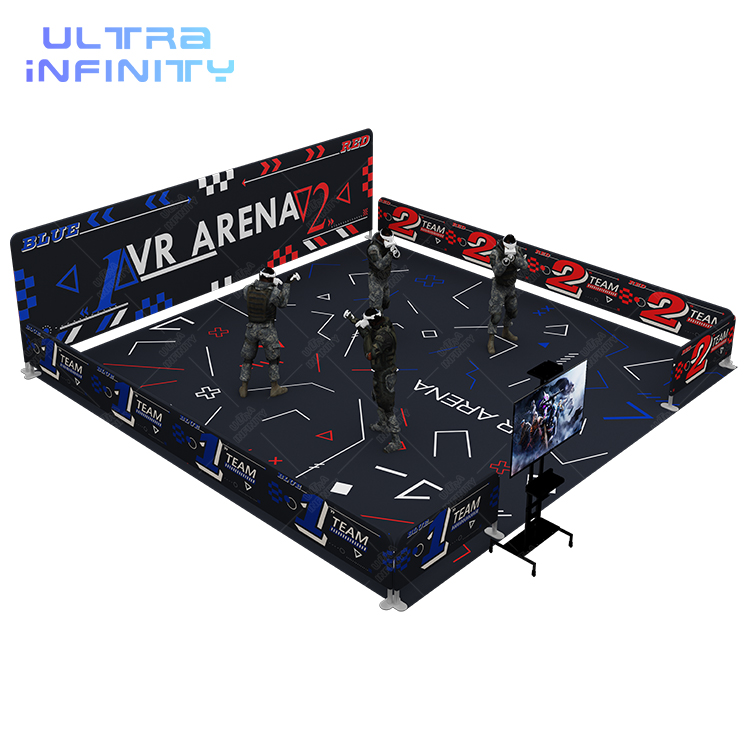
Stage 1 - the first round (6-8 minutes). The group suits up, the staff runs the briefing, and the match is a 6-8 minute combat round on the published dwell model. Short is the design: the published first-day analysis names motion sickness, latency and a 12-15 minute first-timer briefing as the things that kill first visits, so the opening match is built to finish before a newbie tires - one round of walking combat with your own feet visible under you, which is why the format reads as playable to people who have never worn a headset. The published zoning rules set free-roam at ages 8+ and 120cm and up, so the whole family can be in the same round. The Free Roaming VR Arena 2.0 runs this format on a 30-50 square meter footprint.
Stage 2 - the scoreboard debate (5-10 minutes). The match ends and the leaderboard posts the ranking - and nobody leaves. The published dwell study clocks 5-10 minutes of arguing over who won, watching the replay on the spectator screen and planning the rematch. This stage is pure social product: it costs the operator nothing, it happens at the arena edge, and it is the exact moment the queue crowd leans in. The published screen analysis measures 72% of queue guests watching the wall during these minutes, with a 25-35% beverage lift behind the attention - the debate stage is monetized two meters away at the drinks counter.
Stage 3 - the rematch decision (60-70% buy). The published dwell study measures 60-70% of groups buying a second round immediately after the first - the single most valuable number in the VR cluster, because a rematch is booked before the player has left the building and the selling cost is zero. The mechanism is the scoreboard: the published retention analysis ties leaderboard systems to 60% higher repeat rates, 2-3 plays per visit and 30% weekly returners. The rematch decision is where a session becomes a visit and a visit becomes a habit - and it is the published reason the leaderboard is revenue equipment rather than decoration.
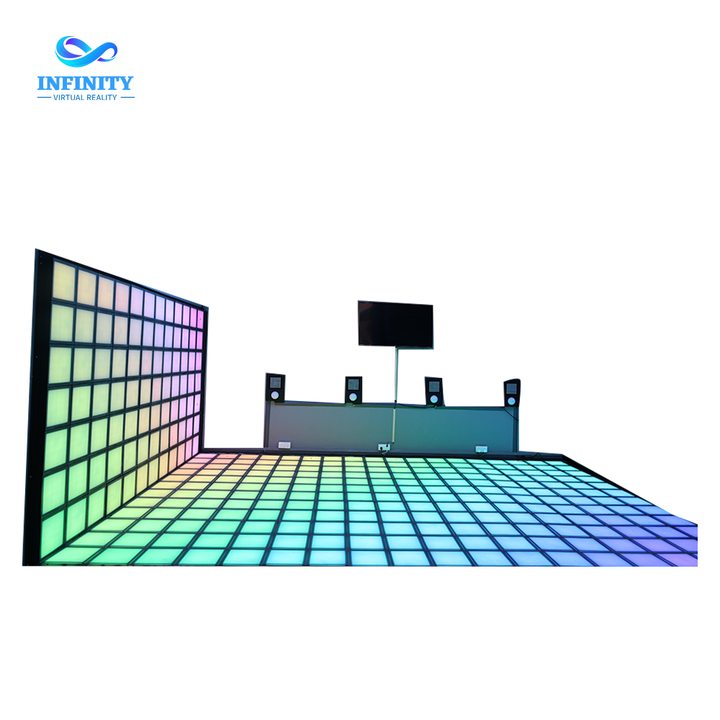
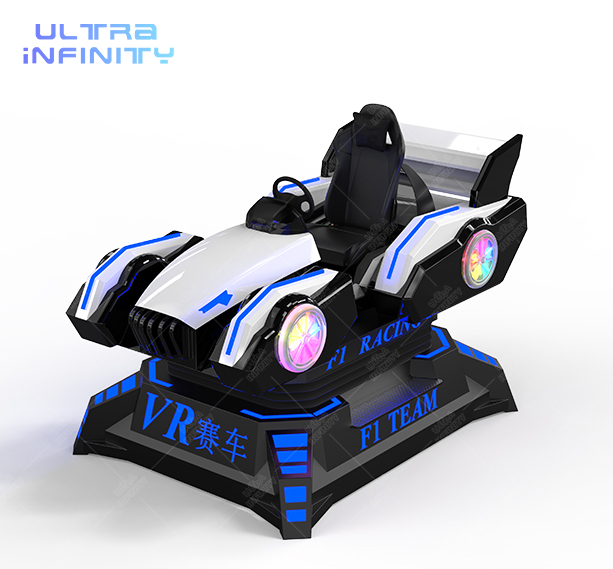
Stage 4 - the spectator pull. While the group rematches, the crowd watching from the side grows - and the published model treats the crowd as a stage of its own. Spectators are tomorrow's players: they have watched a full loop, seen the scoreboard drama, and heard the group argue about the rematch, so converting them into the next session is a one-sentence ask. The crowd spills two ways on a well-planned floor - some onto the Infinity Grid LED floor for their own light-up round, some onto the racing row while they wait for a slot - and both count the same in the till. The published screen analysis puts the viewing share at 72% of queue guests and ties the wall to a 25-35% beverage lift - the spectator zone pays its own rent in drinks while it feeds the next round of players. The published screen analysis covers the display spec; the behavior it captures is the point.
Stage 5 - the follow-up visit. The group leaves having spent 35-50 minutes in the arena zone, and the published dwell study records 65% repeat-visit intent after a first group match - the session ends with the next visit half-booked. The five stages together produce the published 40-minute dwell extension, and dwell is the currency the rest of the floor trades in: every extra minute is spendable at the food counter, the bar, the LED grid room or the racing row on the exit path. The published $320/hour test is the discipline the arena clears on turnover alone; the dwell extension is where the rest of the floor collects.
| Session Stage | Published Timing | Published Behavior |
|---|---|---|
| 1. First combat match | 6-8 minutes | Group enters, 4-player concurrent combat |
| 2. Scoreboard debate | 5-10 minutes | Ranking argued at the arena edge; replay on screen |
| 3. Rematch decision | Immediately after round one | 60-70% of groups buy a second round |
| 4. Spectator pull | During rematches | 72% of queue guests watch the wall; 25-35% beverage lift |
| 5. Follow-up visit | At exit | 35-50 min total dwell; 65% repeat-visit intent |
A concrete scenario closes the loop: the same 60 square meters can run as a cabin row or an arena, and the published comparison is the answer - the cabins win the per-hour player count, the arena wins the visit by 40 minutes per group, the rematch rate compounds the ticket, and the spectator wall sells drinks to everyone waiting. That is the five-stage loop working as designed: the match starts it, the scoreboard extends it, the rematch compounds it, the crowd watches it, and the exit path collects it.
The published dwell study clocks the full loop at 35-50 minutes per group: a 6-8 minute first match, 5-10 minutes of scoreboard debate, an immediate rematch for most of the group, and the spectator pull in between. The match itself is short on purpose - the published five-stage model shows the social stages around the match are where the extra 40 minutes of dwell time actually accumulates.
The published format guide describes 4-player concurrent combat as the core session on a 30-50 square meter footprint, and the group-arena model serves 24-40 players per hour in groups on a 60 square meter floor. The zoning guidance prices one staff member per session with a 15-minute session cap - the format is designed around small teams rotating fast, not one long mass round.
Yes - the published dwell study measures 60-70% of groups buying a second round immediately after the first match ends, and 65% repeat-visit intent after a first group match. The scoreboard debate between rounds is the mechanism: the ranking on the wall turns "that was fun" into "rematch, right now".
It is the group format first-timers finish. The published first-day analysis names the killers of first visits - motion sickness, latency and the 12-15 minute first-timer briefing - and free-roam rooms sidestep the worst of them: you walk, you see your own feet, and the 20ms-class latency bar is met by modern systems. The published zoning rules put free-roam at ages 8+ and 120cm and up, so most families can play the same round together.
Because the arena is a stage. The published screen analysis measures 72% of queue guests watching the spectator wall and a 25-35% beverage lift behind that attention - watching the rematch is part of the product. The dwell study treats the growing crowd at the arena edge as its own stage, and the drinks counter on the exit path is where those watching minutes become revenue.
The published comparison is dwell: a solo cabin serves 60-90 riders per hour on the same 60 square meters, but each rider stays 8-12 minutes and leaves; the group arena serves 24-40 players per hour and each group stays 35-50 minutes. A chair sells a ride; a free-roam arena sells a social match with a rematch attached - which is why the arena anchors the floor plan and the cabins fill the gaps around it.
Send us your group size: we will match your party to the right arena format and session plan through the free 3D layout design - anchored with the Free Roaming VR Arena 2.0 and the leaderboard wall behind it.