A mini golf course rarely dies of one big mistake - it dies of ten small ones that each look reasonable on the build spreadsheet. The opening month hides them: novelty traffic fills the route regardless. Month two is the audit, and by then the design errors are load-bearing. The published capacity analysis gives this list its measuring stick - the 3-5 minute per-hole band, the 16-24 players per course-hour route ceiling - and every mistake on this list is a number that drifted away from a published reference.
The ranking follows the drain rate: throughput mistakes drain every hour the doors are open, pricing mistakes drain the slots that needed filling most, and staleness drains the months after the novelty. The published rate card makes the pricing mistake concrete - the flat $8 rate that leaves the afternoon dead against the tiered $4.50/$5.00/$8.00/$9.00 structure that fills twenty afternoon rounds for $160.
| Rank | Mistake | The Published Number It Ignores |
|---|---|---|
| 1 | Holes that restart play (retry loops) | 3-5 min per-hole band; route ceiling 16-24/hr |
| 2 | One flat price for all dayparts | Tiered card: $4.50/$5.00/$8.00/$9.00 |
| 3 | Manual scorecards on a busy route | Sensor runs 18 rds/hr vs 12 manual |
| 4 | No re-theme calendar | 12 LED rotations a year, 30-minute changes |
| 5 | Single-activity isolation | 57% prefer multi-activity venues (n=600) |
| 6 | Party loop designed as an afterthought | 6-9 hole loop plays 18-45 min by design |
| 7 | Queue with nothing to watch | The signature hole belongs at the end of nine |
| 8 | Hole count copied from a neighbor | 9-hole plans run 9 rounds/hr - sized to demand |
| 9 | No package anchoring | Tiered packages carry +22-35% value lift |
| 10 | Footprint spent on length, not variety | The same 3-5 min band holds at any hole count |
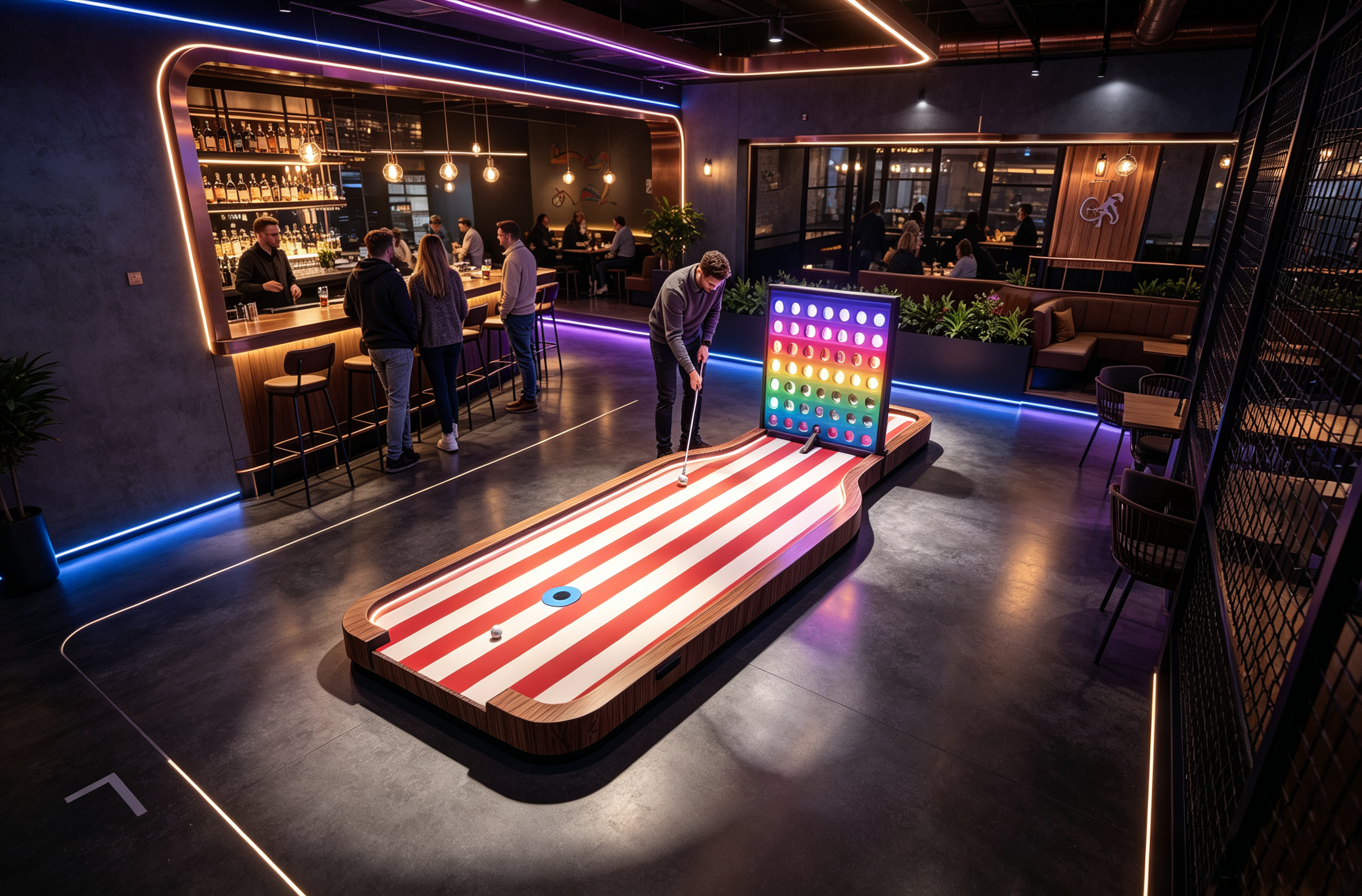
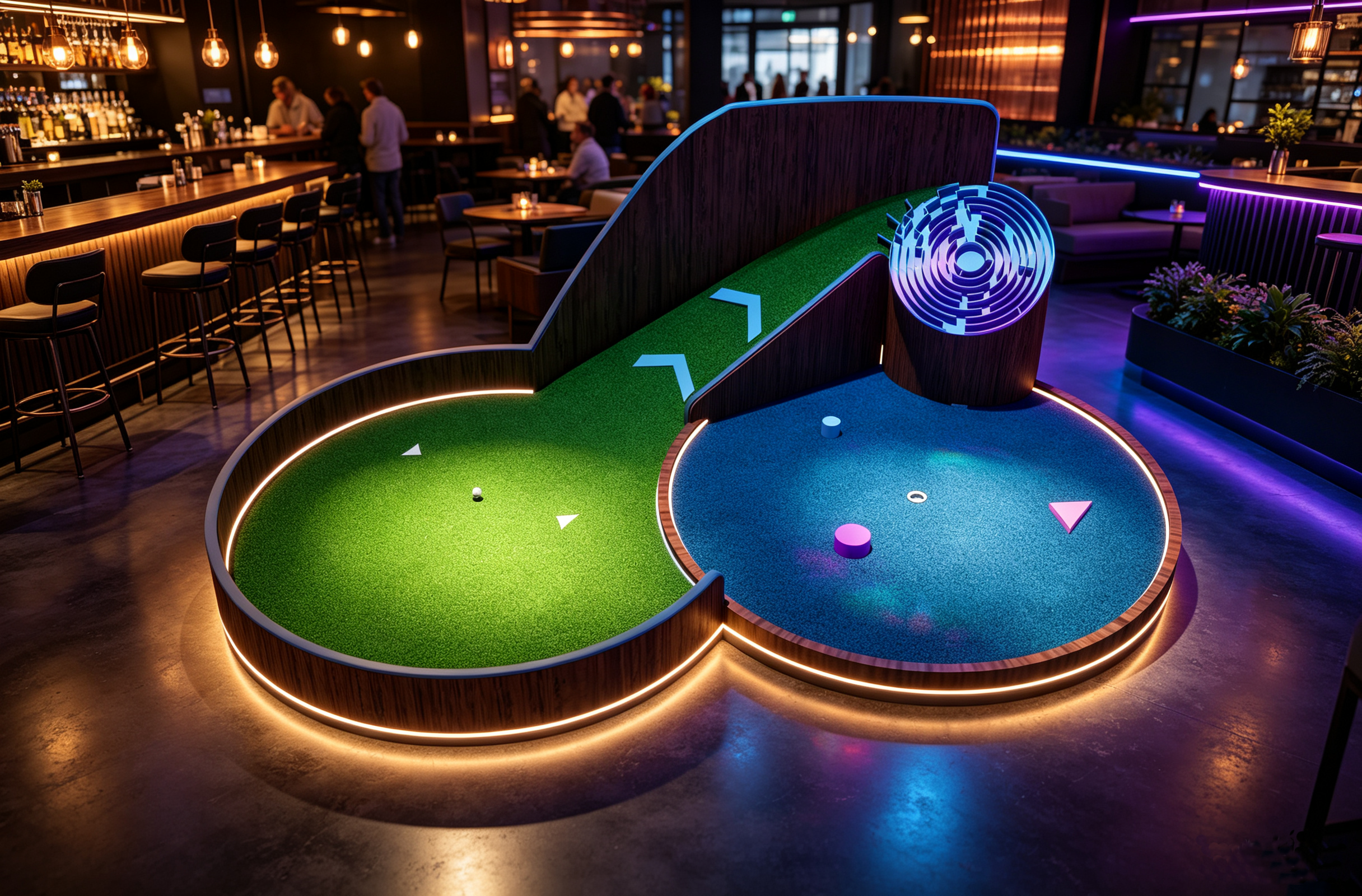
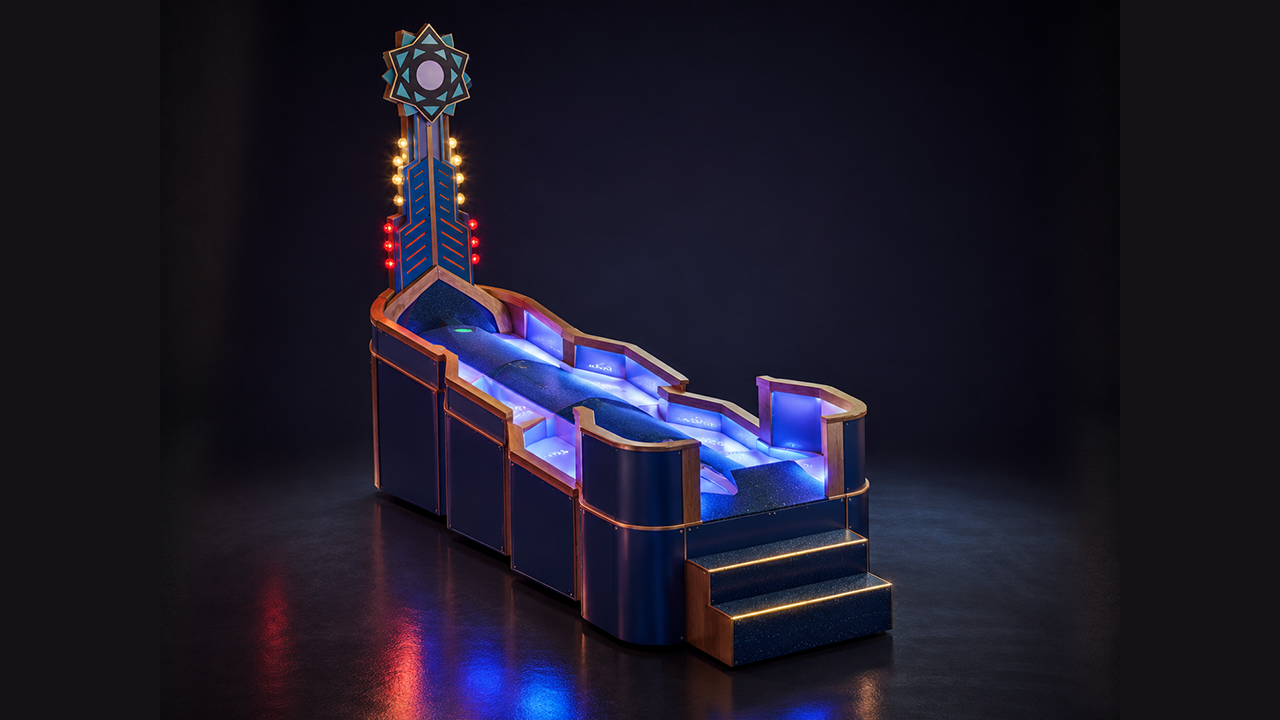
Three of the ten fixes are product purchases rather than rebuilds. The Rainbow Golf Challenge converts mistake three: sensor scoring lifts the route from the published 12 manual rounds per hour to 18 with zero staff - the cheapest construction-free round per hour in the list. The Labyrinth Challenge converts mistake seven and ten together: a signature puzzle hole that gives the queue something to watch and adds variety without length. The Dream Castle Hole anchors mistake four: a themed frame that the published 30-minute LED re-theme cycle re-dresses all year.
Half the mistakes on the list are installed, not designed. The installation errors: leveling poured wrong shows up as dead balls and drifted reads; power and network runs cheapened at build time become the POS and scoring outages the published equipment-mistakes list names as uptime killers; and turf seams sealed badly lift within the first month of play. The operating factors compound them: a course with no re-theme calendar, no spare-parts shelf and no daily walk ages twice as fast as the published rotation-and-restock cadence assumes - the mistakes in this table are cheaper to prevent during the build than to fix after the opening party.
| Pre-Opening Error | Published Reference | Month-One Symptom |
|---|---|---|
| Floor leveling poured wrong | Payback model build quality assumptions | Dead balls, drifted sensor reads |
| Power/network runs cheapened | Equipment-mistakes red-flag list | POS and scoring outages |
| Turf seams sealed badly | Spare-parts wear-item list | Lifted edges by week four |
| No re-theme/restock cadence installed | 12-rotation LED calendar + spares guide | A stale, wearing course by month two |
Picture the published figures assembled into one month-two recovery. The course audits against the ten: its flat $8 rate becomes the published four-tier card and the afternoon fills twenty rounds for $160; its manual scorecards swap to the Rainbow Golf Challenge and the route rate climbs the published ladder from 12 to 18 rounds per hour; the party loop is rebuilt to the published 6-9 hole, 18-45 minute design and packages anchor at the published +22-35% lift; the LED calendar schedules the first of the published 12 rotations and the Dream Castle Hole opens the evening looking like a new course. Month three does not need novelty traffic - it has the returners the fixes were built for.
The scenario is illustrative, but every number in it is a published reference: the rate card, the scoring ladder, the party loop, the package lift and the rotation calendar.
Every figure here is a published planning reference: the 3-5 minute band and route capacities come from the published capacity analysis; the four-tier rate card and the $160 afternoon example come from the published pricing analysis; the 10/12/16/18 scoring ladder comes from the published scoring comparison; the 30-minute, 12-rotation LED calendar comes from the published themes guide; the 6-9 hole party loop and +22-35% package lift come from the published party design; and the 57% multi-activity preference comes from the published KAM Insight research (n=600). All are planning references, not guarantees - restate each against your own course before adopting them.
The questions course owners ask about design errors and fixes, answered with the published references.
Ignoring the published throughput frame: per-hole play must hold the 3-5 minute band or the route loses the 16-24 players per course-hour that pay the rent. Holes built as showpieces that restart play break the band and queue the whole course.
The published rate card prices four tiers - $4.50 morning, $5.00 afternoon, $8.00 evening, $9.00 peak - because each slot has different demand. A flat $8 rate leaves the quiet afternoon slot empty; the published example fills it at twenty rounds for $160.
The published scoring ladder runs 10 rounds per hour with no system, 12 manual, 16 hybrid and 18 sensor. Manual cards cost a full round per hour versus sensors - and the queue feels every one of them.
Nothing changes between visits. The published LED rotation guide re-themes a course in about 30 minutes and runs 12 rotations a year - a course without a rotation calendar shows players the same room every visit.
The published multi-activity research (57% prefer venues with multiple activities against 17% for single-activity) says a course that cannot pair with food, darts or events loses the majority preference.
The scoring swap: moving from manual cards to the published 18-rounds-per-hour sensor pattern needs no construction, and the throughput gain is immediate.
Send us your hole list and rate card: we will return the mistake audit, the fix sequence and the throughput projection through the free 3D layout design - anchored with the Rainbow Golf Challenge, the Labyrinth Challenge or the Dream Castle Hole.