“I have a 1,600 sq ft bar and $40K to spend. What actually makes money — and how fast do I get it back?” That is the exact message a bar owner in Austin sent me last spring. He did not want a definition of “family entertainment center.” He wanted numbers.
So here is the honest version. Over the last six years I have installed bowling and dart setups in more than 200 venues across 30-plus countries, and the single most repeatable win for a small room is not a giant 10-pin alley. It is a two-lane String Bowling system paired with a Dart Machine X5. That combo is what turned his slow Tuesday nights into a $16,000-a-month revenue line. Let me walk you through exactly how, with the real math.
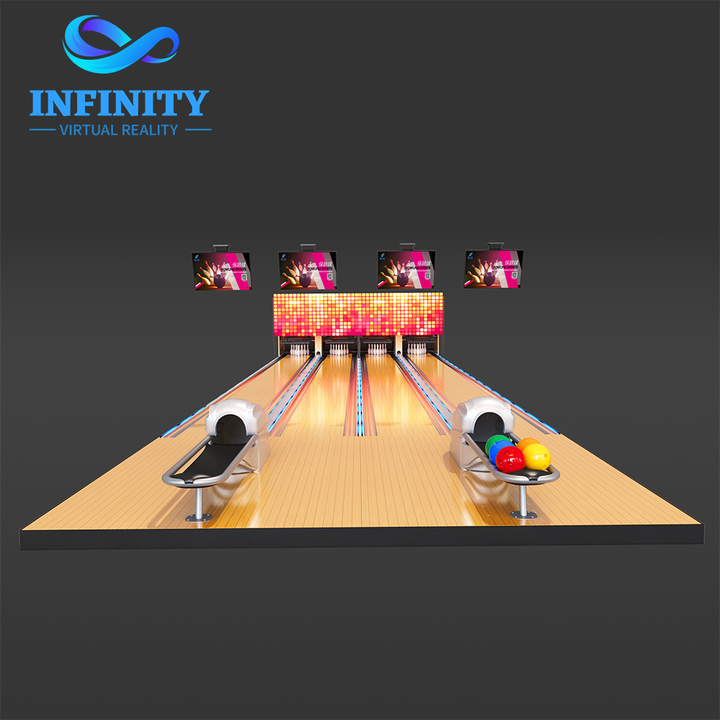
The first question every bar or hotel owner asks me is: “Do I have space for bowling?” And almost everyone assumes the answer is no, because they are picturing a regulation 60-foot lane. Here is what nobody tells them: a full 10-pin regulation lane needs roughly 86 feet of runout and a pinsetter pit deep enough to swallow half your floor. A Commercial 2-Lane String Bowling System does the same job of “drawing a crowd and holding them” in a fraction of the space, because the pins hang on strings and reset mechanically instead of dropping into a deep pit.
That difference is not cosmetic. It is the entire economic argument. String bowling cuts your civil works, your ceiling-height requirement, and — most importantly — your maintenance labor. A traditional free-fall pinsetter is a machine with hundreds of moving parts that jams, and jams mean a staff member walking down a lane while paying customers wait. String mechanisms reset in a couple of seconds and rarely fault. For a small venue with two or three staff on a shift, that reliability is the difference between a profit center and a headache.
My Austin client fit two lanes into a 280 sq ft back corner that had previously been dead storage. That corner now generates more revenue per square foot than his entire bar top. If you are weighing bowling against a Standard 10-Pin Bowling Alley, the rule of thumb is simple: under 3,000 sq ft, go string; over that and targeting league play, consider full lanes.
Space-saving string mechanism, turnkey install, low maintenance. Ideal for bars, hotels and boutique venues that want real bowling without a deep pit.
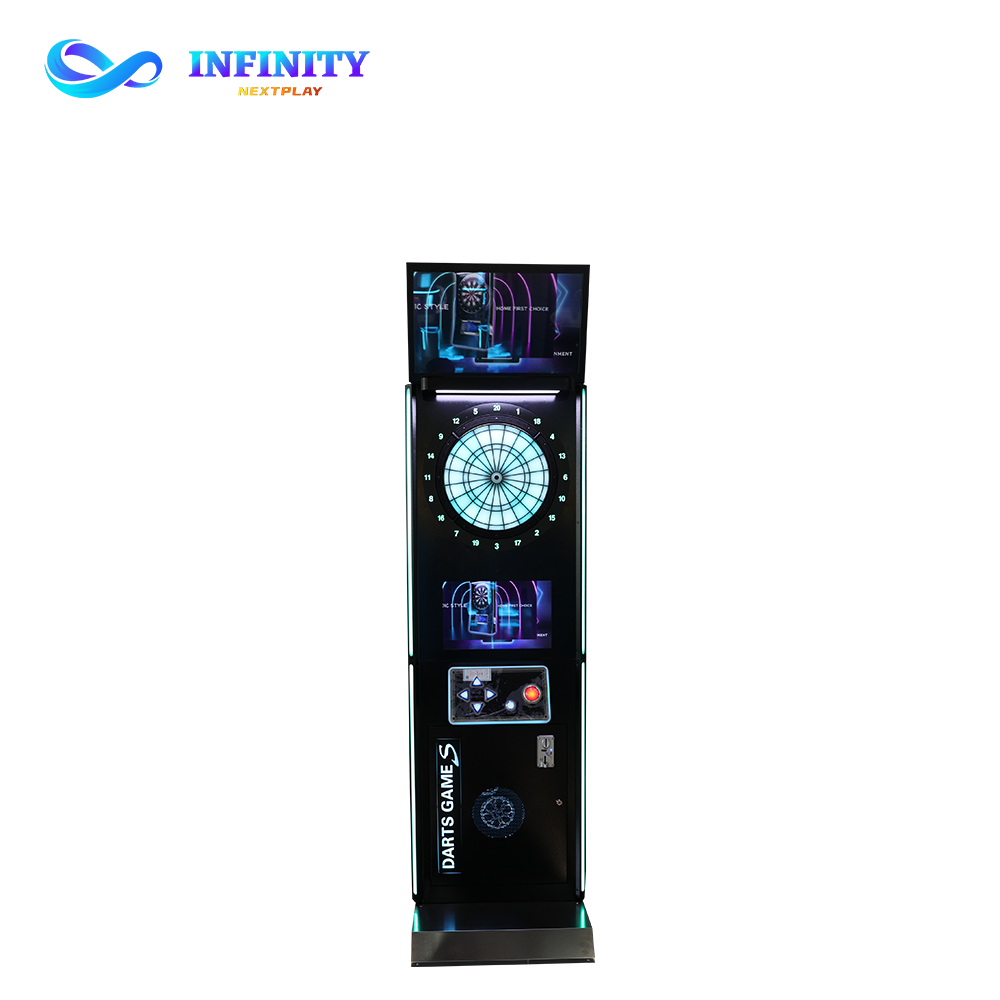
View Details →Coin/card operated electronic darts with online league play. Built for high-traffic gaming zones and sports bars. Near-zero staffing, pure margin.
View Details →If string bowling is the anchor that gets people in the door, the Dart Machine X5 is the quiet cash register that runs itself. Here is why I put it in almost every bar layout: a dart cabinet occupies about 12 square feet, needs no attendant, and bills automatically through a coin or card reader. It is the closest thing to passive income in physical entertainment.
The X5 specifically is the workhorse of our dart line. It is card-reader ready, which matters more than owners realize — the second you remove the “do I have quarters?” friction, per-session spend jumps. It also runs online league play, so your regulars compete against players in other cities. That single feature is what converts a casual thrower into a Tuesday-night regular who brings three friends. Leagues are recurring revenue disguised as a game.
Let me give you the real number from a venue in Manchester, UK. Two X5 cabinets against one wall, no staff assigned, generated roughly £2,100 per month combined in their busy season — and the owner estimated maybe 20 minutes a week of maintenance (wiping down, clearing the occasional stuck flight). Compare that to the labor cost of literally any food or drink item on his menu and you understand why I call darts the highest-margin square foot in the building.
Let me do the full calculation the way I did it for the Austin owner, because “it makes money” is useless without the arithmetic. This assumes a 1,600 sq ft venue in a mid-size US city, using the corner-plus-wall layout.
| Line item | Upfront cost | Monthly revenue |
|---|---|---|
| 2-Lane String Bowling System | $28,000–$34,000 | $9,500 |
| 2 × Dart Machine X5 | $5,200–$6,400 | $3,200 |
| Incremental food & drink (dwell time) | — | $3,300 |
| Total | ~$36,000 | ~$16,000 |
Now subtract operating costs. Bowling and darts add very little labor — you are not hiring dedicated staff, your existing bartenders run the tabs. Utilities, consumables (dart flights, lane maintenance), and payment processing come to roughly $1,800–$2,200 a month. That leaves a net contribution near $13,800. Against a $36,000 all-in investment, you are looking at a payback window of roughly 5 to 7 months, and everything after that is margin. This is why I keep telling small operators to stop obsessing over huge attractions and start with the combo that actually pencils out.
Numbers on a spreadsheet are one thing. Here is what changed on the floor at the Austin bar in the 90 days after install.
| Metric | Before | After |
|---|---|---|
| Avg. customer dwell time | 47 min | 2h 40min |
| Avg. spend per group | $54 | $118 |
| Tuesday/Wednesday traffic | quiet | league nights, near full |
| Private booking inquiries | ~1/month | 9–12/month |
The dwell-time jump is the whole game. A guest who stays 47 minutes buys one drink. A guest who stays over two and a half hours because they are mid-tournament buys food, buys rounds, and posts about it. Entertainment does not compete with your bar sales — it multiplies them. That is the mental shift I try to get every owner to make.
Different context, same combo. A 90-room business hotel in Lisbon, Portugal had a beautiful lobby bar that died after 8pm because guests went to their rooms. They installed a single string bowling lane and one X5 dart cabinet in an underused function room. Within two months, evening food-and-beverage revenue in that room rose about €7,400 per month, and they started marketing “bowl & dine” packages to corporate groups staying midweek. The equipment did not just earn its own keep — it created a reason for guests to spend the evening on-property instead of walking to a restaurant down the street.
The lesson from both stories: this combo works because it is social and repeatable. Bowling gets the group in and laughing; darts keeps individuals coming back for league nights. One is an event, the other is a habit. Together they cover both halves of the retention equation.
Here is the exact sequence I walk every new operator through. Follow it in order and you will avoid the mistakes that cost people money.
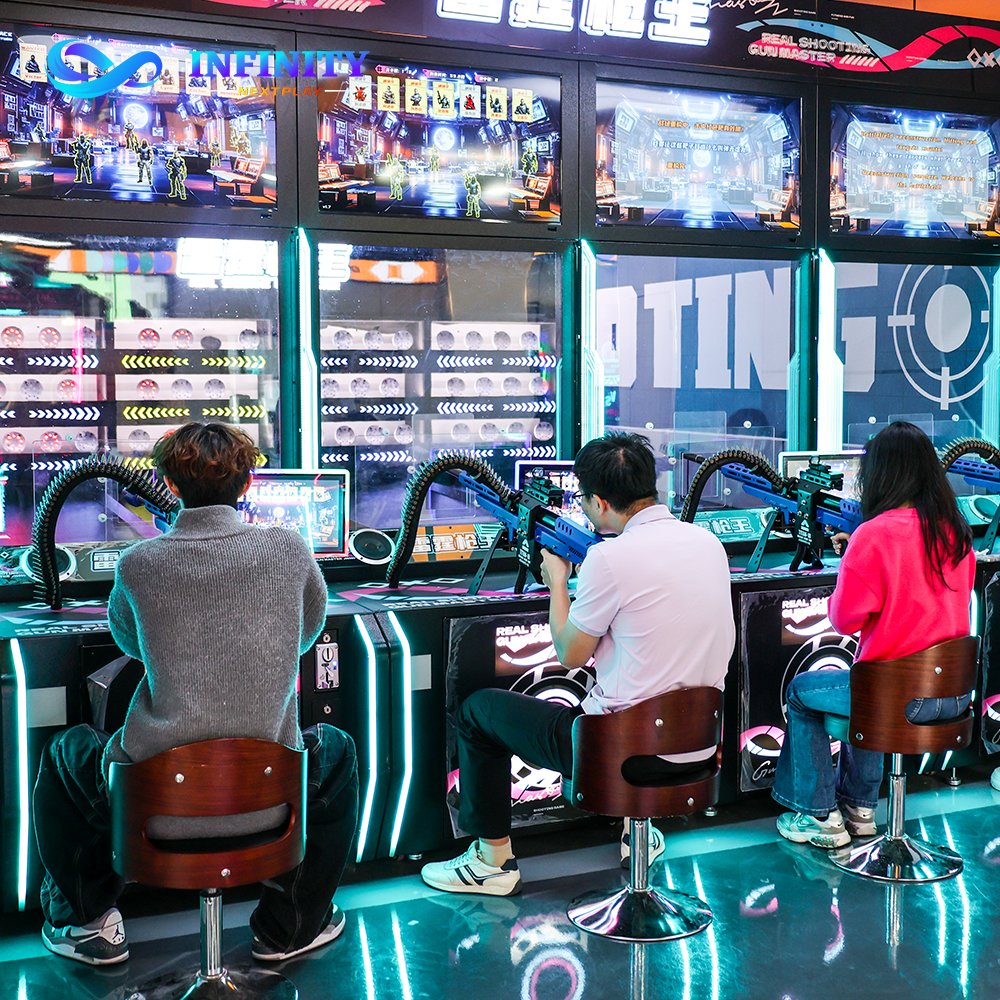
Once the bowling-and-darts core is paying for itself, the most common upgrade my clients ask about is an interactive shooting attraction to capture the younger, competitive crowd. The Shooting Master C4 uses self-loading soft rubber bullets and moving targets, and it slots neatly into a corner or along a wall. It is loud, visible fun that pairs well with league nights — and like darts, it bills automatically with almost no staffing overhead.
Self-loading rubber-bullet shooting with moving targets and 3-level reaction challenges. High-energy, low-staffing, perfect league-night add-on.
View Details →If your crowd skews toward precision-sport fans, an Digital Archery Simulator A4 or a Digital Scoring Shooting Simulator Q4 are excellent later additions with real-time leaderboards that feed the same league-night habit. But do not overbuild on day one — nail the bowling-and-darts core first, then expand from proven cash flow.
How much space do I really need to start?
About 280 sq ft for two string lanes and roughly 12 sq ft per dart cabinet. Many bars fit the whole combo into previously dead corner or storage space. Send dimensions and we will confirm with a free 3D layout.
Is string bowling “real” bowling? Will customers accept it?
Yes. The gameplay feel is virtually identical for casual and social play, which is 95% of a bar crowd. String systems are now standard in boutique venues worldwide precisely because guests do not notice the difference — but you notice the lower maintenance and smaller footprint.
How much staff does this add?
Almost none. Darts and shooting bill automatically. Lanes are run through your existing bar staff via a simple time-based system. Most owners report under 30 minutes of maintenance per week across the whole setup.
What is the realistic payback period?
For the two-lane-plus-two-dart combo in a mid-size market, typically 5 to 7 months once league nights ramp. Hotels and venues with existing foot traffic often hit the lower end.
Do you handle installation and after-sales?
Yes — turnkey delivery, installation guidance, and ongoing parts and technical support are included. String mechanisms are deliberately low-fault, and consumables like dart flights and lane supplies are easy to reorder.
Get a free 3D layout for your space. No commitment required.