You want to open a sports bar, but the math scares you. A full ten-pin alley runs 26 meters, needs a dedicated room, and costs more than most first-time operators can stomach. I have helped 200+ venue owners across 40+ countries solve exactly this problem, and the answer is almost never "go big." It is "go smart." A Duckpin Bowling lane plus an online Electronic Dart Machine X7 in the same room is the cheapest, fastest-payback competitive social hub you can build — and in this guide I will show you the real numbers from venues that already did it.
Let me tell you about Marcus. He runs a 180 m² sports bar in Austin, Texas. When he first called me, he was convinced he needed a "real" bowling alley to compete with the chain down the street. I ran the numbers with him: a standard 26-meter ten-pin installation would have eaten 40% of his floor, required a foundation rebuild, and pushed his upfront cost past $120K. He would have gone bankrupt before month six.
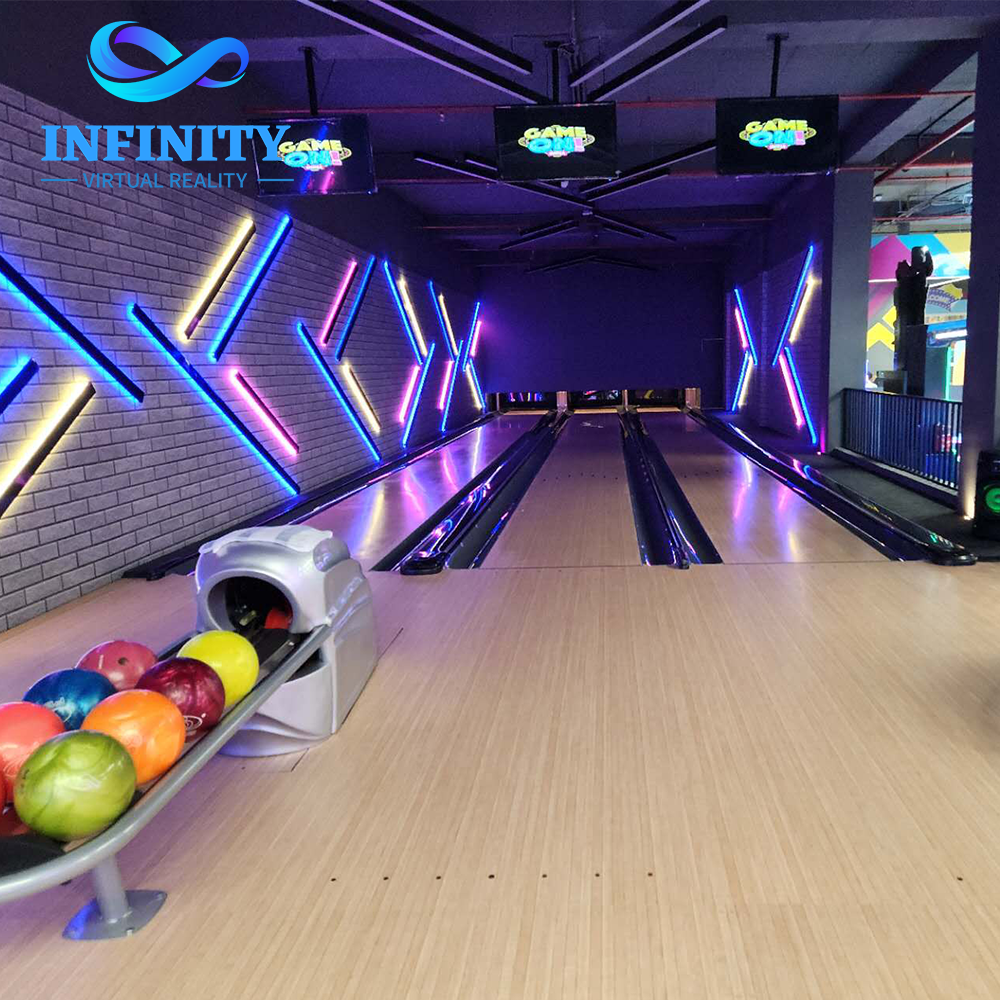
Instead, we installed two Duckpin lanes at 9.7 meters each. The space-saving design meant we fit both lanes in a corner that used to hold three dead pinball machines. The lower foundation height (20–23 cm) meant zero construction — we rolled them in through the front door on a Saturday and were testing games by Sunday night. Marcus's total equipment cost was under $35K.
Here is what happened next. Duckpin uses smaller balls (no finger holes) and shorter lanes, so casual drinkers who have never bowled can throw a strike in their first game. Average session time dropped to 12 minutes, which means throughput tripled versus ten-pin. At $8 per game and an average of 60 games per lane per weekend night, each lane grosses roughly $480/night × 3 nights = $1,440/weekend. Two lanes = $2,880/weekend = about $11,500/month in lane revenue alone, before food and beverage uplift.
But the real magic is what bowling does to the bar tab. Marcus tracked it: tables near the lanes ordered 38% more drinks than tables in the quiet zone. People linger. They celebrate strikes with rounds. The bowling paid for itself in five months; the drinks paid for his vacation.
Bowling brings the crowd in. Darts keep them coming back. That is the lesson from Priya, who runs a members' lounge in Manchester, UK. She added the Online Electronic Dart Machine X7 six months after her Duckpin lanes, and it changed the entire economics of her venue.
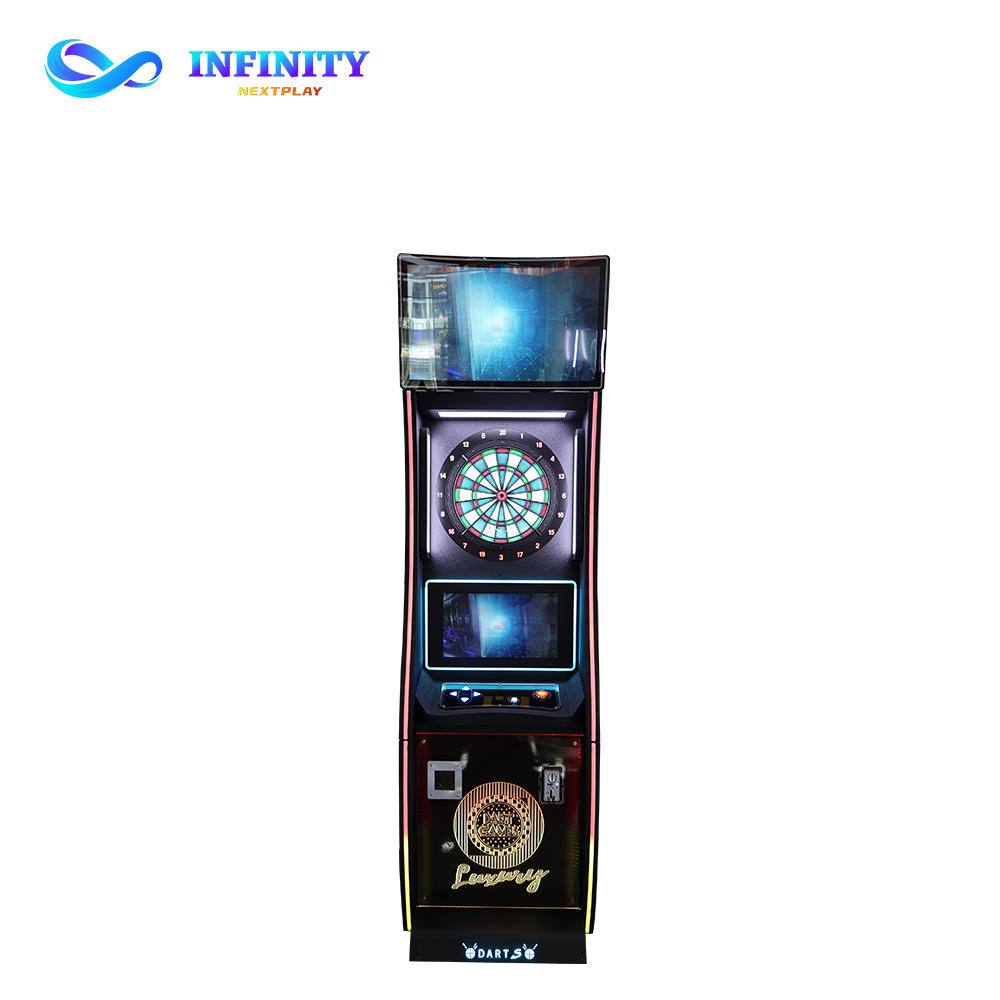
The X7 is our flagship competitive model, and the reason is simple: it connects players globally. A regular on a Tuesday night in Manchester can log in and play a stranger in Melbourne for a global leaderboard rank. That sounds like a gimmick until you see the retention numbers. Priya's members went from visiting 1.8 times per month to 4.3 times per month once the X7 was installed. The soft-tip target is safe for all ages, the automatic scoring removes arguments, and the dual high-definition screens turn every throw into spectator theater.
Financially, the X7 is a margin monster. It occupies 1.5 m², draws maybe $40/month in power, and charges £2 per game. Priya averages 90 games/day across open hours. That is £180/day = £5,400/month from a machine smaller than a pool table. Her upfront cost was under $9K. Payback: under two months.
Combined, Marcus-style Duckpin + Priya-style X7 in one 220 m² room: roughly $11.5K (lanes) + $5.4K (darts) = $16.9K/month gross from the two attractions, against $44K combined equipment cost. That is a 3.1× annual return — before you count the food and beverage multiplier, which both operators independently measured at 30–40% uplift on adjacent tables.
Operators fixate on per-game revenue and forget the real prize: the bar tab. Both Marcus and Priya discovered the same thing independently — the attractions do not make the money, they unlock the money already sitting in your liquor license. When a group of six books two Duckpin lanes for an hour, they are not just spending $48 on games. They are ordering three rounds of wings, a pitcher, and a round of shots. Marcus measured his lane-adjacent tables at a $62 average ticket versus $34 for the quiet zone — an 82% uplift.
The trick is layout. Put your lanes and dart cabinet within sight of the bar, not isolated in a back room. You want the energy of a strike or a bullseye to pull eyes — and then pull orders. Priya rebuilt her lounge so the X7 sits 4 meters from the service station; her bartenders say dart nights feel like "happy hour that never ends." She now runs a "$10 dart-and-a-draft" combo that moves 120+ draft pints on a slow Tuesday. That is $1,200 in margin from a machine that cost her $9K.
If you want to push the multiplier further, add a small LED Dance Floor in the overflow zone. It costs a fraction of either attraction and turns the wait-between-games dead time into a photo moment guests post to Instagram — free marketing for your venue. Three owners I work with credit their LED floor with a 20% bump in first-time walk-ins after local influencers shared clips.
People ask me which to install first. The honest answer: install Duckpin first if your space is wide and you want a "wow" anchor; install the X7 first if your space is tight and you want fastest payback. Here is the side-by-side I show every new owner:
| Factor | Duckpin Bowling | Dart Machine X7 |
|---|---|---|
| Footprint | 9.7–13m per lane | ~1.5 m² |
| Upfront cost | ~$17.5K / lane | ~$9K |
| Payback | 4–6 months | < 2 months |
| Best for | Groups, parties, anchor draw | Daily regulars, retention |
| Skill barrier | Near zero (small balls) | Low (auto scoring) |
| Monthly gross (typical) | $5.7K / lane | $5.4K |
I have walked hundreds of owners through this. Here is the exact sequence that works:
Walk your venue with a tape measure. Duckpin needs 9.7–13m of clear length per lane plus 2m behind for the ball return. The X7 needs a 1.5 m² wall or corner. Most bars have both hiding in plain sight — the unused back wall, the dead corner by the restrooms.
Buy the Duckpin system and the X7 together. We ship both in one container, and bundling typically saves 8–12% versus separate orders. Lead time is 25–35 days from deposit.
Duckpin's low foundation (20–23 cm) means no concrete work. Two technicians set both lanes and the dart cabinet in 2–3 days. You are taking money by Friday.
Charge $6–$9 per bowling game and $1.5–$2 per dart game. Keep it low enough that a group of four plays ten games without flinching. Volume is the game; margins come from the bar tab.
The X7's global matchmaking is built for this. Launch a Tuesday "House League" with a $20 entry. Priya's league night alone fills 14 tables every week — that is her rent, covered, one night a month.
The combination of Duckpin Bowling and the Dart Machine X7 is, in my experience, the highest-confidence bet in the entire competitive socializing category. It is cheap to install, fast to pay back, and — most importantly — it makes people want to come back. If you have a bar with dead floor, you do not have a space problem. You have an equipment problem, and it has a $44K solution.
Get a free 3D layout for your space. No commitment required.