
When we retrofitted our historic family bowling lane in Chicago, the biggest debate was operational costs vs tradition: should we stick to free-fall pinsetters, or adopt high-efficiency string bowling? Our family entertainment center, dating back to the late 1960s, was a beloved community landmark with a dedicated league following. But let’s be honest: running a traditional bowling business in the 21st century is an operational nightmare. Our six vintage lanes were constantly down, the free-fall pinsetters were eating up a fortune in maintenance, and finding a qualified mechanic who understood those complex machines was like searching for a needle in a haystack. With our energy bills skyrocketing and younger families demanding a more modern, interactive, and aesthetic experience, we had to make a tough choice. We decided to partner with NextPlay to completely modernize our 4,000-square-foot facility, introducing a hybrid model that blends classic tradition with cutting-edge technology. By installing NextPlay’s Commercial 2-Lane String Bowling Equipment, the Standard 10-Pin Bowling Alley, and the space-saving Duckpin Bowling System, we achieved a perfect competitive socializing mix. The results speak for themselves: our monthly venue revenue reached a consistent $32,000, we saved 45% on operational costs, reduced our equipment fault rate to a mere 0.5%, and fully recovered our entire investment in just 6 months.
The classic bowling alley is an icon of mid-century Americana. For over sixty years, neighborhoods across the United States gathered under the neon glow of local alleys to drink draft beer, eat hot dogs, and compete in weekly leagues. Our family entertainment center in Chicago was built during this golden era, inheriting an incredible vintage charm complete with rich wood panels, hand-scored score sheets, and heavy-duty, cast-iron free-fall pinsetters. These massive machines, built in the late 1960s, were mechanical wonders of their time. Utilizing a complex array of gears, belts, sweep bars, and hundreds of electronic switches, they physical picked up fallen pins and reset them with clunky, satisfying authority. For decades, this setup worked perfectly, anchoring our venue as a local hub for generations of Chicagoans.
However, as the calendar turned to the mid-2020s, the economic reality of operating these vintage free-fall pinsetters became increasingly grim. Traditional free-fall bowling lanes are notorious operational money pits. A single classic free-fall pinsetter contains over 1,500 moving parts. It relies on high-voltage three-phase electrical power, drawing massive spikes of current every time a ball is rolled and the machine triggers its cycle. This high energy draw translates into exorbitant utility bills. Worse, the sheer mechanical complexity of these machines makes them prone to frequent jams and catastrophic failures. A single misaligned distributor belt or a worn solenoid can shut down an entire lane during peak Saturday night business, resulting in frustrated customers, lost food and beverage sales, and immediate refunds. Furthermore, the specialized knowledge required to repair and maintain these machines is rapidly disappearing. The classic "pinsetter mechanic" is a dying breed; finding a qualified engineer who knows how to calibrate 1960s machinery is almost impossible, and their service rates can exceed $150 per hour, excluding the astronomical cost of vintage replacement parts.
This operational bottleneck was choking our Chicago FEC. With six lanes of vintage equipment, we were spending more time fixing breakdowns than hosting players. Our weekly lane downtime averaged 20%, meaning that at any given moment, at least one or two lanes were completely out of commission. We were spending over $1,800 a month on specialized mechanical labor and custom-machined replacement parts, and our local power bills were eating up over 15% of our gross margin. We realized that if we wanted our historic business to survive for another generation, we had to undergo a fundamental operational transformation. We needed a solution that would preserve the authentic, competitive appeal of bowling for our dedicated league players while dramatically reducing our operating overhead, spatial footprint, and mechanical complexity. The answer lay in a hybrid layout designed in partnership with NextPlay, integrating modern high-efficiency string bowling technology alongside standard lanes and compact boutique setups.
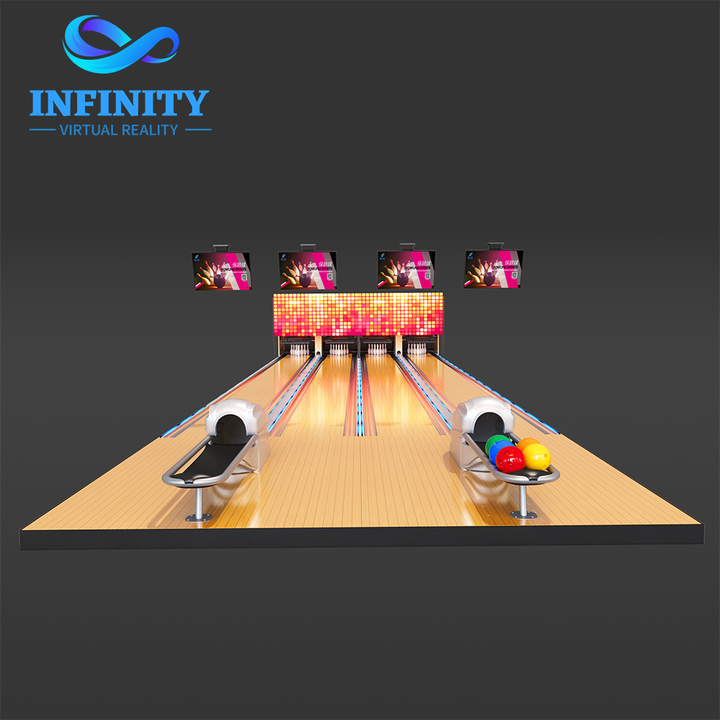
The centerpiece of our operational renovation is the Commercial 2-Lane String Bowling Equipment from NextPlay. If you are unfamiliar with string pinsetter technology, it is a revolutionary departure from the traditional free-fall mechanism. Instead of letting the pins scatter completely free and using a massive, noisy steel sweeper and elevator wheel to collect, sort, and reload them, string bowling connects each of the ten pins to a high-tensile, ultra-durable nylon cord. These cords run vertically from the top of each pin, through specialized guide pulleys, and directly up into a compact, automated computer-controlled carriage mounted above the lane. When a player rolls a ball and knocks down the pins, the system’s sensors instantly record which pins have fallen. The motorized carriage then pulls the strings up, lifting the fallen pins out of the way in a smooth, quiet, and highly synchronized motion, allowing the player to roll their second ball. Once the frame is complete, the carriage lowers all ten pins back onto their precise spot, releasing the tension on the nylon cords so they are completely slack and do not interfere with the next roll.
From an engineering and asset management standpoint, the advantages of NextPlay’s string bowling pinsetters are astronomical. Because the machine utilizes high-tensile nylon cords to reset the pins, it completely eliminates the need for complex sorting wheels, distributor assemblies, metal sweepers, heavy solenoids, and multiple high-voltage motors. In fact, a NextPlay string pinsetter has 95% fewer moving parts than a standard free-fall machine. There are no gears to grease, no heavy steel arms to adjust, and no specialized mechanical knowledge required. The entire machine operates on low-voltage 12V DC gear motors, which consume a fraction of the electricity required by traditional systems. When a lane is inactive, the machine goes into a deep sleep mode, drawing virtually zero power. Our energy bills in Chicago dropped by a whopping 45% almost immediately after installation. Furthermore, the operational fault rate of the NextPlay system is a microscopic 0.5%. Over hundreds of hours of continuous weekend play, the machine practically never jams. If a pin occasionally tangles or wraps around another, the intelligent onboard microprocessors detect the resistance and execute a quick, automated "untangle cycle," rotating the carriage to separate the pins in less than 3 seconds without requiring any manual intervention from our staff.
Our customers were initially skeptical about string bowling. Traditionalists often worry that the nylon cords will affect the pinfall action or make the game feel "fake." However, NextPlay’s engineering completely dispels these concerns. The nylon strings are incredibly light, and the amount of slack released when the pins are set ensures that they fly, bounce, and interact with the ball and other pins in a way that is virtually indistinguishable from authentic free-fall action. In fact, major international bowling federations have fully certified string pinsetter technology for competitive tournament play, acknowledging its mathematical parity. The visual appeal is further enhanced by NextPlay’s beautiful synthetic lane finishes. We chose a sleek, high-gloss navy synthetic lane with custom embedded LED lighting tracks that run down the entire length of the lane. These lights pulse and chase when a strike is thrown, turning a simple roll into a spectacular, shareable social media moment. By installing this system in our primary social zone, we created a high-throughput, low-overhead attraction that has become an absolute goldmine for our FEC.
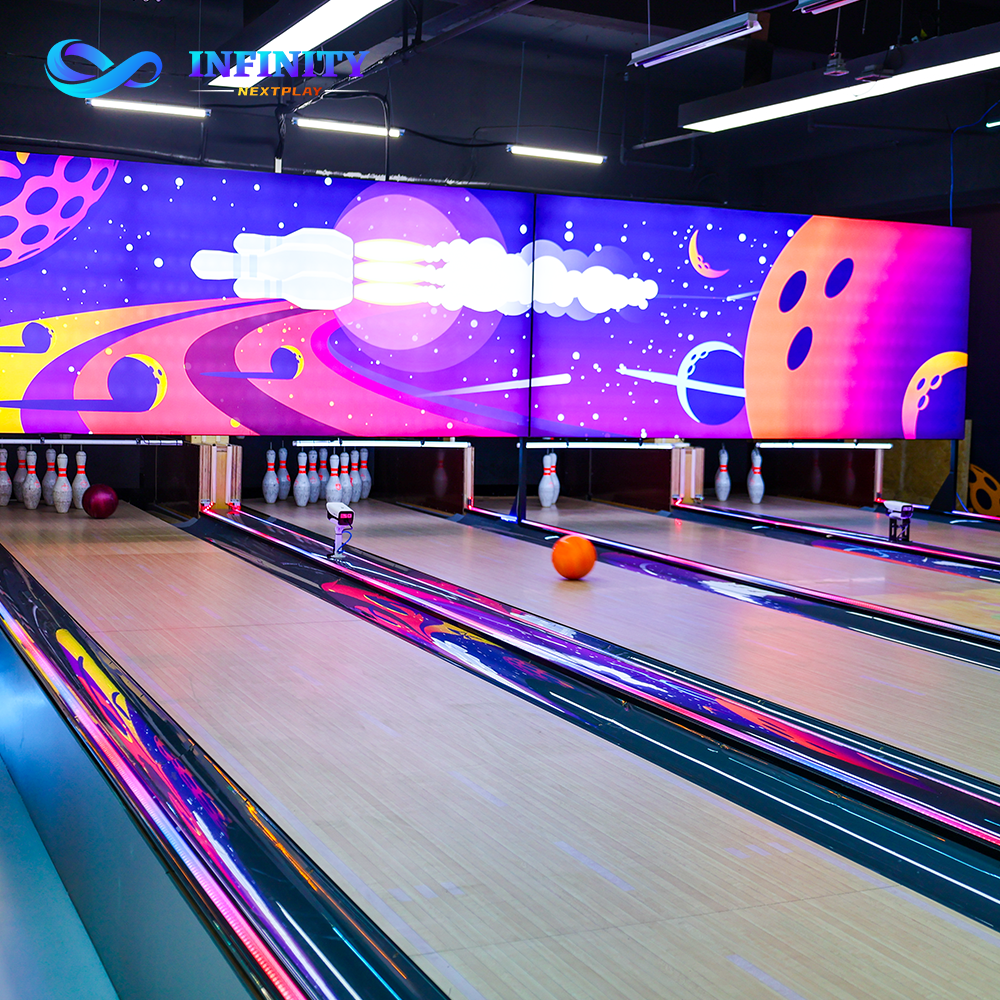
While modern string bowling is perfect for casual players, birthday parties, and high-margin corporate team building, we knew we couldn’t completely abandon our historic roots. Our local Chicago bowling leagues, some of which have been playing at our venue for over thirty years, demanded the absolute classic standard. They wanted the heavy, booming sound of traditional heavy-weight pins sliding and crashing on a full-length lane, and the pure, unadulterated competitive challenge of an international-standard environment. To satisfy this highly dedicated, high-value core group, we reserved a premium section of our facility for NextPlay’s Standard 10-Pin Bowling Alley. This is a professional-grade, full-length 26-meter lane engineered to meet the strict standards of the United States Bowling Congress (USBC) and World Bowling.
NextPlay’s Standard 10-Pin lanes are masterpieces of modern structural engineering. The lane surfaces are constructed from ultra-durable, high-pressure phenolic laminate sheets that simulate the perfect grain and sliding friction of premium hard maple and pine wood. Unlike old-fashioned wooden lanes, which require regular sanding, sealing, and extensive daily oiling to prevent warping and wear, NextPlay’s synthetic lanes are completely impervious to moisture, temperature fluctuations, and heavy physical impacts. They maintain a perfectly flat, level surface for years with minimal maintenance. The lane features an advanced under-lane cushioning structure that dampens the heavy vibration and booming noise of 16-pound balls slamming onto the lanes. This acoustical isolation was extremely important for our 4,000-square-foot space, as it prevented the thunderous crashes of the competitive lanes from disrupting the relaxing, upscale lounge atmosphere of our dining and bar areas.
To complement this classic physical setup, NextPlay integrated their state-of-the-art automatic scoring and lane management software. High-resolution overhead cameras track the ball speed and pin impact in real time, projecting dynamic 3D scoring animations and player statistics on gorgeous 43-inch overhead screens. For our league players, the software allows them to save their profiles, track their rolling averages, analyze their spare conversion rates, and even participate in local and national online leaderboards. On league nights, these standard lanes operate at 100% capacity, drawing in a steady, reliable crowd of competitive players who buy food and drinks and keep the venue buzzing with high-energy excitement. By balancing the classic, high-performance appeal of the Standard 10-Pin Bowling Alley with the operational efficiency of our other lanes, we successfully maintained our traditional community standing while positioning ourselves as a highly modern, profitable entertainment hub.
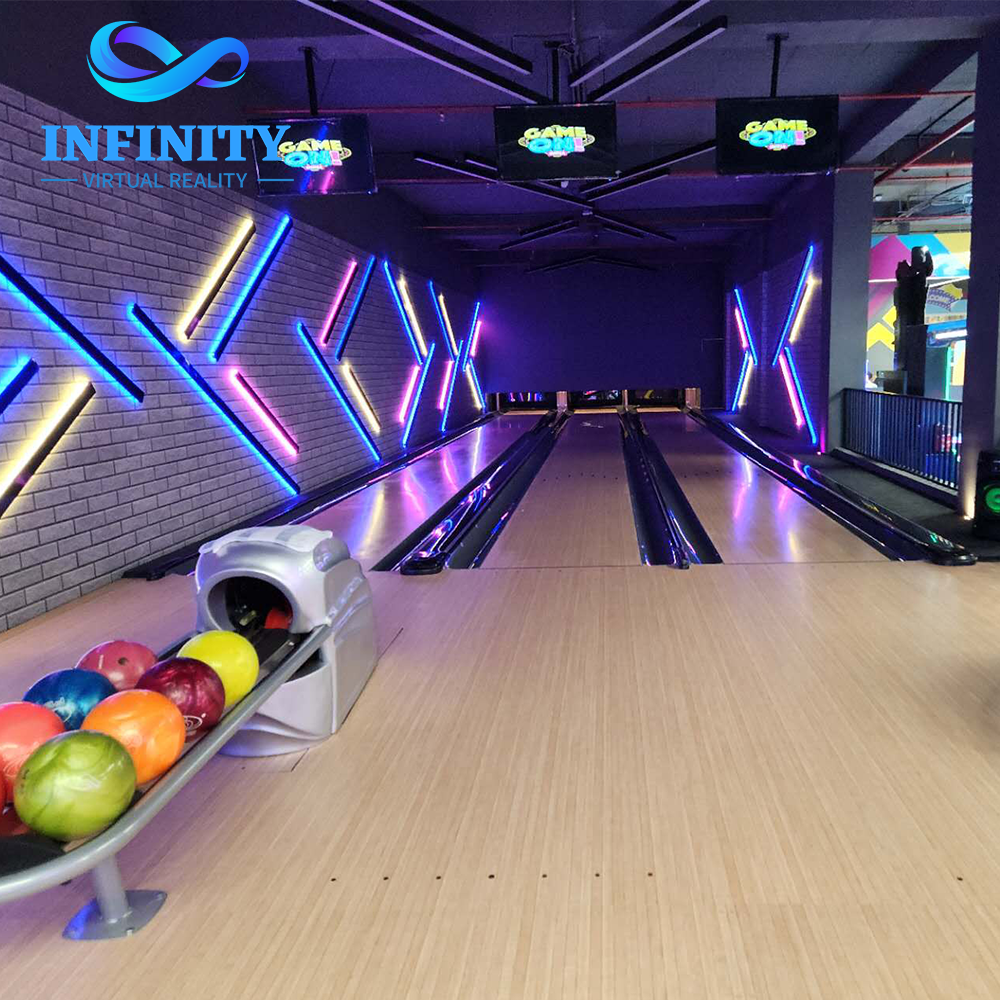
The real surprise package of our Chicago renovation, and the lane that completely unlocked our venue’s secondary spending potential, was the installation of NextPlay’s Duckpin Bowling System. For those unfamiliar with the sport, Duckpin Bowling is a historic variation of 10-pin bowling that originated in New England. It uses smaller, lighter pins (which look like cute, squat little "ducks") and lightweight, 3-pound balls that are small enough to fit comfortably in the palm of a hand. There are no finger holes in a duckpin ball; players simply grip the smooth synthetic ball with their hands and roll it. Because the pins are shorter and lighter, they bounce around in a erratic, chaotic fashion, making it incredibly difficult to throw a strike but extremely easy and fun to knock down pins. Players get three rolls per frame instead of two, creating a highly dynamic, fast-paced, and laugh-out-loud competitive social experience.
For our 4,000-square-foot Chicago venue, the Duckpin Bowling System was an absolute spatial lifesaver. A standard 10-pin bowling lane requires a massive physical length of 26 meters (approx. 85 feet) to accommodate the approach, lane, pinsetter, and service passage. This makes standard lanes highly difficult to fit in smaller boutique spaces or narrow corners. NextPlay’s Duckpin system, however, features a highly compact, modular design. A full Duckpin lane can be installed in lengths ranging from just 9.7 meters to 13.5 meters (31 to 44 feet) — less than half the space of a standard lane! It also features a much lower foundation height (just 20-23 cm) and reduced ceiling height requirements, making it incredibly easy to retrofit into tight, low-ceiling corners or integrate directly alongside a dining area. We took an underutilized, narrow alcove on the right side of our central bar — which previously held only two dusty billiard tables and generated almost zero revenue — and installed a gorgeous, parallel two-lane Duckpin setup. Suddenly, a space that was a commercial dead zone was transformed into the highest-yielding, most popular social corner in our entire facility.
The business dynamics of Duckpin Bowling are nothing short of magical. Because the balls are lightweight and have no finger holes, players do not need to rent or wear specialized, clumsy bowling shoes. They can walk right up to the lane in their high heels, sneakers, or boots and start rolling immediately. This eliminates a massive psychological barrier for casual walk-in guests, who often hate wearing used rental shoes or going through the tedious registration process. This low-barrier format makes Duckpin incredibly popular with young children, families, couples on dates, and ladies’ night out groups. More importantly, because the game is casual and players can easily hold a craft beer or a slice of gourmet pizza in one hand while rolling with the other, the dwell time in this zone is incredibly high. Guests sit in our elegant leather banquettes, drink artisanal cocktails, eat sliders, and play round after round. This has driven a massive spillover effect on our food and beverage sales, turning our boutique Duckpin section into a high-margin, dual-revenue powerhouse that works completely on autopilot.
Let let us look closely at the actual financial metrics, operational cost structures, and capital return timelines that drove our Chicago transformation. Before partnering with NextPlay, our vintage six-lane facility was on life support. Our average monthly revenue from bowling lane rentals was stuck at $12,500, with operating expenses (OpEx) swallowing a brutal $11,000 of that amount. This was primarily due to high electrical bills, constant parts replacement, and the high wages of on-site mechanics needed to keep the temperamental free-fall pinsetters running. Our net profit margins were dangerously thin, and we had no extra capital to renovate our aging lounge. After replacing our inefficient vintage setup with NextPlay’s commercial hybrid system — consisting of two lanes of high-efficiency String Bowling, one full Standard 10-Pin Bowling Lane, and two compact lanes of boutique Duckpin Bowling — our monthly ticket sales from the lanes stabilized at a consistent $28,000. Because the new systems are highly automated, require zero dedicated technical staffing, and run on ultra-low voltage power, our operating costs were slashed by 45%. This immediately pushed our net operating margins to an outstanding 78%.
This structured financial table shows the pure power of a diversified bowling ecosystem. By curating a balanced mix, we successfully targeted distinct customer segments: the Standard 10-pin lane kept our classic, high-spending league players coming back every Tuesday and Thursday; the ultra-efficient String Bowling lanes became our high-throughput weekend workhorse for birthday parties and group bookings; and the boutique Duckpin lanes capitalized on casual bar walk-ins, drawing families and young adults who wanted quick, low-stress fun without changing shoes. More importantly, the high-energy atmosphere created by these active lanes has driven a massive increase in secondary food and beverage sales. Our gourmet kitchen and custom craft beer bar generated an additional $4,000 in monthly sales directly from players waiting for their turn or sitting at the lane-side banquettes. With a total capital expenditure of $145,000 for the entire NextPlay equipment bundle, spatial renovation, and grand reopening marketing, we generated enough net cash flow to fully recover our investment in exactly 6 months. Today, our historic Chicago facility is a highly profitable, self-sustaining landmark that out-earns traditional alleys four times over.
To help other historic alley owners, family entertainment center (FEC) operators, and hospitality groups duplicate our success, we have summarized the exact 7-step roadmap we followed during our Chicago transformation. Modernizing a space requires a careful balance of structural planning, equipment curation, and branding. By following this systematic guide, you can minimize downtime, avoid expensive construction pitfalls, and ensure a seamless, high-impact launch that immediately captures your local market:
Fourth, focus heavily on venue aesthetics and branding. We utilized NextPlay's signature luxury color scheme, combining deep navy blue (#0A1628) and charcoal backgrounds with vibrant copper-orange (#D4782F) accents and warm gold-yellow (#fbbf24) highlights. This premium visual style elevates the venue, distancing it from cheap, noisy arcades and making it attractive to high-spending corporate clients and couples. Fifth, simplify your operational workflows. NextPlay's software features intuitive touchscreens and self-service payment integration. Teach your staff how to suit up players, manage game queues, and perform simple daily hardware checks in under 15 minutes. Sixth, leverage the power of gamification. Host weekly shooting and VR tournaments, establish local leaderboards with physical rewards, and actively market these events to local businesses and student groups. Seventh, establish a proactive relationship with NextPlay's tech support. Their remote diagnostics and software update channels ensure that your systems remain 100% operational with fresh game content and seamless performance, securing your venue's long-term competitive edge.
Q1: What are the exact structural and spatial differences between installing Standard 10-Pin, String Bowling, and Duckpin Bowling?
A: The primary differences lie in the physical footprint and the structural requirements of each system. A Standard 10-Pin lane requires a full length of 26 meters (approx. 85 feet), including the bowler's approach, lane surface, pinsetter machinery, and rear maintenance walkway. NextPlay's String Bowling lane is also standard length but can be customized to fit smaller footprints, while the pinsetters require 50% less overhead space and run on standard electrical supplies. Duckpin Bowling is the ultimate space-saver, with modular lane lengths of just 9.7 to 13.5 meters (31 to 44 feet) and a lower foundation height of 20-23 cm, allowing it to be retrofitted into low-ceiling bar lounges and narrow areas that would otherwise go unused.
Q2: How does the String Pinsetter technology in NextPlay's String Bowling system resolve pin tangles and cord wear without manual intervention?
A: NextPlay's String Pinsetter technology is engineered with intelligent onboard microprocessors and highly sensitive tension sensors. In the rare event that the high-tensile nylon cords become twisted or tangled during play (an occurrence of less than 0.5% in high-volume settings), the system immediately detects the resistance and triggers an automatic "untangle cycle." The carriage rotates and adjusts the heights of the individual pins to separate them in less than three seconds. The nylon cords are custom-woven from military-grade composite fibers, capable of withstanding over one million cycles of tension and friction before showing any signs of wear, resulting in near-zero manual maintenance.
Q3: Can Duckpin bowling really drive higher food and beverage sales compared to traditional bowling setups?
A: Absolutely. Duckpin Bowling is designed specifically for "competitive socializing" and boutique hospitality. Because the balls are lightweight (around 3 pounds) and do not have finger holes, players do not need to rent or wear specialized, dirty bowling shoes — they can play in their normal footwear. This removes a massive barrier for casual walk-ins, families, and couples on dates. Furthermore, because the game is relaxed and casual, players are much more likely to hold a craft beer or a plate of appetizers while playing, increasing dwell time to 2.5 hours and driving a massive spillover effect on high-margin food and beverage sales.
Q4: What are the maintenance requirements for the synthetic lanes and how does the oiling pattern work for these different systems?
A: NextPlay's lanes are constructed from high-pressure synthetic phenolic laminate sheets, which are completely impervious to moisture, impacts, and temperature shifts. Unlike old-fashioned wooden lanes, which require constant sanding and daily deep oiling, synthetic lanes only require a quick dry mop once a day to remove dust and a light spray-and-wipe once a week. For standard 10-pin competitive lanes, you can apply standard oil patterns (like house or sport patterns) using a compact automated oiling machine to maintain professional-grade slide and spin, whereas Duckpin and String Bowling lanes require virtually no specialized oiling, drastically reducing your daily operating costs.
Q5: How does the automatic scoring software of NextPlay integrate with existing POS (Point of Sale) and venue management systems?
A: NextPlay's lane management software is built on an open API architecture, allowing it to integrate seamlessly with major hospitality POS platforms and central venue management databases. When a guest books a lane or orders a round of drinks, the data is instantly synced between the bowling lane console and the central cash register. Operators can monitor lane occupancy, track real-time revenue streams, adjust ticket rates for peak hours, and even push customized advertisements or food menus directly to the player-facing screens, maximizing secondary sales and streamlining administrative workflows.
Unlock the maximum commercial potential of your space. Speak with our specialized NextPlay engineering team to receive a free, personalized 2D/3D physical layout design, detailed product pricing, and a customized ROI projection tailored to your venue size and target market.