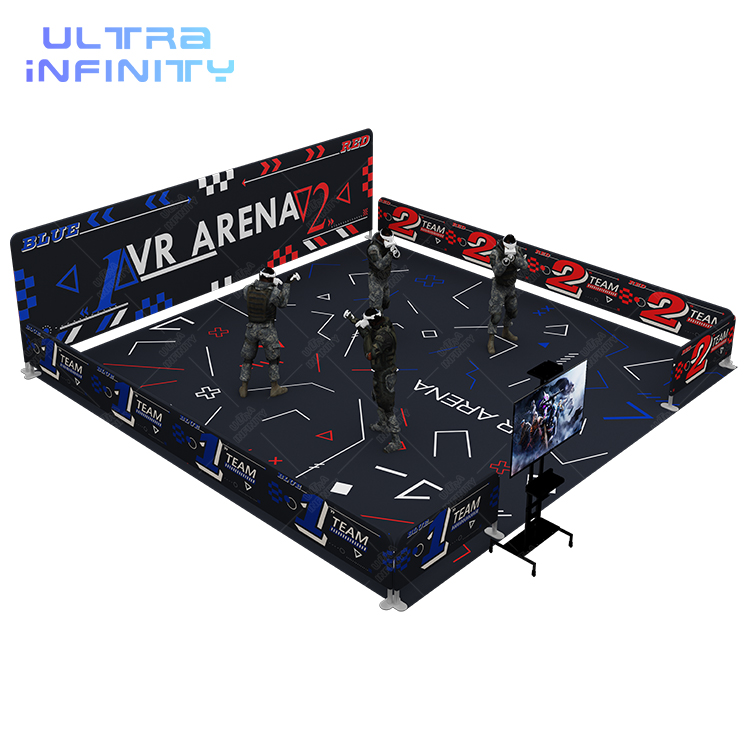
A multiplayer VR arena has a weekday problem and a league is the answer that compounds. Wednesday 7 PM is dead inventory - no school block, no party bookings, no walk-in peak - and yet it is exactly the slot the published league-night model books: 16 to 20 players in four-team matches at $25-30 per player, $400-600 per night before the F&B counter. The league does not just sell the rounds; it sells a standing appointment that players schedule their week around, and it builds a community that returns week after week and brings new players with them.
The published roster model builds the league over eight weeks - long enough for a team to form an identity, short enough to re-launch every quarter. The published fee structure is the design decision that makes it work: a single league fee of $25-30 covers the session, the ladder points and the entry to the monthly final. The published comparison is blunt about the alternative - a per-round price makes the players count every round and leave early, while the single fee commits the player to the full evening. Four-team matches keep the standings simple: win, lose, ladder points, next week.
| Season Element | Published Basis | What It Buys the Venue |
|---|---|---|
| Roster build | 8 weeks to full league roster | A season per quarter, four launches a year |
| League fee | $25-30 single fee incl. final entry | Full-evening commitment, no per-round churn |
| Night slot | Wednesday 7:00-9:30 PM | Dead inventory converted to appointment |
| Match format | Four-team matches, two parallel sessions | 16-20 players without new machines |
The published night math is the part operators underline: 16-20 players at $25-30 per player produces $400-600 per league night before F&B. Run the published two-night structure - a Wednesday amateur night and a Thursday semi-pro ladder - and the board shows $800-1,200 of recurring weekly revenue, which over a four-week month is $3,200-4,800 of predictable income the operator can staff for and budget against. The published repeat analysis explains why the number holds: leaderboard and team systems run a 60% higher repeat rate and a 30% weekly-returner share, and a league is that system on a calendar.
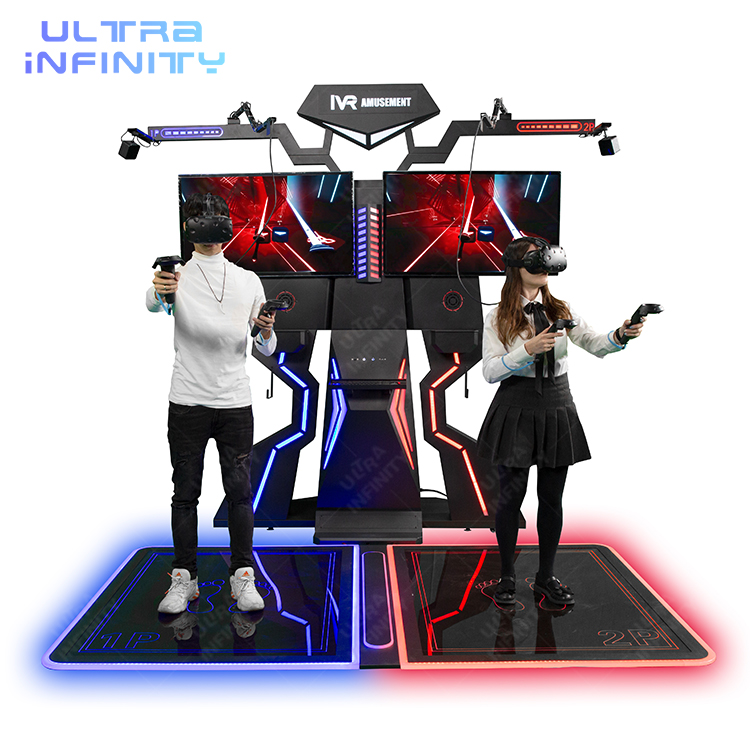
The ladder needs the hardware to match: the Free Roaming VR Arena 2.0 carries the four-team combat format as its headline, the HTC Vive Standing Platform pairs run the published two-parallel-session structure, and the Digital Scoring Q4 keeps the ladder board live between rounds - the scoreboard that the published repeat study credits with the return traffic.
Picture the published figures assembled into one season. Week one opens with twelve players - two teams short of the published target roster - paying the single $25-30 fee that includes the monthly final. By week eight the roster holds at eighteen: the published four-team format runs two parallel sessions, Wednesday 7:00-9:30 PM, and the ladder board on the exit path shows every team exactly where it stands. Each league night lands $400-600 before F&B; over the season the two-night structure banks the published $3,200-4,800 a month. The final night runs the monthly championship, the winning team gets its name on the board, and the next season opens the following week - the published quarterly re-launch, with half the new roster signed up by players who brought their colleagues.
The scenario is illustrative, but every number in it is a published reference: the roster build, the fee structure, the night economics, the repeat multipliers and the parallel-session format.
Every figure here is a published planning reference: the 16-20 player four-team format, the $25-30 single fee, the $400-600 night, the two-night $800-1,200 weekly and $3,200-4,800 monthly structure, the eight-week roster build and the Wednesday 7:00-9:30 PM slot come from the published league-night model; the 60% higher repeat rate, 30% weekly-returner share and 2-3 plays per visit come from the published repeat-rate analysis; and the two-parallel-eight-player session structure comes from the published multiplayer guide (see also the group-size economics playbook). All are planning references, not guarantees - restate each against your own roster and market before adopting them.
The questions operators ask about running a league season, answered with the published references.
The published league-night model runs 16 to 20 players in four-team matches - two parallel eight-player sessions on the published session structure. That roster fills the arena for a full evening without adding machines.
The published model charges a single league fee of $25-30 per player for the full session - the fee covers the match play, the ladder points and the entry to the monthly final. A per-round price makes players count rounds and leave early; the single fee commits them to the evening.
The published economics run $400-600 per league night before F&B. Two league nights a week put $800-1,200 of recurring weekly revenue on the board - $3,200-4,800 a month of income the operator can staff for and budget against.
The published roster model builds the league over eight weeks. A season therefore runs eight to ten weeks of match nights plus the monthly final - long enough to build the community, short enough to re-launch each quarter.
The published model books Wednesday from 7:00 to 9:30 PM - the standing appointment players schedule their week around. The slot is dead inventory otherwise: no school groups, no parties, no walk-in peak.
The published repeat analysis ties leaderboard and team systems to 60% higher repeat rates and a 30% weekly-returner share. A league is that system on a calendar: the standings persist, the rematch is scheduled, and every week the roster brings new players with it.
Send us your arena spec and weekday slots: we will return the league format, the season calendar and the ladder configuration through the free 3D layout design - anchored with the Free Roaming VR Arena 2.0, the HTC Vive Standing Platform or the Digital Scoring Q4.