A roller coaster simulator is a seat that moves while a screen shows you a coaster. There is no track, no lift hill and no restraint pushing into your shoulders on the way down. The ride is a sequence of programmed movements, and the platform under your seat is what performs them. You put on a headset, the ride starts, and for two to five minutes your eyes and your body are both being told that you are on a coaster.
That last sentence is the whole trick, and it is worth understanding before your first ride. A real coaster moves you and your eyes simply report it. A simulator does it the other way round: it shows you the movement first and then moves you to match. When those two things arrive at the same moment, your inner ear agrees with your eyes and the illusion holds. When they disagree, you get the queasy feeling most people blame on virtual reality rather than on the mismatch that actually causes it.
Once you know that, the rest of the category makes sense. Two machines that look nothing alike - a single seat with a headset and a five-seat cabin that rolls through a loop - are both doing the same four things. We call those four things the Motion Cue Chain, and the next section walks them in order. After that: what the numbers on the machine actually mean, how the six formats feel from the seat, whether it will make you sick, and what a first ride looks like from ticket to disembark.
Every coaster simulator in a venue, from a small single-seat chair to a five-seat cinema cabin, is built from the same four links. Understanding them tells you why one ride feels convincing and another feels like a video game with a shaky chair.
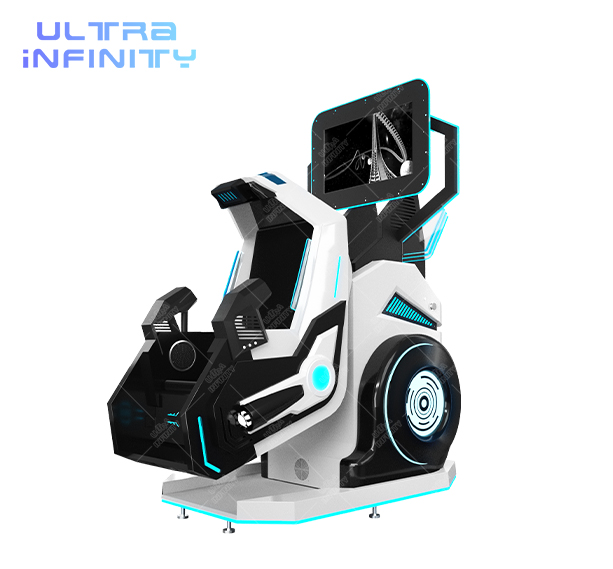
The first link is the immersive image. The headset tracks your head, so when you turn to look at the track ahead, the view turns with you instead of staying pinned to the screen. That is what converts a video into a place. The second link is the moving platform: the seat itself rotates, pitches, drops or rolls, and it does so on cue from the ride programme. Our own single-seat chair rotates a full 360 degrees with a 45 degree pitch envelope, which is how it can put you upside down without leaving its frame.
The third link is the sensory garnish - the parts you notice only when they are missing. Wind across your face when the ride accelerates. Sound that arrives from the right direction. A vibration at the moment of the drop. The fourth link is you: the ride is timed so that the movement, the image and the effects all land at the same instant, and your body reads that as gravity.
| Link in the Chain | What It Does | What You Feel | If It Is Missing |
|---|---|---|---|
| Immersive image | Head-tracked headset replaces the screen | You are inside a place, not watching one | It becomes a flat film - fine, but not a ride |
| Moving platform | Seat rotates, pitches, drops or rolls on cue | Weightlessness, g-force, the twist of a loop | It becomes standing VR: same view, no feeling |
| Sensory garnish | Wind, directional sound, vibration, lighting | Speed and air, without you thinking about it | The ride feels tame even when it rotates |
| Your body, in time | Image, motion and effects arrive together | The illusion holds and you forget the seat | The links disagree, and the disagreement is what makes people queasy |
That last row is the important one, and it also explains a question guests ask all the time: why does a simulator usually feel better than watching a roller coaster video on a phone with a headset on? Because the platform adds the missing half of the sensation. Motion that matches what you see narrows the gap between your eyes and your inner ear, and a narrower gap is a more comfortable ride. Motion that arrives late, or in the wrong direction, widens it.
The labels on these machines are marketing shorthand, and once you can translate them you can predict what a ride will feel like before you pay for it. Here is the honest version of each one.
| Label | What It Actually Means | What You Should Notice |
|---|---|---|
| 360 degrees | The seat can rotate a full circle around its vertical axis, usually with additional pitch on top | You can be turned upside down, and you can be spun rather than just tilted |
| 720 degrees | A larger rotational envelope quoted for cinema-style cabins, often written as 180/360/720 degrees of view | A group ride that can roll through a full loop instead of a single half-turn |
| 3DOF | Three degrees of freedom: the platform moves in three ways, typically pitch, roll and heave | Drops and tilts that feel real, without the full spin of a rotating chair |
| 6DOF | Six degrees of freedom: the platform also surges, sways and yaws | The most complete motion, and what you find in larger cinema and simulator systems |
| 9D | An industry label, not a dimension count. It means a VR headset ride with motion seats and added sensory effects | You get wind, sound and vibration on top of the picture - the garnish, not a new dimension |
| 2K per eye | Headset resolution. Our two-seat chair ships with DPVR E3 headsets at 2K each | A sharper image, fewer visible pixels, more readable distant track |
Two honest notes. First, "9D" has never meant nine dimensions - the number grew out of 4D and 5D cinema marketing, and it now means a motion-seat VR ride with extra effects. Any venue that tells you otherwise is quoting a brochure. Second, bigger numbers are not automatically better rides. A 3DOF slide machine at low intensity is often the right first ride for a nervous guest, and a 720 degree cabin is wasted on someone who wants a two-minute solo spin.
If you are choosing between two rides in a venue, ask about ride length and content instead of degrees. Two to five minutes is the normal range, and the difference between a scenic glide and a launch-and-invert title will change your experience far more than the rotation figure on the cabinet.
Walk into a large venue and you may meet six different coaster rides, all advertised with the same word. They feel very different from the seat, and they suit different guests. Here is what each one actually gives you.
| Format | What You Are Doing | How It Feels | Who It Suits |
|---|---|---|---|
| Single-seat 360 chair | Sitting alone in a rotating chair with a headset and a wind effect | A front-row coaster seat that belongs to you; the queue moves fast because each ride is short | Solo riders, couples taking turns, anyone who wants to go twice |
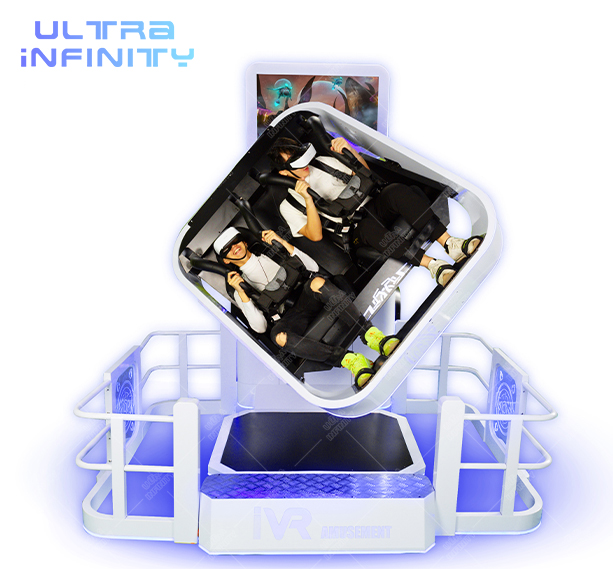
| Two-seat 360/720 chair | Sharing a two-seat chair with nine included movies to pick from | A shared coaster car - you hear each other react, which is half the fun | Friends, couples, parent and teenager |
| Two-seat drop tower | A vertical rise and drop, with 8 or more jumping titles | A free-fall tower: the thrill is the lift and the drop, not the spin | Thrill seekers; less good for a nervous first-timer |
| Slide machine (3DOF) | A compact 3DOF platform with water and sky slide titles | A gentler, gliding sensation - water slide and surf rather than a coaster | First-timers, younger riders, anyone motion sensitive |
| 360 coaster, flight and racing simulator | Holding a flight joystick or a racing wheel with 40+ titles | A coaster that turns into a jet or a race car mid-session | Gamers, teenagers, competitive groups |
| Five-seat 720 cinema | Riding together in a cabin that rolls through a full loop | A shared cinema ride with real motion - the group reaction is the product | Families, parties, birthday groups |
If your interest is the chair specifically - what the ride feels like in detail, how long it lasts, and which content to ask for - we have written a separate guide on the chair roller coaster experience. For families comparing the cinema-style group rides, the 9D VR cinema family guide covers what changes when children are in the cabin. And if you are the one buying the machine rather than riding it, the operator-side companion to this article is how the six formats compare on footprint, power and riders per hour.
Some people feel rough after a coaster simulator, and the reason is not weakness or a bad machine. It is the mismatch described earlier: if your eyes report a dive and your inner ear disagrees, the disagreement can register as nausea. That is why a simulator with a moving platform is generally more comfortable than a static headset playing the same coaster footage - the platform removes part of the conflict instead of adding to it.
It is also why the format matters more than the thriller content. A slide machine gliding through a water course asks a lot less of your inner ear than a 720 degree cabin rolling through a loop. And it is why ride length is designed the way it is: two to five minutes is long enough to be a real experience and short enough that a sensitive guest reaches the end before the discomfort builds.
Who should think twice, honestly: anyone pregnant, anyone with a heart condition or uncontrolled blood pressure, anyone recovering from recent surgery, and anyone who already gets motion sick in cars or on boats. Venues publish these restrictions on the signage next to the ride, and they are rules rather than suggestions. If you fit into any of those groups, ask for a seated, low-motion title or skip the ride and watch.
On age, use the headset manufacturers as your floor rather than the venue marketing. Meta states a minimum age of 10 for Quest, with 10 to 12 year olds needing a parent-managed account, and Sony states that PS VR2 is not for children under 12. In practice that means most venues set a floor around 10 to 12 with an adult present, and younger children get the gentler formats and titles.
Practical ways to keep it comfortable, from people who ride these machines every day: ride early in your session rather than after a heavy meal, keep your eyes on the track ahead instead of closing them (closing your eyes removes the visual cue and usually makes the mismatch worse), use the handles so your head is not being thrown around, and stop after one ride before deciding whether to go again. If you start to feel off, raise a hand - staff stop the programme immediately, and nobody at the counter is going to be surprised.
Knowing what happens next takes most of the nerves out of a first ride, so here is the whole sequence, from the counter to the moment you step off.
Two things are worth asking the operator before you start. Which ride is the gentlest for a first-timer, and which single title they would pick with only one ride left today. Staff who run these machines all day give better answers than any brochure, and the answer is usually a scenic glide rather than the ride on the poster.
If you are going as a group, the economics change: a five-seat cinema cabin is the one format where the whole party rides together, and group packages usually price per head rather than per ride. If you are the one planning the venue rather than the night out, start the other way round - with how the six formats compare on space, power and riders per hour - and then look at the full roller coaster simulator range or the 9D VR cinema range to see what each format looks like installed. Either way, a free 3D layout of your room or your venue floor is where the numbers stop being abstract.
The questions people actually ask before their first roller coaster simulator ride, answered plainly.
It is a seat or cabin that moves while a headset shows you a coaster. There is no track: the ride is a programmed sequence of rotations, tilts and drops performed by a motion platform, with the image and the movement timed to match. A typical ride lasts two to five minutes.
The platform replaces the track. The ride programme moves your seat at the moment the image shows a dip, turn or drop, so your body feels the movement your eyes are reporting. Extra cues - wind, directional sound, vibration - cover the remaining gaps and make the illusion hold.
The intensity is a choice, not a property of the machine. Adult and teenage riders usually start with a scenic glide or a classic coaster title and step up to launch and inversion content on a second ride. Very few people find a well-chosen first title frightening, and the ride stops the moment you raise a hand.
For most people, no - and a moving platform is generally more comfortable than a static headset playing the same coaster, because matched motion removes part of the visual-vestibular conflict that causes the queasiness. Sensitive guests should choose a gentler format such as a slide machine, ride before eating, keep their eyes on the track and stop after one ride.
Use the headset manufacturers as your guide: Meta states a minimum age of 10 for Quest with parent-managed accounts for 10 to 12 year olds, and Sony states PS VR2 is not for children under 12. Most venues therefore set a floor around 10 to 12 with an adult, and steer younger children to gentler formats and titles.
Two to five minutes depending on the title, plus a minute or two for boarding and fitting the headset. That short cycle is deliberate: it keeps queues moving and it keeps a sensitive guest from being on the platform long enough for discomfort to build.
You sit down for every coaster format in the category, including the rotating chairs and the five-seat cinema cabin. Some venues run separate standing VR experiences, and those are a different attraction rather than a coaster simulator.
Yes, in two ways. A two-seat chair puts two riders side by side in one rotating chair, and a five-seat 720 degree cinema cabin puts a whole group in one ride. Single-seat chairs are solo, which is why their queues usually move fastest.
9D is an industry label rather than a dimension count: it describes a motion-seat VR ride with added sensory effects such as wind and sound. A 720 degree figure simply describes a larger rotational envelope, usually on cinema-style cabins. Neither number tells you whether you will enjoy the ride - the title, the format and the ride length matter far more.
Match the format to the person. Nervous first-timer or motion sensitive: a 3DOF slide machine or a scenic chair title. Solo rider who wants a quick thrill: a single-seat 360 chair. Couple or friends: a two-seat chair. Family, party or a group that wants to ride together: a five-seat cinema cabin.
Every format in this guide is a machine somebody designed first. NextPlay builds the single-seat 360 VR motion chair, the two-seat 360/720 chair, the 3DOF slide machine and the five-seat 720 degree cinema cabin, plus the drop tower and the 360 coaster and flight simulator. Browse the roller coaster simulator range to see them side by side, or send us your room dimensions and we will draw the ride onto your floor with the free 3D layout service.