Urban sports bars have a structural problem: margins are healthy at the counter, but the floor pays rent all day and earns only in the evening peak. A typical 600-square-meter unit in a secondary urban location runs USD 3,000 to USD 4,500 per month in rent, and quiet weekday afternoons turn that floor into a dead asset. The fix used by the highest-yield venues is a game floor with a direct operating margin above 90 percent that holds customers for two and a half to three hours instead of 40 minutes.
This blueprint applies that logic to a complete venue: a 600 m² urban social sports bar in which the attraction mix (2 duckpin lanes, 6 online dart cabinets, 2 optical shooting bays and one interactive LED dance floor) generates USD 8,400 per month in game revenue, while the bar and kitchen around it add USD 7,600. Total target revenue is USD 16,000 per month at a blended direct margin of roughly 82 percent. Revenue per square meter lands near USD 27, above the USD 18 to USD 22 range of break-even venues.
The order of design matters. The bar is the margin engine: it sits at the entrance with 180 m² and 60 seats, while the game zones wrap around it so play stays visible from every table. That adjacency turns game revenue into beverage revenue: 60 to 70 percent of game participants order at least one drink per session, adding USD 2.50 to USD 4.00 of margin per head. The compact Duckpin Bowling system is the first attraction to place: it draws the crowd the bar monetizes.
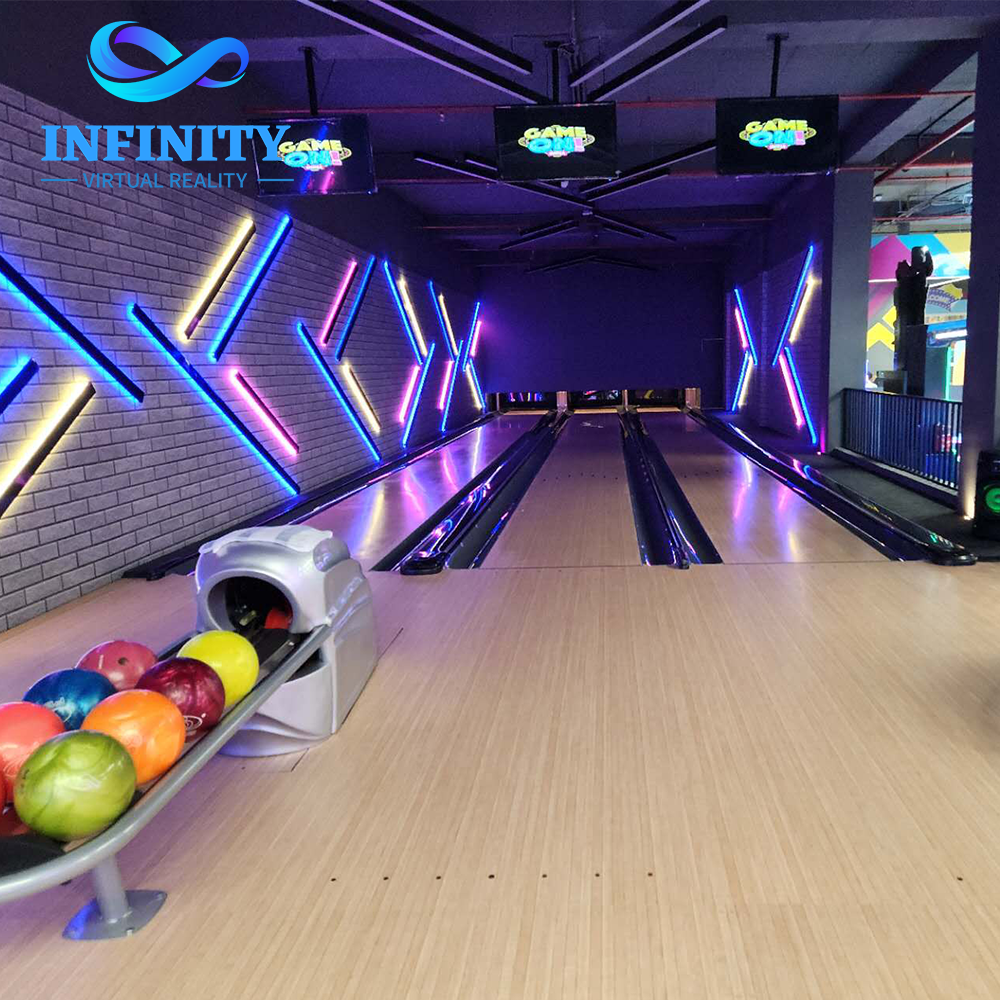
Duckpin bowling anchors the venue because it is the most spectator-friendly game on the floor. The NextPlay duckpin lane runs 12.8 meters inside a compact 90 m² zone with both lanes and bleacher-style seating, versus roughly 120 m² for a single 10-pin lane pair. The system uses automated pin setting and ball return, draws 2.2 kW per lane, and runs with no technician. At USD 18 per game for a group of four (about USD 4.50 per head), two lanes produce 8 to 10 games per hour, or USD 3,600 per month at the 92 percent margin typical of automated bowling.
The placement rule is simple: lanes beside the bar, not in a back room. Spectators who watch a frame from a table stay for a second drink, and the install manual recommends a 3.5-meter sight line from the bar counter to the pin deck. In the reference layout the lanes sit against the east wall behind a low handrail, so the pin action becomes the backdrop of the busiest traffic line.
Opening the two lanes costs USD 52,000 installed, including string machines, ball return and scoring displays. The lane pair pays that back from its own margin in about 15 months, and it is the largest driver of the bar's USD 7,600 monthly F&B number: sessions run 45 to 75 minutes and most groups order across that window.
Bowling in a separate room, away from the bar, where spectators have no reason to order.
Two duckpin lanes beside the bar with a clear sight line, turning every frame into a beverage order.
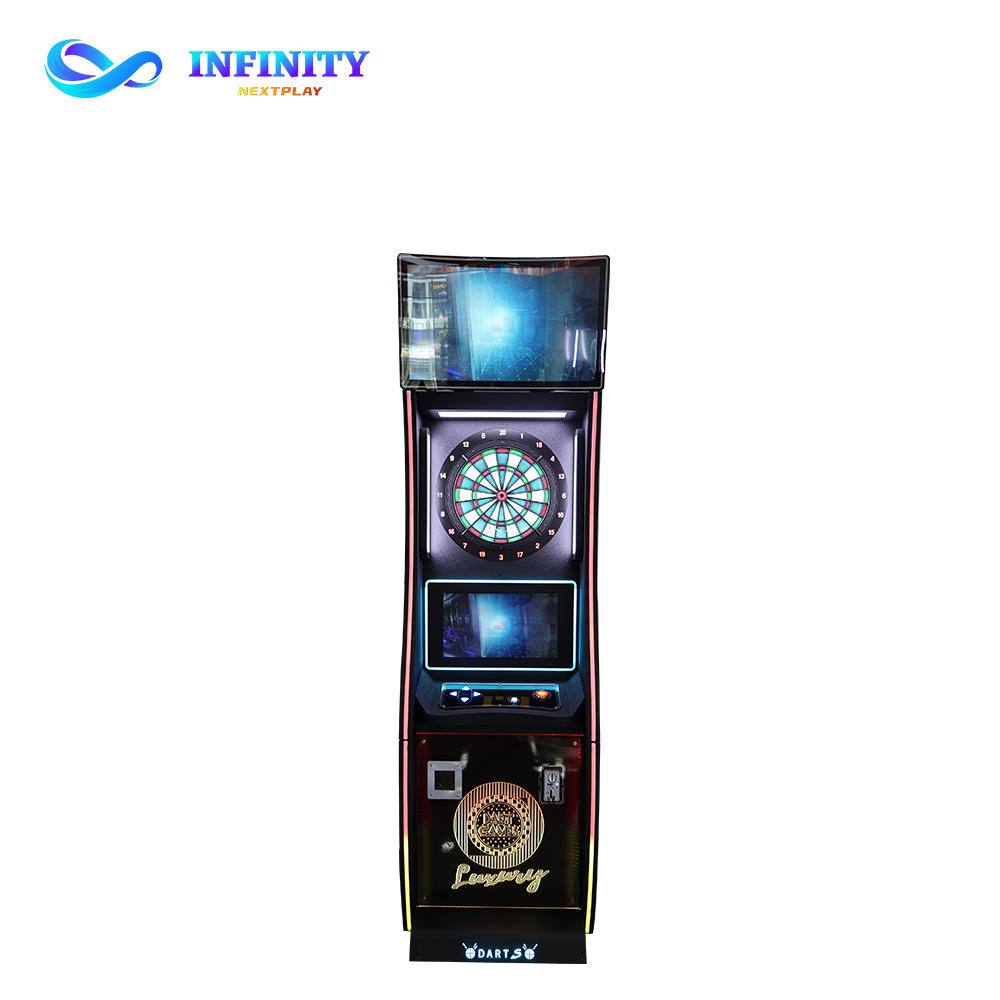
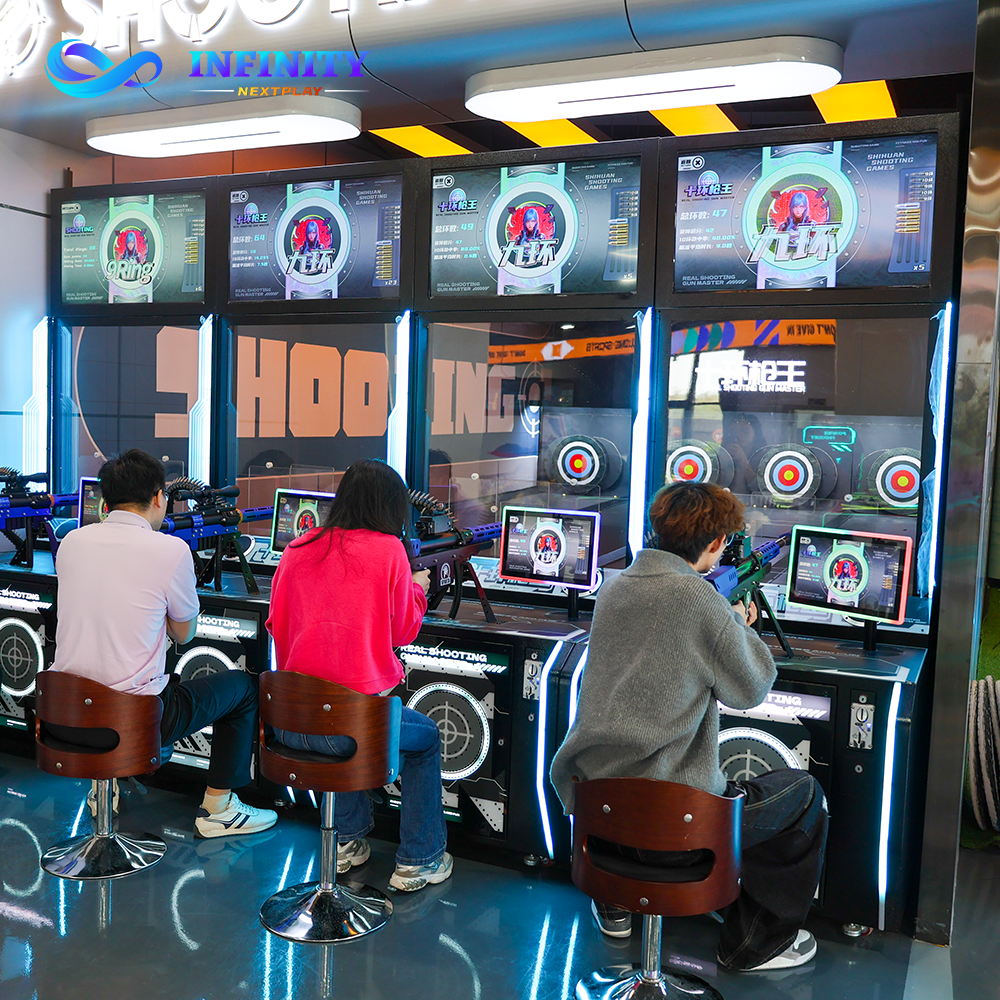
The competitive ring sits on the west side of the floor: six online electronic dart cabinets (Dart Machine X7) and two optical shooting bays (Shooting Q4). The X7 runs a 32-inch high-definition display, automatic scoring, RFID and global online lobbies, letting players challenge rivals in another city. Each cabinet draws about 300 watts over a 1.9 by 1.1-meter footprint, reporting to the cloud dashboard.
Six X7 units cost USD 4,200 each, or USD 25,200 for the ring. At USD 3 per player per game, each unit clears USD 400 per month at a 95 percent direct margin, so the ring contributes USD 2,400. The two Q4 bays add USD 16,000 of capital and generate USD 1,600 per month at USD 8 per session, with real-time leaderboards feeding the Wednesday bracket.
League programming is the retention engine of this zone: Monday-to-Thursday play makes up 55 percent of the zone's monthly total; league nights fill seats the bar cannot otherwise fill. Four rules keep the zone running:
Total capital for the ring is USD 41,200, and the 18-station game floor (2 lanes, 6 dart cabinets, 2 shooting bays and 8 LED pads) keeps 95 percent-plus uptime under the cloud diagnostics dashboard.
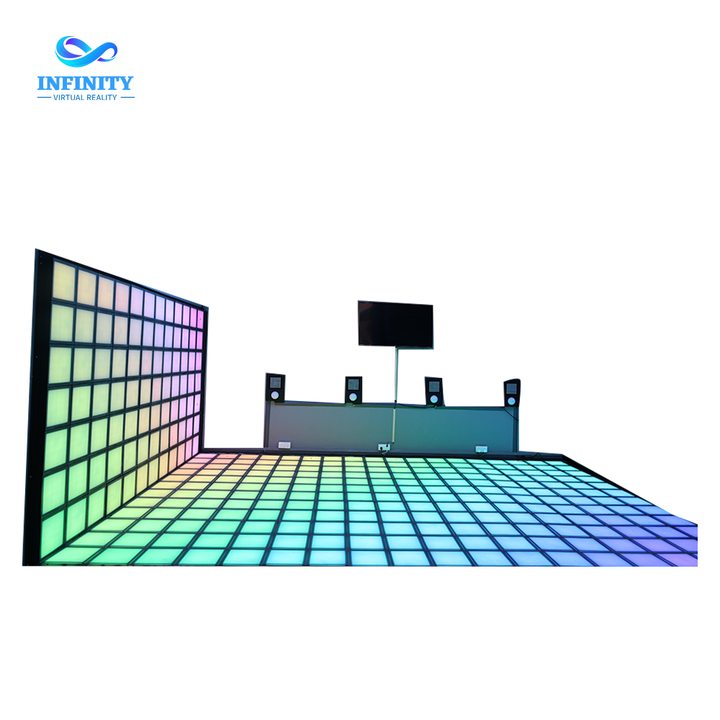
The LED dance floor turns dead hours into bookable product. The Infinity Grid LED Dance Floor is a multiplayer challenge game of interactive light-up tiles; a 50 m² zone holds eight pads plus a viewing bench. In dance mode the same tiles run light shows synced to the DJ, turning the floor into the venue's party surface by 22:00.
Scheduling makes the floor pay. The weekly loop reserves the grid for challenge mode on weeknights, converts it to dance mode on Friday and Saturday after 21:30, and rents it as an event surface on Sunday afternoons at USD 80 to USD 120 per hour. That mix delivers USD 800 per month at a 94 percent margin with almost no consumables: tile spares are the only line item, and the dashboard reports tile health live.
The floor draws the 25-to-35 demographic the bar otherwise loses to clubs, and lifts revenue per square meter without adding a staff position.
The engineering plan starts with zoning, then power, then air. The table below is the reference layout for the 600 m² unit; each zone is defined by its station count and target revenue. The bar carries 47 percent of revenue, the game floor the other 53 percent at much higher margins.
| Zone | Area | Stations | Revenue / m² | Monthly Revenue |
|---|---|---|---|---|
| Bar & lounge | 180 m² | 60 seats | $42 | $7,600 |
| Kitchen, circulation & restrooms | 140 m² | - | - | - |
| Duckpin zone | 90 m² | 2 lanes | $40 | $3,600 |
| Dart ring | 80 m² | 6 X7 | $30 | $2,400 |
| Shooting bay | 60 m² | 2 Q4 | $27 | $1,600 |
| LED dance floor | 50 m² | 8 pads | $16 | $800 |
Power and air are where operators go wrong. The unit draws about 42 kW of connected load: 4.4 kW for the duckpin lanes, 1.8 kW for the dart ring, 4.8 kW for the shooting bays, 1.8 kW for the LED grid, 18 kW for the kitchen, and the rest for HVAC, lighting and audio. A single three-phase feed with per-zone breakers is enough; game circuits run at 230 V. The kitchen extract runs 2,000 m³ per hour, game zones use CO₂-driven demand ventilation, and acoustic panels on the dart and shooting walls keep the floor at 55 to 60 dB(A) at 3 meters, inside most municipal limits past 22:00.
The full package lands at USD 210,000 delivered, installed and commissioned. The CapEx table below is the reference budget for the 600 m² unit; the largest lines are the duckpin lanes and the bar fit-out, the two assets that generate the most revenue.
| Item | Spec | Qty | CapEx |
|---|---|---|---|
| Duckpin Bowling | 2 lanes, automated pin setting | 2 | $52,000 |
| Dart Machine X7 | online play, RFID, 32-inch display | 6 | $25,200 |
| Shooting Simulator Q4 | optical scoring, leaderboard | 2 | $16,000 |
| Infinity Grid LED Dance Floor | interactive tiles, 8 pads | 1 | $13,000 |
| Bar & kitchen fit-out | 14-meter bar, taps, POS, hood | 1 | $60,000 |
| AV, lighting & signage | DJ booth, sound, neon | 1 | $16,000 |
| Electrical, HVAC & install | 3-phase feed, extract, delivery | 1 | $27,800 |
The revenue model below is the monthly target at steady state. The bar line carries the largest share, while the four attraction lines run at 92 to 95 percent direct margins with no consumables beyond LED tile spares and dart tips.
| Revenue Line | Monthly | Share | Direct Margin |
|---|---|---|---|
| Bar & kitchen (F&B) | $7,600 | 47% | 70% |
| Duckpin bowling (2 lanes) | $3,600 | 23% | 92% |
| Dart X7 ring (6 units) | $2,400 | 15% | 95% |
| Shooting Q4 (2 bays) | $1,600 | 10% | 95% |
| LED dance floor | $800 | 5% | 94% |
| Total target revenue | $16,000 | 100% | 82% |
The staffing model keeps fixed costs low: one bar manager, two F&B service staff and one event and game attendant, a team of four running split shifts over a 16-hour operating day, with payroll near USD 6,800 per month. The game floor is cashless: no coin handling, no ticketing staff, no technician, just a 30-minute daily check and dashboard alerts. At the target utilization profile, operators report the USD 210,000 package fully recovered in 11 to 13 months.
A 450 m² venue works with a tighter mix (2 duckpin lanes, 4 dart cabinets, 1 shooting bay); 600 m² gives the full zone split, including the 50 m² LED floor and a 60-seat bar.
Acoustic panels on the dart and shooting walls, a suspended acoustic ceiling, lane covers on the duckpin system, and a 55 to 60 dB(A) target at 3 meters. Demand-based ventilation and closing-hour rules keep the floor inside municipal limits.
Keep the bar at the entrance and the game floor visible but separate; run cashless RFID play, stop game sales 30 minutes before closing, and check the local rules on where beverages may be consumed and at what age.
At the USD 16,000 monthly revenue target with the four-person staffing model, operators report the USD 210,000 package recovered in 11 to 13 months at target utilization.
Get a tailored quote, zone plan and power diagram from the NextPlay engineering team.