Rent per square meter is the largest fixed cost in family entertainment and decides which formats survive a slow quarter. A full-size FEC of 1,200 square meters pays $11 to $13 per square meter monthly in a regional mall - a bill near $15,000 before the first coin. A 400-square-meter boutique zone in the same class pays about $5,200 per month yet earns more per square meter because every attraction sits close to the spending corridor. The format works because it concentrates the three revenue layers - equipment play, food and beverage, and redemption - into a loop the visitor crosses three times in ninety minutes.
Compression also cuts the break-even point. The $145,000 package covers duckpin bowling, electronic darts, arcade archery and a VR motion chair, and the fit-out brings the total opening investment to roughly $235,000 including floors, acoustics, power and furniture. With monthly net cash flow around $16,000, the venue recovers the equipment investment in nine months and the full opening budget in about fifteen. A large-format competitor with $600,000 in attractions needs $25,000 of monthly net profit just to reach the same payback, attendance that most secondary malls cannot deliver.
Density is the second argument. In a 400-square-meter box every dollar of capital sits within six meters of the main walkway, so no dead zone exists. Large venues carry 15 to 20 percent of their floor as low-yield circulation and storage; the compact ring keeps that under 10 percent. Compact zones report $30 to $45 of monthly revenue per square meter against $14 to $18 for full-size centers, which is why landlords call boutique operators first.
The format also matches the leasing market: malls carry vacancies in the 300 to 600 square meter band, where landlords offer fit-out contributions and rent holidays that large halls do not get. A 400-square-meter zone fits inside a former restaurant unit or bank branch, and the equipment can relocate to a second site in under two weeks if the location underperforms. The real question for an operator is no longer whether small footprints work; it is which anchor attraction should occupy the center of the ring.
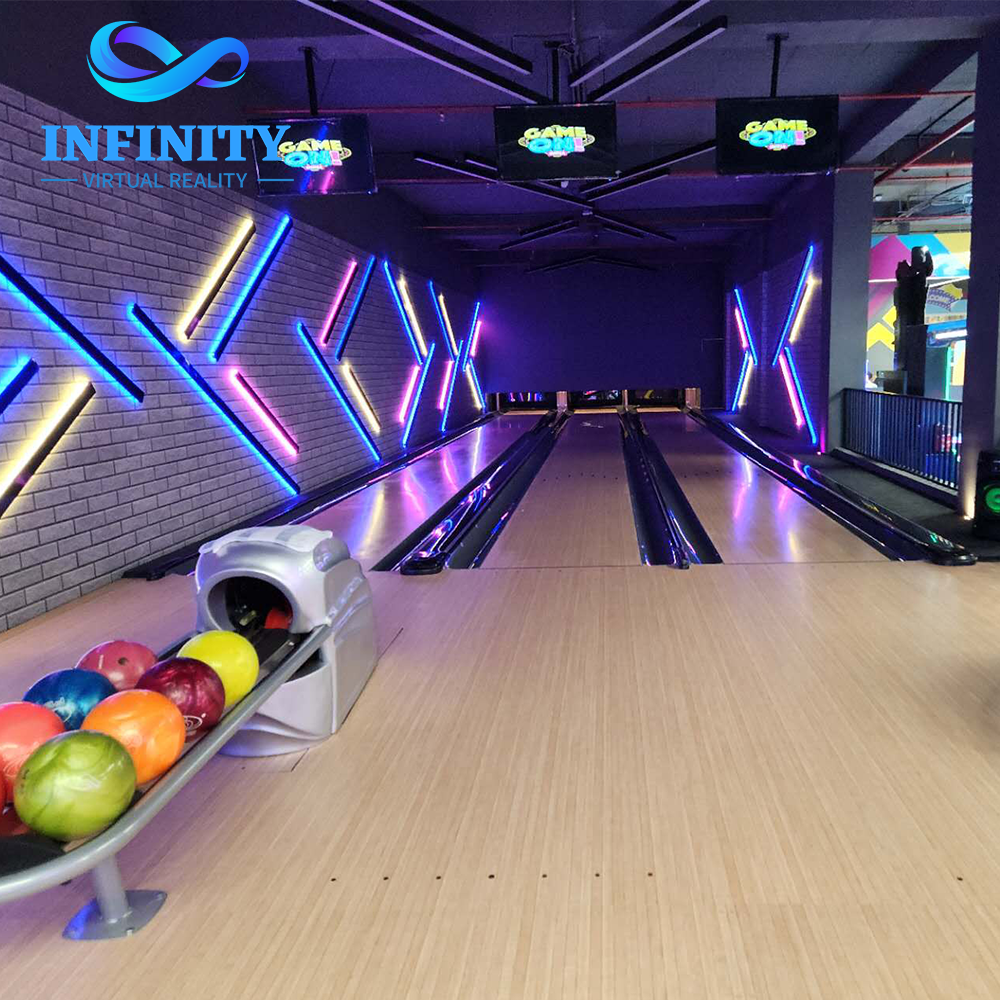
Duckpin bowling beats every other group attraction on space because the lane is about one third shorter than a ten-pin lane. The >duckpin bowling system in this blueprint needs about 14 meters of running length including approach, pit and ball return, and two lanes side by side with shared seating and a shoe counter fit inside 120 square meters. Each lane has automatic pin setting, ball return and touchscreen scoring, so no pin chaser or scorer is needed. The masking unit and LED accents make the lanes the visual center of the venue, driving the dwell time that food and redemption counters depend on.
The throughput math works at boutique scale. A duckpin game runs 20 to 24 minutes with five to six players per lane, giving each lane about 14 games per operating day. At an average ticket of $6.50, the two lanes produce about $1,300 per day at 70 percent utilization, or $27,000 per month at full schedule. Weekend league slots at $8 lift the ticket, and birthday parties take both lanes for ninety minutes at a flat $180. The lanes are the highest revenue generator per square meter and the attraction that keeps groups on site longest.
Maintenance is lighter than full-size bowling. Duckpin pins are small and light, the machines share the free-fall and string-pin families of compact systems, and the electronics are serviceable from the operator dashboard. Compared with a 26-meter ten-pin install, the two lanes consume a third of the power, cost a quarter of the spare-parts inventory, and need no technician visit for routine cleaning.
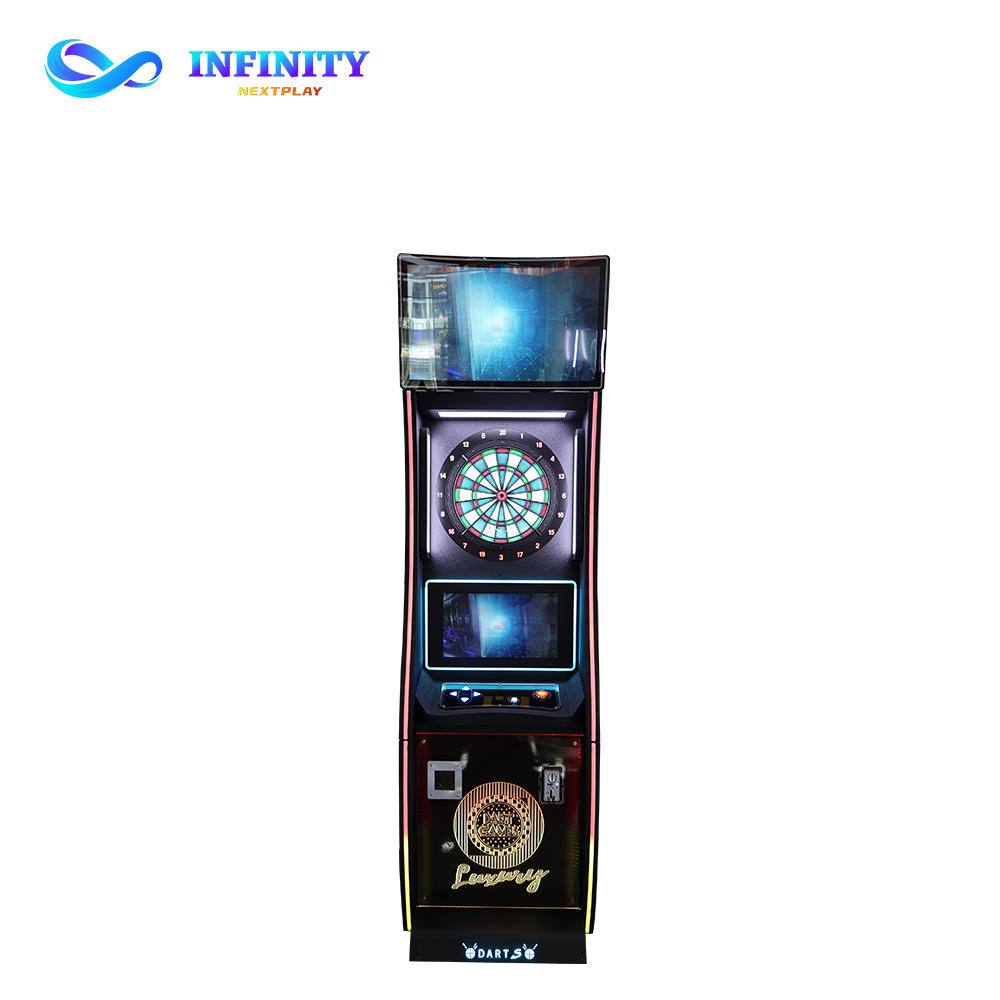
The arcade ring wraps around the duckpin core in a loop that keeps every machine within sight of the service desk. The >Dart X4 cabinet takes a 1.2 by 1.9 meter footprint with 2.5 meters of throw distance, and four cabinets fit along a 10-meter wall with the walkway in front. Electronic darts is the cheapest attraction to run: no balls, no pins, no consumables, and online ranking brings players back weekly. League nights run from the operator console with no referee, and each cabinet pulls under 350 watts.
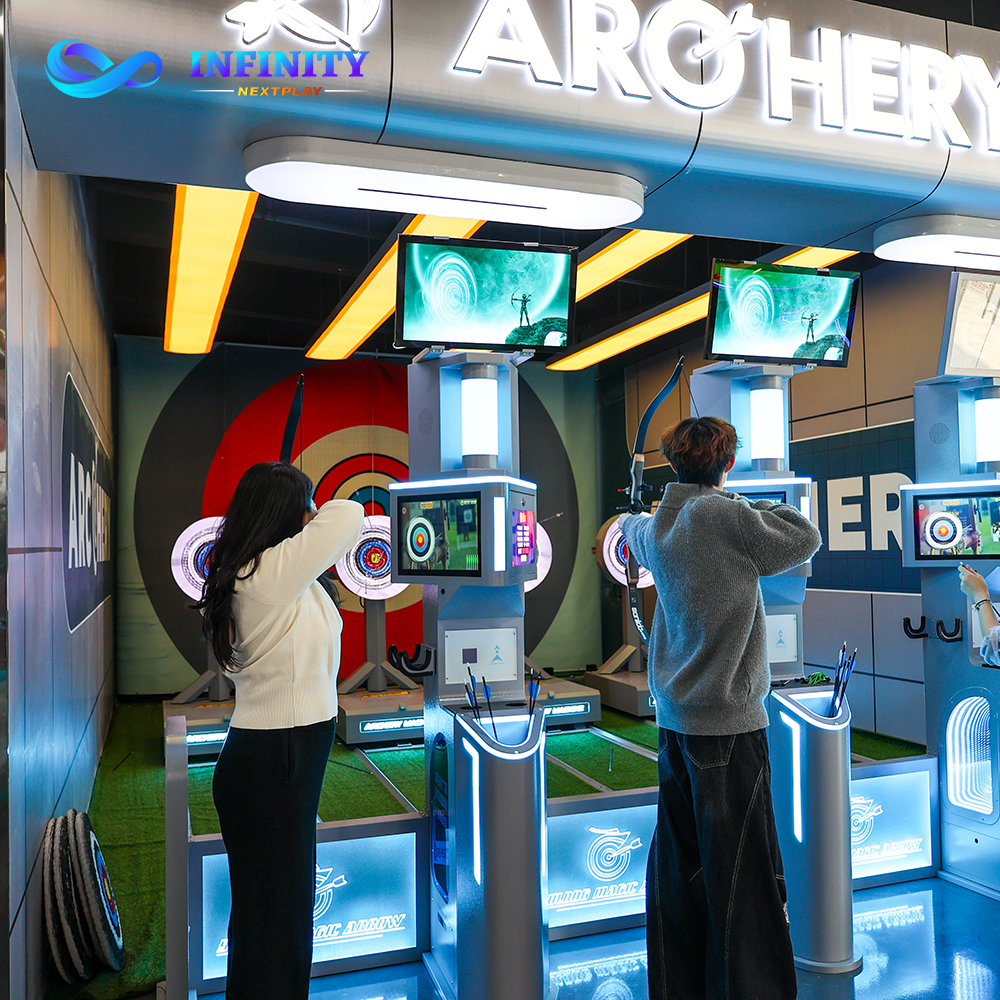
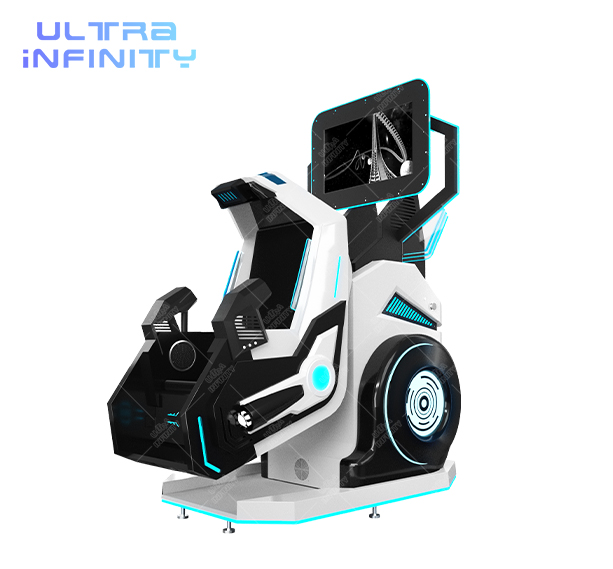
Arcade archery takes a 6-meter lane with a 1.2 by 0.9 meter target unit, and the >Archery A4 scores every arrow automatically through ballistic sensors and dual displays. The >VR 360 motion chair needs a 2.5 by 2.5 meter pad plus half a meter of clearance, and its single-seat capacity keeps per-play cost low while justifying a $6 to $9 ticket. Together the dart wall, archery lane and VR pad occupy about 45 square meters, leaving the ring for redemption shelves, photo moments and queuing that doubles as party overflow seating.
Full-size FEC attractions need specialist staff, oversized power and long maintenance windows that a 400-square-meter unit cannot absorb.
Compact automated machines with auto-scoring, cloud diagnostics and dashboard control run on general staff with no technician on site.
The ring also balances traffic. Families arrive at the duckpin lanes, parents rotate to the dart wall while children finish a game, and the archery lane captures queue overflow during party hours. Because every station is visible from the service desk, two attendants cover the whole loop without roaming, and no machine sits idle more than 20 minutes during peak hours - the density target that makes the $12,000 monthly equipment revenue realistic.
The 400-square-meter box splits into four functional bands. The duckpin core sits at the back, farthest from the entrance; the arcade ring follows the perimeter wall; the service desk, redemption and kitchenette occupy the entrance band; and the service core with storage and the electrical room closes the last corner. This zoning keeps loud attractions away from the door, puts the sales counter within four meters of all four zones, and leaves a circulation loop of at least 2.4 meters for prams and party groups. The allocation used in the standard engineering package is below.
Power budgeting starts with a load list, not a single breaker size. The two duckpin lanes draw about 6 kW together, the dart cabinets under 1.5 kW, the archery system 1.6 kW and the VR chair 2.2 kW, a machine load near 12 kW. HVAC, lighting, the kitchenette and printers add roughly 6 kW, so the venue is designed around an 18 kW peak with an 80-ampere three-phase supply. Scoring terminals and the VR chair get UPS backup, and every attraction shares one data network for the cloud dashboard and the cashless payment loop.
| Zone | Footprint | Content | Power Draw |
|---|---|---|---|
| Duckpin core (2 lanes) | 120 m2 | 2 lanes, seating, shoe counter | 6.0 kW |
| Arcade ring (darts) | 60 m2 | 4 dart cabinets, walkway, queuing | 1.5 kW |
| Archery + VR corner | 45 m2 | Archery A4 lane, VR 360 chair pad | 3.8 kW |
| Service, F&B and redemption | 85 m2 | desk, kitchenette, redemption shelves | 4.5 kW |
| Circulation and storage | 90 m2 | main loop, service core, storage | 2.2 kW |
Acoustics separate the venue from its neighbors. Duckpin pin drops register 68 to 72 dB at the lane, cabinet music adds about 6 dB at the ring, and untreated transfer through shared walls is the most common complaint in mixed-use buildings. The blueprint specifies acoustic panels on walls shared with other tenants, a floating threshold at the door, carpet in the ring and service core, and a double-glazed entrance window. The measured package keeps leakage under 45 dB at the property line, satisfying most lease clauses without a full acoustic ceiling.
The $145,000 package is one line item covering the duckpin pair, four dart cabinets, the archery lane, the VR 360 motion chair, redemption hardware, the scoring and management software license, freight, installation and two days of on-site training. It is quoted as one contract, so the operator gets one warranty, one spare-parts list and one installation schedule. The package is scaled to the 400-square-meter ring - no redundant capacity, no separate consultant - and a second site uses the identical manifest.
Revenue splits across three streams. Equipment play contributes about $12,000 per month: bowling 45 percent, darts 20, archery 15 and the VR chair 20. Food and beverage adds $9,000 and redemption $5,500, for a gross total near $26,500. Operating costs run about $10,400 per month: rent $5,200, two attendants and a shared manager $3,600, utilities $1,000, maintenance and insurance $600. The monthly net of $16,100 against the $145,000 package returns the investment in nine months, as the table below shows.
| Item | Value | Basis |
|---|---|---|
| Equipment package (CapEx) | $145,000 | duckpin pair, darts, archery, VR chair, redemption, license, install |
| Monthly gross revenue | $26,500 | equipment $12,000 + F&B $9,000 + redemption $5,500 |
| Monthly operating cost | $10,400 | rent $5,200, labor $3,600, utilities $1,000, other $600 |
| Monthly net cash flow | $16,100 | gross revenue minus operating cost |
| Simple payback | 9 months | CapEx divided by monthly net cash flow |
The model holds under conservative assumptions. A 15 percent revenue drop still yields a 10.5-month payback, and weekday promotion at 20 percent discount lifts low-demand hours without eroding the weekend ticket. League deposits, birthday packages and corporate team events add contracted revenue that does not depend on walk-in traffic. A second site costs roughly 12 percent less in logistics and training with the same payback profile.
The staffing plan is the quiet advantage of the compact format. Two attendants cover the floor per shift and one venue manager splits time across the zone, putting the labor bill at about $3,600 per month in a secondary market. No specialist is required because every machine scores itself: the lanes manage pins and scoring automatically, the dart cabinets run their own leagues, the archery system registers every arrow, and the VR chair operates on a coinless card loop. Attendants focus on sanitizing controllers, escorting minors and running the redemption counter.
The roster covers a 12-hour day with two shifts of two attendants plus a manager overlap at peak hours, and the cloud dashboard lets the manager review live utilization from a phone. Handover follows a 20-minute checklist covering cash drawers, fault flags and cleaning status. Because all four attractions share one network and one dashboard, a single trained attendant can run the venue solo on quiet Monday and Tuesday hours, trimming labor cost by about 18 percent across the week.
Maintenance is scheduled rather than reactive: the Monday window from 09:00 to 11:00 covers pin deck cleaning, dart target rotation and VR headset wipes, and the annual spare-parts budget is 1.5 percent of the package value. Fault rates across the four attractions run below 0.4 percent of plays, and the most common issue - a stuck pin or a loose headset cable - is resolved from the dashboard or the spare kit without a service call. The zero-specialist model is what keeps the payback number real after the first year.
The full blueprint is built for 400 square meters. Duckpin alone fits in about 260 square meters including two lanes, seating and a service desk, and a single duckpin lane with a small arcade corner works from around 140 square meters. Below that, the revenue mix starts to lose the redemption and F&B streams that make the nine-month payback work.
Peak load is about 18 kW including HVAC and lighting. An 80-ampere three-phase supply covers it with margin; the duckpin pair draws 6 kW, the dart cabinets under 1.5 kW, the archery system 1.6 kW and the VR chair 2.2 kW. Scoring terminals and the VR chair are UPS protected, and single-phase 220V is sufficient for darts, archery and VR machines.
Two attendants per shift plus one manager who also covers adjacent operations. No technician is needed because all machines are self-scoring and cloud-managed; routine cleaning and fault fixes follow the operator handbook, and cloud diagnostics flag issues before they stop a machine.
Nine months at the modeled $26,500 gross and $16,100 net monthly figures; a 15 percent revenue discount stretches it to about 10.5 months, and a second standardized site typically lands at 9 to 11 months with lower logistics cost.
Get a tailored quote, a floor plan and an ROI worksheet from the NextPlay engineering team.