An arcade operator plans soundproofing, speaker placement and the volume that fills the floor without drowning the games, and almost never plans the permission to play the music itself. The law sees it differently: the moment a venue plays music for its guests, for any commercial purpose, it is holding a public performance, and a public performance of a copyrighted song needs a license from the song''s owner. Background music is not a background matter, it is a legal line item.
The key distinction that confuses most operators is the difference between the recording and the song. Playing a downloaded track, a streaming playlist or a purchased CD buys the right to own the file, not the right to perform it in public; the performance right belongs to the songwriter and the publisher, and it is enforced through the performing rights organizations, the PROs. The four major PROs in the United States are BMI, ASCAP, SESAC and GMR, and each one controls a different slice of the songs a typical arcade playlist uses.
The practical takeaway is that a venue does not license songs one by one, it licenses repertoires through blanket licenses, one per PRO, and the math of how many blankets an arcade needs is the subject of this guide. The goal is simple: keep the music that drives the atmosphere, and make sure every note is covered by a license the venue can show on demand.
A performing rights organization does two jobs: it collects royalties from venues that play music, and it pays those royalties to the songwriters and publishers it represents. Each PRO controls a different repertoire, which is why a single blanket license never covers a full playlist; the average commercial playlist draws songs from all four organizations, and the venue that licenses only one PRO is still exposed on everything the others control.
| Performing Rights Org | What It Controls | Typical Venue Fit |
|---|---|---|
| BMI | Largest US repertoire, broad pop and rock catalog | Needed by almost every venue |
| ASCAP | Second-largest catalog, strong pop, film and theater music | Needed by almost every venue |
| SESAC | Smaller catalog, country, Latin and niche genres | Needed when those songs are on the playlist |
| GMR | Newer PRO, premium songwriter catalog | Increasingly part of standard venue coverage |
The blanket license is the practical unit of compliance: one annual fee, one PRO, unlimited use of that PRO''s entire repertoire for the venue''s standard music use. There is no per-song accounting for the operator, no log of every track, just a single payment and a certificate. The cost scales with how the venue uses music, which is exactly where most arcade operators misjudge their number.
The common assumption is that one blanket license is enough because one company sent the bill. In practice the audit math works the other way: a venue that plays a broad playlist is almost certainly using music from BMI and ASCAP at minimum, often SESAC and GMR as well, and each organization can audit independently. The operator who signs one blanket and stops is not compliant, it is partially covered, and partial coverage is what the next audit letter exploits.
The PROs price the blanket license on a sliding scale built from the venue''s capacity, its square footage, the number of zones with music, and the type of use, background only, live events, DJ nights or karaoke. An arcade usually lands in the lower-to-middle bands of the scale, but the exact number depends on how the floor is wired: a single background zone prices differently from a multi-zone venue with a party room and a bar.
| Venue Profile | Estimated BMI Fee | Estimated ASCAP Fee |
|---|---|---|
| Small arcade, under 100 capacity, one zone | $450 - $700 / year | $550 - $800 / year |
| Mid-size FEC, 100-250 capacity, two zones | $1,000 - $1,800 / year | $1,200 - $2,000 / year |
| Large FEC, 250-500 capacity, bar and party rooms | $2,500 - $4,500 / year | $2,800 - $5,000 / year |
| Venue with DJ nights or karaoke | Base fee plus event surcharge | Base fee plus event surcharge |
Two features of the scale matter more than the base number. The first is the zone count: every separate area with its own music, the main floor, the bar, the party room, the bowling concourse, can raise the fee, because the PRO treats each zone as an additional performance location. The second is the event modifier: a venue that hosts DJ nights, karaoke or live acts pays a higher rate than a venue with background music only, because those events are precisely the performances the license exists to cover.
The total for a typical arcade is usually modest, a few thousand dollars a year across all four PROs, which is why the fee is so easy to skip and so expensive to skip badly. The license is one of the cheapest compliance lines on the P&L, and also one of the few that can produce a five-figure liability when missing.
The enforcement engine is the audit, and the audit begins with the letter. PRO representatives visit venues, log the music being played, compare the playlist against their repertoire, and when a venue is unlicensed they send a demand for back fees plus damages. The exposure is defined by copyright law: statutory damages of $750 to $30,000 per work infringed, up to $150,000 per work for willful infringement, and a court can also award the PRO''s legal costs.
| Scenario | Likely Outcome | What It Costs |
|---|---|---|
| Unlicensed venue, first notice | Demand letter with back fees and settlement | 1-3x the avoided license fees |
| Unlicensed venue, repeated notices | Negotiated settlement with audit inspection | Multi-year back fees plus damages |
| Venue hiding events from the application | License voided, statutory damages claimed | Thousands to tens of thousands |
| Licensed venue with complete file | Letter closed with proof of coverage | The license fee only |
The audit math is brutal because the damages scale with songs, not with venues: a single unlicensed hour of a DJ set can play dozens of songs, and if the repertoire overlap with the auditing PRO is wide, each song is a separate claim. This is why the settlement demand is usually framed as a multiple of the avoided fees, the PROs know that the full statutory route is slow, so they price the settlement to make compliance look cheap, which it is.
The arcade has an extra exposure most venues do not: the game floor itself. Some game manufacturers license the music inside their games, but the venue''s own playlist, the party room speaker, the pre-game hype track, the karaoke night, is venue music and venue liability. The operator who separates the two, game soundtracks covered by the manufacturer, venue music covered by the PRO blankets, is the operator who sleeps through the audit season.
The cleanest way to scope the licenses is to map the venue by zone and by music source, because every zone that plays music adds a performance point. The map is also the document the operator shows during an audit, and a complete map is often enough to close a letter without a site inspection.
| Zone | Typical Music Source | License Status Needed |
|---|---|---|
| Main game floor | Venue playlist over house speakers | PRO blanket (background use) |
| Bar and lounge | Venue playlist, jukebox or DJ | PRO blanket plus event coverage |
| Party room | Separate speaker feed, kids playlists | PRO blanket, counted as its own zone |
| Bowling concourse | House music over lane speakers | PRO blanket, counted as its own zone |
| Arcade game cabinets | Game manufacturer soundtracks | Covered by the game license, verify on paper |
| Karaoke room | Karaoke tracks sung by guests | PRO blanket plus karaoke-specific terms |
The map also fixes the fee quote: the operator who can tell the PRO exactly how many zones and what sources, background only or events too, gets an accurate application instead of a guess that turns a routine renewal into an audit trigger.
Compliance is a file, not a feeling. The venue that can produce the certificates, the zone map and the payment history on demand is the venue that turns an audit letter into a five-minute conversation; the venue without the file is the venue that negotiates from a position of exposure. Building the file takes an afternoon and saves the year.
Complete zone map, four blankets on file, event log updated, renewals on time, and an audit letter closes with a five-minute proof.
One license, no map, an unlogged DJ night and a second unlicensed zone; the audit letter arrives with a multiple-of-fees settlement attached.
The file is also the operating tool: the same zone map that satisfies the auditor tells the operator where the music is actually delivering value. The venue that maps the sound the same way it maps the floor can decide zone by zone whether the party-room playlist earns its license, which is the difference between paying for music and investing in it.
The license fee is easiest to justify when the music is doing work, and the best venues treat sound as a designed layer of the experience rather than a background afterthought. The attractions that lean on sound are the ones where the license pays back: the soundtrack of a cinematic ride, the crowd audio of a sim, the beat of a social game, all of them turn the audio layer into a revenue driver instead of a cost line.
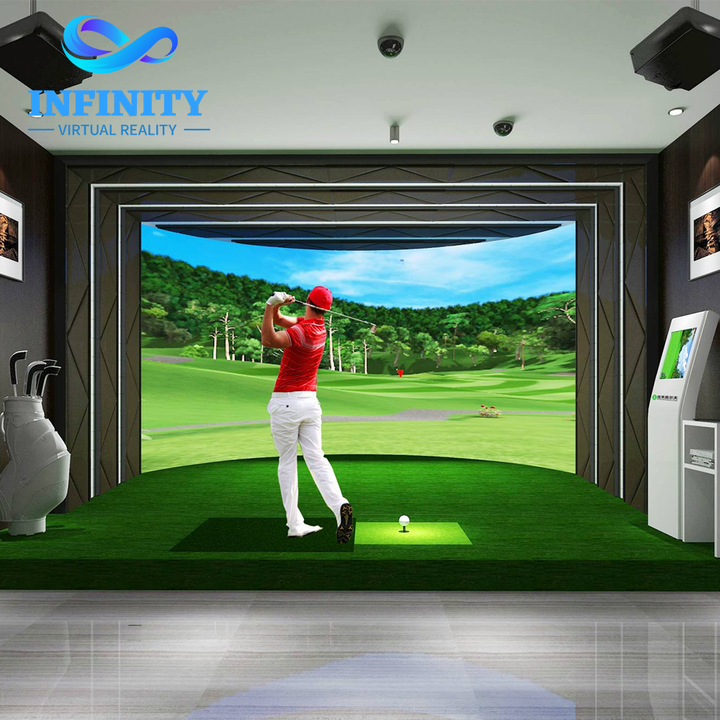
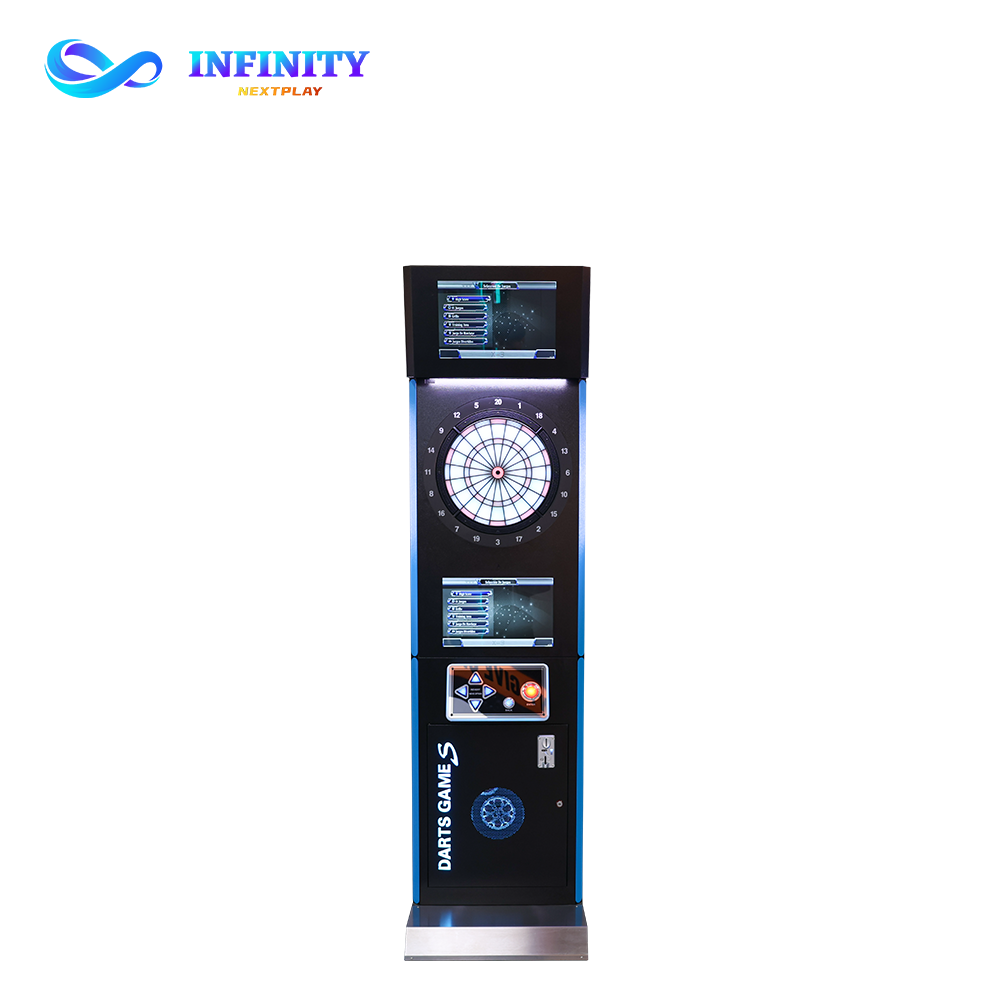
The Naked 3D Rail Track Flying Cinema is the clearest example: the ride is built on its soundtrack, the orchestral swell and the wind effect are what make the drop feel real, and the venue that licenses the music properly can run the show loop with confidence. The Indoor AR Golf Simulator uses a quieter audio palette, ambient course sounds that set the tone for a relaxed sim round, and the Professional Arcade Dart Machine X3 carries its own in-game audio while the surrounding lounge music creates the social layer; in each case the licensed sound is part of the product.
A1: Yes. Playing music for guests in a commercial venue is a public performance under copyright law, and it requires a license from the performing rights organizations. A streaming subscription or a purchased file covers personal use only, not the venue.
A2: Most arcades need licenses from BMI and ASCAP at minimum, and often SESAC and GMR as well, because a normal playlist draws songs from all four repertoires. The operator should match the licenses to the actual playlist and declare the real zone count.
A3: A small arcade with one zone typically pays a few hundred dollars a year per PRO; a mid-size FEC with a bar and a party room runs a few thousand dollars a year across all four organizations. The fee scales with capacity, zone count and events.
A4: Usually yes, the game license covers the soundtracks inside the cabinets, but it does not cover music the venue adds, the house playlist, the party room feed or the DJ night. The operator should keep both sets of documents on file.
A5: The PROs can audit, demand back fees and pursue statutory damages of $750 to $30,000 per infringed work, more for willful infringement. In practice the first contact is a settlement demand for a multiple of the avoided fees.
The license is a few thousand dollars a year for a mid-size arcade, and the liability it removes is potentially six figures. The operator who maps the zones, signs the blankets, keeps the file and renews on time turns the scariest compliance letter in the industry into a five-minute proof, and keeps the music that makes the floor feel alive.
The sound the license protects is the same sound that sells the experience: the Naked 3D Rail Track Flying Cinema ride whose soundtrack carries the emotion, the Indoor AR Golf Simulator whose ambient audio sells the calm round, and the Professional Arcade Dart Machine X3 whose lounge energy holds the group. Contact NextPlay for the venue music checklist and run your floor with the music on and the risk off.
Ask NextPlay for the venue music checklist: the zone-by-zone coverage map, the fee estimator and the audit-response template that keep your floor licensed and your music on.