The following equipment units form the primary revenue-generating hardware for the commercial venue described in this guide.
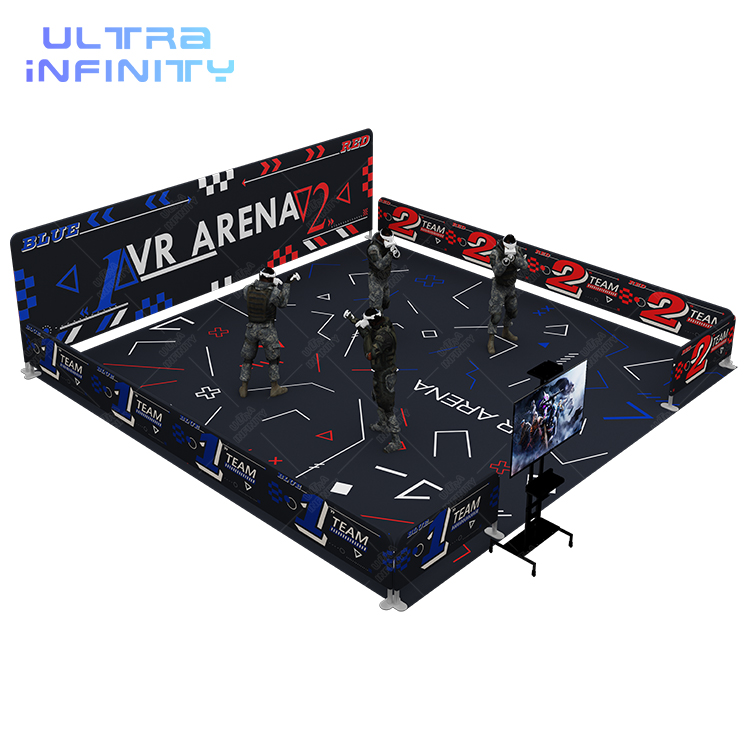
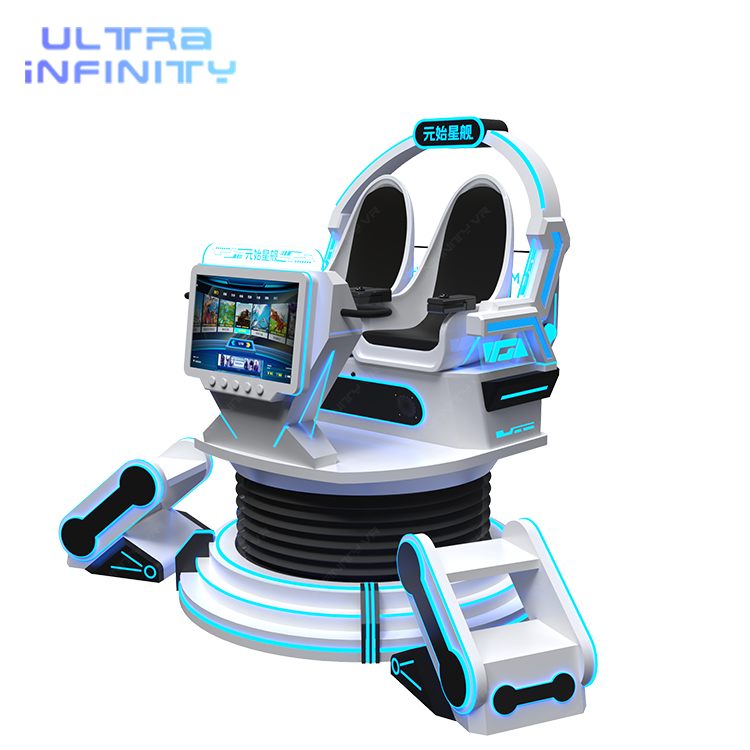
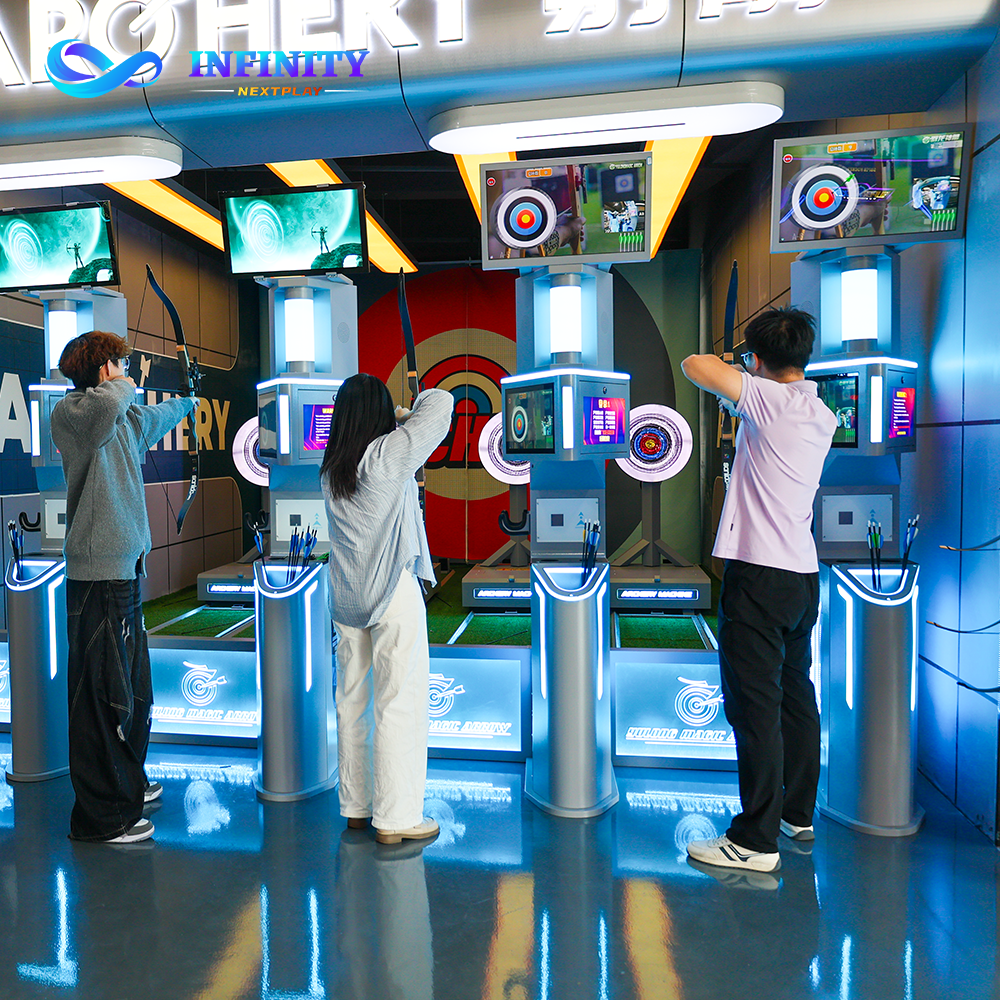
Explore the equipment referenced throughout this guide: Free Roaming VR Arena 2.0 - Multiplayer VR Walking Shooting Simulator VR Starship U2 - 9D VR Cinema 2 Players Gaming Chair Professional Arcade Archery System for Full Venue Solution - Auto Voice Scoring & Dual Display - A6. Each unit is engineered for commercial-grade reliability and backed by full factory support.
VR arenas are one of the fastest-growing formats in location-based entertainment because they offer something arcades and cinemas cannot: fully immersive multiplayer experiences where groups move, shoot, and compete together. The business model benefits from high repeat-play potential, strong group bookings, and premium pricing per session. A well-designed VR arena can deliver payback in 12-24 months, making equipment selection the single most important decision you will make.
Market Drivers: Repeat play: 60%+ of revenue from returning groups. Group size: 4-8 players per session drives utilization. Premium pricing: $15-$40 per session per player.
The heart of any VR arena is a free-roaming multiplayer system that lets players walk, aim, and interact inside a shared virtual space. A Free Roaming VR Arena 2.0 is the flagship choice, supporting multiple simultaneous players with full-motion tracking and a curated library of competitive shooting titles. This single system typically accounts for 40-60% of your total equipment budget, and it is the piece that defines your arena''s experience.
Free-Roam Budget: Core system: $40K-$120K depending on player count. Tracking & backpacks: $5K-$20K. Content licenses: $2K-$8K/year. Expect the free-roam system to lead your capex.
Beyond the core system, you need headsets, tracking hardware, and rendering computers sized to your player count. Modern free-roam arenas use wireless or backpack-mounted PCs so players move without cable constraints. Plan for one complete player kit per station, plus one spare for every four stations to minimize downtime. Sensor and camera placement, computed during the layout design phase, determines how reliably the system tracks players across the arena.
Per-Player Kit: Headset: $1K-$2K. Backpack PC or wireless module: $1K-$3K. Tracking accessory: $500-$1.5K. Spare ratio: 1 spare kit per 4 stations.
Not every visitor wants a full free-roam session, and seated experiences are excellent for younger guests, nervous first-timers, and quick-turnaround sessions. A VR Starship U2 9D Cinema adds a 2-player motion chair that runs short cinematic rides, giving you a high-throughput option that uses far less floor space per revenue dollar than free-roam.
Seated Mix: Motion chairs: $15K-$40K each. Turnaround: 3-6 minutes per session. Throughput: 10-20 sessions/hour vs 4-8 for free-roam. Best for mixed-age venues.
A winning VR arena does not rely on VR alone. Skill-based attractions such as an arcade archery system add accessible, low-cost-to-run games that appeal to casual players, fill gaps between VR sessions, and build leaderboard competition. These attractions diversify your revenue and keep the venue interesting on slower days.
Skill Game ROI: Arcade archery: $10K-$25K. Maintenance: minimal vs motion hardware. Throughput: high, no headset hygiene overhead. Leaderboards drive repeat play.
Space planning is where most VR arena projects succeed or fail. A free-roam zone needs 500-2,000 square feet depending on player count and game design, with clear safety padding on walls and columns. Around the free-roam zone, plan waiting areas, a seated VR zone, skill games, and a redemption or F&B counter. A professional 3D layout is essential: it resolves sightlines, cable management, emergency exits, and player flow before you spend on hardware.
Zone Allocation: Free-roam: 60%. Seated VR & skill games: 20%. Entry, waiting & F&B: 20%. Minimum ceiling height: 3m. Floor must be flat and shock-absorbent.
VR arenas carry real safety obligations. Padded barriers, padded floors, clear emergency stop controls, and staff supervision are non-negotiable. Because headsets and controllers touch multiple users, plan a cleaning protocol with sanitizing wipes between every session and a check-in system for hygiene compliance. Insurance costs are directly affected by how seriously you take safety, so document your procedures and train staff rigorously.
Safety Budget: Padding & barriers: $3K-$10K. Signage & e-stop systems: $1K-$3K. Sanitizing supplies: $500-$1K/month. Liability insurance: $10K-$30K/year.
VR arena budgets scale with ambition. A compact starter arena with one free-roam system, a seated chair, and a skill game lands between $80,000 and $150,000. A mid-size venue with two free-roam systems and a fuller lineup runs $150,000-$250,000. Flagship arenas with multiple free-roam zones, several seated experiences, and premium finishes exceed $300,000. Budget an additional 15-20% of equipment cost for installation, layout, and contingency.
Operating a VR arena is relatively lean: the main recurring costs are staffing, electricity, content licenses, and maintenance. A single free-roam station generating 6-10 sessions per hour at $15-$40 per player can produce strong daily revenue, and seated rides add high-throughput incremental income. Typical operating costs run 40-60% of revenue, leaving healthy gross margins once the equipment is paid down.
Monthly Operating Costs: Staffing: $6K-$15K. Electricity: $800-$2K. Content & software: $500-$1.5K. Maintenance reserve: $500-$2K. Total: roughly 45% of monthly revenue.
The most common mistakes are buying too few spare kits, skipping professional layout planning, choosing a system with weak content updates, and under-budgeting installation and fit-out. Operators also fail to plan for hygiene and staff training, which damages both the experience and the safety record. Buy from a full-solution supplier that provides installation, training, and ongoing content support rather than sourcing bare hardware from multiple vendors.
Top 5 Buying Mistakes: 1) No spare kits. 2) Skipping 3D layout. 3) Static content library. 4) Under-budgeted install. 5) No hygiene plan.
A starter arena costs $80,000-$150,000, mid-size $150,000-$250,000, and flagship arenas over $300,000, with the free-roam system leading the budget.
A free-roam arena typically needs 500-2,000 square feet, with 3m minimum ceiling height and flat, padded, shock-absorbent flooring.
A typical arena supports 4-8 simultaneous players per free-roam zone, expandable to 8-12 in flagship layouts with multiple zones.
VR arenas can reach payback in 12-24 months with operating costs around 45% of revenue, driven by group bookings and premium per-session pricing.
Yes, each player station needs a headset plus tracking and rendering hardware, ideally wireless or backpack-mounted for free-roam movement.
Seated 9D motion chairs and skill games like arcade archery broaden your audience, improve throughput, and diversify revenue.
Start by defining your target player count and budget, then request a free 3D layout and equipment quote from a full-solution supplier. Choose a free-roam system with a strong content roadmap, add seated and skill experiences for audience breadth, and budget for installation, safety infrastructure, spares, and operating reserves. With disciplined planning, your VR arena can be generating revenue within a few months of installation. Begin with a consultation to model your exact space and investment.
Get a free VR arena layout plan, equipment quote, and ROI projection tailored to your space and budget.