The indoor entertainment industry is undergoing a seismic shift. While traditional bowling alleys and arcade halls once dominated the landscape, a new breed of high-tech social entertainment is rapidly capturing market share. At the forefront of this revolution stands the Indoor AR Golf Simulator — a product that merges professional-grade sports training technology with the immersive social experience that modern consumers demand. For venue operators, sports bar owners, and family entertainment center (FEC) managers, understanding the full potential of this technology is no longer optional. It is a strategic imperative.
Key Insight: The global indoor golf simulator market is projected to exceed $3.2 billion by 2028, driven by urbanization, limited outdoor space, and the growing demand for year-round recreational activities that combine fitness, socializing, and technology.
The concept of indoor golf is not new. Simulator-based golf has existed for over two decades. However, what makes the current generation of AR (Augmented Reality) golf simulators fundamentally different is the convergence of three critical technologies: high-speed optical tracking, real-time physics simulation, and immersive projection systems. These innovations have transformed what was once a niche training tool into a mainstream entertainment powerhouse.
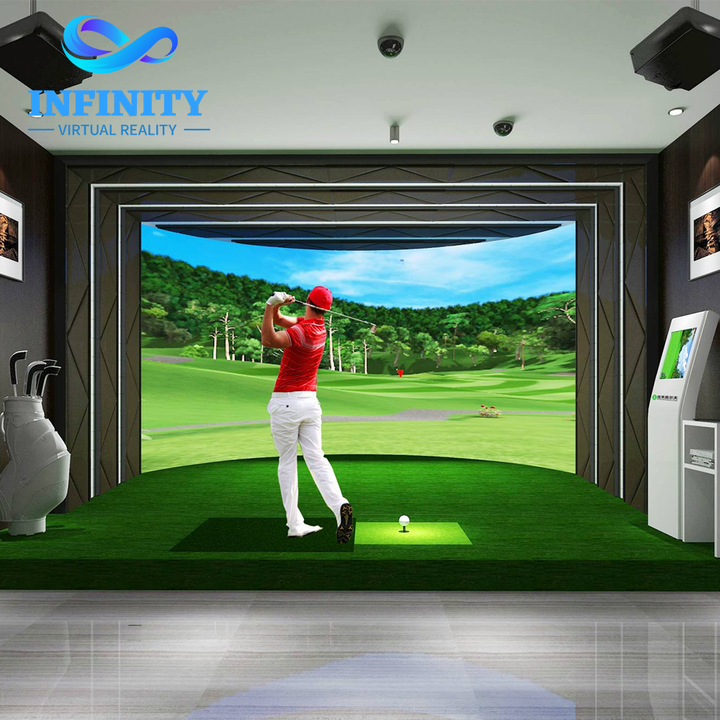
Consider the demographics. Millennials and Gen Z consumers — who now represent the largest spending cohort in the entertainment sector — are not drawn to passive experiences. They want interactive, shareable, and technologically sophisticated activities. Indoor AR golf checks every one of these boxes. A player steps up to the tee, swings a real club at a real ball, and watches in real-time as the virtual representation of their shot travels across a photorealistic digital course projected on a massive screen. The experience is visceral, addictive, and inherently social.
But the appeal extends far beyond entertainment. Indoor AR golf simulators serve a dual purpose that makes them uniquely valuable for commercial operators. They function as both a leisure attraction and a legitimate sports training platform. This dual-market positioning means your venue captures two distinct customer segments simultaneously: casual players looking for a fun night out, and serious golfers seeking a reliable practice environment regardless of weather or time of day.
Understanding the technology stack is essential for making informed purchasing decisions. Not all golf simulators are created equal. The difference between a consumer-grade setup and a professional commercial system is vast, and it directly impacts user experience, durability, and return on investment.
The heart of any professional AR golf simulator is its ball tracking system. The most advanced commercial units employ dual high-speed camera detectors capable of capturing over 3,000 frames per second. This extreme frame rate is necessary because a golf ball leaves the clubface at velocities exceeding 160 mph (257 km/h) with spin rates that can surpass 8,000 RPM. Only cameras operating at thousands of frames per second can accurately capture these fleeting parameters.
The dual-camera configuration serves a critical purpose. A single camera can measure ball speed and launch angle effectively, but it struggles with calculating side spin and axis tilt — the two factors that determine whether a shot curves left, right, or holds its line. By employing two cameras positioned at different angles, the system triangulates the ball's full three-dimensional trajectory with extraordinary precision. This data feeds directly into the physics engine, which then renders the simulated shot in real-time with sub-degree accuracy.
Speed of computation is as important as accuracy of measurement. The human brain expects near-instantaneous visual feedback when performing a physical action. If there is even a 200-millisecond delay between the player's swing and the appearance of the ball flight on screen, the immersive illusion breaks. Professional AR golf simulators achieve latency times below 50 milliseconds, creating a seamless connection between the player's physical effort and the virtual outcome. This is accomplished through optimized computer vision pipelines and dedicated graphics processing units (GPUs) that handle the rendering workload independently.
The visual display is the interface between the player and the virtual world. Consumer-grade projectors simply cannot deliver the brightness, resolution, or color accuracy required for a convincing simulation. Commercial AR golf systems use high-brightness 4K laser projectors that produce vivid, daylight-clear images even in venues with ambient lighting. Laser projection technology also offers significant advantages over traditional lamp-based projectors: longer lifespan (typically 20,000+ hours), consistent brightness over time, and instant on/off capability without warm-up periods.
The projection surface matters equally. Professional installations use impact-resistant screens designed to withstand thousands of high-velocity ball strikes daily. These screens are engineered with a matte finish that eliminates hot spots and glare, ensuring that the projected image remains crisp and uniform from edge to edge.
For venue operators, the ultimate question is always about return on investment. An AR golf simulator represents a significant capital expenditure, and the business case must be compelling. The data strongly supports the investment across multiple revenue streams.
Revenue Stream Analysis:
The open-booth design philosophy of modern commercial AR golf simulators further enhances their revenue potential. Unlike enclosed simulator pods that isolate players, open configurations foster natural social interaction. Spectators gather around, friends cheer each other on, and the experience becomes a group activity rather than a solitary pursuit. This social multiplier effect is critical for driving word-of-mouth marketing and repeat visits.
Consider the space efficiency argument as well. A traditional 18-hole outdoor golf course requires approximately 150 acres of land. Even a 9-hole executive course demands 30-40 acres. An indoor AR golf simulator bay occupies approximately 100-150 square feet of usable space. You can install 4-6 simulator bays in the footprint that a single bowling lane requires. This density of revenue generation per square foot makes AR golf one of the most space-efficient entertainment investments available.
Not every venue has identical requirements. The optimal simulator configuration depends on several factors: available space, target customer demographic, integration with existing offerings, and budget parameters. Here is a framework for making the right decision.
A standard AR golf simulator bay requires a minimum ceiling height of 9.5 feet (2.9 meters) to accommodate the full arc of a driver swing. The depth of the playing area should be at least 12 feet from the tee position to the screen, with an additional 4-5 feet of clearance behind the player for the backswing. Width should accommodate at least 8 feet for comfortable lateral movement. These dimensions translate to a total footprint of approximately 12 feet deep by 10 feet wide per bay, though premium installations with seating and spectator areas typically occupy 150-200 square feet per bay.
The hardware captures the data, but the software delivers the experience. Evaluate potential simulators based on their course library size, graphical quality, and software update frequency. The best commercial systems offer access to hundreds of photorealistic courses modeled from real-world locations. Multi-player modes, skill challenges, and tournament functionality add replay value that keeps customers returning. Some platforms also integrate with online golf communities, enabling virtual competitions between venues — a powerful feature for operators with multiple locations.
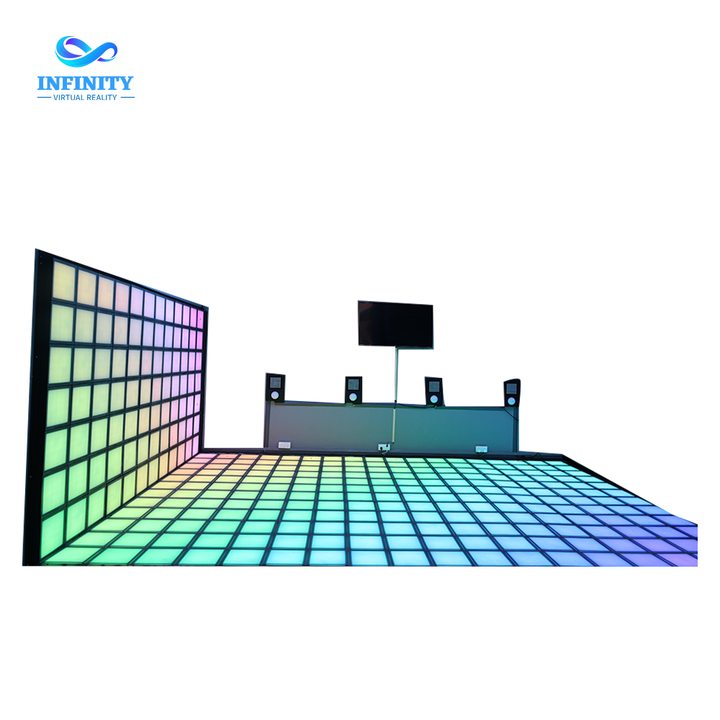
The most successful entertainment venues do not rely on a single attraction. They curate a portfolio of complementary experiences that encourage longer visits and higher per-customer spending. An AR golf simulator pairs exceptionally well with other interactive entertainment technologies. Indoor bowling lanes create a sports-themed zone. Digital archery or shooting simulators add competitive variety. LED dance floors and social gaming stations cater to larger groups. The key is selecting a simulator provider that offers a complete venue solution ecosystem — one that ensures equipment compatibility, unified management software, and cohesive design aesthetics.
Professional installation is not a luxury — it is a necessity. The accuracy of an AR golf simulator depends critically on precise calibration of the camera system, screen alignment, and environmental conditions. Improper installation can result in measurement errors that degrade the user experience and undermine the product's credibility.
A professional installation team will handle site assessment, floor preparation, equipment mounting, camera calibration, software configuration, and on-site testing. The typical installation timeline for a single bay is 3-5 days from delivery to operational readiness. Multiple-bay installations may require 2-3 weeks depending on complexity.
Maintenance requirements are remarkably low compared to mechanical entertainment equipment. The primary maintenance tasks include regular cleaning of the projection screen, periodic camera lens cleaning, and software updates. There are no moving mechanical parts subject to wear and tear (unlike bowling pinsetters or air hockey tables), which means dramatically lower long-term maintenance costs and higher uptime. Industrial-grade components are rated for continuous operation in commercial environments, typically supporting 12-16 hours of daily use without performance degradation.
The simulator itself is only one component of the customer experience. How you design the surrounding environment determines whether players come for 30 minutes or three hours. The most successful golf simulator zones incorporate several design principles.
First, create a dedicated zone with appropriate lighting and acoustics. The projection area needs controlled ambient light to maintain image quality, but the surrounding social area should feel warm and inviting. Second, provide comfortable seating for spectators. Remember that golf is inherently social — players want their friends to watch, comment, and take turns. Third, integrate food and beverage service directly into the golf zone. Counter service or dedicated waitstaff for the golf area transforms the experience from a quick activity into a full evening outing. Fourth, consider ambient music and sports broadcasting on adjacent screens to create a sports-bar atmosphere that attracts walk-in traffic even from non-golfers.
The indoor AR golf market is still in its early growth phase. Several emerging trends will shape the next generation of simulator technology. Artificial intelligence-powered swing analysis will provide players with coaching-quality feedback in real-time, eliminating the need for a human instructor during casual play. Multiplayer networked competitions between venues across different cities and countries will create a new form of competitive social gaming. Integration with wearable technology will allow biometric data — heart rate, muscle engagement, balance — to be incorporated into the simulation experience. And advances in projection technology, including curved and wrap-around screens, will push immersion to levels that blur the line between virtual and physical reality.
For venue operators, the message is clear: the window of early-mover advantage is open now. Markets that are currently underserved will become saturated within 3-5 years as more operators recognize the opportunity. Securing a prime location, establishing a loyal customer base, and optimizing operations while the market is still developing positions your venue for sustained profitability as the industry matures.
Investing in an indoor AR golf simulator is not just about adding equipment to your floor. It is about repositioning your venue in the market, attracting a new customer demographic, and creating a technology-driven entertainment experience that differentiates you from competitors. The combination of professional-grade tracking technology, immersive visual systems, and proven revenue performance makes AR golf one of the most compelling investment opportunities in the commercial entertainment sector today.
The critical success factors are choosing the right technology partner, planning your space intelligently, designing a complete customer experience ecosystem, and executing with professionalism from installation through ongoing operations. With the right approach, an AR golf simulator installation can transform your venue from a conventional entertainment space into a destination that commands premium pricing, generates consistent foot traffic, and builds lasting customer loyalty.
Tech Engine:Equipped with dual high-speed camera detectors (3,000+ FPS) to precisely capture ball spin, launch velocity,...
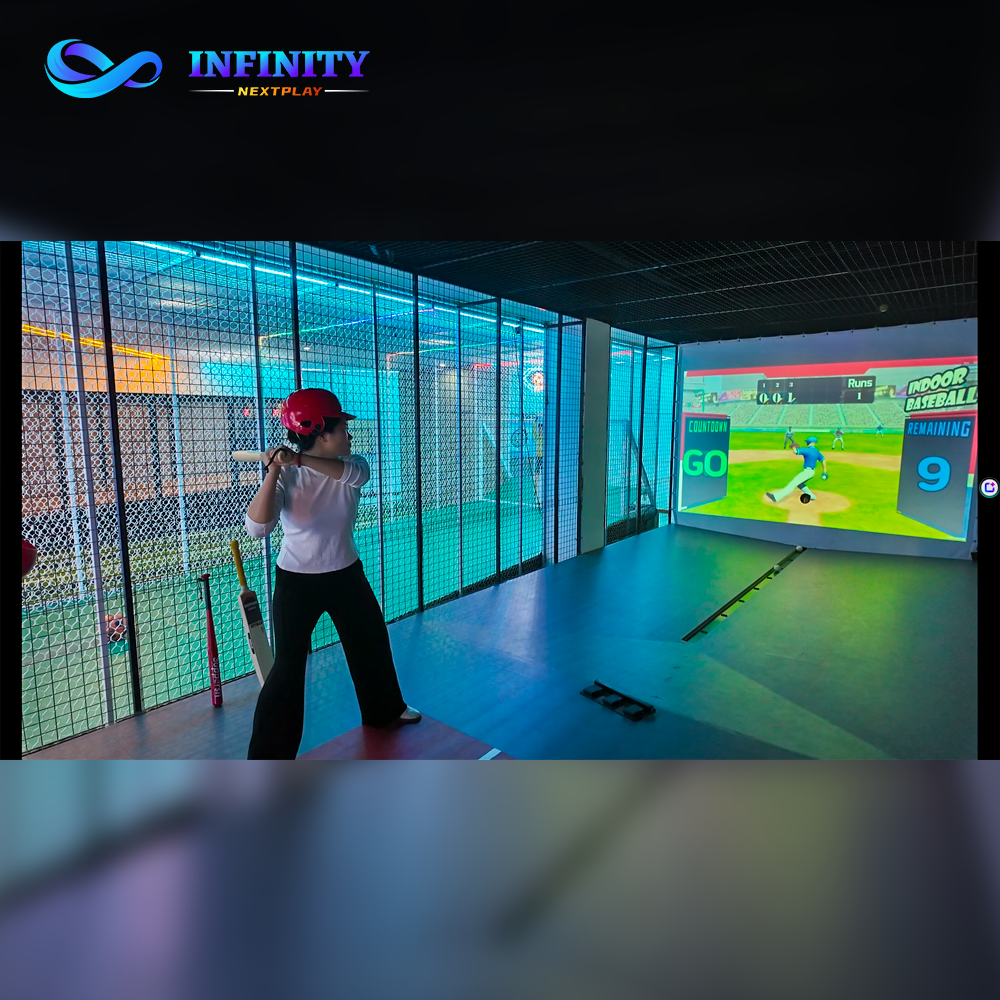
View Details →Unmatched Realism:Features advancedHigh-Speed Sensorsthat track ball velocity and trajectory in real-time, providing a...
View Details →Infinity Grid LED Dance Floor Game, Interactive Light up Jumping Tiles for Party Room & Event Rental, Multiplayer Challe...
View Details →Get a free 3D layout for your space. No commitment required.