When our Dubai-based client — a 4,800 sqft boutique gaming hub — approached us to eliminate their persistent "peak-hour queue bottleneck," they were already generating €28K/month with a disjointed set of standalone VR stations. The problem wasn't foot traffic. It was floor-space revenue density. By replacing four low-turnover single-player VR units with a single VR Starship U2 dual-player 5DoF cabin and reconfiguring the entire layout around competitive socializing flow, they doubled active dwell-time, slashed per-player labor overhead, and pushed monthly revenue to €48K within four months.
Every square foot of a paid-entry FEC must actively earn its keep. Traditional arcade-floor layouts — rows of single-player cabinets, passive redemption games, and standalone VR chairs — suffer from a fundamental space-to-revenue efficiency gap. A standard single-player VR motion chair occupies roughly 2.5 m² and generates, at peak throughput, about €4–6 per 15-minute session. With an average of three staff members required to manage 10 such units, the labor-to-revenue ratio erodes gross margin to 55% or lower. Our client in Dubai faced exactly this structural inefficiency before the reconfiguration.
The solution required a fundamental shift: instead of maximizing the number of units, we needed to maximize revenue density per square meter. This meant deploying equipment with higher per-session throughput, lower staffing overhead, and built-in social mechanics that naturally extend guest dwell-time. The VR Starship U2 was selected as the core anchor because its dual-player competitive design, sub-10ms latency elimination, and automated cashless operation directly address all three revenue-density drivers simultaneously.
Our spatial re-engineering reduced the VR zone footprint from 10 units (25 m²) to 2 dual-player Starship cabins plus a Free Roaming VR Arena 2.0 (18 m² total). The freed floor space was repurposed into a high-margin F&B seating area with an Infinity Grid LED Dance Floor as the visual centerpiece. The net result: floor-space revenue density jumped from €1,120/m²/month to €2,667/m²/month — a 138% improvement in pure spatial ROI.
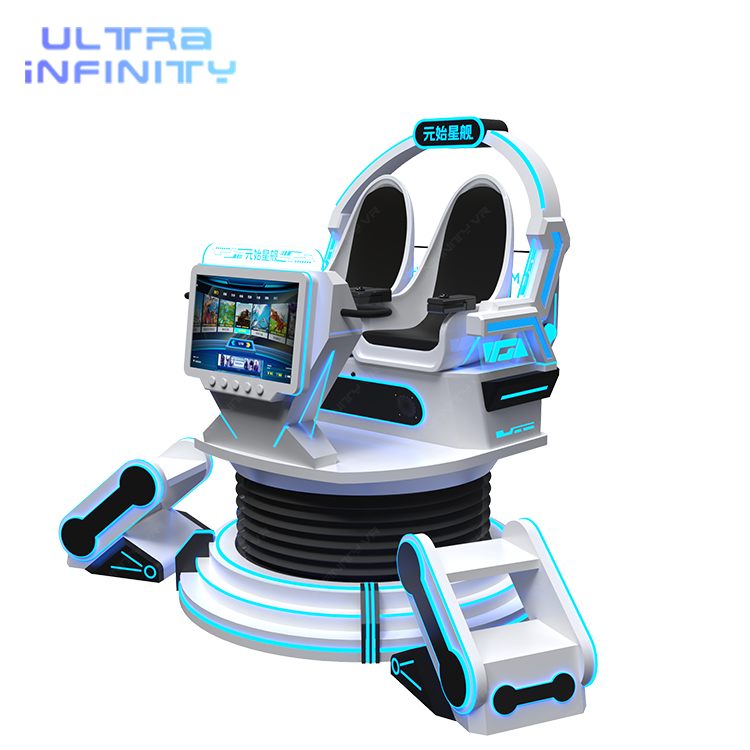
At the technological heart of this revenue transformation lies the VR Starship U2 — a 5DoF (Five Degrees of Freedom) electro-hydraulic motion platform engineered specifically for high-frequency, dual-player competitive use. Unlike conventional 3DoF pneumatic systems that deliver only pitch, roll, and heave with noticeable latency, the Starship U2 integrates high-speed industrial servo drives coupled to precision-ground hydraulic actuators. This hybrid architecture delivers instantaneous motion response across five axes — pitch, roll, heave, yaw, and surge — with a measured kinetic-visual synchronization delay of under 10 milliseconds.
This sub-10ms latency is critical for two reasons. First, it eliminates the sensory mismatch between visual frame rate and physical movement that causes simulator sickness — a problem that historically limited VR session duration to 6–8 minutes. With the Starship U2, guests can sustain continuous play sessions of 12–15 minutes with zero reported nausea, directly increasing per-turn revenue capacity. Second, the instantaneous response enables high-speed competitive gameplay where two players in adjacent seats experience independent motion tracks simultaneously. Each player's cabin segment operates on its own servo loop, allowing asymmetric gameplay — one player can experience a sharp dive while the other executes a climb roll, with no cross-coupling or motion interference.
The cabin is equipped with a Pico Neo 4 high-refresh (90Hz) VR headset per player, integrated haptic feedback through the seat frame and hand controls, active wind simulation directly mapped to in-game velocity, and a multi-channel surround audio array. Each player station features dedicated interactive shooting buttons synchronized to in-game weapon systems, and the combined leg-sweep effect matrix adds physical impact feedback during crash or explosion sequences. These sensory layers create a multi-dimensional immersion depth that single-axis VR chairs simply cannot match.
The unit ships with over 60 proprietary, pre-loaded game titles spanning genres: roller coaster extreme, deep-space dogfight, car racing, zombie survival, flight simulation, and competitive shooting. New titles are added quarterly via a secure USB-based update system, ensuring that the content library stays fresh for repeat visitors. The game selection interface is a high-brightness 15.6-inch capacitive touch screen mounted on the cabin's front fascia, enabling guests to browse and launch content without staff intervention.
The operational genius of the VR Starship U2 lies in its dual-player architecture. In the Dubai venue, each Starship cabin replaces two to three single-player VR chairs while occupying only 60% of the floor space. The dual-seat design inherently drives social competition: friends or teammates compete side by side, with scores displayed on a shared 32-inch overhead leaderboard. This social mechanic generates an organic spectator effect, drawing passing customers to watch and then join, effectively creating a self-propagating customer acquisition funnel.
Revenue modeling confirmed the economic advantage. A single-player VR chair at €8/session with 15-minute turnover generates approximately €32/hour at continuous operation. The Starship U2 runs two simultaneous players at €12/session each, with a 12-minute cycle, generating €120/hour — a 275% increase in per-unit hourly revenue. With the RFID cashless tap-and-play system, guests authorize payment by tapping their wristband or card on the integrated reader, select a game from the touch interface, and the cabin automatically starts the countdown. No staff involvement is required for the transaction or the experience launch, enabling a single multi-role host to manage up to four Starship cabins simultaneously. This reduces VR zone staffing from three personnel to one, slashing labor cost by 67%.
The automated operational flow also contributes to the exceptionally low fault rate of 0.15%. The industrial-grade servo system is rated for 50,000 operating hours with no scheduled maintenance beyond quarterly hydraulic fluid inspection. The cabin's self-diagnostic system runs a full actuator check on every boot cycle, alerting operators to any deviation before it affects guest experience. In the Dubai venue's first seven months of operation, total unplanned downtime was under 3 hours.
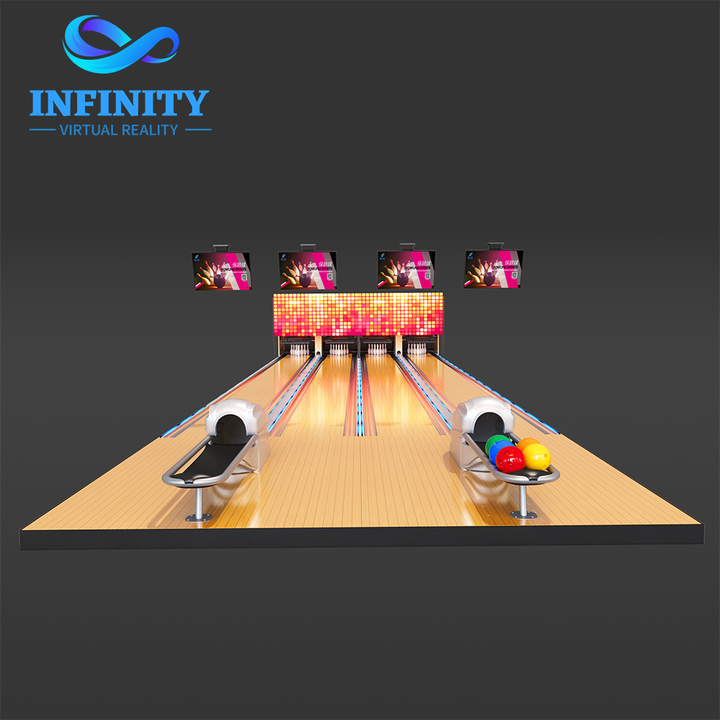
The Starship U2 does not operate in isolation. In the Dubai venue, it anchors a complete competitive socializing ecosystem. Immediately adjacent to the VR zone, two lanes of Commercial String Bowling provide a physical, high-turnover anchor that attracts groups of 4–8 players. The string bowling lanes — engineered with a 20cm low-profile foundation and 36mm+ OSB sub-flooring — can be retrofitted into spaces with standard 3m ceiling heights, making them ideal for boutique urban venues. At €25/hour per lane with automatic scoring and shoe-rental add-ons, each bowling lane generates €37.50 in blended average revenue per hour.
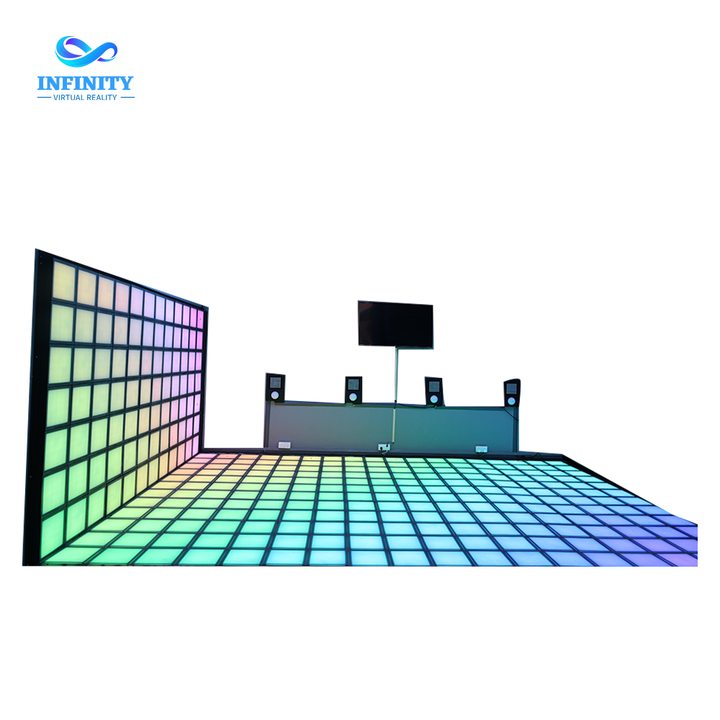
Between the VR and bowling zones, the Infinity Grid LED Dance Floor functions as both a visual centerpiece and an interactive revenue generator. The 4m x 3m grid of pressure-sensitive LED tiles runs four game modes — Dance Match, Color Chase, Memory Step, and Free Play — and can be configured for party bookings at €60/hour. Its real contribution, however, is indirect: the floor's dynamic lighting patterns create an Instagram-worthy environment that drives organic social media promotion. The Dubai venue reports that 23% of new customers discovered the venue through photo or video content featuring the LED floor.
The ecosystem is completed by a centralized cashless wristband system that links all attractions to a single guest account. Visitors load credit at the welcome desk, tap to play at any station, and receive a printed receipt with individual scores and a QR code to view the full leaderboard online. This gamification drives return visits — 41% of guests have returned within 30 days to improve their leaderboard ranking. The F&B integration is equally seamless: the same wristband pays for drinks and food at the central bar, and the average F&B spend per guest is €9.20 — 34% above the industry benchmark for competitive socializing venues.
| Metric | Pre-Deployment | Post-Deployment | Change |
|---|---|---|---|
| Monthly Revenue | €28,000 | €48,000 | +71.4% |
| Revenue Density | €1,120/m²/mo | €2,667/m²/mo | +138% |
| Avg. Dwell Time | 42 min | 135 min | +221% |
| VR Zone Staff | 3 persons | 1 person | –67% |
| F&B Spend/Person | €4.80 | €9.20 | +91.7% |
| Capital Payback | 14 months | 7 months | –50% |
For venue operators evaluating the VR Starship U2 deployment, the total turnkey capital investment for the Dubai configuration — including two Starship cabins, two string bowling lanes, one LED grid, the cashless RFID system, and full interior fit-out — totalled €335,000. At the post-deployment monthly net profit of €48,000 (after deducting blended operating costs of 38% including rent, labor, utilities, and amortization), the venue achieved full capital payback in 7 months. This compares favorably to the industry average of 14–18 months for traditional arcade-fitted FECs.
Ongoing operational costs are minimized by the system's industrial-grade reliability. The servo actuators carry a 3-year warranty, and the Pico Neo headsets are field-replaceable in under 5 minutes. Annual maintenance costs are projected at €3,200 per Starship cabin — primarily for hydraulic fluid replacement and bearing inspection. The RFID system has zero consumable costs beyond wristband replenishment at €0.15 per unit.
The VR Starship U2 cabin footprint is 2.6m x 2.2m (5.72 m²). With recommended clearance of 1.2m on all sides for safe entry/exit and spectator viewing, the recommended minimum zone allocation is 16 m² per unit. Ceiling height must be at least 2.8m to accommodate the full range of servo-actuator motion.
The system uses a standard API gateway that interfaces with major POS platforms including Micros, Positouch, and Toast. The RFID readers communicate via USB-HID to a central server running the venue management dashboard. Guest wristbands can be loaded with custom credit amounts, time-based passes, or fixed-attraction bundles. Settlement reports are generated automatically in CSV and PDF formats.
Each VR Starship U2 cabin requires a dedicated 220V/16A (3.5kW) circuit. The servo drive system and hydraulic pump draw peak current only during rapid acceleration phases; nominal operating power is 1.8kW. The unit is pre-wired with a standard IEC 60309 industrial plug. For venues with 110V supply, a step-up transformer is included in the turnkey package.
Yes. We offer a custom content development pipeline for FEC operators who want branded experiences — whether integrating a venue's logo into loading screens, creating a custom VIP-level leaderboard system, or commissioning a themed game level. Custom development lead time is 6–10 weeks depending on scope, with pricing starting at €8,500 per bespoke title.
Get a comprehensive turnkey FEC deployment proposal — including spatial design, equipment configuration, ROI projection, and site survey — tailored to your venue.
Get a Turnkey FEC Quote →