How do you fill a 3,500 sq ft resort basement that sits empty from November to March? That is the question I kept asking myself two winters ago, watching our otherwise beautiful Mediterranean property turn into a ghost town the moment the summer families flew home. We had a pool nobody wanted to swim in, a spa that felt overpriced, and a “games room” with two dusty pool tables that generated maybe $400 a month. The fixed costs, meanwhile, did not take the winter off.
I am writing this because I found a way out of that cycle, and I want other resort operators in Europe to see the exact numbers before they sign another lease on dead space. The short version: I combined a VR Arena 2.0 free-roaming VR system with two lanes of compact duckpin bowling and a shooting simulator, all packed into 3,500 sq ft of underused basement. Off-season revenue went from roughly $3,000 a month to $24,000 a month, and the payback on the whole build-out landed around 16 months.
This is not a brochure. It is the breakdown I wish someone had handed me before I started — the capex, the revenue mix, the staffing, the mistakes, and the reason this particular combination works in European vacation destinations where weather and seasonality punish anything that depends on sunshine.
The old resort playbook was built on passive amenities: a pool, a spa, a tennis court, maybe a kids’ club that ran for three hours a day. Those amenities made sense when the guest’s only other option was to lie on a beach. They make a lot less sense when the beach is closed, the wind is howling off the Atlantic, and families are stuck inside looking for something — anything — to do that does not involve another round of cards in the lobby.
What changed for me, and for a growing number of European resort operators I have spoken with since, is the realisation that guests will pay premium rates for active, weather-proof experiences that they cannot get at home. A family that would never spend €40 on a hotel pool session will happily spend €120 on a 30-minute free-roaming VR battle where four people run around a digital arena shooting zombies together. The perceived value is completely different, and so is the margin.
There is also a structural reason this works in European vacation destinations specifically. Many resorts in Spain, Greece, Portugal, southern Italy, and the south of France were built for a 90-day summer season, then retrofitted to try to stretch into shoulder months. The rooms are there, the staff are there, the kitchen is there — but the reason to be there evaporates the moment the weather turns. Immersive attractions solve exactly that problem. They are inside, they are bookable, they are weather-proof, and they give guests a reason to extend a stay by a day or two instead of cutting it short.
I am not arguing that every resort should rip out its spa. I am arguing that the “entertainment mix” most resorts currently offer is heavily weighted toward passive amenities that generate almost no incremental revenue in the off-season. Adding even a small immersive layer — a VR Arena 2.0 plus a couple of lanes of Duckpin Bowling — changes the math enough to keep a property viable for 12 months instead of three.
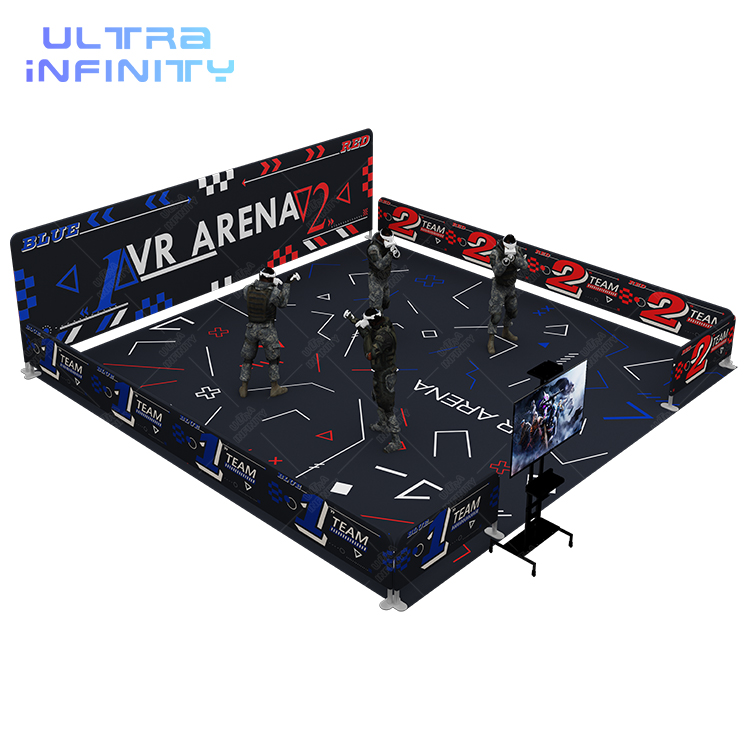
If I had to pick one piece of equipment that transformed our basement, it is the VR Arena 2.0. It is a free-roaming, multiplayer VR walking and shooting simulator, which sounds like a mouthful until you see a family of four actually running around inside it, dodging virtual zombies and screaming at each other to “reload, reload!” The footprint is manageable, the setup does not require structural changes that most resort buildings cannot accommodate, and — this matters more than I expected — there is no weight limit, no site limit, and no age limit, so you can sell the same session to a 12-year-old and a 70-year-old without a liability conversation.
What makes it the “headline” attraction is not just the technology. It is the noise. People walking past the glass door of our basement stop, stare, and ask what is going on inside. That curiosity converts to bookings at a rate I have never seen from a printed flyer or a lobby poster. The VR Arena is, in marketing terms, its own acquisition channel.
I will walk you through the actual case study in a moment, but the operational point is this: a single VR Arena 2.0 unit can run back-to-back 20- to 30-minute sessions for 2 to 6 players at a time, which means in a single evening you can push 40 to 60 paying guests through one piece of equipment. That throughput is what makes the per-square-foot revenue number work in a tight resort footprint. You can read the full product spec on the VR Arena 2.0 product page if you want the technical details before I go further.
CASE STUDY — MARBELLA, SPAIN
Elena runs a 120-room resort on the Costa del Sol. Her basement was, in her words, “a conference room that nobody booked and a gym that nobody used.” Total usable floor area: 3,500 sq ft. Before the retrofit, that space generated roughly $3,000 a month in off-season revenue, mostly from the gym access fee and the occasional corporate off-site.
She installed one VR Arena 2.0, two lanes of duckpin bowling, and one Shooting Simulator Q4. The build-out, including flooring, soundproofing, partitions, and a small bar, came in around $80,200. Within four months of opening, monthly revenue from the space had climbed to $24,000. The mix is roughly 38% VR sessions, 25% bowling, 17% shooting, 12% food and beverage, and 8% private events.
“The thing I did not expect,” Elena told me, “was that guests started extending their stays. We had a family from the UK who were supposed to leave on a Saturday. The kids tried the VR Arena on Friday night, refused to leave, and the parents rebooked for two more nights. That happened more than once.”
Free-roaming multiplayer VR walking shooting simulator. No weight limit, no site limit, no age limit. The headline attraction that fills resort lobbies with screaming, laughing guests.
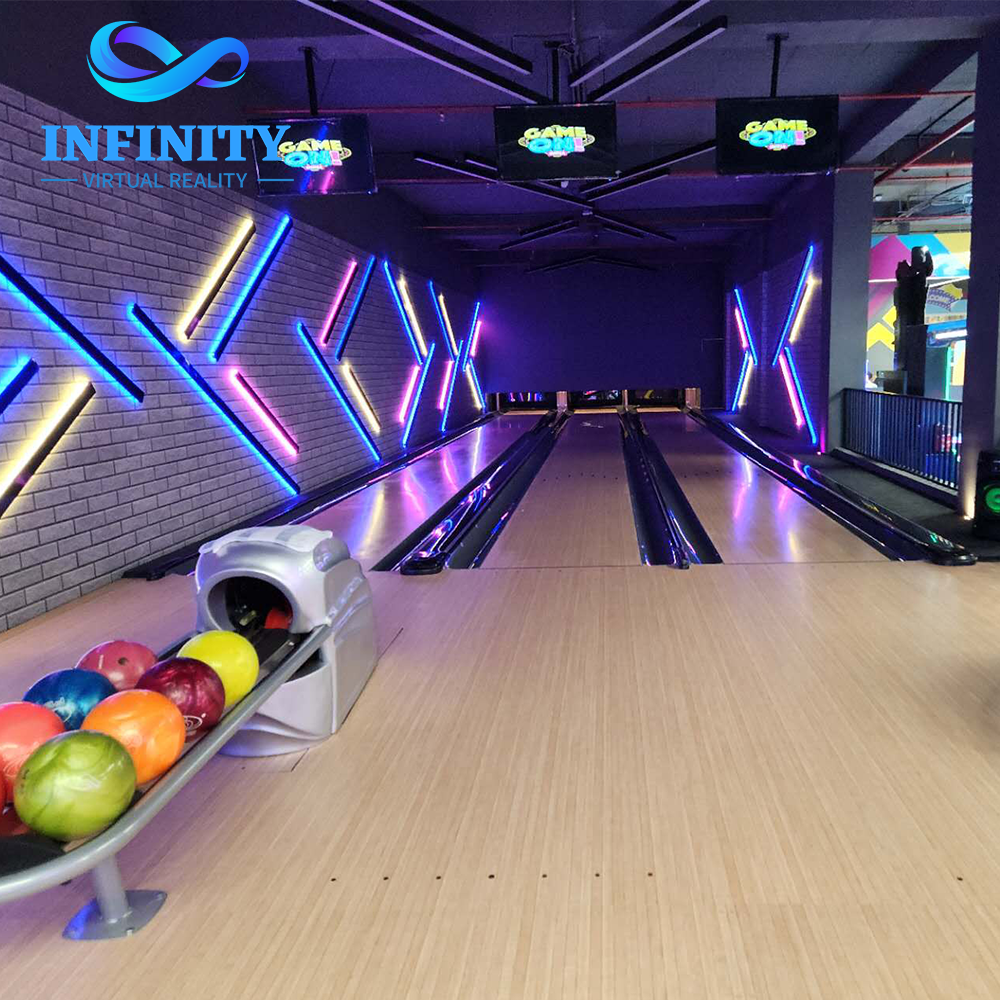
View Details →The VR Arena pulls people in. The duckpin bowling is what keeps them there. I was sceptical about bowling at first — it felt like a tired, American-mall concept — but duckpin is a different animal. The lanes are shorter, the balls are smaller, the pins are lighter, and the game is genuinely harder, which means a session lasts longer and feels less intimidating for non-bowlers. Crucially, the compact footprint means two lanes fit into a space that a single traditional tenpin lane would not.
Operationally, the duckpin lanes became the social anchor of the room. While one group is inside the VR Arena, the next group is bowling. While the bowlers wait for their turn, they are at the bar. The flow between the three attractions — VR, bowling, and the shooting simulator — is what turns a 3,500 sq ft basement from a single-ride experience into a two-hour hangout. The food and beverage attach rate, which I will break out in the revenue table, is almost entirely driven by people waiting for a bowling lane.
The other thing I underestimated about Duckpin Bowling is how much adults like it after dinner. It is the only attraction in the room that pairs naturally with a beer. VR and shooting are intense, focused activities. Bowling is the one you do while you talk. That made it the cornerstone of our evening programming, and it is the single biggest reason our average guest stay time went up.
CASE STUDY — SANTORINI, GREECE
Nikos operates a 90-room boutique resort on a cliffside property in Santorini. His challenge was different from Elena’s: his season was already short, but guests who did come were leaving earlier than they used to because there was “nothing to do after the third sunset photo.” He had 3,000 sq ft of ground-floor space that had been a function room.
He installed a near-identical setup: one VR Arena 2.0, two duckpin lanes, one Shooting Simulator Q4, and a small bar. Build-out was slightly cheaper at around $74,000 because the space was already finished. Monthly revenue settled at $19,000 — lower than Marbella, but in a market with a shorter season and fewer rooms. The metric Nikos cares about most is length of stay: average guest stay time went from 2.5 days to 4 days, which more than doubles the per-guest room revenue.
“I do not sell this as an arcade,” Nikos said. “I sell it as a reason to stay an extra night. The VR Arena gets the kids. The bowling gets the parents. The shooting gets the corporate groups. Everybody has a reason to not check out on time.”
Space-saving design (9.7m-13m length) with lower foundation height. Easy installation for existing resort spaces. The social anchor that keeps guests staying longer.
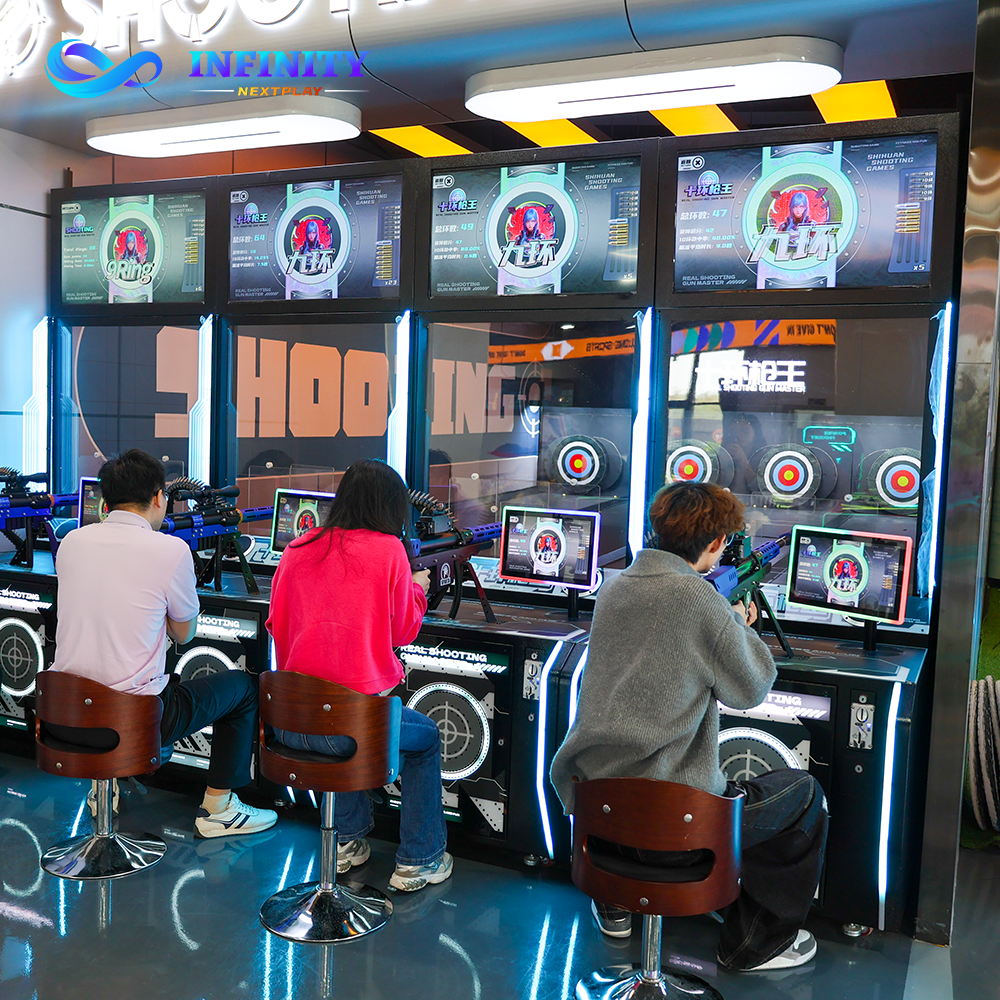
View Details →If the VR Arena is the headline and the duckpin is the anchor, the Shooting Simulator Q4 is the competitive layer — the thing that turns one-time visitors into repeat visitors and casual guests into league members. It is a digital-scoring shooting simulator with a real-time leaderboard, a 39-inch top display, and a professional 10-ring scoring system with moving targets. In a resort context, that sounds niche until you watch two fathers from different countries spend 90 minutes trying to beat each other’s scores on the leaderboard.
What the Q4 does, operationally, is give you a third revenue stream that costs almost nothing to run between sessions. A VR session needs a staff member to brief players and reset the arena. A bowling session needs pin maintenance. A shooting session, once it is running, is almost entirely automated — the leaderboard updates itself, the scoring is digital, and the system handles multiple players in sequence without intervention. That makes it the highest-margin line on the revenue table below.
The other role the Q4 plays is corporate and team-building. European resorts that host corporate off-sites in shoulder months need a “competitive” activity that is not go-karting or a golf tournament. The shooting simulator, with its leaderboard and digital scoring, is perfectly pitched at that market. Nikos in Santorini told me he books at least one corporate group a week from October to April, and the Q4 is always the centrepiece of the package. You can check the full spec on the Shooting Simulator Q4 product page.
Digital scoring with real-time leaderboard and 39-inch top display. Professional 10-ring scoring system with moving targets. The competitive layer that drives repeat visits.
View Details →Here is the part I always wanted someone to show me first. The table below is the actual capex breakdown for Elena’s Marbella build-out. Your numbers will vary depending on local labour costs, the condition of the space, and how much of the build-out you can do in-house, but this is a realistic benchmark for a 3,500 sq ft retrofit in a southern European resort.
Now the revenue side. This is the monthly run-rate Elena reached after roughly four months of operation, in the off-season (November through March). Summer months are higher, but I am deliberately quoting off-season numbers because that is the problem we were trying to solve. The point of this table is to show that no single line carries the business — the combination is what makes the unit economics work.
On the opex side, expect roughly $7,500 to $9,000 a month in running costs once you are at steady state: two part-time attendants, a bar tender on peak evenings, electricity, VR content licensing, consumables (headset hygiene, bowling shoes, targets), and a small marketing retainer. Net margin on the $24K run-rate lands around 55-60% once staff and consumables are paid — which is how you get to a 16-month payback on $80K of capex. I am deliberately not rounding up to make the math look prettier. The numbers above are what Elena actually reported to me in March.
If you are sitting in a resort reading this and wondering where to start, here is the sequence I would follow. I made two of these steps harder than they needed to be, and I have flagged those below so you do not repeat them.
You need a minimum of 3,000 sq ft of clear, column-free or low-column space, with at least 3.5m ceiling height for the VR Arena. Measure it yourself before you talk to a supplier — do not trust the architect’s drawing. The single most common reason these projects stall is that the “3,800 sq ft” function room turns out to have a low beam running through the middle of it. Walk the space with a tape measure, photograph every obstruction, and note where the power, water, and emergency exits already are.
The combination I have described — VR Arena 2.0, two duckpin lanes, and a Shooting Simulator Q4 — was not the first configuration I considered. I originally wanted a second VR unit and skipped bowling. That would have been a mistake, because the bowling is what generates the F&B attach. Choose equipment that covers three different guest modes: intense (VR), social (bowling), and competitive (shooting). Do not buy two of the same mode.
The mistake I made was opening with per-session pricing and watching families haggle at the front desk. The fix was to sell bundles: a “Family Night” package that included one VR session, one hour of bowling, two soft drinks, and a shooting session for a fixed price. Average ticket went up 40% overnight, and the queue complaints disappeared because people had bought a block of time rather than a single ride. Aim for at least three package tiers: family, couples, and corporate.
Your attendants need to understand the rhythm of the room, not just how to reset a VR headset. The job is to keep the three attractions in sync: when the VR group finishes, the bowling group should be ready to move; when the bowling group is mid-game, the shooting simulator should be running. Train staff to actively route guests between the three zones rather than waiting for guests to figure it out. This is the difference between 600 weekly guests and 1,200 weekly guests in the same space.
Open the space to a corporate group or a local business network first, not to the general public. You want your first 50 guests to be people who will tolerate a 10-minute setup hiccup and who will post about it on LinkedIn. A soft launch to corporate clients also generates immediate event revenue, which funds the first month of operations while you iron out the flow. Public launch should happen in week three, once the staff have run the room under pressure at least twice.
You can start with just the VR Arena 2.0, and I know operators who have done exactly that. The risk is that you lose the social anchor and the competitive layer, which means lower F&B attach, shorter average dwell time, and weaker repeat-visit rates. If budget forces a phased rollout, my suggestion is VR first, duckpin second, shooting Q4 third. Do not skip the duckpin — it is the cheapest of the three and the one that most directly drives food and beverage revenue. You can read more about the Duckpin Bowling system to confirm the footprint works for your space.
The whole point of the setup is that it is weather-proof. Elena is in southern Spain, but Nikos is in Santorini where winter weather is genuinely rough, and the numbers still work. The constraint is not climate — it is whether your resort has enough year-round or shoulder-season guests to fill the room. If your property closes entirely for four months, this will not save you. If your property stays open but empty, this is exactly the problem it solves.
Hygiene and turnaround on the VR headsets. You will run through a lot of disposable face covers and sanitising wipes, and if you cut corners here, guest complaints spike within a week. Budget for a dedicated headset hygiene station and treat it as non-negotiable. The second headache is bowling lane maintenance — the string machines are reliable, but the pinsetter needs a weekly check. Neither is a deal-breaker, but both need to be in your standard operating procedure from day one.
Assuming the space is already built out (flooring, partitions, power, lighting in place), equipment delivery and installation takes 3 to 5 weeks. The VR Arena 2.0 and Shooting Simulator Q4 can be commissioned in under a week each; the duckpin lanes are the long pole because of the string pinsetter alignment and the foundation work. If you are doing a full build-out from a raw function room, add 6 to 10 weeks for construction before equipment arrives. Elena’s total project, from order to public launch, was 14 weeks.
It is the lowest-revenue line of the three (17% in Elena’s mix), but it is also the highest-margin line because it is almost fully automated. Even without corporate packages, the leaderboard drives repeat visits from individual guests who want to beat their previous score. If you are tight on capex, this is the one you can phase in last — but I would not leave it out permanently, because it is what gives the room a “reason to come back tomorrow” for guests who have already done the VR and the bowling. The Shooting Simulator Q4 is the cheapest of the three units, so the barrier to adding it later is low.
If there is one thing I want you to take away from this, it is that the “resort entertainment hub” is not a single product. It is a combination of three attractions that cover three different guest modes — intense, social, and competitive — in a footprint small enough to fit inside most existing resort basements. The reason Elena and Nikos both hit their numbers is not that any one piece of equipment is magical. It is that the three together create a flow that keeps guests in the room for two hours instead of twenty minutes, and that flow is what generates the food and beverage spend, the repeat visits, and the extended stays.
The off-season revenue gap that most European resort operators accept as inevitable is, in my experience, largely a problem of offering the wrong thing in the wrong space. Replace passive amenities with active, weather-proof experiences, and the math changes fast. The capex is real — $80K is not trivial — but a 16-month payback on a space that was previously generating $3K a month is a return I have not seen from any other resort capex line item, including room renovations.
If you are operating a resort in Spain, Greece, Portugal, Italy, or the south of France and you have a 3,000-3,500 sq ft space that is currently underperforming, the combination of VR Arena 2.0, Duckpin Bowling, and the Shooting Simulator Q4 is the configuration I would build again tomorrow. Get a 3D layout done for your specific space before you commit to anything — the footprint constraints matter more than the equipment choices.
Get a free 3D layout for your space. No commitment required.