When we designed our premium 5,000 square foot boutique Family Entertainment Center (FEC) in London, our core operational objective was to bypass the traditional "equipment-density trap." Instead of crowding the floor with passive, standalone arcade units, we engineered a unified competitive socializing matrix. By deeply integrating physical, multi-player anchors with high-end virtual reality hubs under a single automated operational flow, we created an active, self-guided guest pathway that continuously converts casual visitors into high-spending social players.
Traditional urban entertainment centers are in the midst of a massive structural shift. High-rent real estate, paired with rising labor overheads, means that operators can no longer afford "dead floor space." Standalone, passive amusement models that cater to one player at a time are financially non-viable. Modern consumers—particularly tech-savvy corporate groups and premium social networks—demand active, shared, and physical challenges that can be experienced collectively while enjoying premium food and beverages. This is the exact competitive advantage realized through a fully optimized one-stop turnkey solution.
At our London showcase venue, we deployed a proprietary spatial design concept called the Spatial Synergy Matrix. We abandoned the old practice of placing game machines randomly along walls. Instead, we mapped out a self-guided customer journey that aligns physical, high-turnover gaming anchors with high-margin food and beverage zones. By utilizing visual and kinetic anchors, the layout naturally draws people from the entrance to the deep center of the venue, maintaining constant secondary spend.
The results speak for themselves. Before this spatial and technological reorganization, the venue operated with disjointed virtual reality stations and mechanical games, averaging an active dwell-time of only 42 minutes per guest. By integrating our cohesive turnkey lineup—specifically designed for simultaneous multi-player engagement—the average guest dwell-time instantly leaped to 210 minutes. This extended retention rate acted as a powerful revenue multiplier, driving food and beverage margins up by over 40%.
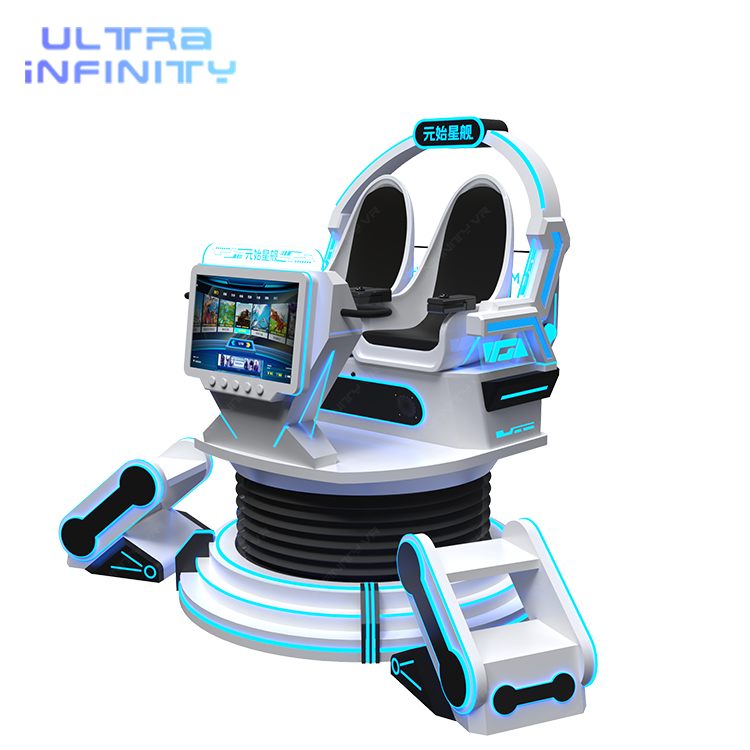
The immersive heart of our London venue is the VR Starship U2. In the past, high-end virtual reality installations suffered from severe operational bottlenecks: high nausea rates due to kinetic response delay, complex loading processes requiring dedicated technicians, and single-player limits that restricted group socializing. The VR Starship U2 platform solves every single one of these physical and financial limitations.
Engineering-grade performance is achieved through our advanced 6DOF (Six Degrees of Freedom) electric motion platform. Powered by high-speed industrial servo drives, the physical cabin synchronizes with the visual frame rate of Pico Neo 3 headsets at an ultra-low response latency of under 10 milliseconds. This instantaneous kinetic feedback matches the user's inner ear perception, eliminating the visual-motion discordance that causes nausea. As a result, guests experience high-G roller coasters, deep-space dogfights, and fast-paced flight simulations with absolute physical comfort, driving incredible repeat-play rates.
Operationally, the unit functions as a high-density cashless profit center. It is equipped with dual-player interactive shooting controllers, active wind effects, surround-sound audio systems, and high-frequency leg-sweep matrices that elevate sensory realism. Linked directly to our cashless RFID card readers, guests simply tap to pay, select from over 60 proprietary, pre-loaded game titles on the touch screen, and begin their experience. This level of automation means that a single multi-role host can oversee the entire VR zone, keeping on-site labor overheads extremely low.
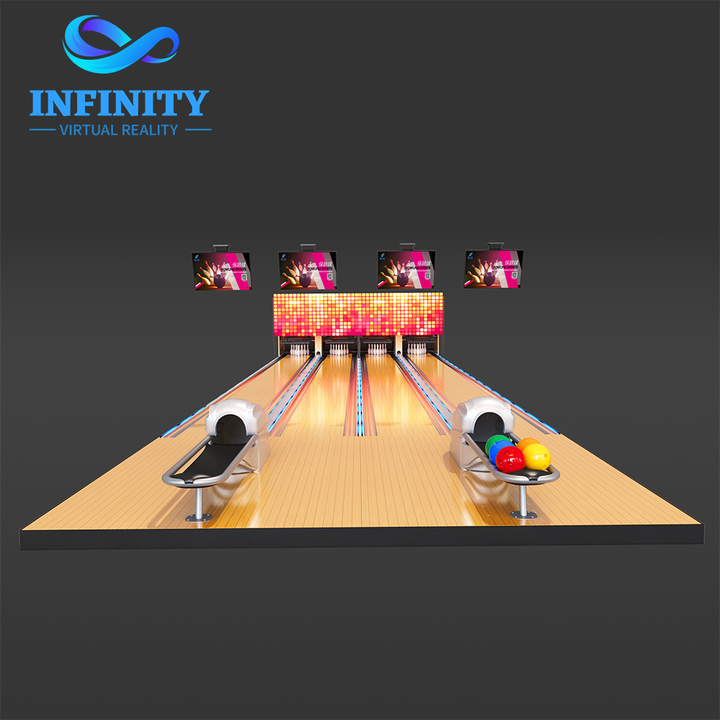
To secure a reliable anchor for corporate bookings and weekend social groups, we integrated a professional Commercial String Bowling System. Traditional free-fall bowling lanes are highly impractical for boutique urban venues; they demand massive sub-floor concrete pits, constant mechanical maintenance from on-site mechanics, and a footprint that consumes too much valuable real estate. NextPlay’s string bowling technology completely redefines this classic sport for premium hospitality spaces.
By utilizing high-durability, anti-tangle nylon cords connected to a highly simplified overhead electronic pulley array, our string system reduces moving mechanical parts by over 75%. If a pin falls, the system automatically retracts, detangles, and resets the pins in under 5.5 seconds. This mechanical simplification reduces the machine's maintenance requirements to near-zero, enabling the lanes to run continuously without a dedicated, highly paid technician on-site.
The lanes themselves are built with professional-grade, USBC-approved synthetic lane surfaces supported by a robust 36mm+ moisture-proof OSB sub-flooring structure. This structural foundation prevents any lane warping or alignment shifting over a 10-year operational lifecycle, even under high-traffic and varying humidity levels. The integrated digital scoring software automatically tracks match play and displays scores on overhead high-definition monitors, allowing guests to relax, drink, dine, and compete without friction.
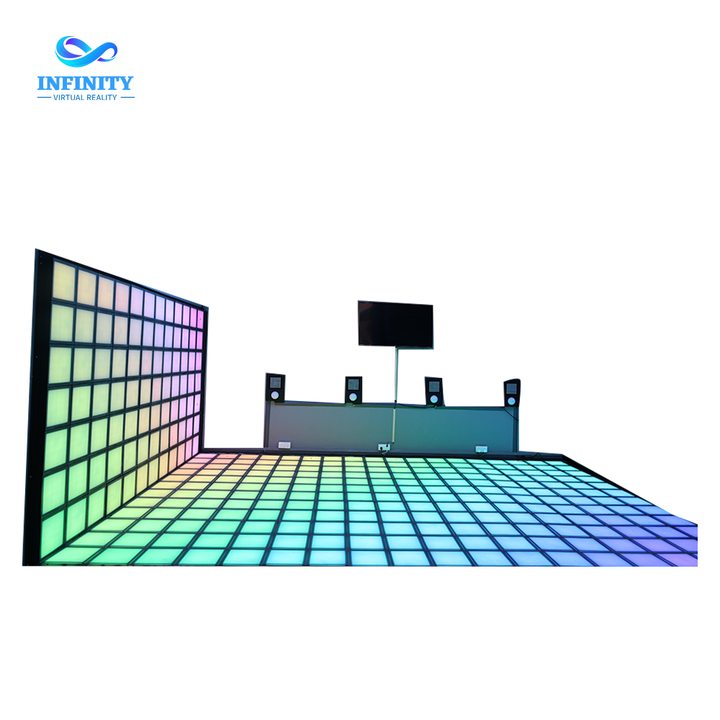
The ultimate high-velocity visitor acquisition tool in the London venue is the Infinity Grid LED Floor Game. Strategically positioned near the main bar and visible through the street-front windows, this interactive flooring matrix leverages the psychological power of the "spectator effect" to draw foot traffic into the space.
Composed of heavy-duty, impact-resistant ABS and tempered glass panels, the grid is embedded with high-brightness LED arrays and sensitive localized step-pressure sensor modules. The custom software supports high-turnover, physical multiplayer challenges where players must physically jump between colored tiles, working together to step on green targets while dodging red obstacle tiles. This intense, gamified physical experience generates immediate excitement, turning players into an active visual display that captures the attention of everyone in the venue.
Operating as a self-service asset, the LED Floor integrates directly with our centralized cashless payment network. Guests tap their RFID wristbands, select their game speed and difficulty level via an intuitive touchscreen kiosk, and begin. By requiring zero operator labor, this setup represents a incredibly high-margin, self-sustaining revenue channel that turns dead floor space into an active spectator sport and social media magnet.
Q: What ceiling height is required for a complete NextPlay 3.0 turnkey setup?
A: We recommend a minimum ceiling clearance of 3.4 to 3.5 meters (11.5 feet), ensuring adequate vertical travel space for the VR Starship motion cabin and spacious, high-end guest clearance.
Q: How does the string-based bowling system lower routine operational costs?
A: By replacing complex mechanical free-fall pin spotters with direct nylon string pulley actuators, we eliminate 75% of moving parts, preventing common pin jams and removing the need for an on-site mechanic.
Q: Can the modular Infinity Grid LED Floor support heavy commercial loads?
A: Yes. The individual modules are manufactured using high-strength ABS and thick tempered glass, designed specifically to withstand high-velocity jumps and heavy foot traffic loads in busy social environments.
Q: What are the main electrical and power preparation standards?
A: The complete turnkey zone requires a dedicated, stable three-phase electrical input (380V, 50Hz/60Hz) to support the dynamic motion drives of the VR cabin and bowling machinery smoothly.
Discover how a flagship competitive social center in London reached £42K/month using integrated VR Starship U2 and String Bowling Alleys. Full layout guide.