The arcade concourse is the open walkway that connects the venue's attractions, and it is the most under-managed floor in the building. The concourse is measured in linear meters, not square meters, because the money is made along the path the guest walks, not in the floor area between the machines. A well-designed concourse converts every meter of guest movement into a transaction surface, and a poorly designed concourse is a corridor that carries the guests to the attractions and gives nothing back.
The concourse yield is the revenue per linear meter per hour, and the top operators run their concourses at $8 to $14 per meter per hour during the evening peak, against the $2 to $4 that the average arcade collects from the same walkway. The difference is not the hardware; it is the programming of the path. The concourse that offers a reason to stop at every meter collects the yield; the concourse that offers a clear walk to the anchor collects nothing but the traffic.
The concourse also carries the venue's after-hours story. The evening hours after the attractions close are the concourse's best hours: the darts league, the tournament screen, the drink rail and the redemption counter all live on the concourse, and the venue that programs the corridor after dark captures 40 to 60 percent of its total concourse revenue in the hours the attractions are dark. This guide covers the layout rules, the after-hours programming and the per-meter economics that turn the pass-through into the yield machine.
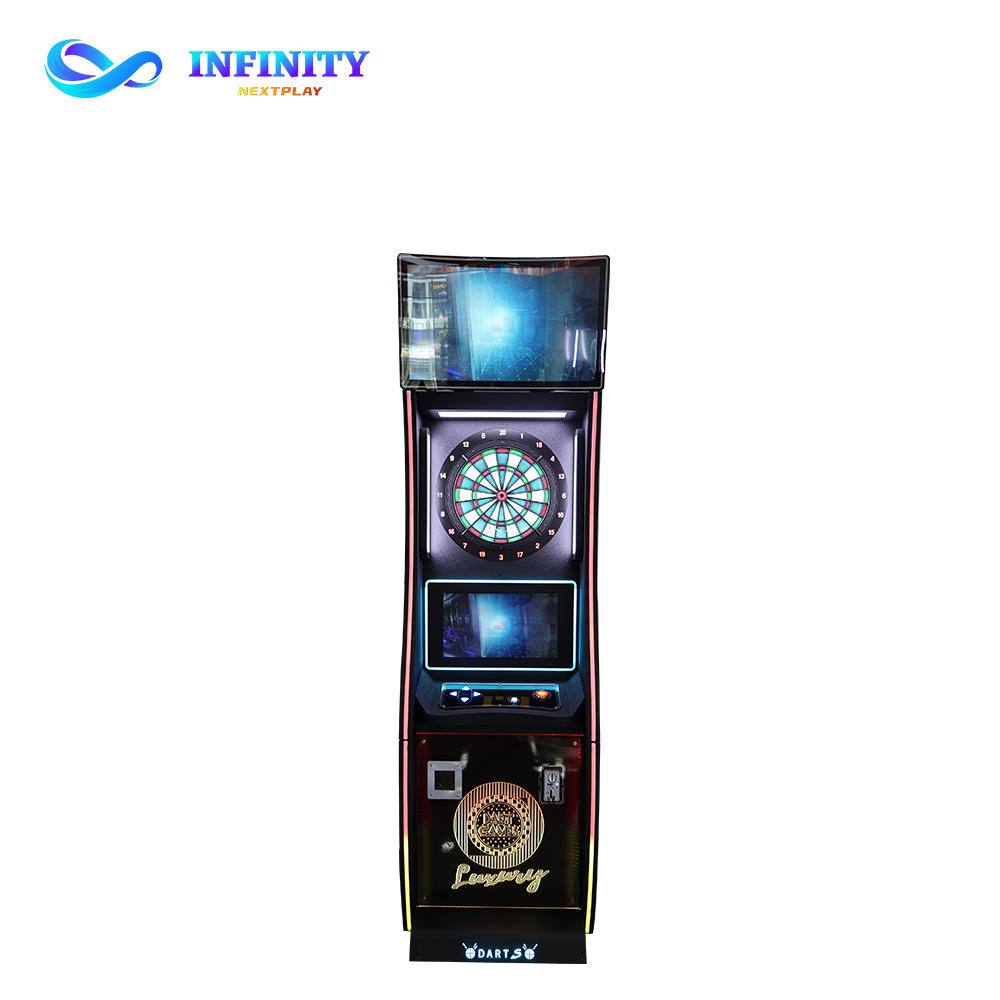
The concourse layout follows the same rule as the retail floor: the money is made at the stopping points, not in the walk. The first rule is the stop cadence: the concourse should offer a reason to stop every 6 to 10 linear meters, alternating the machine types so the walk never becomes a row of identical cabinets. The Online Electronic Dart Machine X7 is the classic concourse stop because it is social, quick and visible: a two-player round takes minutes, the scoring screen draws a crowd and the global play option keeps the machine active at any hour.
The second rule is the sightline discipline. The concourse should never offer a straight, unobstructed walk from the entry to the anchor, because the guest who sees the destination walks to it without stopping. The operator breaks the sightline with a machine bank, a prize tower or a screen wall every 10 to 15 meters, and each break forces the guest to make a decision at the stopping point. The interrupted walk is the yield walk; the straight walk is the exit.
The third rule is the edge placement. The high-yield machines sit on the outer edge of the concourse, facing the walk, with the low-yield and the filler machines on the inner wall. The guest walking the corridor sees the earning surfaces first, and the seating, the redemption and the storage hide behind the filler wall. The edge is the advertising surface of the concourse, and the operator who puts the earners on the edge doubles the yield of the same machines.
| Concourse State | Peak-Evening Yield (30m) | Per-Meter Rate |
|---|---|---|
| Unprogrammed corridor | $240-480 | $2-4 / meter / hour |
| Programmed concourse | $960-1,680 | $8-14 / meter / hour |
| After-hours league night | +$400-700 added | 60-80% machine occupancy |
The machine mix on the concourse follows the dwell-and-transaction logic: the concourse earns from the fast, social, visible games, and the mix should cluster around three classes. The first class is the social scorer: the electronic dart machine, the arcade shooter with the leaderboard and the skill games with the visible score displays. The second class is the spectator draw: the games that produce a crowd when played, which trigger the walk-up transaction from the watchers. The third class is the quick impulse: the redemption games and the short skill challenges that convert the passing guest in under two minutes.
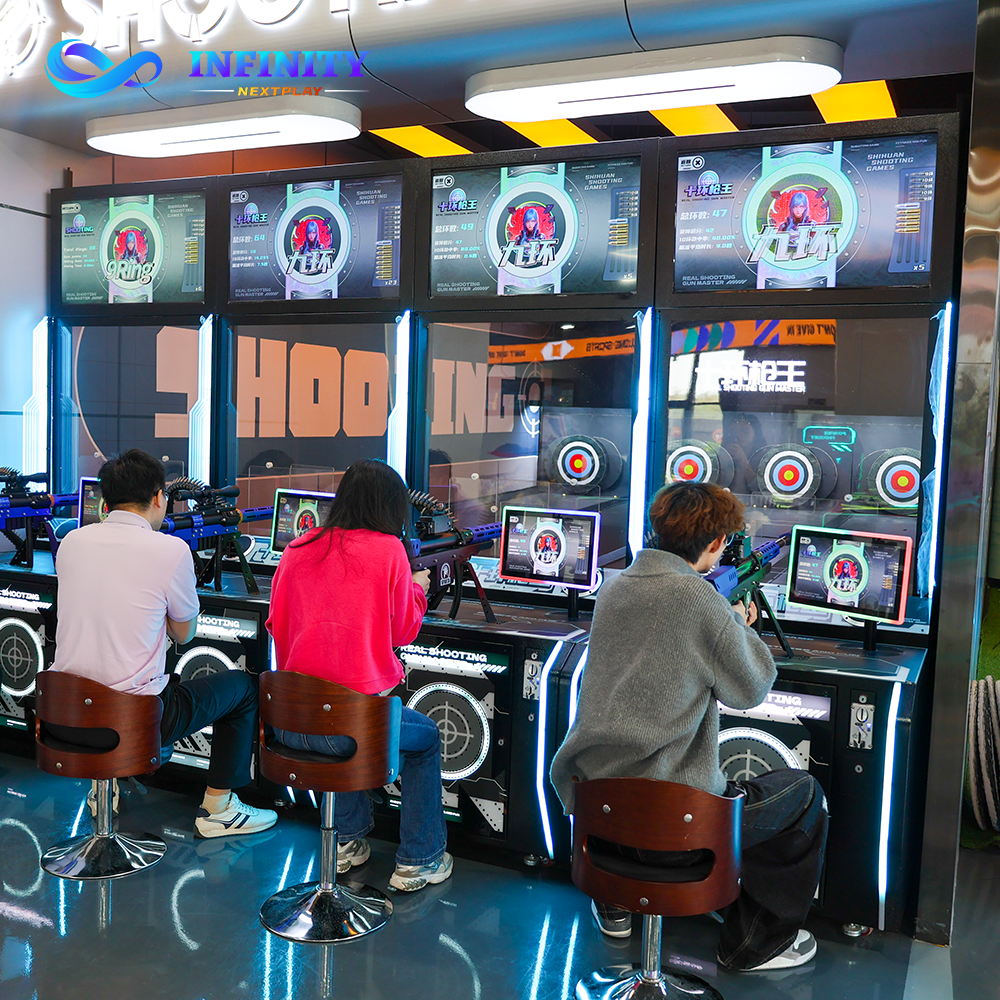
The Digital Scoring Shooting Simulator Q4 fits the concourse because its leaderboard turns every session into a spectator event: the scores post in real time, the crowd gathers around the screen and the walk-up rate rises with the crowd. The Q4 class of machine earns its concourse place by producing the two-sided transaction: the player pays for the session, and the watchers convert into the next players.
The mix rule is the one-third split. The concourse should run one third social scorers, one third spectator draws and one third quick impulse games, and the operator rotates the mix every three to four months to keep the path fresh. The stale concourse is the silent yield killer: the guest who has seen the same row for six months walks it without looking, and the same machines that earned $10 per meter in month one earn $4 by month six. The rotation is the maintenance of the yield.
The after-hours program is where the concourse yield multiplies, and the programming follows the venue's other league nights. The darts league runs the concourse's social scorers from 8pm, the tournament screen hosts the shooter finals and the drink rail turns the walkway into a standing bar. The after-hours concourse becomes the venue's social zone, and the social zone is the highest-yield floor in the building because the guests who stay for the league buy the drinks, the redemption and the repeat visits.
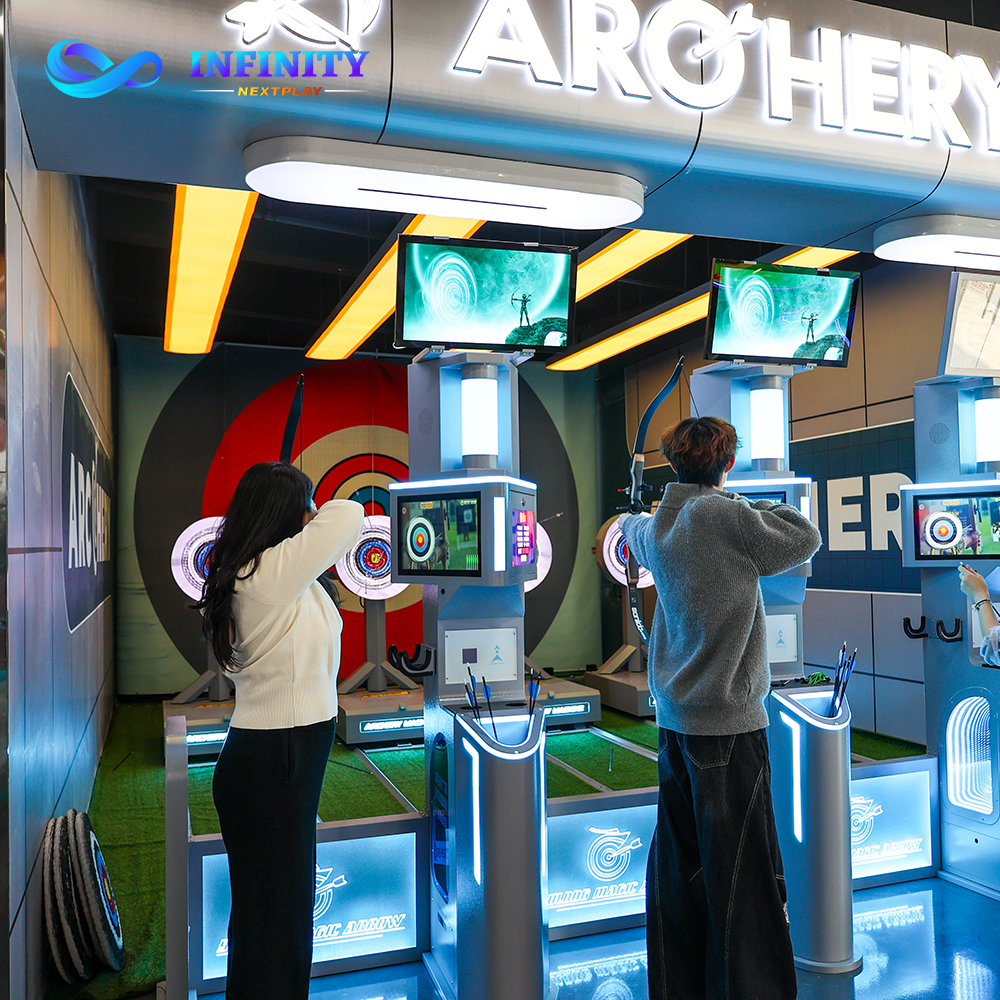
The Digital Archery Simulator A4 is the after-hours anchor of the concourse program: the dual-screen scoring, the adjustable track and the tournament format make it the natural centerpiece of the league night, and the arcade that runs an archery league converts its Tuesday concourse into the busiest floor of the week. The after-hours anchor needs the same social structure as the darts league: the posted schedule, the prize pool and the persistent leaderboard.
The after-hours economics are the strongest in the venue. The darts and archery leagues run the concourse machines at 60 to 80 percent occupancy on the nights that would otherwise run them at 15 percent, the drink rail adds the 60 to 70 percent margin F&B, and the concourse that programs the dark hours collects 40 to 60 percent of its total yield after the attractions close. The operator who runs the after-hours program treats the concourse as the evening venue, not the daytime corridor.
The per-linear-meter economics decide where the concourse investment goes, and the numbers favor the path over the floor. A 30-meter concourse running at $8 to $14 per meter per hour during the four-hour evening peak produces $960 to $1,680 per peak evening, and the after-hours program extends the yield into the league nights. The same 30 meters of corridor running unprogrammed produces $240 to $480, which is the 2 to 3 times lift that the layout and the programming deliver.
The investment per meter is small against the yield. The concourse upgrade costs are the machine rotation, the signage, the prize displays and the league programming, and the operators who invest $2,000 to $5,000 per concourse section recover the investment in the first three to five months of the after-hours program. The concourse is the venue's cheapest yield upgrade because the floor and the machines already exist; the investment is in the programming of the path.
The yield comparison with the attractions completes the picture. The concourse at $8 to $14 per linear meter per hour matches the yield of the venue's mid-tier attractions on a per-meter basis, and the concourse runs longer hours: the attractions close at 10pm, and the concourse league nights run until midnight. The path that outlasts the attractions is the path that collects the after-hours revenue, and the after-hours revenue is the margin the walk-in day cannot produce.
The redemption counter is the concourse's end-of-path collector, and its placement decides how much of the concourse yield it captures. The counter sits at the far end of the concourse, past the last machine bank, so the guest who reaches the counter has walked the full path and passed every earning surface. The redemption display is the visual lure of the path: the plush toys, the electronics and the big-ticket prizes hang in the sightline of the walk, and the guest who sees the prizes walks the full concourse to reach them.
The redemption economics convert the concourse yield into the prize spend. The redemption counter runs at a 50 to 60 percent prize cost, and the ticket payout is calibrated so the average guest walks out with a small prize or banks the tickets toward a big one. The banked-ticket mechanic is the concourse's retention engine: the guest with 800 tickets banked returns next week to reach the 1,000-ticket prize, and the return visit replays the full concourse walk.
The counter also serves the after-hours program. The league nights run the redemption counter as the prize station: the tournament winners collect the tickets, the prize wall stays lit and the banked-ticket balance draws the regulars back. The counter that stays open with the league converts the after-hours yield into the prize loop, and the prize loop is what keeps the concourse guests in the venue after the attractions have closed.
The concourse yield is measurable per machine, per section and per hour, and the venue should track the three levels. The per-machine data comes from the machine meters: the plays, the revenue and the downtime per unit, which identify the dead machines that the rotation should replace. The per-section data comes from the daily revenue split between the entry third, the middle third and the end third of the concourse, which identifies the dead stretches of the path.
The per-hour data is the after-hours report: the revenue by hour from 6pm to midnight, which shows the yield curve of the concourse and the effect of the league nights. The operator who reviews the three levels weekly knows which machines to rotate, which sections to reprogram and which league nights to promote. The data loop turns the concourse from an assumed asset into a measured one, and the measured asset is the one that gets the investment.
The data also drives the yield targets. The operator sets the per-meter target for the next quarter, publishes it to the staff and reviews the gap at the weekly meeting. The concourse that has a target behaves differently from the concourse that has a hope: the staff moves the machines, adjusts the signage and promotes the league with the number in mind. The target is the management commitment that converts the layout rules into the yield.
The verdict for the operator is that the arcade concourse is the venue's most under-priced floor, and the yield is recovered by programming the path rather than adding hardware. The stop cadence, the broken sightline, the edge placement, the machine rotation and the after-hours program convert the pass-through corridor into a yield machine at $8 to $14 per linear meter per hour, against the $2 to $4 of the unprogrammed walk.
The investment case is the cheapest yield upgrade in the venue. The concourse floor and the machines already exist; the investment is the layout rework, the machine rotation, the league programming and the redemption placement, and the operators who invest $2,000 to $5,000 per section recover it in three to five months. The concourse pays back faster than any new attraction because it monetizes the movement the venue already has.
The final rule is the path rule: the concourse earns what the guest does on the walk, and the guest does what the path invites. The operator who programs every meter of the walk collects the yield at every stop, and the operator who lets the path stay empty collects the traffic without the revenue. The concourse is the venue's most productive floor when it is treated as the product, and the after-hours program is where the product earns its keep.
Concourse yield is the revenue per linear meter per hour along the open walkway between the attractions. Top operators run their concourses at $8 to $14 per meter per hour during the evening peak, against the $2 to $4 that the average arcade collects from the same walkway, and the difference comes from programming the path, not adding hardware.
Apply the four layout rules: a reason to stop every 6 to 10 linear meters, a broken sightline every 10 to 15 meters, the earners on the outer edge facing the walk and a machine rotation every three to four months. The interrupted walk is the yield walk; the straight walk to the anchor is the exit.
The mix should run one third social scorers (electronic darts, leaderboard shooters), one third spectator draws (games that produce a crowd) and one third quick impulse games (redemption, short skill challenges). The Q4-class leaderboard shooters and the X7 electronic darts earn the highest per-meter rates because they convert the watchers into the next players.
Run the after-hours program: the darts and archery leagues from 8pm, the tournament screen for the shooter finals and a drink rail that turns the walkway into a standing bar. The programmed concourse collects 40 to 60 percent of its total yield after the attractions close, and the league nights run the machines at 60 to 80 percent occupancy.
At the far end of the concourse, past the last machine bank, with the prize display in the sightline of the walk. The guest who sees the prizes walks the full path to reach them, and the banked-ticket mechanic brings the guest back next week to reach the bigger prize, replaying the full concourse walk.
The upgrade is the cheapest in the venue: the floor and the machines already exist, and the investment is the layout rework, the machine rotation, the league programming and the redemption placement at $2,000 to $5,000 per section. Operators recover the investment in three to five months through the after-hours program.
Get the electronic dart, shooting and archery simulator specs, the concourse layout diagrams and the after-hours league programming sheet for your venue. Send your floor plan and our engineers will return the concourse machine mix and the per-meter yield target for your path.