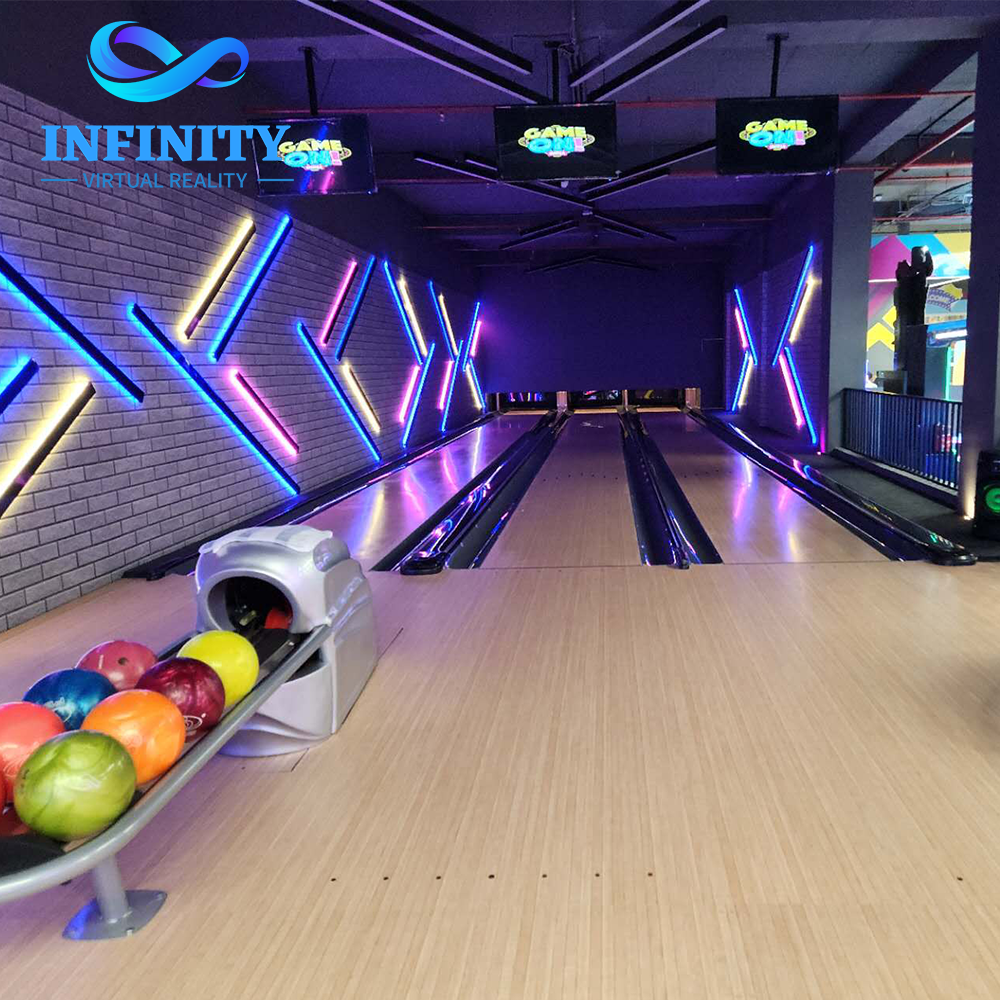
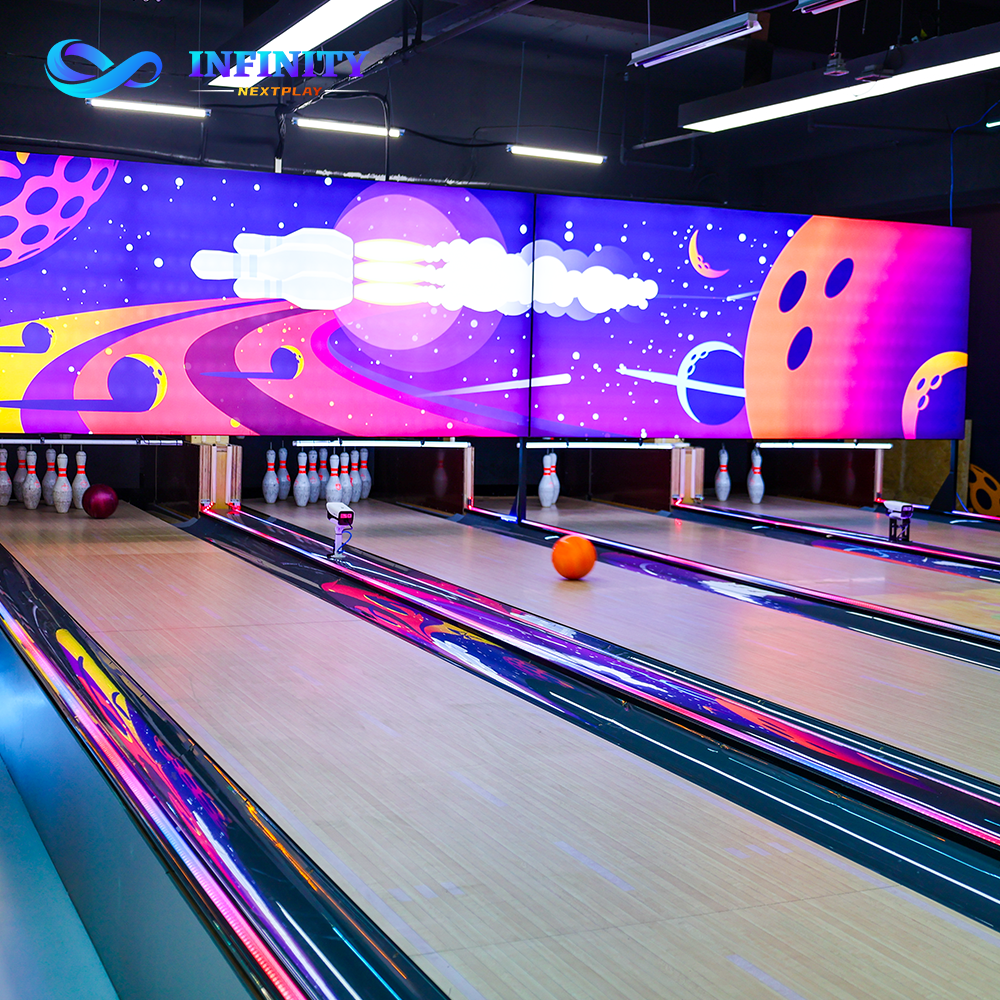
Bars, hotels, and boutique entertainment venues are always looking for attractions that deliver high revenue per square meter without a full-size footprint. The Duckpin Bowling System answers with a space-saving 34-foot lane, automatic scoring, and easy installation, turning a compact corner into a social, repeat-play revenue engine that works in spaces where traditional 60-foot lanes simply cannot fit.
Bowling has always been one of the highest-grossing social activities in entertainment venues, but the traditional 60-foot lane footprint has locked the category out of the bars, hotels, and boutique venues where the best demographics actually spend. Duckpin bowling solves that equation: the shorter 34-foot lane and smaller pins cut the space requirement nearly in half, which means a two-lane duckpin zone fits where a single regulation lane once stood, and a four-lane zone converts a 120-square-meter room into a full bowling center.
The Duckpin Bowling System is engineered around a simple commercial principle: bowling is a social game, and social games sell drinks. Players do not bowl alone in silence; they book the lane for 60 to 90 minutes, rotate through turns, and order food and drinks at the adjacent deck. Operating venues consistently report that each active lane drives between $1,200 and $2,800 of incremental food-and-beverage revenue per month, which is why the category is a staple of high-yield FEC equipment mixes.
From a commercial engineering perspective, the duckpin system also solves the two operational problems that made traditional bowling expensive to run: ball return staffing and maintenance downtime. The automatic ball return and digital scoring system remove the need for lane attendants entirely, and the compact pin-setting mechanism is rated for continuous commercial duty with a monthly maintenance cost below two hundred dollars per lane. The result is a bowling zone that runs unattended from opening to closing, generates per-square-meter yields that rival arcade floors, and builds the group bookings that drive the highest-margin hours of the week.
The duckpin experience is built around fast, social rounds. The smaller ball and pins make scoring accessible to every age group, so families, casual groups, and league players all share the same lanes without intimidation. A full game of duckpin runs in roughly 25 minutes, roughly half the time of a regulation bowling game, which means each lane can serve two to three groups per hour instead of one, multiplying the per-hour revenue per square meter of the zone.
The touch-screen scoring console is the social hub of each lane. It manages game setup, player rotation, and score tracking, and it supports split-screen team play that lets two groups share a lane with independent scoring. The console also links to the venue loyalty system, so frequent bowlers earn points on every visit and come back for the rewards, sustaining the repeat-play culture that makes bowling one of the stickiest entertainment categories in the industry.
The social dynamic is what separates duckpin from single-player arcade games. When a group occupies a lane, the surrounding high-top tables fill with waiting players, and the group''s cheers become free marketing for the venue. Operating venues report that lane-side spectator traffic lifts adjacent F&B sales by 25 to 35 percent during evening hours, because the visible social energy of the bowling zone pulls walk-in customers who would otherwise pass straight through the venue.
Installation is designed for occupied venues. Each lane requires a level concrete or tile floor, a standard grounded outlet, and roughly 5.5 meters of clear lane depth. The modular lane sections assemble in place, and a four-lane zone can be commissioned by the venue''s general maintenance staff in under two days with the included setup checklist and alignment jig.
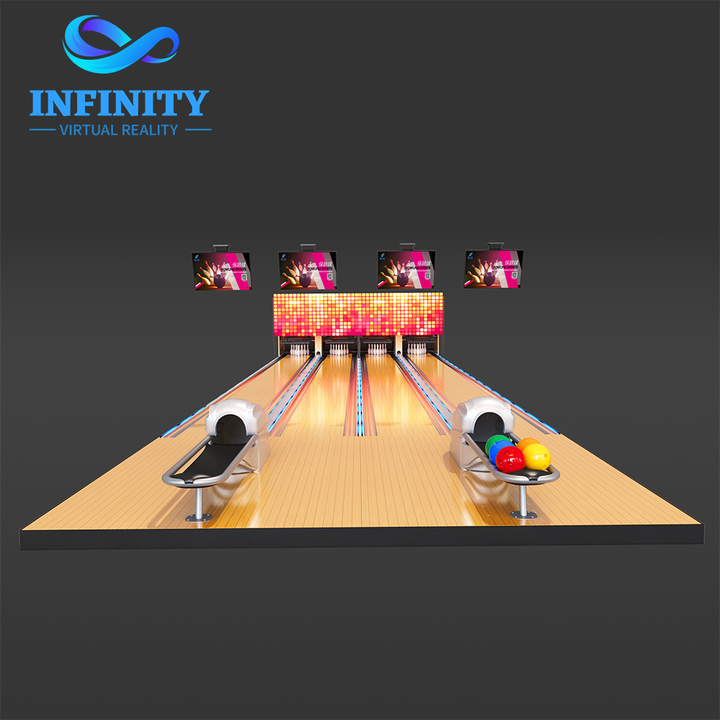
A standard boutique bowling zone deploys four duckpin lanes in a two-by-two block with an adjacent high-top deck. The equipment CAPEX for a four-lane configuration, including automatic scoring, ball returns, and installation support, typically lands in the range of $21,000 to $25,000 depending on regional freight and accessory scope.
The projection is deliberately conservative. It assumes a 70 percent capacity ramp in the first quarter, no sponsored league revenue, and no admission-package upselling. Venues that bundle the bowling zone into birthday packages and corporate events, the two highest-margin segments in boutique entertainment, typically shorten the payback to under five months while the lanes continue to run completely unattended.
Duckpin Bowling System: 34ft compact lane configuration, automatic touch-screen digital scoring, fully automatic ball return, compact automatic pin-setting mechanism, standard duckpin plus split-screen team play game modes, POS and membership API linkage ready, level-floor installation with no structural work, 900W maximum power per lane on 110-240V supply, CE / UL / ISO 9001 compliant components, zero staffing requirement per lane, roughly $180 per lane per month maintenance at peak utilization, 5.5m clear lane depth required per bay.
Layout discipline is what separates profitable bowling zones from decorative ones. The zone must sit on a high-traffic path with a direct sightline from the bar, because the sight of active lanes is the primary marketing asset. The recommended configuration below balances social circulation, spectator seating, and adjacent F&B integration.
The duckpin system is engineered for industrial duty cycles, with the pin-setting and ball return mechanisms rated for continuous commercial operation. The only recurring consumables are duckpin balls and surface oil, restocked roughly monthly at peak utilization, costing approximately $180 per month per lane. The automatic pin-setting mechanism requires quarterly inspection and can be serviced by venue maintenance staff with the included tool kit.
Total annual operating cost per lane typically stays under $2,400 even at maximum utilization, which keeps the operating margin of the bowling zone consistently above 88 percent after direct game revenue is counted. Compared with regulation lanes that require deep foundations and continuous mechanic staffing, the duckpin''s modular design keeps both downtime and maintenance labor near zero, which is why the category is a favorite of boutique venue operators.
The duckpin bowling zone is one of the few entertainment investments that requires no additional staff, no structural renovation, and no specialized maintenance, while still producing some of the highest per-square-meter yields in boutique hospitality. The combination of compact lanes, automatic scoring, and social group play creates a self-running revenue loop: the lanes attract their own groups, the groups generate their own F&B demand, and the league culture sustains repeat bookings week after week.
The decision rule is simple: if the venue has a 12-meter wall on a high-traffic path, four duckpin lanes convert that wall into an attended-by-software bowling zone with a sub-seven-month payback and zero incremental payroll. Start with two lanes, measure the group-booking effect for one quarter, and let the data justify the full four-lane build-out.
Contact our commercial project engineers today for a custom bowling zone layout, space assessment, and factory-direct quotation for your bar or venue.