In the highly competitive commercial hospitality and active leisure industry, Family Entertainment Centers (FECs), corporate event spaces, and modern recreational zones are constantly seeking highly engaging, low-staffing attractions to capture new demographics. Inflated manual labor costs, escalating real estate square-meter rents, and quiet weekday periods frequently combine to suppress the overall profitability of standard retail layouts. Traditional coin-operated arcades and static children's playgrounds are failing to generate the high ticket spend-per-head demanded by modern B2B investors and high-end consumers. To overcome these commercial hurdles, next-generation venue operators are adopting the "Competitive Socializing" model—a framework that integrates automated, cashless, and highly immersive active entertainment. This comprehensive B2B commercial analysis details how a re-engineered 600m² active entertainment hub achieved an exceptional net monthly yield of $45,000. By strategically deploying NextPlay's next-generation product suite—the interactive Infinity Grid LED Dance Floor, the premium double-seat VR Starship U2, and the high-density VR Thunder Knight Race 4-Player cockpit array—the developer completely unlocked their space's revenue potential, securing direct operating margins exceeding 92% and boosting food and beverage sales by 35%.
In the highly competitive commercial hospitality and active leisure industry, Family Entertainment Centers (FECs), corporate event spaces, and modern recreational zones are constantly seeking highly engaging, low-staffing attractions to capture new demographics. Inflated manual labor costs, escalating real estate square-meter rents, and quiet weekday periods frequently combine to suppress the overall profitability of standard retail layouts. Traditional coin-operated arcades and static children's playgrounds are failing to generate the high ticket spend-per-head demanded by modern B2B investors and high-end consumers. To overcome these commercial hurdles, next-generation venue operators are adopting the "Competitive Socializing" model—a framework that integrates automated, cashless, and highly immersive active entertainment. This comprehensive B2B commercial analysis details how a re-engineered 600m² active entertainment hub achieved an exceptional net monthly yield of $45,000. By strategically deploying NextPlay's next-generation product suite—the interactive Infinity Grid LED Dance Floor, the premium double-seat VR Starship U2, and the high-density VR Thunder Knight Race 4-Player cockpit array—the developer completely unlocked their space's revenue potential, securing direct operating margins exceeding 92% and boosting food and beverage sales by 35%.
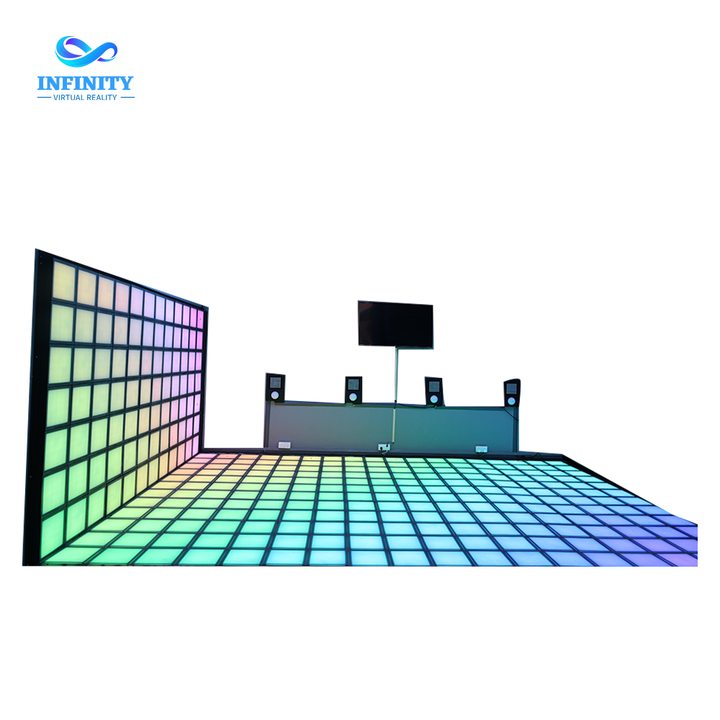
The absolute cornerstone of the active dynamic zone is the Infinity Grid LED Dance Floor Game. This revolutionary active entertainment system bridges the gap between traditional athletic workouts and video-game competition. Operating entirely on an interactive grid of high-intensity, pressure-sensitive LED tiles, the system challenges players of all ages to run, jump, and dodge obstacles as they play through multiple dynamic challenge games. Instead of a passive spectator experience, the LED Floor Game creates a hyper-social, highly visual spectacle that naturally draws crowds of onlookers and drives massive organic viral exposure on social media platforms.
The engineering of the Infinity Grid is optimized for heavy commercial environments. Constructed with high-durability, impact-resistant polycarbonate covers and industrial-grade steel structural frames, each individual 30x30cm LED tile is engineered to withstand constant, high-velocity human impacts. The integrated piezoelectric sensors register player movements with sub-10ms response latency, ensuring flawless real-time tracking during competitive high-speed gameplay. The entire grid is modular, allowing operators to scale the size of the play park (from 4x4m to 10x10m+) to perfectly fit their venue's physical dimensions and layout constraints.
The engineering of the Infinity Grid is optimized for heavy commercial environments. Constructed with high-durability, impact-resistant polycarbonate covers and industrial-grade steel structural frames, each individual 30x30cm LED tile is engineered to withstand constant, high-velocity human impacts. The integrated piezoelectric sensors register player movements with sub-10ms response latency, ensuring flawless real-time tracking during competitive high-speed gameplay. The entire grid is modular, allowing operators to scale the size of the play park (from 4x4m to 10x10m+) to perfectly fit their venue's physical dimensions and layout constraints.
From a business operational standpoint, the Infinity Grid acts as a pure passive income generator. Operating on a 100% cashless, self-service QR-code ticketing or RFID member card model, the attraction requires absolutely no dedicated on-site technicians or manual operators. Players simply select their challenge mode on the integrated 21.5-inch high-definition local touch console, tap their cashless card, and start playing. With groups of up to 6 players competing simultaneously, this segment achieves incredible throughput and high per-minute profitability, transforming a physical room into a high-performance active gaming powerhouse.
The absolute cornerstone of the active dynamic zone is the Infinity Grid LED Dance Floor Game. This revolutionary active entertainment system bridges the gap between traditional athletic workouts and video-game competition. Operating entirely on an interactive grid of high-intensity, pressure-sensitive LED tiles, the system challenges players of all ages to run, jump, and dodge obstacles as they play through multiple dynamic challenge games. Instead of a passive spectator experience, the LED Floor Game creates a hyper-social, highly visual spectacle that naturally draws crowds of onlookers and drives massive organic viral exposure on social media platforms.
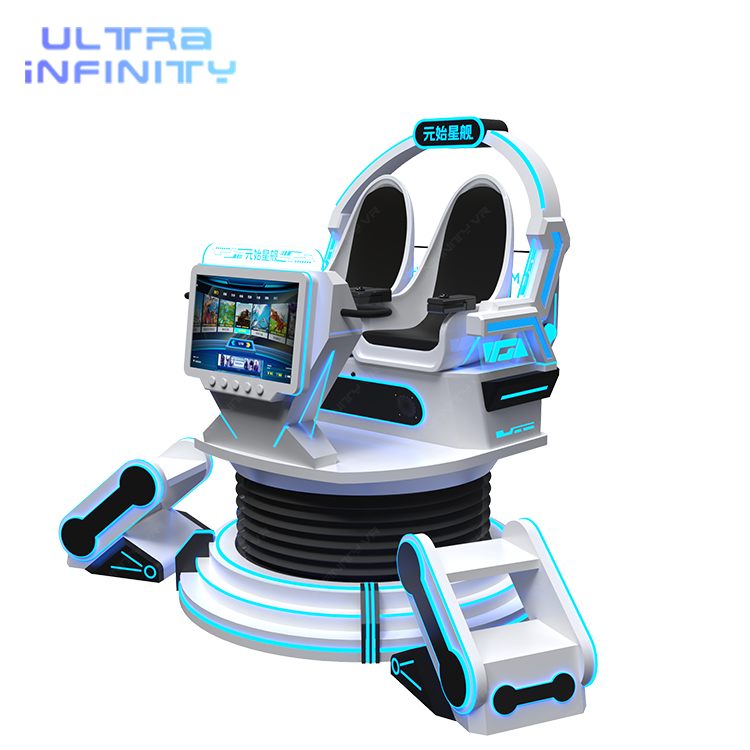
While the LED Grid drives physical group energy, an FEC also requires highly cinematic, high-margin virtual reality attractions to capture single players and couples looking for a deep, sensory-rich escape. The VR Starship U2 represents the absolute pinnacle of next-generation commercial virtual reality. Engineered with dual deep-immersion Deepoon VR headsets and two custom leather-plated motion seats, this premium simulator delivers breathtaking B2B commercial yield. Unlike standard vr egg chairs that offer basic motion profiles, the U2 is built upon an advanced 5DoF (Five Degrees of Freedom) electro-hydraulic dynamic platform.
The mechanical precision of the 5DoF platform allows the Starship U2 to replicate complex physical trajectories—including rapid drops, high-G banks, and 360-degree rotations—with micro-second accuracy and absolute mechanical stability. The simulator is equipped with highly synchronized sensory effects, including intense leg sweeps, dynamic facial air blasts, realistic back-push plates, and deep localized subwoofers, completely dissolving the boundary between the virtual and physical worlds. The cabinet itself features a majestic, futuristic spaceship design outlined with programmable neon LED highlights, serving as a powerful visual centerpiece that commands immediate attention.
Operating entirely via cashless QR-code or RFID swipe systems, the VR Starship U2 integrates over 60 pre-loaded high-definition games, roller-coaster simulations, and tactical shooting missions, ensuring an extremely high replay value. Each seat is equipped with tactical interactive shooting buttons, converting passive cinematic rides into competitive, high-scoring interactive battles. For commercial lounges or premium FECs, the U2 serves as a high-turnover passive income magnet, generating consistent, high-ticket cash flows with zero technical labor or operator overhead.
To maximize the venue's social synergy and capture lucrative corporate teambuilding bookings, the layout includes the flagship VR Thunder Knight Race 4-Player simulator. Motor racing is a universally appealing, highly competitive activity that naturally drives high spectator engagement and fierce social competition. However, traditional simulator setups are freestanding and require large spatial footprints. NextPlay's Thunder Knight Race solves this spatial limitation by packing four high-performance, independent racing cockpits into a single, high-density unified platform, maximizing profit-per-square-meter.
Each of the four independent cockpits is mounted upon a high-performance 3DoF dynamic motion system driven by ultra-low latency industrial brushless electric actuators. This setup replicates realistic physical forces—such as tyre traction loss, high-speed cornering chassis roll, and track vibration feedback—providing an authentic professional racing experience. The simulator is paired with state-of-the-art Pico 4 Ultra VR headsets, delivering hyper-realistic, low-latency 4K visual environments that eliminate motion sickness. All four cockpits are networked locally, allowing players to compete in 4-player head-to-head multiplayer races.
The true genius of the Thunder Knight Race is its cashless, autonomous league-management software. The system automatically tracks player lap times, ranks players on a global leader board, and runs automated bracket-style local tournaments. This self-contained structure allows sports bars, premium lounges, and modern FECs to organize highly profitable weekly leagues and tournament events without requiring any on-site referee or staff supervisor. The high-density design ensures that four players are generating high-ticket revenue simultaneously within a very compact square-meter layout, serving as the ultimate anchor for long-term customer retention.
Securing an outstanding passive yield of $45,000 per month from a 600m² layout requires meticulous spatial choreography and fluid customer routing, a methodology NextPlay defines as the "Spatial Synergy Matrix." In a high-end competitive socializing venue, active gaming segments, virtual reality simulation zones, and high-margin food and beverage (F&B) hospitality points must not operate as isolated nodes. Instead, they must be layered to create a continuous, high-energy commercial cycle where active play and spectator consumption feed into one another.
The Spatial Synergy Matrix layout divides the 600m² floorplan into three highly optimized, synergistic commercial zones: Zone A (The High-Energy Active Play Zone, occupying 180m²), Zone B (The Virtual Reality Immersion Block, occupying 160m²), and Zone C (The High-Density Hospitality Core, occupying 260m²). Zone A features the interactive Infinity Grid LED Floor Game as its main visual centerpiece, surrounded by custom spectator glass enclosures and high-top standing drink rails. This layout converts active gameplay into a public theater-like performance, stimulating impulse play purchases from nearby diners. Zone B houses the VR Starship U2 and the 4-Player VR Thunder Knight Race, creating a sleek, futuristic virtual sports corridor.
Zone C comprises the central circular bar, a high-output kitchen, and plush VIP dining booths that wrap directly around the play zones. Because guests seated in Zone C maintain direct line-of-sight to the glowing LED grids and the moving screens of the VR race, they are constantly exposed to the venue's social excitement. This visual integration has been proven to extend overall customer dwell times to an average of 2.8 hours, driving up food and beverage sales by 35% and converting passive diners into active cashless players, thereby maximizing the venue's total space yield.
As detailed, the collective play-driven revenue reaches **$45,000** per month. Because these high-end attractions run autonomously without physical resetting mechanisms or dedicated staff oversight, the operating overhead is kept extremely low. This lean labor structure guarantees an exceptional net profit margin, enabling the developer to fully amortize their initial hardware investment in less than 8 months of active operation, while simultaneously boosting average dining sales by 35%.
Launching a premium, low-staff competitive socializing zone requires meticulous technical coordination and precise structural alignment. NextPlay provides a comprehensive, 100% turnkey implementation process, guiding operators through seven critical technical phases to ensure a flawless grand opening:
Discover the answers to the most common technical and operational inquiries regarding NextPlay's automated competitive socializing equipment:
How does the Infinity Grid LED Floor Game minimize operational and staff overhead?
The Infinity Grid is engineered for 100% autonomous operation. It integrates directly with cashless QR-code mobile scanning and RFID member card POS systems. Players register, select from multiple dynamic challenges, and start their game sessions entirely through the integrated local touch console, requiring zero manual resets, token distribution, or staff supervision.
What sets the VR Starship U2's motion system apart from standard VR simulators?
Unlike traditional VR simulators that rely on simple 3DoF motion profiles, NextPlay's VR Starship U2 is engineered with an advanced 5DoF (Five Degrees of Freedom) electro-hydraulic dynamic platform. This professional-grade drive system replicates complex physical trajectories, sudden altitude drops, and 360-degree banking curves with micro-second accuracy, eliminating motion lag and providing unmatched sensory realism.
How does the 4-Player VR Thunder Knight Race maximize profit per square meter?
Traditional racing simulators are freestanding, single-player units that occupy massive spatial layouts. NextPlay's Thunder Knight Race combines four high-performance, independent racing cockpits into a single, unified high-density structural platform. This modular design allows four players to compete simultaneously within a very compact square-meter layout, multiplying your spatial revenue capacity while organizing automated local leagues.
Is sub-floor excavation or concrete foundations required to install these three attractions?
No structural excavation or concrete foundations are required. The Infinity Grid is modular and autoportant, laying flat on any level concrete or commercial floor. The VR Starship U2 is a self-contained freestanding unit, and the VR Thunder Knight Race is built on a rigid unified steel platform, meaning all three systems can be completely assembled, calibrated, and operational in under 4 days.
Tell us your space size, location and requirements. We will recommend the right competitive socializing combo...