Most beginner rigs get planned backwards: pick a wheel, pick a headset, then discover the room is one meter short. The room decides everything. Measure it before you price anything.
Put tape on the floor in the exact rig shape and sit in it. If the position feels awkward after ten minutes, the real rig will feel worse after a season. The room pass costs an afternoon and saves the most expensive mistakes.
A racing setup is four parts that have to work as one system. Beginners usually budget them separately and then discover one weak link drags the whole experience down.
| Part | Job | Beginner pick |
|---|---|---|
| Headset | The view and the immersion | PC VR headset with inside-out tracking |
| Wheel and pedals | The controls that actually matter | Direct drive wheel base, load cell pedals if the budget allows |
| Cockpit frame | Keeps everything rigid | Aluminum profile rig, not a folding stand |
| PC | Runs the game without frame drops | RTX 4060 or better, 32GB RAM |
The wheel is the part people overthink and the rig frame is the part they underthink. A wobbly frame feels fine for an hour and miserable for a season. Rigidity is the whole game in sim racing.
Buy in the order that makes every later purchase keep its value. This order is not the order of price.
The common beginner mistake is the reverse: buy the headset first because it is the fun part, then realize the wheel has nowhere to mount. The frame first rule sounds boring and saves the most money.
Motion platforms sit outside this list. They are the first upgrade after a season, not part of the first build. A beginner rig on a fixed frame teaches the driving basics. A motion platform adds sensation on top of skill, and it multiplies the cost of every mistake you still make.
Three tiers cover the beginner range. Each one is a complete rig, not a partial one.
The math beginners get wrong: a cheap rig is not a discount, it is a second purchase. Every tier skip in the frame or the wheel base shows up as a rebuild within a year. Buy the frame and the wheel at the level you want to end at.
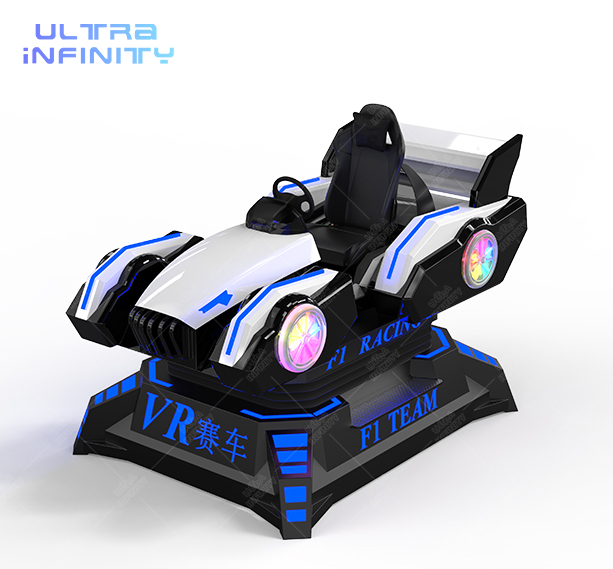
Once the basics stop being the question, the same skills scale straight into commercial hardware. The kit below is what venues run, and the products are live on this site.
If the rig is going into a venue rather than a garage, plan the zone before ordering the hardware. The free 3D layout design page maps the racing zone into the floor plan with clearance and power runs included.
About 2 x 2 meters for a fixed cockpit. Motion platforms need another meter of clearance per side. Seated racing needs no ceiling height, which is the main space advantage over golf or flight sims.
$1,500-$2,500 builds a working entry rig. Putting extra money into the wheel base and the frame pays off; cheap frames get rebuilt within a year.
VR gives full immersion and depth perception at a lower hardware cost per degree of view. The trade-offs are comfort on long sessions and the need for a strong GPU. Most beginners start VR and add screens later.
You can clamp a wheel to a desk for a week of testing. After that the desk flex kills the feel and the position wrecks the driving. A frame is not an accessory, it is the platform.
No. Fixed-frame racing teaches the driving line and braking. Motion adds sensation on top of skill and belongs to the second-year upgrade.
Tell us your room dimensions and budget. Our team recommends the right cockpit, wheel and frame for your space, and provides a free 3D layout design for venue installs.