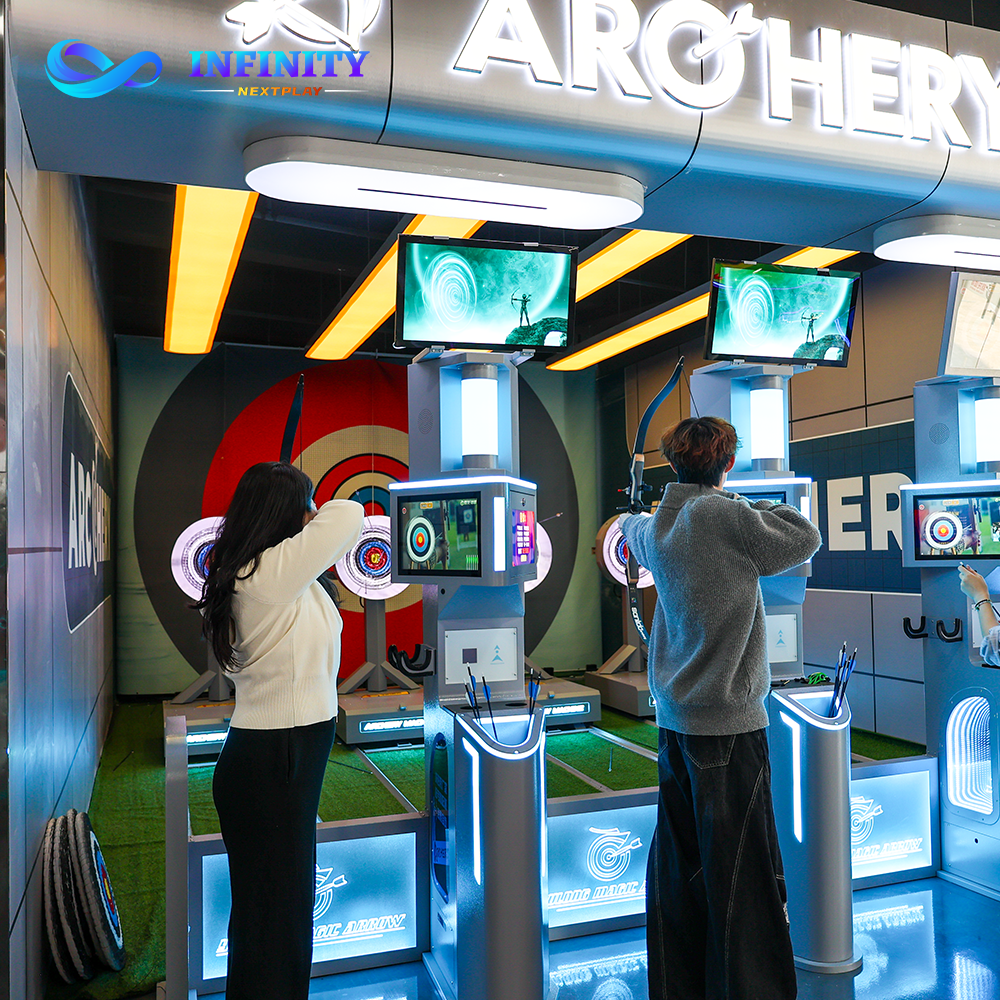
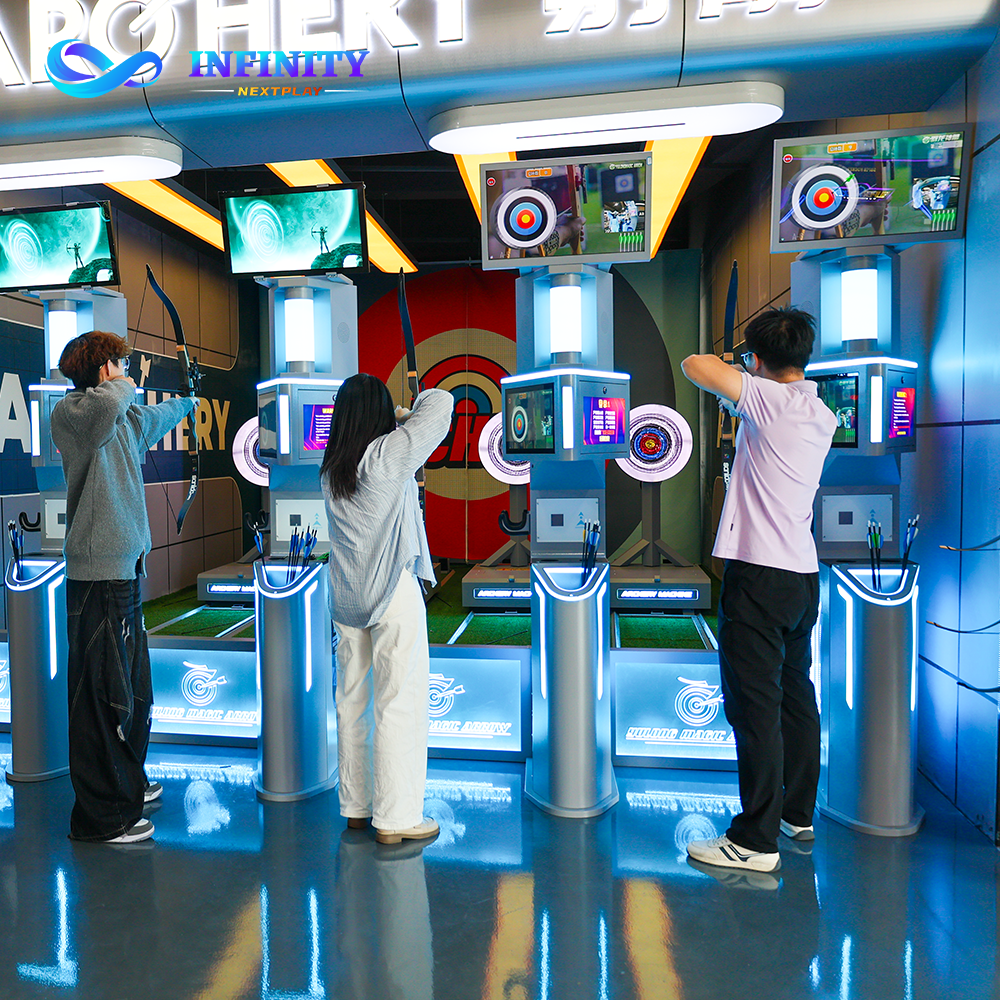
Archery is having a moment in indoor entertainment, and the reason is simple: it is one of the few games where a six-year-old and a grandparent can both pull a bow, hit a target and cheer together within the first minute. In family entertainment centers and indoor sports venues, the attraction keeps drawing families, birthday queues and office groups, because it needs no athletic background, no team knowledge and no long rules briefing. You pick up the bow, the screen shows you a target, and the first shot usually lands close enough to feel like a small win. That instant reward is why every round seems to end with someone asking for one more pull.
Family and group entertainment venues count their visitors mostly as parents with children, often with a healthy share of teenagers and young adults mixed in, according to industry statistics about who visits indoor entertainment centers. An attraction that a parent and a child can enjoy side by side, at their own pace, is exactly what that crowd looks for. Archery fits because the skill gap is forgiving: the game adjusts distance and difficulty, so younger players shoot closer targets while older players step back or take on moving ones. Everyone plays the same game, everyone compares the same scores, and nobody sits on the sidelines waiting for a turn, because a digital lane turns one station into a shared experience.
This guide is a practical, family-friendly walkthrough of the best indoor archery games to try, divided by the kind of occasion you are planning: a casual family visit, a birthday party, a corporate team-building session or a friendly league night. For each type we explain what makes it fun, how the scoring works and why archery groups keep coming back. If you are more interested in why this activity has become so popular with families and groups, the companion article on this site, why indoor archery is becoming a popular family and group activity, covers the trend in depth; this guide focuses on the games themselves.
A modern digital archery simulator is a games platform, not a single sport. The software carries a library of modes that switch the experience from a calm precision challenge to a sweaty head-to-head team battle in seconds, all on the same lane. The game types below are the ones that matter most for families and groups, and a good venue will let you browse them before you commit.
The mix matters as much as the individual modes. A family lunch visit works best with classic and moving target games that everyone can pick up quickly, while a birthday party or corporate session leans on duels and team battles, where the competition and the laughing are the point. Because the games live in software rather than hardware, a single lane can serve all of these without any setup change, which is why the digital lane has displaced the old paper-target range in most modern venues.
Every archery session should start with a classic precision game, because it teaches the core feeling of archery in the gentlest way. A circular target shows rings and a bullseye, the bow feels familiar in your hands, and the screen scores each arrow the moment it lands. There is no pressure, no timer and no opponent, just the quiet satisfaction of watching the score climb ring by ring. For a child picking up a bow for the first time, that first hit on the target is a memory they keep asking to repeat.
The classic format matters for families because it is completely self-paced. An adult can take a deliberate shot and check their form, a child can shoot quickly and cheer a lucky bullseye, and a first-timer needs nothing more than the instruction the screen shows. Venues run it as a warm-up round before moving the group to faster games, and it is also the mode league players practice, so it suits both curiosity and ambition. If the lane has an adaptive range, like the Digital Archery Simulator A4 with its adjustable shooting distances from about five to over eight meters, the venue can bring the target closer for younger players and push it back for the serious shooters in the group, so everyone hits the target at their own comfort level.
Precision rounds also create the quiet kind of competition that mixed-age groups love. Scores are compared at the end of the round, the winner gets a small celebration, and the losing side is genuinely smiling, because a bullseye for a child feels as big as one for an adult. That balance is rare in physical games, and it is exactly what makes archery a family favorite. For anyone who has never shot before, the precision game is the on-ramp; everything else in the library builds on the same aim, grip and release.
Once the group has the basic feel, moving target games change the entire energy of the lane. Instead of a still bullseye, the target slides sideways, pops up in different corners or fades in and out, and suddenly the calm precision round becomes a game of anticipation and reaction. Players have to aim not at where the target is, but at where it will be, which is exactly the skill that makes archery feel athletic. The scores swing wildly, the cheering gets louder, and even the adults who said they would just watch end up taking a shot.
Speed and timed rounds take the same idea further. A countdown starts, the target shrinks with every miss, and a stream of arrows raises the score if you keep landing hits before time runs out. This mode is a natural fit for teenagers and for competitive families, because it turns a skill game into a beat-the-clock challenge that everyone wants to try again to beat their own score. Venues often run moving-target and speed modes as the centerpiece of a group session, because as the round progresses the lane energy carries the whole party.
For organizers, moving-target rounds have a second value: they fill time without losing attention. A classic round has natural pauses between shots, but a speed round runs almost continuously, which keeps a group of twelve people flowing through the lane with no dead moments. If you are running a party or a team-building block, mixing one moving-target round into every rotation keeps the group hooked and the schedule tight. The automatic scoring on systems such as the Professional Arcade Archery System A6 announces results by voice and shows them on the big display, so nobody needs to track scores manually and the momentum never breaks.
The loudest moments in any indoor archery venue come from duels. Two players, one challenge, the same target and matching scores, with the round ending when someone pulls ahead. A duel adds a personal edge that precision rounds never have: the target is exactly the same for both sides, so every close shot becomes a story. For siblings, couples or two friends who walked in on a casual visit, a duel is the mode that turns a walk-in session into a rivalry they will mention the next time they come.
Team battles scale duels to a whole group. Families split into two teams, take turns shooting the same set of rounds, and the combined scores decide the match. The format solves the classic group problem: instead of one person shooting while everyone watches, every member of the team has a shot that counts, which keeps a group of ten fully involved for the whole round. The system online 1v1 matchmaking feature even lets a match pair against another venue, which corporate teams treat as the highlight of the afternoon. For league nights, the same duel mechanics become a ladder: venues publish a leaderboard from the automatic scoring, and teams keep returning to defend their rank.
Indoor archery earns its place in the event calendar because it works as an activity and as programming. A birthday party can book a lane block, run precision practice first, then duels and a mini tournament, and finish with an automatic leaderboard that names a champion; the parents watch from the side, the children run the games themselves, and cleanup is the venue treating the lane like any other rental. Corporate team-building sessions use the same structure with a different tone: the games become a shared bonding exercise where ranks matter less than the group cheering every win.
The pricing reality is friendly for organizers. Group activity venues commonly price indoor sessions in the tens of dollars per participant range, with packages for a block of games, typically from around thirty-five dollars per person in the group-activity market, and birthday and corporate bundles often fold in a reserved bay, staff guidance and the leaderboard extras. These are directional market references, and the exact number depends on the venue, the group size and the package; the point is that archery sits in the affordable band of group activities rather than the premium end, which is why party organizers keep choosing it.
| Occasion | Suggested Game Flow | Why It Works |
|---|---|---|
| Family visit | Precision warm-up + moving target + one duel | Every age succeeds early; short rounds fit a casual afternoon |
| Birthday party | Practice block + team battles + mini tournament + leaderboard | Everyone gets shots that count; a named champion ends the party |
| Corporate team building | Mixed teams + team battles + online 1v1 feature | Bonding with clear results; combined scores reward cooperation |
| League / club night | Duel ladder + rankings + repeat fixtures | Continuous repeat visits and a community that owns the leaderboard |
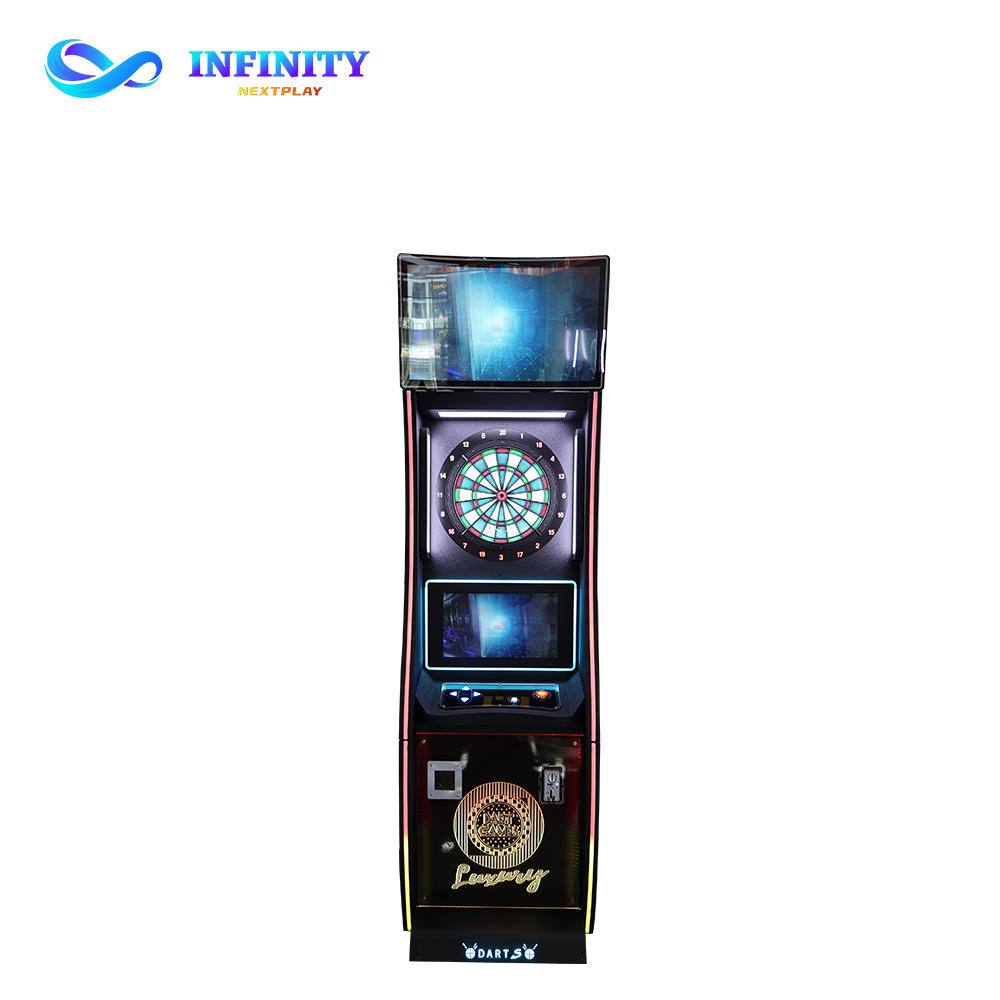
Event planning tip: pair archery with one neighboring digital sport to double the session length without doubling the floor space. An archery system and an automatic-scoring electronic dart machine share the same social energy, and a combined play pass keeps a group moving between two stations instead of leaving the room when one round ends. Venues that run archery inside a wider multi-game floor report exactly this pattern: guests stay longer, the average spend per visit rises, and the group rounds turn into repeat bookings.
Part of choosing an indoor archery game is seeing how families react to the word archery before they try it. New players wonder whether the bows hurt, whether the arrows are real and whether a child can handle the equipment. The modern simulator answers all three before the first shot: the bows are lightweight trainer equipment, the shots are scored by sensors and cameras rather than physical impact against people, and there is no heavy draw weight or sharp arrow point in the experience. Players aim at the screen, the system reads the shot, and the target reacts on display.
Because the lane reads the shot digitally, the safety boundary is built into the design rather than left to the players. The play bay has a fixed shooting direction and a backstop, staff set the correct distance, and the sensors score the arrow on screen, so the entire point of the exercise is accuracy against the target, never anything else. A child cannot be hurt by an arrow, a first-timer cannot be penalized for a hard draw, and a nervous player learns the release with no consequence beyond a score. Venues running family sessions report that within two minutes of starting, the "is this safe" question disappears and the group is simply playing.
Instruction time is short by design. A host or a small on-screen prompt covers grip, stance and release, and the first precision round is forgiving enough that every player gets a positive first result. That is the entire loop that makes indoor archery work for groups: quick safety briefing, immediate success, rising challenge. If you are an organizer, ask the venue whether their lane includes staff guidance and an adaptive distance setting, because those two features decide whether a group of complete beginners hits the ground running or spends the first ten minutes confused.
Not every archery lane feels the same, and the right choice depends on the group you serve. For a family or a small friend group looking for a relaxed skill experience, a compact lane with adaptive distance and intuitive dual screens makes it easy for children and first-timers to succeed early. For a party, a corporate team or any group that feeds on competition, an automatic-scoring, voice-driven system with online duels and a visible leaderboard turns every session into a show. Knowing which experience you are buying is the difference between a quiet afternoon target practice and the loud group event everyone photographs.
Owners planning an archery corner for a venue, from a sports bar to a family entertainment center, can pair this guide with the venue-side cost breakdown of commercial archery equipment, and request a free 3D layout design to see how a lane fits alongside the rest of the games floor. The budget and the floor plan decide the system; this guide decides the games the group will love.
Looking for a commercial archery system that matches the games above? The featured models below are built for the setups and group types described in this guide.
Classic precision games are the ideal starting point: a static target with rings and a bullseye, no timer and no opponent, which lets each player learn grip, stance and release at their own pace. Most venues run precision as the warm-up before moving groups to moving targets, duels or team battles.
Yes. Simulator bows are lightweight, the shots are scored by sensors against a screen rather than physical people, and there is no heavy draw weight or sharp arrow point. With an adaptive distance setting, staff move the target closer for younger players so even a first-time child can hit the target in the first minutes.
A typical booked block runs 30 to 90 minutes depending on the package. A standard flow is precision practice, then moving-target rounds, then duels or team battles, which fills 45 to 60 minutes naturally. Corporate and birthday packages often extend to a full hour with a leaderboard final.
No. The screen shows the grip, stance and release, and the first precision round is forgiving enough for everyone to succeed. Venue hosts cover the basics in a couple of minutes, and dual-screen systems make following along easy for a group of complete beginners.
It is one of the strongest choices for corporate groups. Mixed teams shoot combined scores, which rewards cooperation rather than individual skill, and the duels and online 1v1 options give clear results that become the highlight of the afternoon.
Indoor group activity sessions commonly price in the tens of dollars per participant range, with packages typically starting around thirty-five dollars per person for a block of games in the group-activity market. Birthday and corporate bundles often include a reserved bay, staff guidance and the leaderboard extras.
A precision game uses a static target with rings and rewards calm, accurate aim. A moving target game slides, fades or appears the target and rewards anticipation and reaction instead, which makes the round faster, louder and more athletic. Most sessions start with precision and move to moving targets as confidence grows.
Yes. Parties commonly book a lane block, run practice first, then team battles and a mini tournament, and finish with an automatic leaderboard that names a champion. Ask the venue about adaptive distance settings and whether staff guidance is included, which decide how smoothly complete beginners get going.
Choosing games and equipment for a family visit, birthday party or corporate session? Look over the featured archery systems above, or share your group size and occasion and we can recommend the right setup.