Our sports bar had been operating for five years with a standard formula: big screens, pub food, and a loyal but aging customer base. Revenue was flat, and we were losing younger customers to newer, more interactive venues opening across the city. We needed a transformation — something that would differentiate us from every other sports bar while leveraging our existing bar infrastructure and food service capabilities.
The solution came in two parts: a Professional AR Golf Simulator from Infinity NextPlay as our premium anchor attraction, and a pair of Electronic Dart Machines (the X7 and X3 models) as accessible, high-turnover social games. The combination transformed our business. Within six months, monthly revenue increased by 45%, from $48,000 to $70,000, and our average customer age dropped from 45 to 32. Here is how we did it and what we learned along the way.
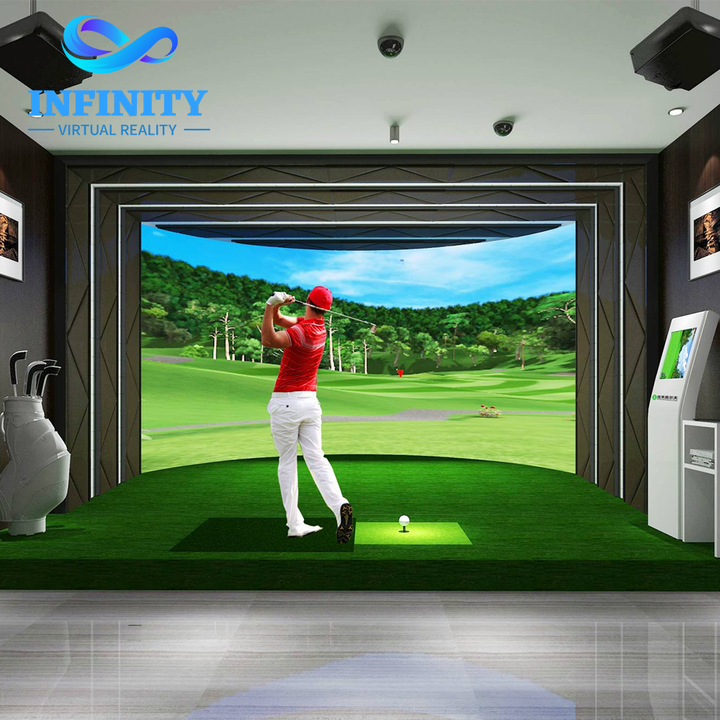
The Professional AR Golf Simulator was our flagship investment. Unlike consumer-grade golf simulators that use basic sensor mats, this system features dual high-speed camera detectors capable of capturing 3,000+ frames per second. These cameras track ball spin, launch velocity, club face angle, and swing path with professional-grade precision. The data feeds into a low-latency tracking algorithm that projects a hyper-realistic ball flight simulation onto a high-brightness 4K laser projector.
The difference in quality is immediately apparent to anyone who has played on lower-end simulators. The ball flight is smooth and accurate, the response time is instantaneous, and the visual quality rivals what you would see in a professional golf training facility. Our simulator includes over 40 world-famous courses — St. Andrews, Pebble Beach, Augusta — which gives golfers the experience of playing legendary courses without leaving our bar. This premium experience commands premium pricing: we charge $45 per hour for the golf simulator, compared to the $25-$30 per hour typical for lower-end systems in our area.
The golf simulator generates approximately $8,500 per month in direct revenue. However, the real financial impact comes from the F&B uplift. Golfers using the simulator spend an average of 2.5 hours on-site (compared to 1 hour for regular bar customers), and their per-person F&B spending is $38, compared to our bar average of $18. We estimate that the golf simulator drives an additional $6,000 per month in food and beverage sales, bringing its total monthly contribution to approximately $14,500.
One feature that surprised us was the popularity of the golf simulator for corporate events and private parties. Local businesses book the simulator for team-building events, client entertainment, and staff celebrations. These corporate bookings account for 35% of golf simulator revenue and tend to happen during weekday afternoon and early evening hours — times that were previously our slowest periods. A typical corporate booking includes 4-6 participants for a 2-hour session at $400-$500, with catering ordered from our kitchen.
The AR Golf Simulator's zero-contact hardware design has been a significant operational advantage. Players use their own clubs (or our rental sets), and there are no worn components to replace. The system calibrates automatically for each player, and the projection screen is designed for thousands of hours of continuous use. Our only recurring costs are periodic software updates and occasional cleaning of the camera lenses. The system has operated with 99.7% uptime over our first six months, with the only downtime being a single firmware update that took 30 minutes.
While the golf simulator attracts a premium segment, the dart machines are our volume drivers. We installed two machines: the X7 Online Electronic Dart Machine (our flagship model with global online play) and the X3 Professional Arcade Dart Machine (dual HD screens, ideal for our bar environment). Together, they generate $6,800 per month in direct revenue, with an additional $4,000 per month in F&B uplift from dart players.
The X7 has been particularly popular with our younger demographic. Its global online play feature allows players to create profiles, track statistics, and compete against opponents in other cities and countries. The 21.5-inch HD screen displays real-time leaderboards, and players can see their ranking among local, regional, and national competitors. This competitive dimension has created a community of regular players who visit specifically to defend their rankings. We now have 47 active X7 members who visit at least twice per week, forming the core of a social dart league that we organize monthly.
The X3, positioned near the bar area, serves as the entry point for casual players. Its intuitive touch interface and single-coin play option make it accessible for first-time dart players. We've observed that approximately 30% of X3 players graduate to the X7 within their first month, drawn by the competitive online features. This natural progression from casual to competitive play keeps customers engaged and coming back. The average dart player visits 2.7 times per week and spends $16 per visit on our food and beverages, contributing an estimated $4,000 per month in F&B sales attributable to dart play.
The genius of combining a premium attraction (AR Golf) with accessible attractions (Darts) is that they serve different customer segments while sharing the same F&B infrastructure. Golf attracts higher-spending customers who book in advance and stay longer, while darts attract a higher volume of casual customers who visit frequently for shorter sessions. Both groups spend on food and beverages, and they often interact with each other — dart players watch golf on the simulator screens during breaks, and golfers join dart games after their session.
We designed the layout to encourage this cross-pollination. The golf simulator is positioned in a semi-enclosed bay near the rear of the bar, with a glass partition that allows visibility without transmitting noise. The dart machines are placed in a high-traffic area between the bar and the seating area, where their HD screens and leaderboards create visual attraction. This arrangement means that a customer coming in for darts sees the golf simulator and becomes curious, while a customer booking the golf simulator passes through the dart area and often tries a game before or after their round.
The integration with our bar operation has been seamless. Both systems use card-based payment that integrates with our POS system, allowing us to track spending by customer and run targeted promotions. We've introduced a "Golf & Darts Combo" package at $55 per person that includes one hour of golf simulator time, 30 minutes of dart play, and one drink. This package has a 28% take rate among groups and has increased average dwell time from 1.5 hours to 2.8 hours for combo purchasers.
One of our biggest concerns before installation was whether the entertainment equipment would require additional staff or specialized training. In practice, the opposite has been true. Both the golf simulator and the dart machines are fully automated — customers pay by card, the system activates automatically, and play is self-guided through intuitive touchscreen interfaces. Our existing bar staff manages both systems with no additional headcount, and training took less than one day per staff member.
The golf simulator includes an automated tutorial mode that guides first-time players through setup, club selection, and swing basics. The dart machines feature a demo mode that cycles through game options on the screen, making it easy for new players to understand the rules without staff intervention. We estimate that the automated operations save us approximately $3,000 per month in labor costs compared to if we needed dedicated attendants for each attraction.
Maintenance has been simpler than expected. The golf simulator's camera system is enclosed in a protective housing that requires only monthly lens cleaning. The dart machines have self-diagnostic systems that alert us to any issues before they become serious problems. Our total maintenance cost across all three machines is less than $200 per month, primarily for replacement dart tips and software updates.
Our total equipment investment was $95,000: AR Golf Simulator ($68,000 including installation, 4K projector, and 40-course library), Dart X7 ($8,500), Dart X3 ($6,500), and integration, signage, and minor renovations ($12,000). We funded the investment through a small business loan with a 5-year term and monthly payments of approximately $1,800.
The incremental monthly costs directly attributable to the entertainment equipment are minimal: electricity for the simulator ($300), maintenance and supplies ($200), software subscription fees ($150), and marketing ($500). Total incremental costs are approximately $1,150 per month, plus the loan payment of $1,800. With incremental monthly revenue of $22,000 (the difference between our pre-installation revenue of $48,000 and current revenue of $70,000), the net incremental profit is approximately $19,050 per month. At this rate, the equipment investment of $95,000 is recovered in just 5 months — well below our conservative projection of 8 months.
We project that revenue will continue to grow as our dart league expands and corporate golf bookings increase. By month 12, we expect total monthly revenue to reach $78,000-$82,000. The equipment itself has a useful life of 7-10 years, meaning the investment will generate substantial profit over its lifespan. The intangible benefits — brand differentiation, younger customer acquisition, and social media presence — are difficult to quantify but likely exceed the direct financial returns.
For sports bar owners considering a similar transformation, here are our most valuable insights. First, invest in the premium attraction first and build the supporting attractions around it. The golf simulator is our differentiator — it's what sets us apart from every other sports bar in the city. The dart machines are the volume builders that ensure the golf simulator's premium positioning doesn't make the bar feel exclusive or unwelcoming to casual customers.
Second, integrate payment with your POS system from day one. We initially ran the golf simulator and dart machines as separate payment systems, and it created accounting headaches and missed cross-selling opportunities. After integrating all payments through our POS, we saw a 15% increase in F&B sales from entertainment customers simply because the unified payment flow made it easier for them to order food and drinks while playing.
Third, create a loyalty program that spans both attractions. Our "NextPlay Rewards" card tracks points earned on both the golf simulator and dart machines. Points can be redeemed for free play time, drink discounts, or food items. The program has 340 active members in just six months, and members visit 3.2 times more frequently than non-members. Fourth, use the leaderboard features actively. We display our weekly golf leaderboard and dart rankings on a dedicated TV screen near the bar, creating a competitive atmosphere that drives repeat visits.
Fifth, market the experience, not the technology. Our most successful marketing campaigns show people having fun — groups celebrating a good golf shot, friends competing at the dart machine, corporate teams high-fiving after a tournament. We never lead with technical specifications in our advertising, even though the technology is what makes the experience possible. Sixth, be patient with the corporate events channel. It took us three months to build momentum, but now corporate bookings are our fastest-growing revenue segment with 20-25% month-over-month growth.
Finally, don't neglect your existing customer base during the transformation. We made a point of introducing our loyal bar regulars to the new equipment gradually, offering free trial sessions during slow hours and hosting a "member preview" event before the public launch. This approach turned our existing customers into advocates rather than skeptics, and many of our regulars have become our most frequent entertainment users.
Adding the AR Golf Simulator and electronic dart machines to our sports bar has been the best business decision we have made. The combination transformed our customer base, increased revenue by 45%, and created a sustainable competitive advantage in our market. The key insight is that premium and accessible attractions are not opposing strategies — they are complementary. The golf simulator attracts high-value customers and corporate bookings, while the dart machines drive volume, frequency, and community engagement.
For sports bar owners feeling pressure from newer entertainment concepts, we recommend taking the leap. The technology has matured to the point where installation is simple, operation is automated, and the financial returns are clear and compelling. With Infinity NextPlay's professional-grade equipment, integrated payment systems, and ongoing support, the barriers to entry are lower than most bar owners realize. A $95,000 investment that pays back in 5-8 months and generates incremental profit for a decade is not just an equipment purchase — it is a strategic transformation of your business model.
Our sports bar is no longer just a place to watch the game. It is a destination where customers play, compete, celebrate, and stay for hours. The 45% revenue increase speaks for itself, but the real measure of success is the energy in the room on a Tuesday night — customers laughing, competing, and spending — all because we had the courage to try something different. For any bar owner wondering whether premium entertainment equipment is right for their business, our answer is a resounding yes.
Get a free 3D layout for your space. No commitment required.