The commercial hospitality landscape has experienced a fundamental structural migration. Traditional sports bars and conventional gaming arcades frequently suffer from compressed operating margins due to static entertainment assets, floor plan dead zones, and sub-optimal food and beverage (F&B) conversion rates. When establishing an 800m² boutique competitive social venue, spatial engineering cannot rely on arbitrary asset placement. Instead, it demands a mathematically optimized Spatial Synergy Matrix that balances high-velocity guest circulation, clear sightlines for spectator engagement, acoustic zoning, and high-margin hospitality service points.
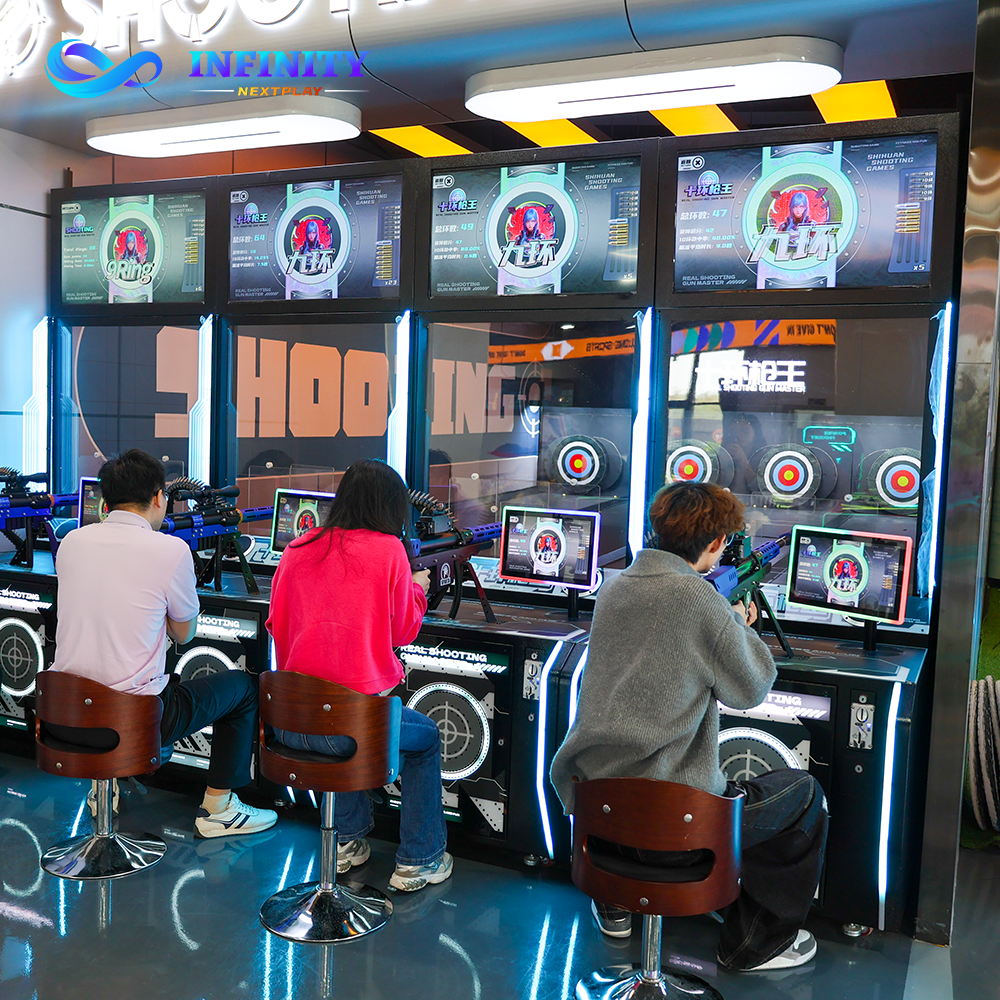
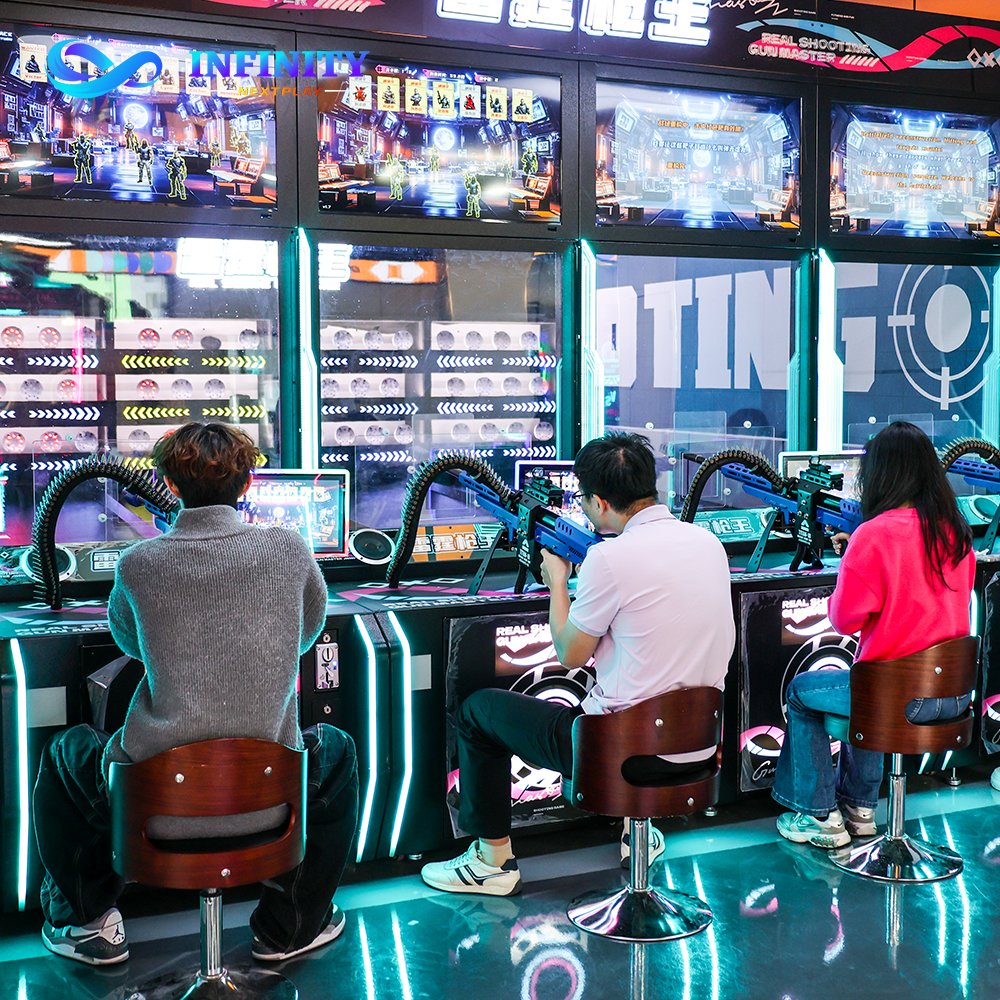
In an 800m² layout optimized for tactical e-sports, the floor plan is segmented into four interconnected operational zones: the Tactical Precision Zone (occupying approximately 220m²), the Social E-Sports Darts Bay (180m²), the High-Adrenaline Motion Driving Cockpits (160m²), and the Central Hospitality & Spectator Lounge (240m²). By arranging the high-visibility Digital Scoring Shooting Simulator Q4 along the primary architectural feature wall, operators establish a dominant visual anchor that draws immediate attention from entering guests. The 39-inch overhead tournament leaderboard screen creates a continuous focal point, encouraging ambient spectatorship and motivating walk-in guests to participate in structured shooting competitions.
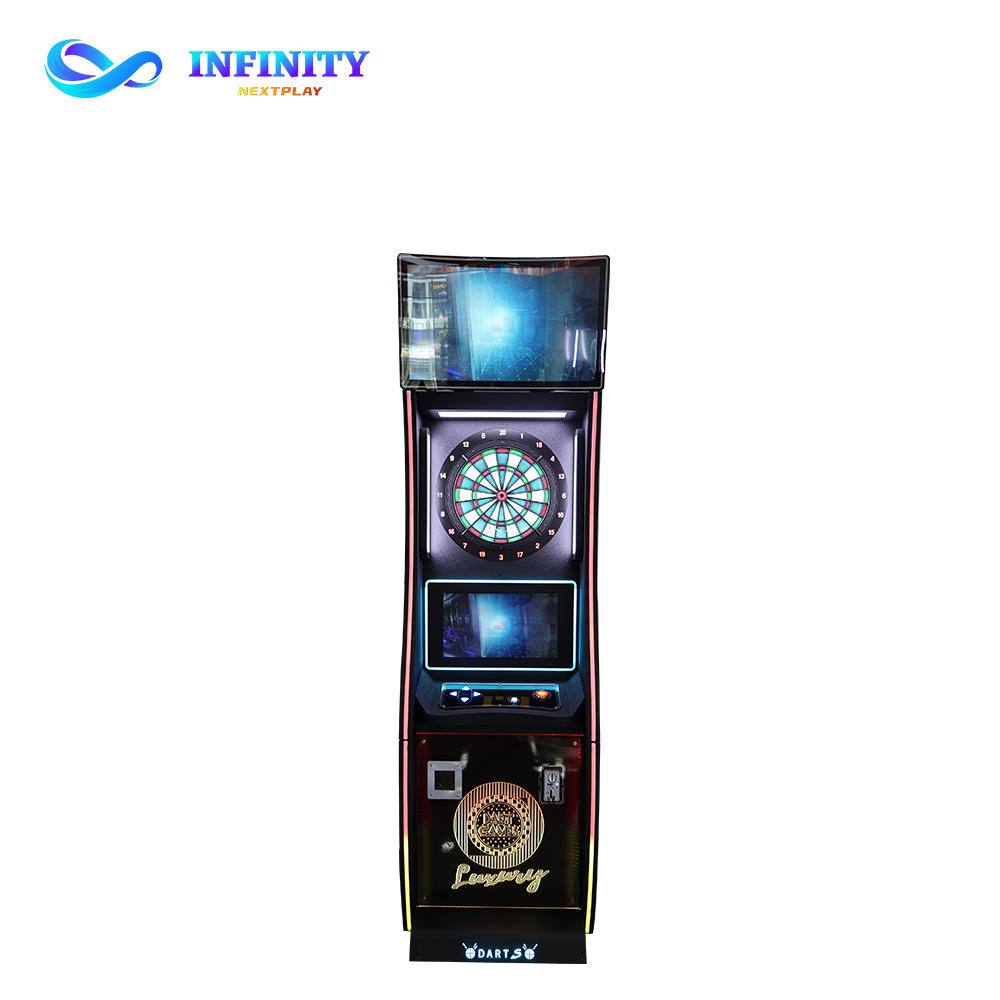
Directly adjacent to the tactical shooting range, the Online Electronic Dart Machine X7 bays are installed in a staggered parallel configuration. Darts represent one of the highest profit-density assets per square meter in competitive social entertainment because players actively consume craft beverages and appetizers between rounds. By integrating dedicated high-top seating consoles and integrated ordering terminals within 1.5 meters of each X7 dart lane, operators eliminate friction in the service loop. This spatial proximity directly correlates with a 38% increase in hourly beverage re-order frequency compared to isolated gaming setups.
The high-impact dynamic motion driving zone housing the Thunderclap 6DOF Racing Car Machine is positioned along the perimeter acoustic enclosure. Because 6-DOF dynamic motion simulators generate significant tactile force and energetic audio effects during competitive racing heats, placing them on reinforced sub-floor platforms ensures structural isolation while maximizing visual drama for bystanders. The triple-screen display arrays face toward the central lounge bar, effectively turning live racing telemetry into ambient entertainment for dining guests.
| Functional Zone | Core Hardware Fleet | Allocated Footprint | Hourly Revenue / m² | Primary F&B Driver |
|---|---|---|---|---|
| Tactical Precision Range | Q4 Digital Range & C4 Recoil Shooting | 220 m² | $14.20 / hr | Group Corporate Packages |
| Social Darts Lounge | X7 Global Networked Darts Bays | 180 m² | $18.60 / hr | Cocktails & Tap Beverages |
| Dynamic Motion Cockpits | Thunderclap 6DOF Motion Simulators | 160 m² | $16.80 / hr | Premium VIP Reservations |
| Hospitality & Central Bar | High-Top Tables & Telemetry Hub | 240 m² | $22.40 / hr | Full Dining & Craft Spirits |
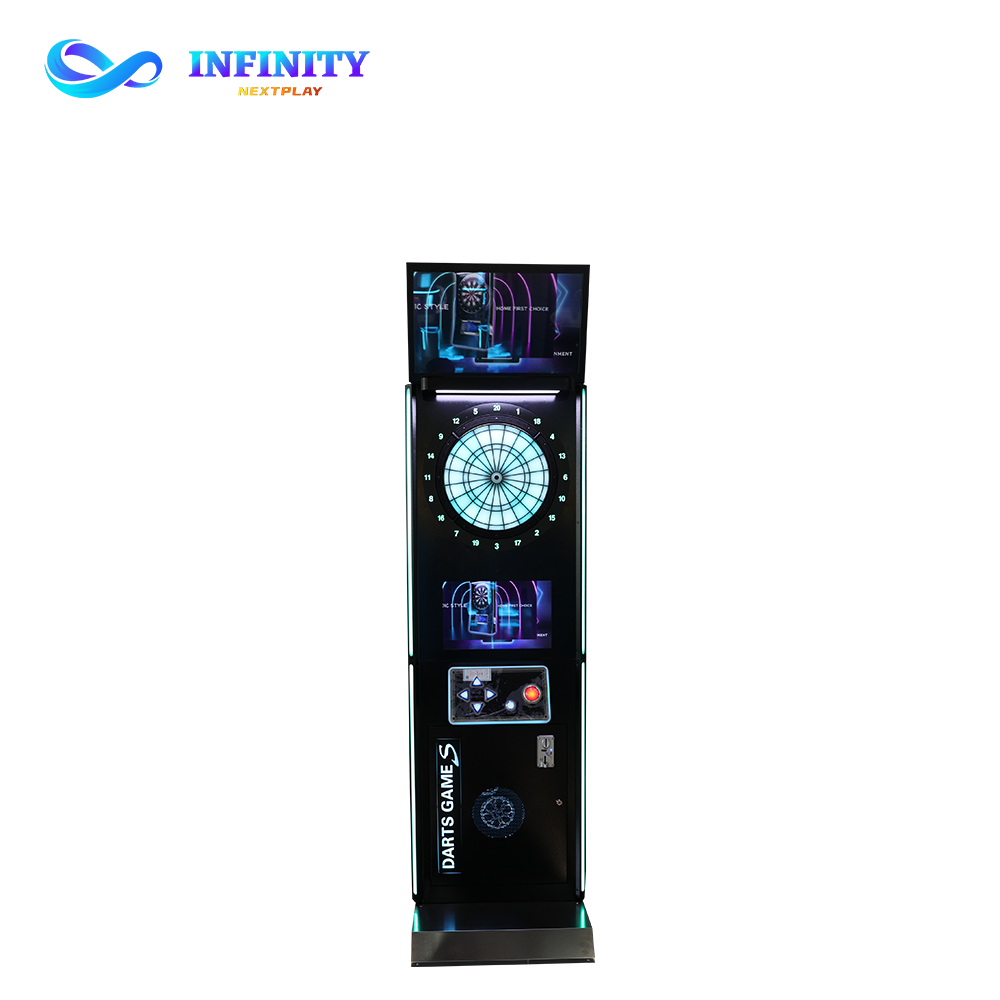
A critical factor in operational longevity is avoiding congestion bottlenecking around checkout counters and equipment bays. By implementing a unified RFID cashless card reader ecosystem integrated across all equipment assets—including the standalone Coin Operated Dart Machine X5—players tap their membership wristbands or smartphone NFC wallets to initiate game sessions instantly. This hands-off authorization framework reduces labor overhead while providing venue managers with granular real-time telemetry on asset utilization rates.
Boutique entertainment venues operate under rigorous commercial usage conditions. Unlike consumer-grade peripheral hardware, commercial tactical simulators must maintain millimetric calibration stability across tens of thousands of consecutive game cycles per month. The Digital Scoring Shooting Simulator Q4 utilizes an industrial 10-ring infrared impact sensing grid coupled with high-durability moving target tracks. Constructed with an alloy structural cabinet and heavy-duty steel guide rails, the Q4 target mechanism withstands high-velocity projectile impacts without sensor drift or mechanical fatigue.
In tactical shooting simulation, tactile realism is essential for player immersion and repeatable skill development. The companion Automatic Rubber Bullet Shooting Machine C4 features a patented pneumatic recoil actuation engine that replicates real-world slide cycling force without requiring hazardous explosive propellants. The automated magazine feeding mechanism ensures continuous bullet recycling, eliminating manual reloading intervention by staff. Paired with a 15.6-inch high-definition touch control panel for game selection and a 39-inch overhead leaderboard display, the C4 platform delivers an automated, high-throughput competitive attraction.
For electronic darts infrastructure, the Online Electronic Dart Machine X7 sets the benchmark for tournament-grade precision. Engineered with a self-healing nylon matrix soft-tip target face, high-sensitivity matrix pressure sensors, and dual high-definition LCD displays (21.5-inch player interface + 32-inch overhead camera feed display), the X7 supports real-time global 1VS1 online matchmaking. An integrated wide-angle optical camera system captures live player throws, streaming opponent feeds with sub-50ms video latency. This connected architecture allows venue operators to host regional and international dart tournaments, transforming local league players into loyal weekly patrons.
| Equipment System | Core Engineering Specification | Actuation / Sensor Engine | Structural Frame Material | MTBF Reliability Rating |
|---|---|---|---|---|
| Q4 Digital Shooting Target | 10-Ring Infrared Optical Sensing Grid | Motorized Moving Track & Auto-Reset | Reinforced Cold-Rolled Steel Cabinet | >50,000 Cycles |
| X7 Online Darts System | Dual HD Display & Global 1VS1 Video Link | Nylon Matrix Soft-Tip Target Board | Commercial Powder-Coated Alloy Shell | >100,000 Throws |
| Thunderclap 6DOF Simulator | 6-DOF Servo Motion Platform & Force Feedback | 1000Hz Motion Control Telemetry Engine | Heavy-Duty Tubular Steel Motion Base | >30,000 Hours |
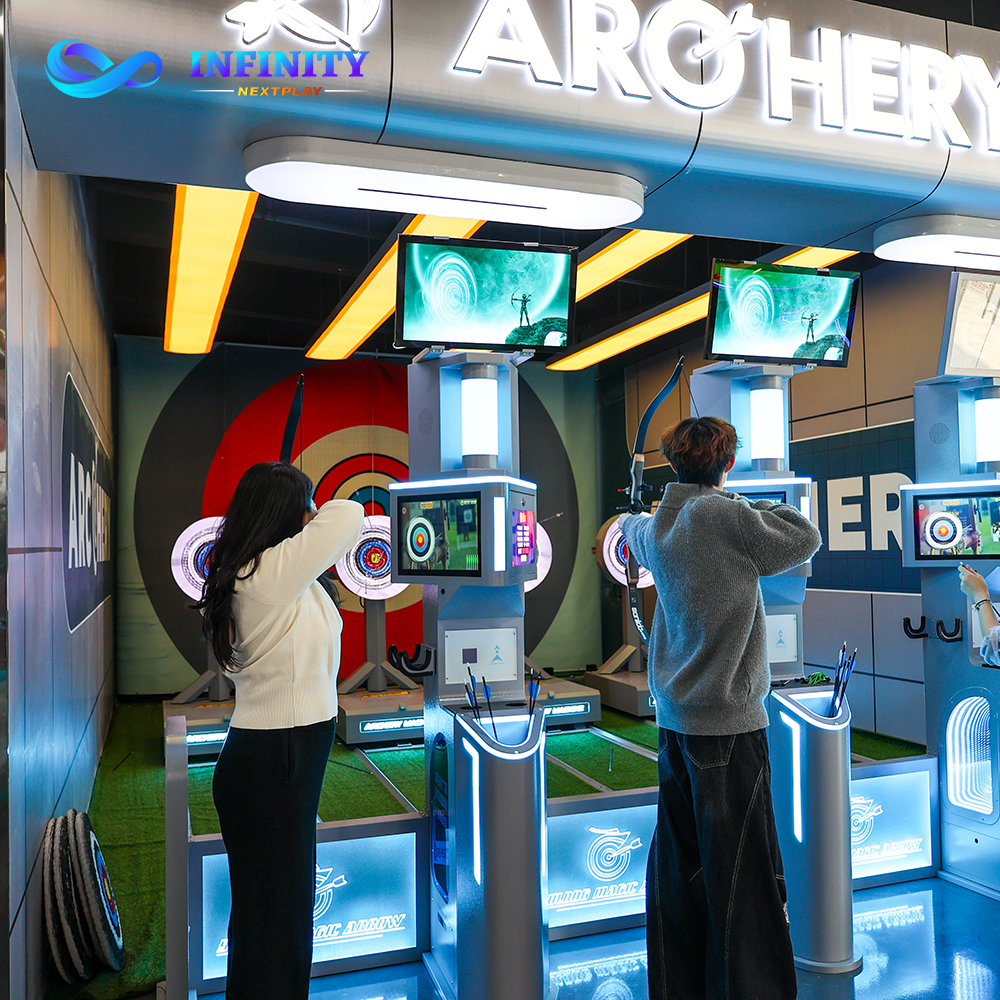
| A4 Digital Archery System | Adjustable 5m–8m Target Range Track | Automated Arrow Retrieval & Optical Detection | Industrial Alloy Frame & Rubber Shield | >40,000 Shots |
The engineering crowning jewel of the motion driving zone is the Thunderclap 6DOF Racing Car Machine. Built on an electric six-degree-of-freedom dynamic motion platform, the simulator translates in-game physics—including roll, pitch, yaw, surge, sway, and heave—into precise physical accelerations. Driven by high-torque AC servo actuators communicating via a sub-10ms latency CAN-bus telemetry system, the Thunderclap 6DOF cockpit reproduces subtle traction loss, kerb vibrations, and braking g-forces with uncanny fidelity. The inclusion of an active force-feedback steering wheel and triple 43-inch ultra-wide curved HD monitors delivers an uncompromised motorsport experience that commands premium hourly reservation rates.
Financial sustainability in competitive social entertainment relies heavily on extending visitor dwell time and driving recurring hospitality revenue. In traditional gaming venues where players engage with single-player redemption arcade machines, average guest stay time rarely exceeds 45 to 60 minutes. In contrast, an engineering-backed 800m² tactical e-sports lounge leverages structured group competition to extend average visitor dwell time to 145 minutes. As dwell time increases beyond two hours, guest spending on craft beers, signature cocktails, and shared dining platters climbs exponentially.
To quantify this economic advantage, consider a comparative financial analysis between a standard sports bar operating traditional passive television monitors and an 800m² NextPlay tactical e-sports lounge. While a standard sports bar generates an average spend per head of $38.00 (primarily driven by food and drink consumption during sports broadcasts), a tactical e-sports lounge equipped with the Q4 target range, X7 global darts, and Thunderclap 6DOF simulators achieves an average spend per head of $118.50. This 3.1x increase in customer spend is achieved through a blended revenue model consisting of direct gameplay fees ($42.00), high-margin F&B consumption ($64.50), and recurring corporate tournament entry packages ($12.00 per head amortized).
Additionally, corporate team-building events represent a lucrative corporate sales funnel for tactical e-sports lounges. Corporate clients actively seek unique, non-intimidating competitive activities where participants of varying athletic abilities can compete on equal footing. The combination of precision digital target shooting on the Q4 range and tactical archery on the Digital Archery Simulator A4 provides the ideal framework for corporate leagues. Operators can offer turnkey corporate packages that combine a 2-hour private tournament ladder, real-time leaderboard management, and premium catering, commanding reservation rates between $2,500 and $6,000 per corporate group booking.
Tournament software automation plays a pivotal role in maintaining low operational payroll. The X7 dart network and Q4 target range feature automated scoring algorithms and centralized leaderboard management. Staff members are not required to manually calculate scores, reset physical target cards, or manage tournament brackets. Instead, venue staff focus entirely on delivering attentive hospitality service, taking food and beverage orders, and fostering an energetic event atmosphere. This hands-off technology stack reduces operational floor labor requirements to just 3 to 4 staff members during peak operational shifts, driving operational EBITDA margins above 42%.
Executing a flawless commercial deployment requires rigorous adherence to MEP (Mechanical, Electrical, Plumbing) engineering standards during the site build-out phase. An 800m² tactical e-sports lounge has specific electrical load requirements and structural flooring specifications that must be integrated before equipment delivery. The total electrical power budget for the 800m² equipment fleet is calculated at approximately 28kW peak load, requiring a dedicated 3-phase 380V/220V electrical sub-panel with individual circuit breakers for each simulator bay.
For structural sub-flooring, the dynamic motion forces generated by the Thunderclap 6DOF Racing Car Machine require a reinforced floor foundation with a minimum load-bearing capacity of 500kg/m². Installing high-density industrial rubber dampening pads beneath the motion platform frame absorbs structural harmonic vibration, preventing vibration transmission into adjacent commercial tenant spaces. In target shooting bays housing the Q4 and C4 simulators, bullet containment baffles and energy-absorbing rubber impact curtains behind moving targets ensure absolute projectile safety and silent acoustic operation.
Network architecture demands gigabit Cat6 Ethernet cabling terminated at a centralized industrial network switch. While Wi-Fi connectivity is sufficient for consumer mobile devices, commercial e-sports assets such as the Online Electronic Dart Machine X7 require hardwired LAN connections to maintain sub-50ms video latency during global 1VS1 online matchmaking tournaments. Power conditioning UPS (Uninterruptible Power Supply) units must be installed on all main server controllers to protect system telemetry and customer tournament data against unexpected power grid fluctuations.
Contact NextPlay FEC engineering consultants today for customized 2D/3D venue layout CAD blueprints, equipment fleet quotation packages, and full ROI financial projection modeling.