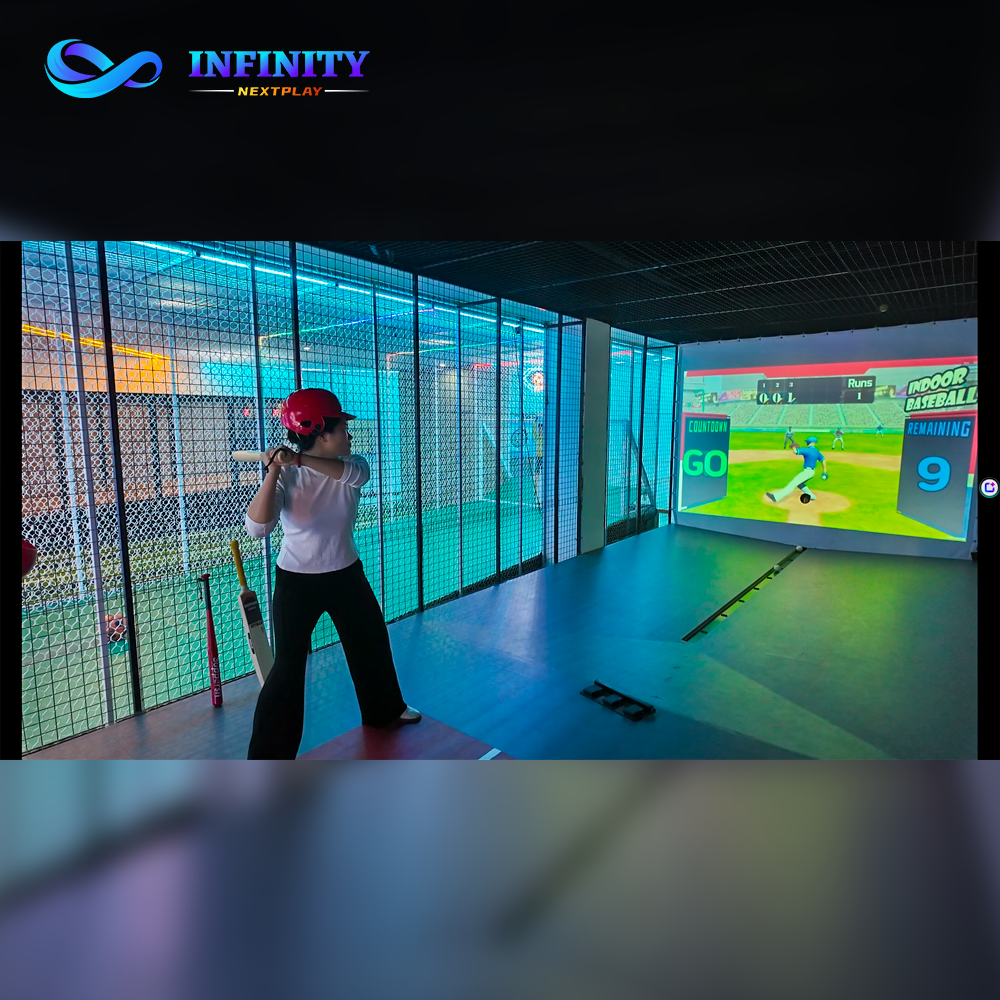
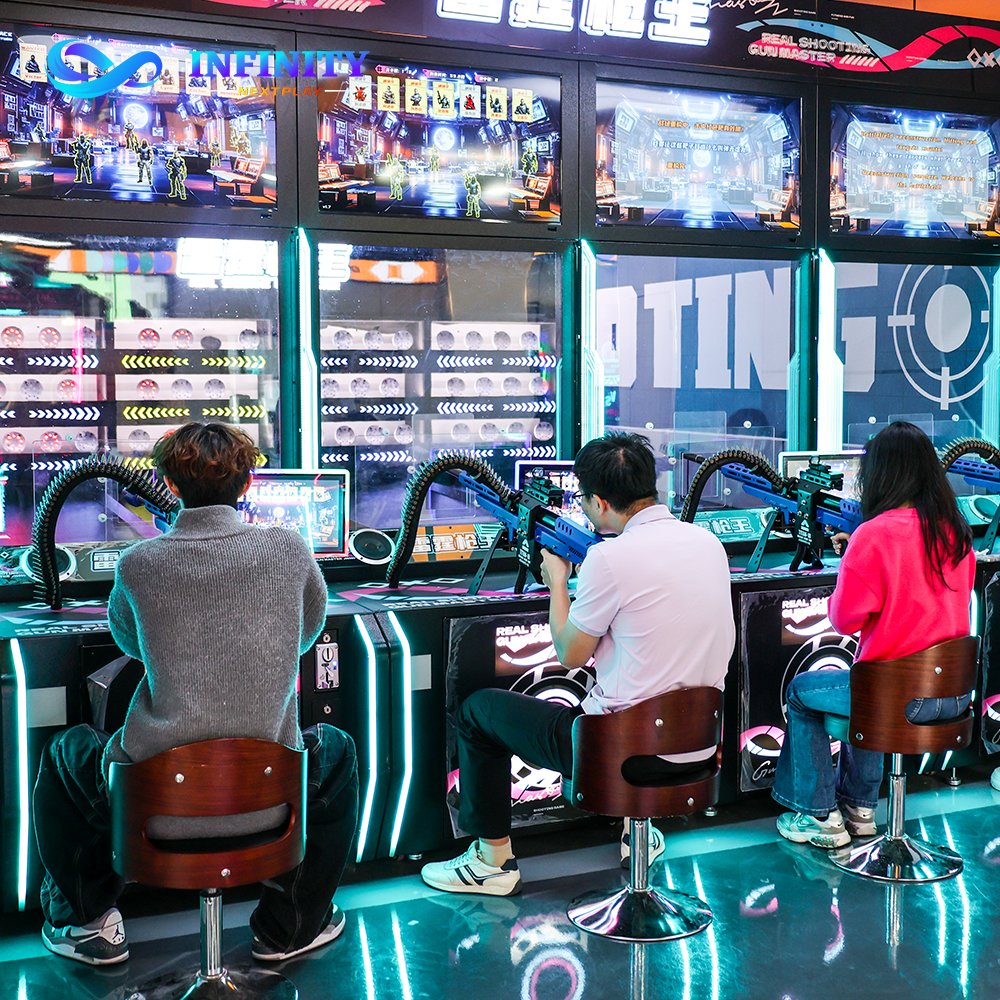
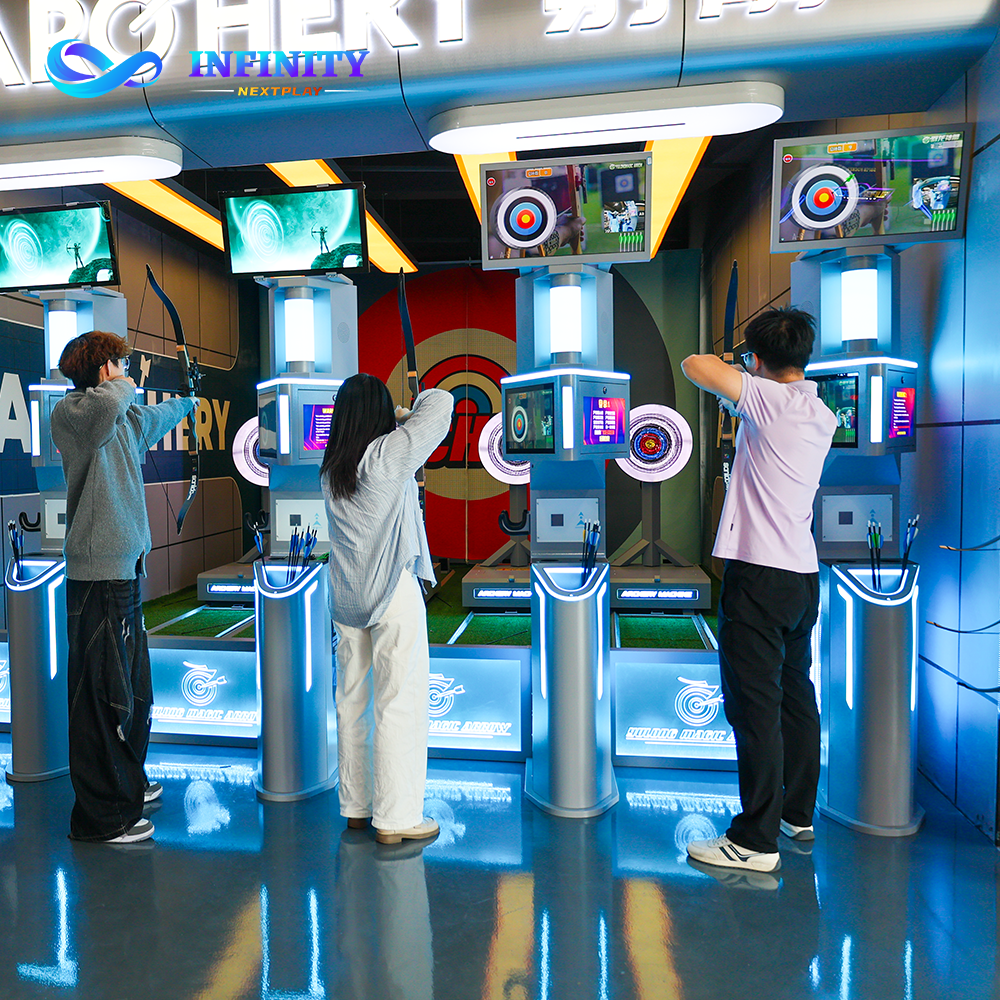
The following commercial sports simulation units form the primary revenue generators within this end-to-end commercial installation.
Commercial entertainment centers operating in tier-1 and tier-2 urban complexes face rigorous floor yield metrics. Operating a 2500m2 venue demands an intricate balance between high-throughput anchor attractions and high-margin concession/social lounge spaces. Modern commercial real estate developers evaluate venue partners based on revenue per square meter ($/m2) and average customer dwell time. Integrating modular active gaming hardware allows operators to eliminate dead space while establishing sub-10ms response times for active players. Spatial synergy requires clear line-of-sight acoustics, structural load ratings exceeding 500kg/m2 for heavy bowling assemblies, and dedicated 3-phase power distribution circuits.
Key Spatial Yield Parameters: Primary Anchor Zone (42% Floor Area), Active Gaming Matrix (35% Floor Area), Social Lounge & Concessions (18% Floor Area), Mechanical & Operational Corridors (5% Floor Area). Projected Monthly Yield: $88-$135/m2.
Industrial durability forms the bedrock of long-term commercial profitability. Mechanical subsystems deployed in commercial active gaming environments undergo continuous impact and vibration cycles. For instance, string pinsetter bowling mechanics utilize nylon-braided high-tensile cords rated for over 1.5 million cycles before mandatory maintenance intervals, reducing power consumption by 72% compared to traditional mechanical pinsetters. Digital shooting ranges utilize multi-array infrared optical sensor grids operating at 240 FPS frame rates, eliminating recalibration downtime. All structural framing utilizes 36mm OSB base subflooring paired with anti-vibration rubber damper pads to mitigate acoustic transmission to adjacent retail tenants.
Subsystem Certifications & Tolerances: Optical Sensor Sampling Rate: 240Hz; Structural Steel Framework: Q235B Galvanized Steel; Acoustic Isolation Attenuation: -28dB; Power Efficiency Rating: Level 1 Commercial Standard; Mechanical Mean Time Between Failures (MTBF): >2,500 Operating Hours.
Evaluating the total cost of ownership (TCO) requires rigorous financial sensitivity modeling across weekday off-peak and weekend peak operational cycles. Initial capital expenditure (CAPEX) encompasses core hardware procurement, international freight logistics, structural installation, electrical conditioning, and interior thematic finishes. Operational expenditure (OPEX) is optimized through automated scoring networks, cashless card reader integration, and low-maintenance string drive mechanisms, reducing direct site labor requirements to 2.5 FTE (Full-Time Equivalents) per shift.
CAPEX Distribution: Active Gaming Hardware (52%), Interior Fit-Out & Lighting (22%), HVAC & Electrical Infrastructure (14%), Freight & Import Clearance (7%), Contingency Reserve (5%). Target Payback Period: 6.8 to 8.2 Months.
Facilities hosting high-intensity interactive gaming require robust MEP (Mechanical, Electrical, Plumbing) engineering. Electrical loads must accommodate transient voltage spikes during simultaneous equipment startups. Dedicated 380V 3-phase 50Hz/60Hz isolation transformers prevent noise interference in digital scoring controllers. HVAC systems must deliver 8 to 10 total air exchanges per hour in high-activity active gaming grids to maintain thermal comfort and control relative humidity below 55%, protecting sensitive optical sensors and LED matrix displays from moisture condensation.
MEP Engineering Standard: Total Power Allocation: 45kW - 75kW 3-Phase; Thermal Load Capability: 120,000 BTU/hr; Floor Levelness Specification: FF 50 / FL 45 Commercial Flatness; Emergency Egress Clearance: 1.8m Minimum Corridor Width.
Modern commercial entertainment centers eliminate cash transaction friction by integrating universal RFID card reader terminals and QR-code mobile payment gateways. Centralized venue management software (VMS) tracks equipment occupancy rates, individual game play counts, revenue generated per machine hour, and maintenance telemetry in real time. Remote diagnostic protocols automatically alert venue managers via automated Webhook notifications if optical sensors report ambient light interference or if bowling lane string tension deviates from baseline operational thresholds.
Software Interoperability: Protocols Supported: API/REST, MQTT, TCP/IP; Card Reader Compatibility: Nayax, Intercard, Embed, Custom Webhooks; Real-time Telemetry Polling Rate: 1.0 Second; Data Backup Redundancy: Dual Cloud & On-Premises Local Storage.
Commercial compliance is paramount when securing operational permits from local municipal authorities. All active gaming equipment, rubber bullet shooting ranges, and interactive LED floor matrices comply strictly with CE, ASTM F2374, and EN14960 standards. Flame-retardant materials utilized in padded wall enclosures feature Class B1/M2 fire resistance ratings. Emergency stop circuits (E-Stop) are hardwired to master control panels, allowing immediate power disconnection across all active shooting lanes and motorized bowling assemblies upon alarm trigger.
Compliance Checklist: Fire Resistance Certification: ASTM E84 Class A / EN 13501-1 Class B-s1,d0; Electrical Safety: Low Voltage Directive (LVD) 2014/35/EU; Electromagnetic Compatibility: EMC 2014/30/EU; Emergency Egress Isolation: Hardwired E-Stop Triggers.
Maintaining high customer satisfaction and preventing unplanned equipment downtime requires adherence to an 8-step daily operational standard operating procedure (SOP). Operations staff perform mandatory pre-opening checks prior to admitting public guests. Step 1: Optical sensor calibration and ambient light check. Step 2: Inspection of bowling nylon cord tension and lane oiling. Step 3: Voltage verification across 3-phase sub-panels. Step 4: Test projectile recovery mechanisms in shooting systems. Step 5: Sanitize touchscreens and interactive grid surfaces. Step 6: Verify card reader network connectivity. Step 7: Run diagnostic self-test suite. Step 8: Midday and end-of-day revenue audit and physical inspection.
SOP Execution Schedule: Pre-Opening Audit (08:30 - 09:30); Midday Operational Calibration (14:00); Post-Closing Sanitization & Maintenance Audit (22:30 - 23:30). Mean Repair Time (MTTR): <30 Minutes for Modular Replacements.
Beyond walk-in retail traffic, corporate B2B private bookings represent the highest-margin revenue stream for urban sports clubs. By configuring multi-player tournament leaderboards across digital archery, duckpin bowling, and interactive LED grids, operators host high-density corporate team-building events during off-peak weekday hours (Monday to Thursday, 10:00 - 17:00). Customized event packages bundle hourly active gaming access with premium food and beverage service, driving corporate event margins above 68%.
Corporate Event Economics: Average Corporate Group Size: 25-80 Guests; Average Hourly Package Rate: $450-$1,200/hr; Food & Beverage Margin Contribution: 72%; Corporate Repeat Booking Rate: 34% Annually.
Sustaining long-term repeat traffic demands continuous gamification and social sharing mechanics. Integrated HD cameras capture high-score strikes, bullseye archery shots, and speed agility achievements, generating short video clips formatted for TikTok, Instagram, and local social platforms. Players scan a QR code on the scoring display to instantly download branded video highlights, turning every customer into an organic marketing ambassador. Leaderboards update globally across linked venues, fostering competitive community rivalries.
Virality Metrics: Social Video Download Rate: 48% of Active Players; Organic Social Reach Expansion: 1,400+ Impressions Per Active Player; Monthly Loyalty Card Retention Increase: +28% Over Baseline Commercial Arcades.
Installing active sports equipment within multi-story commercial shopping centers or mixed-use hotel complexes requires specialized acoustic isolation engineering. High-impact kinetic collisions from bowling balls or automated baseball batting generate structure-borne low-frequency sound waves (30Hz - 120Hz). By incorporating dual-layer elastomer isolation mounts and floating sub-floor assemblies, structural vibration transfer is reduced by over 92%, maintaining tenant peace in adjacent retail or guest room environments.
Acoustic Engineering Parameters: Airborne Noise Reduction: STC 58 Rating; Impact Noise Isolation: IIC 62 Rating; Subfloor Assembly: 25mm Rubber Isolation Pad + 36mm OSB Decking + Anti-Static Acoustic Turf/Vinyl Finish.
International project execution requires streamlined logistics and modular hardware assembly. All structural frames, electronics enclosures, and bowling lane components are engineered to fit standard 40ft High Cube (40HQ) shipping containers with custom shock-absorbing steel crates. Pre-wired plug-and-play harness assemblies allow factory-trained installation engineers to complete full venue assembly, commissioning, and staff training within a compressed 18 to 22-day on-site window.
Logistics & Assembly Milestones: Container Capacity: 2x 40HQ Containers; Factory Pre-Assembly Testing: 100% Commissioned Before Shipment; On-Site Assembly Timeline: 18 Calendar Days; Staff Operational Training: 4 Days On-Site.
A detailed 12-month pro forma income statement demonstrates operational resilience across seasonal fluctuations. Month 1-2 focus on venue commissioning and soft-launch marketing. Month 3-6 experience accelerated growth driven by weekend retail foot traffic and social media virality. Month 7-12 achieve steady-state maturity with predictable corporate event bookings. Sensitivity modeling confirms positive cash flow even under conservative 45% occupancy scenarios.
12-Month Projected Performance Summary: Year 1 Gross Revenue: $1,240,000 - $1,850,000; Operating Profit Margin (EBITDA): 38.4%; Net Cash Flow After Debt Service: $420,000; Breakeven Occupancy Threshold: 22.5% Maximum Capacity.
Frequently asked questions by commercial venue developers and hospitality operators address technical, operational, and financial parameters.
Q1: What is the minimum ceiling clearance required for active gaming and bowling installation? A1: A minimum clear height of 3.2 meters is recommended for standard installations, while high-velocity baseball batting simulators require 3.8 meters of clear height to accommodate optical camera arrays and overhead protective netting. Q2: How does string pinsetter maintenance compare to traditional bowling systems? A2: String pinsetters contain 75% fewer moving parts, eliminating complex mechanical gearboxes. Maintenance consists of weekly cord inspection and monthly lubrication, reducing annual maintenance expenses by up to 80%. Q3: Can the equipment integrate with our existing property management or POS system? A3: Yes, all scoring and control systems feature open REST APIs and standard TCP/IP networking, allowing smoothly integrated integration with major commercial POS, card reader, and PMS platforms. Q4: What warranty and spare parts support is provided post-installation? A4: All structural frameworks include a 3-year warranty, while electronic controllers and optical sensors are covered by a 12-month direct replacement warranty. Critical spare parts packages are delivered with the primary equipment shipment. Q5: How long does complete site commissioning take from order placement? A5: Standard manufacturing and factory testing require 25 to 30 days, sea freight transit takes 20 to 35 days depending on destination port, and on-site installation and commissioning require 18 to 22 days.
A granular disaggregation of revenue streams and operational expenses illustrates the weekly cash flow dynamics of a commercial active gaming center.
Weekly Cash Flow Metrics: - Weekday Retail Play Revenue (Mon-Thu): $14,200 - Weekend Retail Peak Revenue (Fri-Sun): $28,500 - Corporate Event & Private Party Revenue: $12,800 - Food & Beverage Concession Profit Contribution: $8,400 - Total Weekly Gross Revenue: $63,900 - Weekly Direct OPEX (Labor, Utilities, Maintenance, Software Licensing): $18,200 - Weekly Net Operating Margin: $45,700 (71.5% Direct Operating Margin).
Delivering a market-leading commercial active gaming center requires an uncompromised commitment to engineering precision, spatial efficiency, and operational automation. By partnering with NextPlay, venue owners receive an end-to-end end-to-end commercial solution—from initial 3D spatial layout and MEP engineering to factory manufacturing, global logistics, on-site commissioning, and ongoing operational support. Contact our commercial engineering team today to receive a customized 3D spatial layout and financial ROI model tailored to your commercial site.
End-to-End Commercial Implementation Steps: Site Survey & Architectural Blueprinting -> Custom Equipment Engineering -> Factory Assembly & Quality Audit -> Global Shipping & Customs Handling -> On-Site Installation & Staff Training -> Grand Opening Marketing & Continuous Operations Support.
Contact NextPlay commercial engineers today to receive a custom 3D spatial layout, MEP installation guide, and comprehensive ROI financial projections for your site.