A 2,500-square-meter regional sports club is a different asset class from the 300-500 m2 neighborhood centers that dominate most markets. The first decision is catchment, not rent: a venue inside a 30-60 minute drive radius serves 400,000-800,000 residents. The building needs capacity for 450 daily visits and enough novelty to justify a 45-minute drive. NextPlay reserves 1,600 m2 for paid attractions, the rest for reception, food and plant rooms.
Anchor structure is what separates a club from an arcade. Ten-pin bowling moves the most people per square meter of paid floor and keeps groups on-site longest, so it anchors the building. The free-roaming VR arena is the signature attraction, generating the photos and social content that fill its channels. Baseball batting and AR golf are the repeat layers, since players return to beat a measurable score. No single line should exceed 41 percent of revenue.
Corporate business is the layer most operators undervalue. In year one, 15-20 percent of monthly revenue should come from corporate team building: weekday blocks of 20-60 people, three-to-four-hour programs rotating bowling, VR, batting and golf. One account manager converts four to six clients per quarter at $1,500-2,500 per event, and a 40-person weekday booking adds about $1,800 in revenue to otherwise idle hours.
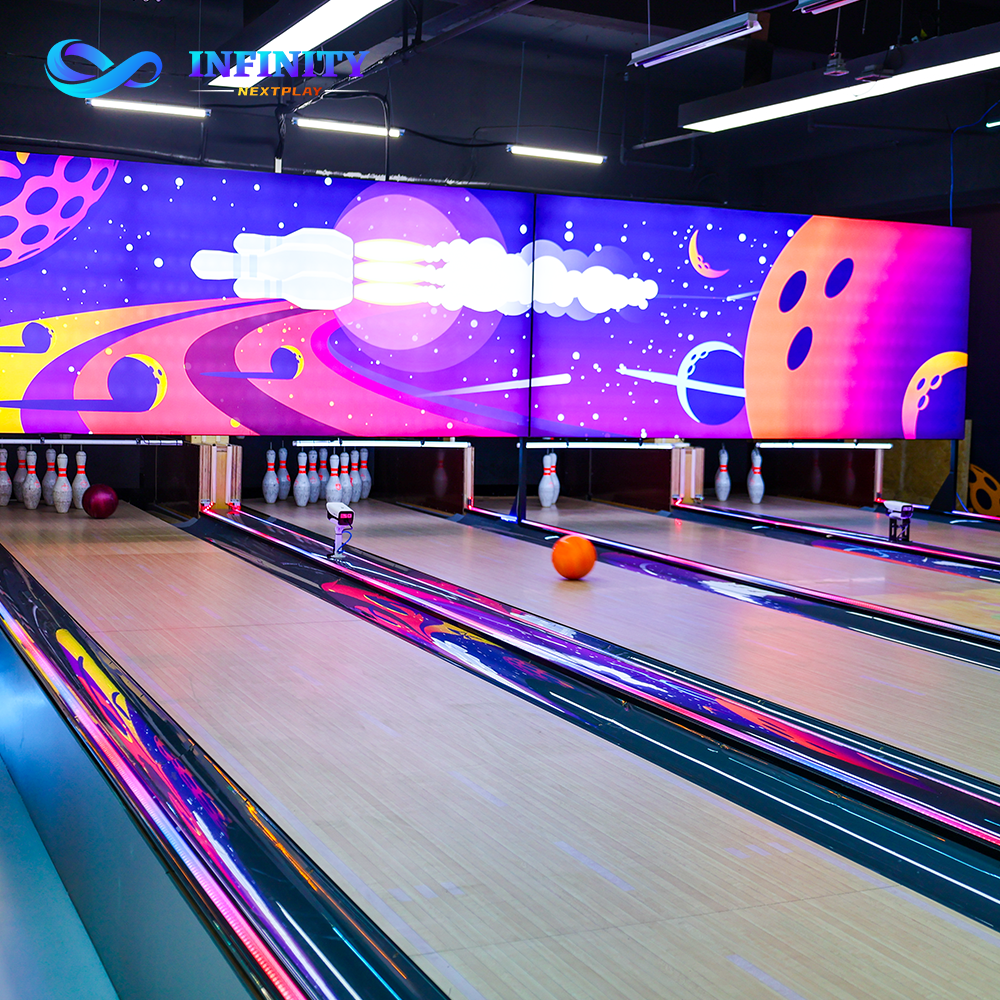
The core of the floor is four international-standard 26-meter lanes, a different machine from duckpin or string systems: full-length approach, automatic pinsetters and electronic scoring, running tournaments at the same speed as casual games. Four lanes need about 720 m2 including approach and the service corridor, but they buy a tournament floor neighborhood centers cannot offer. NextPlay supplies the package, from the standard 10-pin bowling system with lane beds, pinsetters and scoring consoles.
Lane economics set the baseline. At $35-42 per lane-hour on weekend peaks and $18-25 on weekday evenings, four lanes generate $18,500 a month before food and retail. League nights on Tuesday and Thursday run two squads of eight teams and hold roughly 250 weekly regulars. The tournament floor hosts monthly handicapped events with entry fees and prize pools.
Maintenance follows a fixed weekly routine because pinsetters are the highest-wear components in the building. The service plan covers belt tension, sensor cleaning, ball lift units and scoring consoles, and the spare kit holds the parts that fail most often: belts, sensor boards and triggers. With that routine, fault rates stay around 1-2 percent of games played. The four-lane room runs with two floor staff in the evening and one during the day.
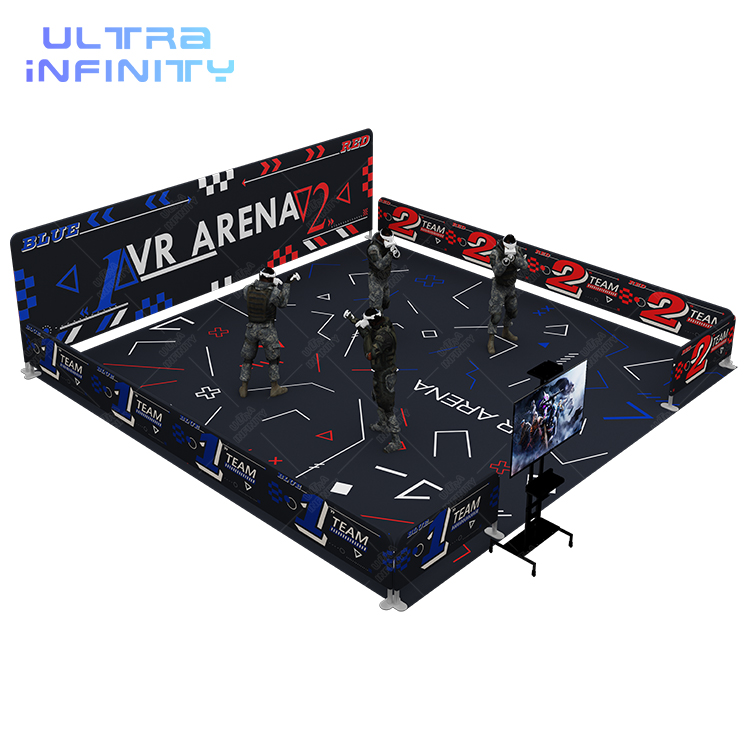
The tech zone is built around the Free Roaming VR Arena 2.0, a walking and shooting arena for up to eight players. The footprint runs 100-150 m2 with a 2.6 m minimum ceiling height, a 15-18 minute play loop and 90-second reset. At $12-15 per session the arena reaches 40 sessions a day at peak, about $7,500 a month, school groups absorbing the morning slots retail never fills.
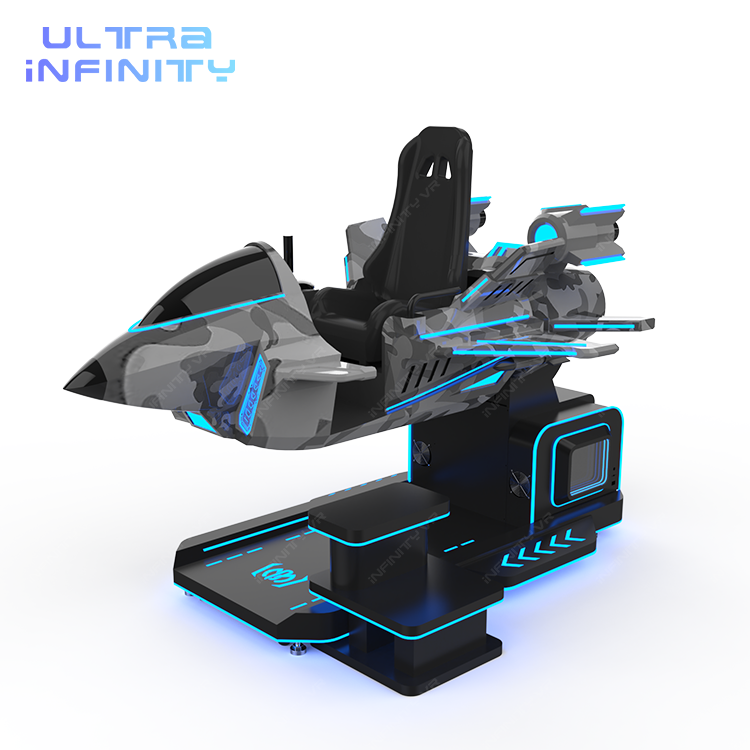
Alongside the arena, two VR Flight Thunder Fighter F2 units form the impulse layer: motion-platform flight and shooting missions of four to six minutes at $8-10 per ride, about 25 rides a day per unit. Two seats occupy about 20 m2 including safety clearance, supervised by the zone marshal, and give the venue a dramatic entrance point that reads well on video.
Operations in the tech zone run on a simple queue model. Sessions are booked on 30-minute slots in the POS, so the arena, flight seats and sports sims share one booking screen and one marshal per four stations. Night pricing lifts weekend evening tickets by 15-20 percent, and leaderboard software keeps players returning to beat a recorded score. The zone draws about 4.8 kW at the meter, remote diagnostics resolving most software issues without a site visit.
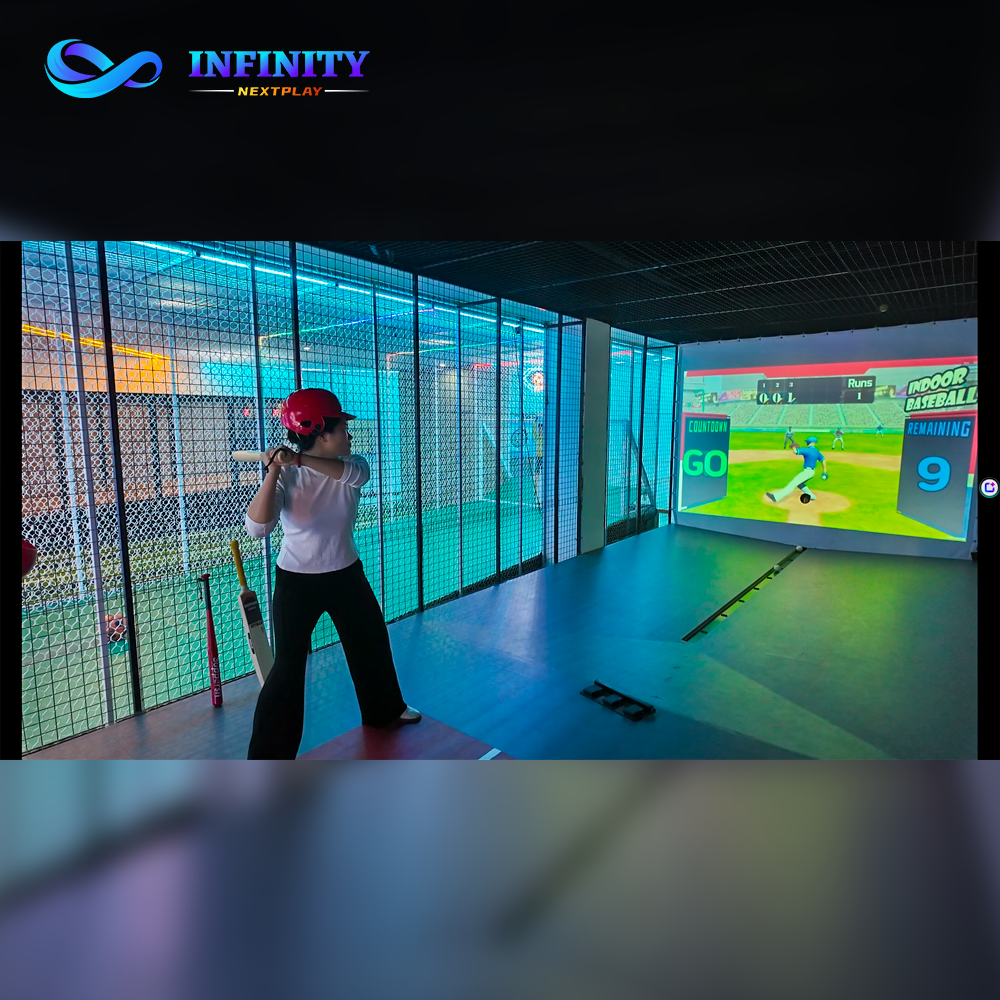
The sports zone pairs the indoor baseball batting simulator with the AR golf simulator in one wing, one attendant covering both bays. The baseball unit tracks balls in real time with HD projection: a 12 m cage, pitches from 40 to 120 km/h, scoring on accuracy rather than contact. A 20-minute session sells at $12-15, and score-based play drives the fastest repeat cycle in the venue. Batting memberships at $60-80 a month lock in weekday traffic.
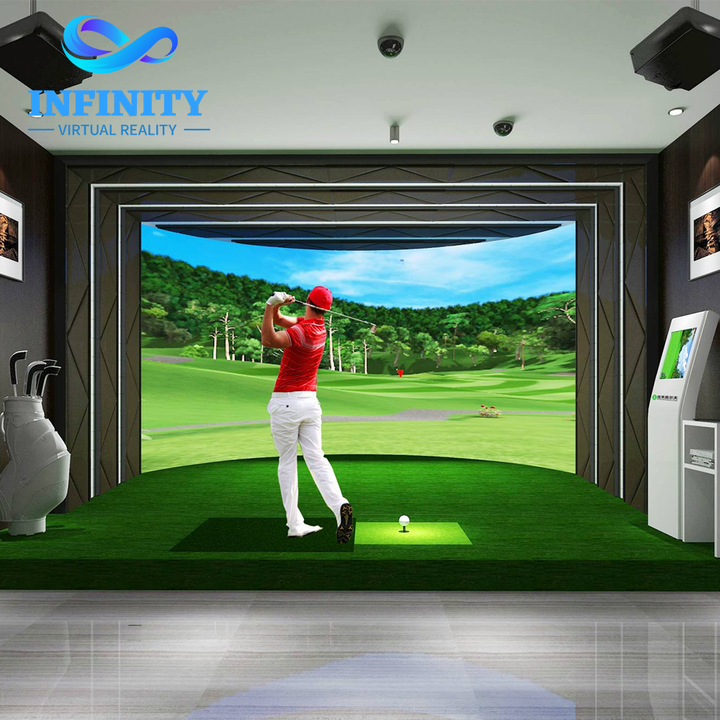
The AR golf simulator uses a high-speed camera detector and a 4K laser projector in an 8 m by 5 m room. Rounds, driving range practice and lessons run on the same bay at $25-35 per hour, and league night on Wednesday holds 16-24 players. Golf is the strongest retention product in the club: players book the same hour weekly, and league members renew above 80 percent season to season.
The sports zone gives the club its membership story. Monthly sports passes, member evenings and a season ladder create the club part of the club, which pay-per-play venues lack. Corporate clients favor this zone because baseball and golf translate across teams with different fitness levels. Zone revenue lands between $11,000 and $12,000 a month across the two bays. Both units run on 220-240 V with fault rates below 0.5 percent.
Attractions produce revenue at high gross margin but with fixed capacity, so the third layer is margin stacking: food, events and leagues that sell the same hours a second and third time. The league system is the retention engine, bowling on Tuesday and Thursday, golf on Wednesday, VR arena leagues for school groups, and every league night converts to a food event because players eat where they play.
Food and beverage is sized as a supporting line, not a restaurant: a 60-80 seat food hall with a counter kitchen, because in a club the kitchen converts league nights rather than competing with local restaurants. The target is $2.50-3.50 of food spend per head, adding $3,500-4,000 a month on traffic the attractions already generate. The table below shows how the six revenue lines build the $45,000 monthly target.
| Revenue Stream | Main Drivers | Monthly Revenue |
|---|---|---|
| 10-Pin Bowling (4 lanes) | Leagues, peak lane hours, events | $18,500 |
| Free Roaming VR Arena 2.0 | School groups, parties, peak sessions | $7,500 |
| VR Flight Thunder Fighter F2 (x2) | Birthday blocks, walk-in impulse rides | $4,500 |
| Baseball Batting Simulator | Member passes, score-based repeat play | $5,000 |
| AR Golf Simulator | Leagues, lessons, corporate hours | $6,000 |
| Food and Beverage | League nights, events, party packages | $3,500 |
| Total Monthly Revenue | All zones combined | $45,000 |
Margin discipline separates a profitable club from a busy one. League fees are collected per season, corporate contracts are invoiced monthly, and party packages are paid in advance, so cash never depends on walk-in weather. Food cost of sales runs 28-32 percent, the menu built around a limited set of high-margin items. A single POS holds the league platform, booking and member passes, and feeds the owner dashboard with per-zone revenue and league retention data.
The complete equipment and fit-out package comes to $650,000, run by 12-15 people: a general manager, two floor supervisors, six or seven attraction staff, three food service staff, one technician and one account manager who also covers marketing. Payroll runs about $13,500 a month, utilities and maintenance $5,500, marketing and software $3,500, and insurance, licenses and administration $3,000. Monthly revenue of $45,000 leaves EBITDA near $19,500.
| Investment Line | Scope | Budget |
|---|---|---|
| 10-Pin Bowling (4 lanes) | 26 m lanes, pinsetters, ball returns, scoring, LED displays | $265,000 |
| Free Roaming VR Arena 2.0 | Arena build, 8 headsets, vests, sensors, marshal station | $85,000 |
| VR Flight Thunder Fighter F2 (x2) | Motion platforms, projection, safety clearance | $62,000 |
| Baseball Batting Simulator | Ball tracking, HD projection, 12 m cage and netting | $48,000 |
| AR Golf Simulator | High-speed camera, 4K laser projector, full bay build | $55,000 |
| Fit-out, power and AV | Flooring, three-phase power distribution, sound, LED walls | $95,000 |
| Project management and installation | Shipping, site install, staff training, launch | $40,000 |
| Total Package | Complete equipment plus fit-out | $650,000 |
Weekday occupancy below 25 percent and a $650,000 equipment base sitting idle before 4 pm.
Corporate blocks, school groups and league programs booked through one account manager, on an attraction floor sized for 450 daily visits.
The payback model is straightforward. The operator funds about $150,000 in equity, the 30 percent equipment down payment plus opening stock, while the balance runs on 36-month equipment finance at 4.8 percent. At $19,500 of monthly EBITDA the equity tranche is recovered by month six, behind the headline metrics. Full asset payback for the $650,000 package lands in the 26-to-30-month band, and every corporate contract shortens it.
The organization follows the zones rather than one big team. Each zone has a written opening routine, a daily count target and a fault channel into the shared dashboard. Training is delivered at installation: two weeks covering lane maintenance, arena marshal procedures, sports sim calibration and the POS. The technician handles all zones and receives spare parts under a 12-24 month warranty with a next-batch shipping SLA.
The planning target is 450 daily visits, about 165,000 a year. A 30-60 minute catchment of 400,000-800,000 residents supports that flow; below 300,000 residents, consider a smaller mix.
A four-lane 26 m setup with pinsetters, ball returns, scoring and displays runs about $265,000 installed, roughly 40 percent of the $650,000 package. Lane rooms need a flat slab, 4.5 m ceiling and three-phase power.
The arena works from 2.6 m clear height; NextPlay recommends 3.0 m for larger groups and clean sensor calibration. The area runs 100-150 m2 for eight players.
The model targets 15-20 percent of monthly revenue from corporate blocks in year one, mostly weekday hours at $1,500-2,500 per event. Corporate volume is the main weekday lever.
Send the NextPlay engineering team your site details for a layout plan, an equipment quote and a 36-month finance model.