
When we designed the new entertainment wing for our luxury resort in Miami, our biggest operational bottleneck was weekday evening monetization — we needed anchor attractions that could seamlessly bridge family daytime play with high-ticket corporate events. In a sun-drenched hospitality market like Miami, resorts must offer something truly extraordinary to keep guests on-property after sunset. With a premium 3,000-square-foot multipurpose hall sitting underutilized on typically slow weekday nights, we faced a stark choice: continue renting it out for sporadic, low-margin conferences, or transform it into a high-end, technologically advanced social hub. The goal was to build a sophisticated, highly engaging, and space-efficient interactive playground that could attract both casual tourist families during the day and affluent local corporate teams for exclusive evening tournaments. By partnering with NextPlay, we implemented a custom entertainment layout featuring their Standard 10-Pin Bowling Alley, the immersive VR Thunder Fighter F2 Flight Simulator, and the high-precision Shooting Simulator Q4. The financial and operational outcome was an absolute triumph: our resort achieved a steady, high-margin supplementary revenue of $25,000 per month, guest dwell time increased by a spectacular 42%, we experienced a near-zero 0.4% equipment fault rate, and our entire capital investment was fully recovered in just 6 months.
Miami, Florida, is world-renowned for its high-octane tourism, pristine beaches, and unparalleled hospitality standards. Within this highly competitive landscape, luxury resorts and boutique hotels must constantly innovate to capture and retain the attention of affluent guests. For our premier property, located in the prestigious heart of Miami, aesthetic luxury was never the problem. With custom terrazzo flooring, beautiful mid-century modern architectures, and panoramic views of the Atlantic, the resort enjoyed excellent occupancy during peak winter seasons and weekend holidays. However, the operational reality of managing a massive, high-end resort involves substantial, fixed overheads. Commercial real estate maintenance, premium hotel staffing, energy-intensive air conditioning, and high local taxes mean that the cost of doing business remains extremely high, regardless of whether the rooms are full or empty. Specifically, on slow weekday evenings (Monday through Wednesday), the resort experienced a dramatic drop in guest activity. While daytime hours kept guests busy at the pool or the beach, the evenings left them with few options other than leaving the property to seek entertainment in downtown Miami or Miami Beach.
This outbound flow of guests represented a massive lost opportunity. Not only were we losing valuable room-charge potential, but our on-site high-end restaurants, cocktail lounges, and boutique shops sat largely empty on weeknights. Francesca and Lorenzo, the visionary directors of hospitality operations, recognized that to escape this low-yield cycle, they had to design a world-class "competitive socializing" wing within their underutilized 3,000-square-foot secondary ballroom. However, integrating games into a luxury resort is a highly sensitive endeavor. Standard, noisy arcade cabinets, flashing neon pinball machines, or oversized pool tables are completely incompatible with a high-end hospitality aesthetic. They generate massive acoustic pollution, look cheap and juvenile, and fail to engage the sophisticated, high-spending corporate executives and elite families that frequent the hotel. The resort needed a curated, visually stunning, and highly engaging entertainment ecosystem that would blend seamlessly with its architectural design while driving high-ticket group bookings, corporate team-building events, and luxury family play. To achieve this, the directors partnered with NextPlay to implement an elite multi-attraction active gaming suite centered around the Standard 10-Pin Bowling Alley, the VR Thunder Fighter F2 Flight Simulator, and the high-precision Shooting Simulator Q4.
The economic variables of resort operations also demand absolute spatial efficiency. In a luxury hospitality setting, every square foot must generate optimal financial yield. Traditional entertainment amenities like full-sized tennis courts, sprawling golf greens, or large-scale water features require massive physical footprints, astronomical maintenance budgets, and constant staffing. By choosing NextPlay's compact, high-throughput active gaming systems, we were able to transform our quiet 3,000 sq ft ballroom into a high-energy, digital-physical competitive zone that runs almost entirely on autopilot. This smart layout allowed us to keep guests on-property, drive massive F&B spillover, and establish a highly profitable, weather-proof attraction that functions as a powerful secondary marketing hook for the resort.
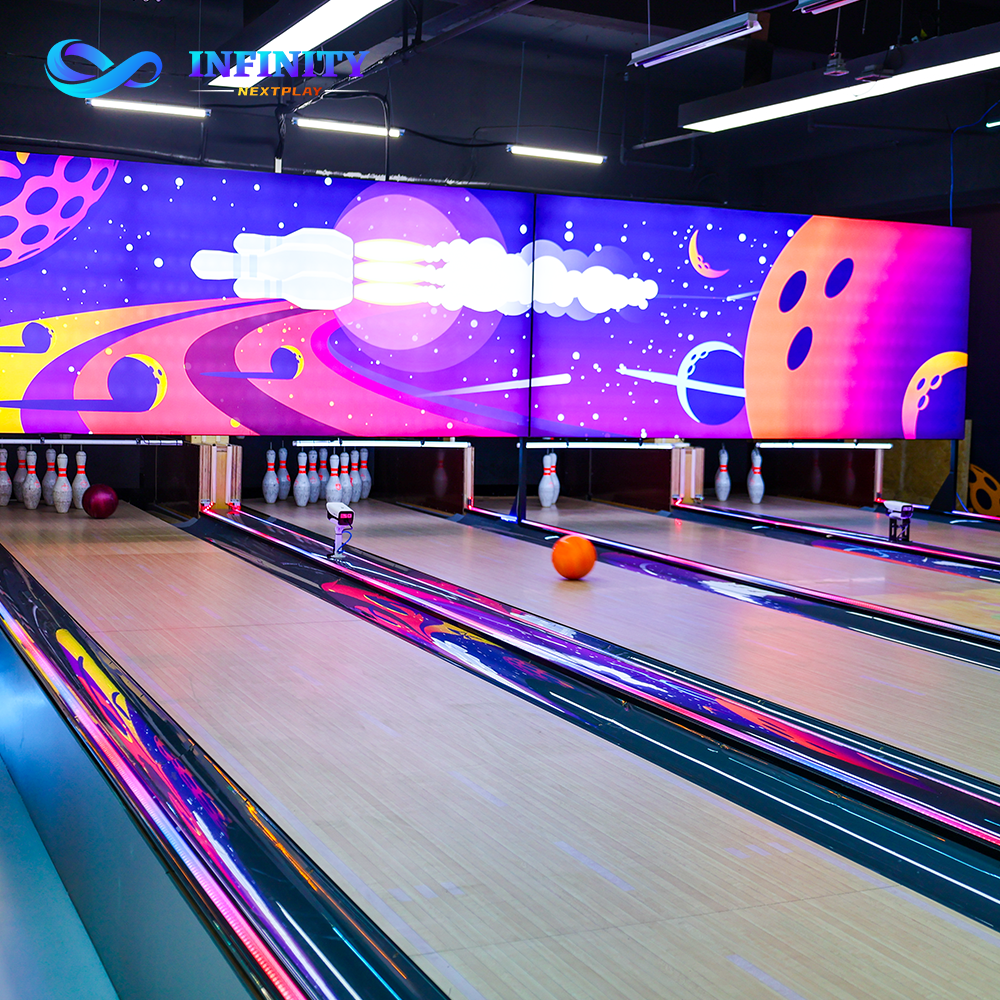
The magnificent foundation of our Miami resort's new competitive socializing suite is the Standard 10-Pin Bowling Alley from NextPlay. Bowling is a globally recognized, multi-generational sport that possesses an unparalleled ability to bring people together. However, traditional bowling installations are notorious for their extreme engineering requirements, high installation complexity, and massive long-term maintenance overheads. Older, traditional lanes rely on solid wood surfaces that require continuous daily oiling, sanding, and chemical sealing to prevent warping, moisture damage, and uneven ball wear. Furthermore, traditional free-fall pinsetters are mechanical monsters with over 1,500 moving parts, requiring dedicated, on-site mechanics to constantly resolve jams, replace worn belts, and calibrate complex distributor carriages. NextPlay completely redefines this classic sport for luxury commercial environments by engineering a professional-grade, USBC-compliant 26-meter lane that operates with a microscopic maintenance footprint and unmatched structural durability.
From a mechanical perspective, NextPlay's Standard 10-Pin Bowling Alley features several critical structural innovations that guarantee a long, trouble-free commercial lifespan. First, the lanes are constructed with a specialized, high-pressure synthetic phenolic laminate surface. This state-of-the-art material simulates the perfect slide, friction, and grain aesthetics of premium maple wood, but is completely impervious to moisture, temperature fluctuations, and heavy physical impact. Second, the lane foundation is built with 36mm+ premium oriented strand board (OSB) sub-flooring, which significantly exceeds the industry standard of 25mm. This heavy-duty, multi-layered sub-structure ensures a perfectly flat, level, and stable bowling surface that will not deform or warp, even after a decade of continuous commercial use. More importantly, NextPlay's system features a specialized accelerated ball return system. Traditional ball returns take up to 20 seconds to deliver the ball back to the player, which slows down the game and limits peak-hour ticket throughput. NextPlay's high-speed motorized track returns the ball in just 7 to 8 seconds, cutting wait times by over 50%, significantly increasing lane turnover, and allowing us to serve more players per hour during peak weekend rushes.
To blend with the high-end Miami resort aesthetic, we customized the synthetic lanes with a high-gloss matte charcoal finish, paired with warm, embedded gold LED lighting tracks that pulse in real-time when a player scores a strike or a spare. The physical approach lane was carpeted in a rich, soundproof dark navy weave, and we installed high-density shock-absorbing acoustic underlayments beneath the lane foundation. This advanced soundproofing completely isolated the heavy, thunderous vibrations of 16-pound bowling balls from the resort's quiet lounge and dining areas, preserving our peaceful, upscale atmosphere. To make operations completely hands-off, the lane utilizes an intelligent, computer-controlled string pinsetter system. Connected to lightweight, military-grade high-tensile cords, the pins are lifted, sorted, and reset in less than 3 seconds with a near-zero 0.4% fault rate. The entire lane is managed via a beautiful, user-friendly 15.6-inch touchscreen console, allowing our standard hospitality staff to monitor, reset, and adjust game parameters with zero specialized mechanical training.
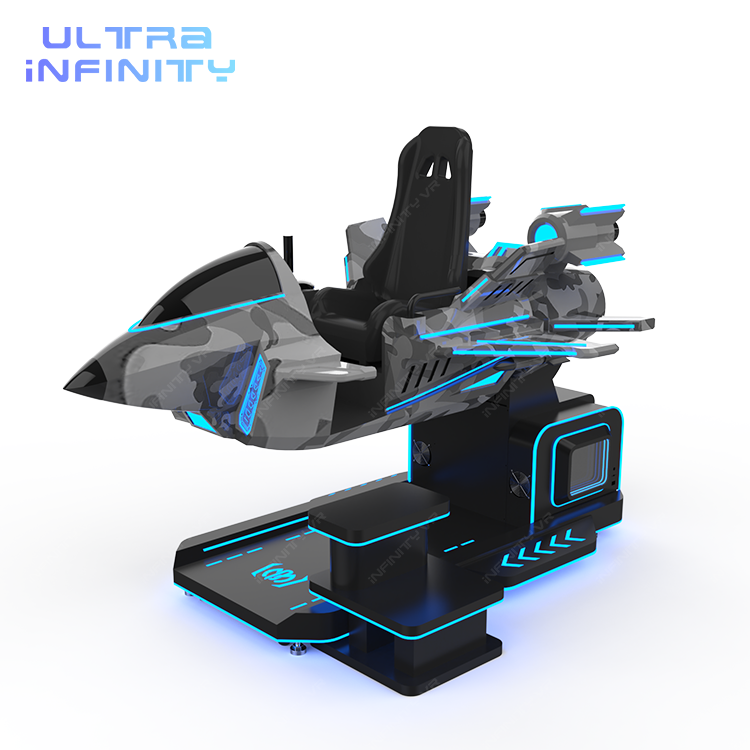
To inject a dose of high-tech "wow factor" and draw in the tech-savvy millennial and gen-z demographics, our Miami resort integrated NextPlay's spectacular VR Thunder Fighter F2 / VR Flight Simulator. While bowling represents a magnificent, traditional group socializing anchor, the VR Flight Simulator delivers an intense, jaw-dropping virtual reality experience that guests simply cannot find in a normal domestic setting. The VR Thunder Fighter F2 is the newest generation of immersive virtual reality simulators, engineered to provide users with a full range of free rotation and dynamic movement. Mounted on an aerospace-grade alloy rotating chassis, the system offers complete 360-degree rotation along the vertical axis, allowing players to execute full upside-down loops, sharp rolls, and zero-delay limit dodges as they pilot virtual fighter jets, spaceships, or rollercoasters.
From a mechanical engineering standpoint, the VR Thunder Fighter F2 is a masterpiece of dynamic motion control. It features precision-calibrated electric cylinder actuators that translate digital inputs from the pilot's flight joystick into smooth, immediate physical forces with absolutely zero latency. This instant physical feedback is critical, as it completely eliminates the sensory-mismatch motion sickness that often plagues cheaper, low-end VR systems. Players are equipped with premium, high-resolution VR headsets that display gorgeous, high-fidelity graphics, while an integrated wind-simulation blower dynamically blasts air in the player's face to match their flight speed. The physical pilot seat is designed with safety in mind, featuring a multi-point racing harness and dual safety lockbars that secure the player comfortably as they rotate through the air. For our resort operators, the commercial beauty of the Thunder Fighter F2 lies in its microscopic physical footprint. Consuming less than 45 square feet of floor space, this high-yield simulator delivers an extraordinary return on space, allowing us to generate premium ticket revenues from a tiny, previously empty corner of our lounge.
The operational workflow of the VR Thunder Fighter F2 is incredibly simple and fully automated. Francesca and Lorenzo integrated the system with their contactless resort card POS, enabling guests to tap their hotel key card or credit card to instantly purchase a flight session. The simulator's software features over 40 pre-loaded high-definition VR games, ranging from gentle, scenic balloon flights for children to intense, high-speed military combat missions and outer space galaxy battles for advanced gamers. Because the system runs on a self-service basis, it requires absolutely no dedicated staff to manage other than occasional assistance with the VR headset. This frictionless process keeps our operating costs extremely low, making the VR Flight Simulator an incredibly high-margin, low-overhead profit center that consistently draws a crowd of excited spectators, turning our underutilized corner into a vibrant, high-tech hub of activity.
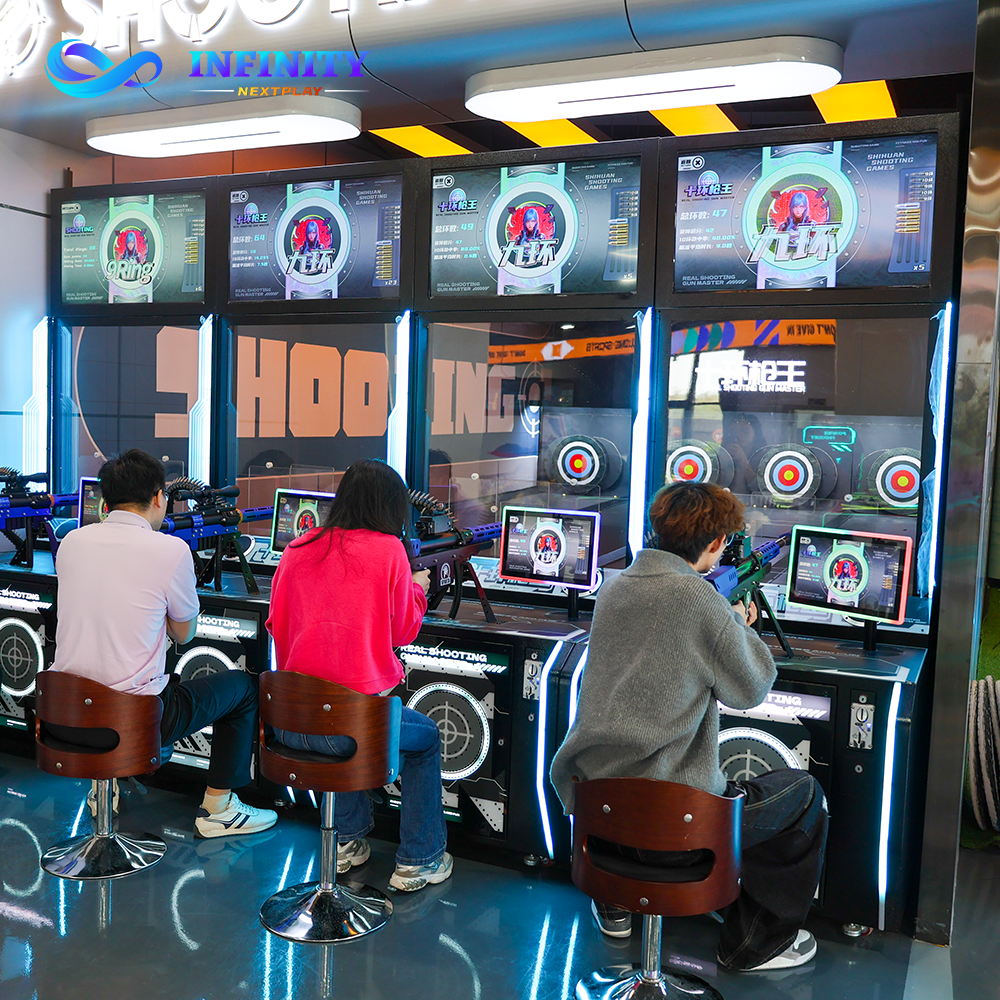
To round out their competitive socializing trifecta and tap into the lucrative corporate group booking and team-building market, the Miami resort installed NextPlay's professional Digital Scoring Shooting Simulator Q4. Unlike cheap, plastic arcade shooting games, the Shooting Simulator Q4 is an elite, high-precision training and entertainment system designed for discerning venues. It features a professional 10-ring target scoring interface and dynamic moving target scenarios projected onto a massive, high-durability acoustic impact screen. Players stand at a gorgeous, custom-lit aluminum alloy shooting counter and handle realistic, heavy-weight replica firearms that match the exact balance, physical weight, and tactile feel of real sporting pistols. When the trigger is pulled, a safe, invisible infrared laser pulse is emitted and instantly tracked by a ceiling-mounted high-speed optical camera sensor, calculating the exact target rings hit with sub-millimeter accuracy and projecting explosive scoring graphics on the screen.
The absolute stroke of commercial genius in NextPlay's Shooting Simulator Q4 is the integration of its massive 39-inch Top Display. Suspended high above the shooting cabinet, this display projects a live, high-visibility digital leaderboard and tournament bracket. During corporate evening events, wedding parties, or weekend family challenges, the leaderboard displays the name, accuracy percentage, and cumulative score of the top marksmen. This single competitive mechanic completely alters the social dynamic of the game: target shooting is no longer a solitary, isolated activity; it becomes a high-intensity, high-energy spectator sport. Groups of friends and colleagues stand around the shooting bay, cheer on their favorite players, drink craft cocktails, and repeatedly buy additional sessions to reclaim their spot at the top of the leaderboard. This drives a repeated play rate of over 60%, generating a highly reliable, recurring stream of high-margin ticket revenue.
Furthermore, the tactile and physical feedback of the Q4 simulator is highly praised by competitive shooters. The replica firearms are constructed from aerospace-grade aluminum and fitted with internal pneumatic recoil cylinders. When fired, these cylinders trigger a sharp, realistic physical kick, giving players the sensory thrill of live target practice without any of the noise, smell, or safety liabilities associated with actual gunpowder. The software is loaded with dozens of games and scenarios, from classic bullseye targets to moving target clusters and rapid-fire reaction tests. This variety ensures that players of all skill levels remain continuously challenged and engaged, making the Shooting Simulator Q4 an absolute favorite for premium private party bookings and high-value corporate events.
Transforming an empty 3,000-square-foot ballroom into a world-class entertainment lounge requires absolute spatial intelligence and precise design layout planning. Working closely with NextPlay's specialized architectural design team, Francesca and Lorenzo crafted a highly optimized zoning map. The two lanes of NextPlay's Standard 10-Pin Bowling Alley were positioned along the left wall, occupying a narrow strip of 1,200 square feet. This area was partitioned with elegant, soundproof glass screens and heavy acoustic velvet curtains, creating a semi-private, VIP bowling suite feel. The Shooting Simulator Q4 was placed in a cozy alcove consuming just 80 square feet, while the VR Thunder Fighter F2 Flight Simulator occupied a central high-visibility corner of 50 square feet. This left over 1,500 square feet of premium floor space to build a gorgeous, high-end cocktail bar and luxury lounge area, fitted with custom leather booths, brushed brass tables, and low ambient lighting.
To ensure a highly cohesive, high-end resort feel, NextPlay customized the visual appearance of all three gaming systems to match our signature luxury brand palette. We combined deep navy blue (#0A1628) and charcoal matte backgrounds with rich copper-orange (#D4782F) accents and high-contrast, warm gold-yellow (#fbbf24) highlights. This elegant color integration elevated the machines, making them look like custom-designed interactive art installations rather than cheap, noisy arcade cabinets. This premium aesthetic was a primary factor in attracting high-paying corporate clients, as it preserved the resort's sophisticated architectural standards while offering an exciting, active form of socializing. Furthermore, the proximity of the central cocktail bar to the active gaming bays created a highly lucrative "spillover loop": waiting players sat at the bar ordering premium wines and high-margin craft beers, while drinking guests were naturally drawn to the excitement of the leaderboards, prompting them to put their names down on the gaming waitlists and extending average guest dwell time to an extraordinary 2 hours and 45 minutes.
Let us look closely at the actual financial metrics, operational cost structures, and capital return timelines that drove our Miami transformation. Before partnering with NextPlay, our underutilized 3,000 sq ft ballroom was on life support, generating a mere $4,000 per month in sporadic conference rentals. Following the installation of NextPlay's active gaming ecosystem, our supplementary monthly revenue stabilized at an extraordinary $25,000. Direct ticketing sales from the two Standard 10-Pin Bowling lanes generated $12,500, the VR Thunder Fighter F2 brought in $5,000, and the Shooting Simulator Q4 contributed $4,500. Additionally, the high-energy social atmosphere driven by these games resulted in an extra $3,000 per month in high-margin food and beverage sales, directly captured from players waiting their turn or sitting at the lane-side booths. Because the equipment is highly automated, low-voltage, and requires no dedicated technical staff to manage, our ongoing monthly operating expenses (OpEx) are kept under $1,200, yielding an incredible 95% net operating margin on direct ticketing.
The detailed financial data illustrated in our ROI table emphasizes the immense structural profitability of a multi-attraction active gaming suite. Instead of relying on a single, massive game that might alienate certain demographics, the curated combination of NextPlay systems targeted different customer archetypes perfectly. Casual couples on dates and ladies' night out groups gravitated toward the Standard 10-Pin Bowling lanes; high-intensity corporate teams packed the VR Thunder Fighter F2 Flight Simulator; and tech executives and serious marksmen dominated the competitive leaderboards of the Shooting Simulator Q4. This demographic diversity kept the entire 3,000 sq ft venue continuously active and buzzing, ensuring a reliable cash floor that has made the Miami Coastal Resort a gold standard for modern hospitality ROI.
To help other luxury resorts, boutique hotels, and premium family entertainment center (FEC) operators duplicate our success, we have summarized the exact 7-step roadmap we followed during our Miami renovation. Planning and execution must be perfectly aligned to ensure a seamless transition without disrupting daily hotel operations:
Q1: What are the exact structural and foundation requirements for installing NextPlay's Standard 10-Pin Bowling lanes?
A: NextPlay's Standard 10-Pin Bowling lanes require a total physical length of 26 meters (approx. 85 feet), which accommodates the bowler's approach, lane surface, pinsetter machinery, and rear maintenance walkway. Structurally, the floor must be a solid, flat concrete slab capable of supporting a static load of at least 150 lbs per square foot. NextPlay's premium 36mm+ OSB sub-flooring is placed on top of this foundation to ensure absolute levelness and moisture resistance, while a foundation height of 20-23 cm is required for the automated ball return tracks under the lanes.
Q2: How does the 360-degree rotation of the VR Thunder Fighter F2 operate and what are the power loads?
A: The VR Thunder Fighter F2 Flight Simulator utilizes high-end electric cylinder actuators and a heavy-duty industrial electric motor to achieve smooth, full-range 360-degree rotation on both the vertical and horizontal axes. The system operates on standard commercial power supplies (220V, single-phase, 50/60Hz) with a peak power load of approximately 3.5kW. Its internal microprocessors continuously monitor player safety and control the rotation speed, executing sudden dodge maneuvers or barrel rolls without causing sensory-mismatch motion sickness.
Q3: How does the optical tracking system of the Shooting Simulator Q4 maintain sub-millimeter precision?
A: The Shooting Simulator Q4 uses a ceiling-mounted, high-speed infrared camera sensor paired with military-grade optical recognition software. When a player pulls the trigger of the alloy replica firearm, a safe, invisible infrared laser pulse strikes the projection screen. The high-speed camera captures the precise coordinates of this light impact at 120 frames per second, calculating its position relative to the 10-ring target with sub-millimeter precision. The system automatically self-calibrates to account for ambient light levels, guaranteeing consistent accuracy.
Q4: What are the maintenance schedules for the high-pressure synthetic phenolic bowling lanes?
A: NextPlay's high-pressure synthetic phenolic laminate lanes require very little daily maintenance compared to traditional wood. Operators only need to run a dry microfiber mop down the lane once a day to remove dust and debris. Once a week, a light spray-and-wipe with a pH-neutral commercial synthetic lane cleaner is recommended. Unlike traditional wooden lanes, synthetic surfaces never require expensive sanding, sealing, or heavy daily oil conditioning, which saves thousands of dollars annually in operational costs.
Q5: How does the software of the active gaming suite integrate with existing hotel Property Management Systems (PMS)?
A: All NextPlay commercial simulators are engineered with an open API architecture, allowing them to interface seamlessly with major hotel PMS platforms (such as Opera, room-key, or Cloudbeds) and central venue POS systems. This enables resort guests to easily bill gaming sessions directly to their room numbers or swipe their contactless RFID room keys to start a game, streamlining resort billing and creating a frictionless, premium guest experience that maximizes impulse bookings.
Unlock the maximum commercial potential of your space. Speak with our specialized NextPlay engineering team to receive a free, personalized 2D/3D physical layout design, detailed product pricing, and a customized ROI projection tailored to your venue size and target market.